A farewell to P1P
The P1P leaves the stage, but the P1S and P2S move forward to define the next chapters of productivity

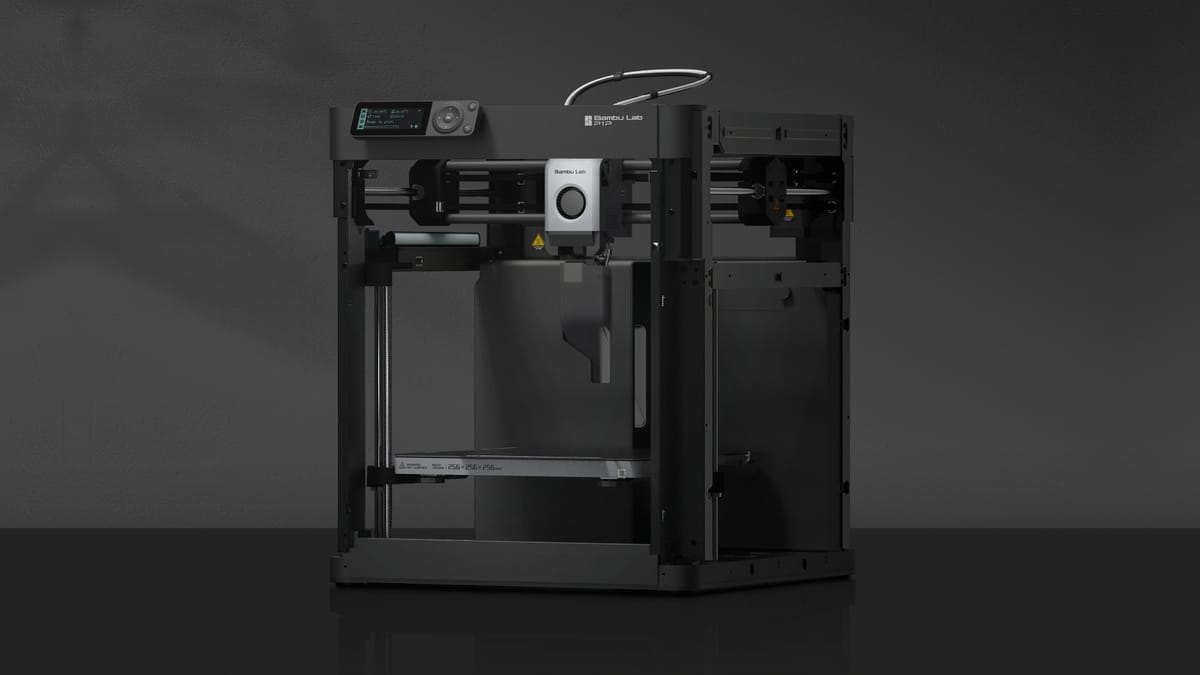
Bambu Lab P1P - one of the most popular desktop 3D printers of recent years - is coming to the end of its three-year journey. An icon of productivity and one of the most frequently modified FFF systems leaves behind a rich legacy, proudly carried on by the P1S and P2S models.
But let us reassure you right away:
The EOL of the P1P simply means that the 3D printer will no longer be manufactured or sold. Support in terms of spare parts availability and service will continue for the next five years, until 2031.
At the same time, the P1S model will continue to be manufactured and sold, and Bambu Lab has no plans to phase it out in the foreseeable future. Also, most spare parts are interchangeable between the P1P and P1S, and they will be provided continuously.
End of manufacturing and active sales = 2026-02-10
Software & firmware bug fixes and feature updates = 2027-11-14
Software & firmware security patches = 2029-11-14
Continuous supply of spare parts = February 2031
Uninterrupted support = February 2031
End of spare parts supply and support = February 2031
P1P - the modest icon of sheer productivity
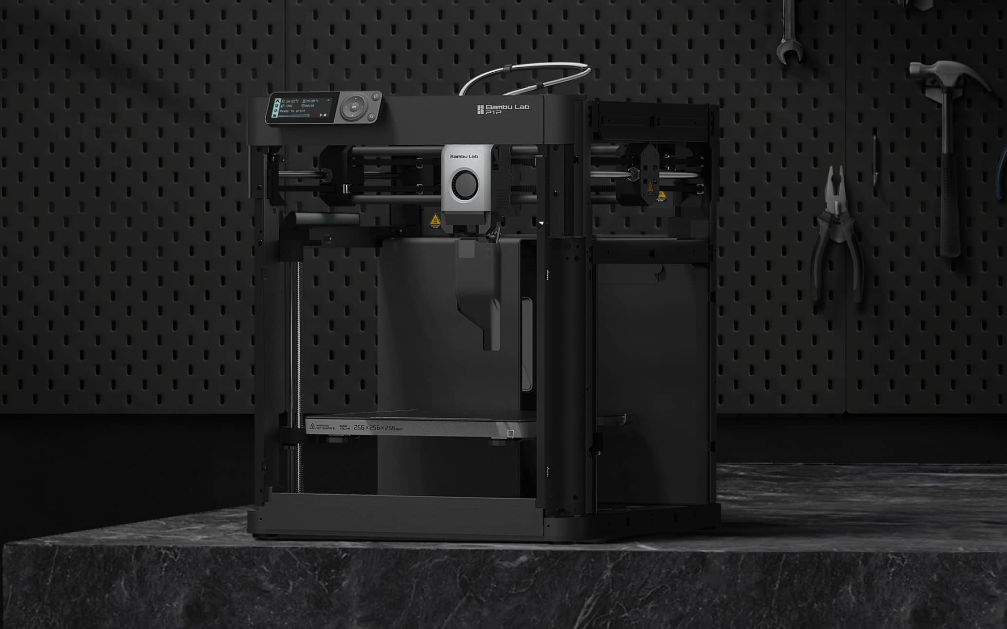
The birth of the P1P was a direct response to the rapid changes that took place in the 3D printing market at the beginning of the 2020s. When Bambu Lab entered the market in 2022 with the X1 model, it introduced a completely new approach to performance, automation, and system integration in desktop FFF 3D printers.
Unprecedented printing speeds, unmatched quality enabled by an extensive set of sensors, cameras, and lidar, as well as the AMS system dedicated to multi-color and multi-material printing, established an entirely new benchmark.
Bambu Lab caused the boundaries between the hobbyist and professional segments to gradually and irreversibly blur.
Just a few months after the launch of the X1 series, it became clear that the technology developed by Bambu Lab had the potential to reach a much broader audience than just hobbyists and 3D printing enthusiasts.
This is how the concept of the P1P was born - a more affordable 3D printer that retained all the core technological features of the X1, but was simplified where it did not directly affect productivity.
The closed enclosure, color display, and some advanced extras were removed. This allowed the price to be significantly reduced without sacrificing what mattered most to many users: speed, repeatability, and reliability.
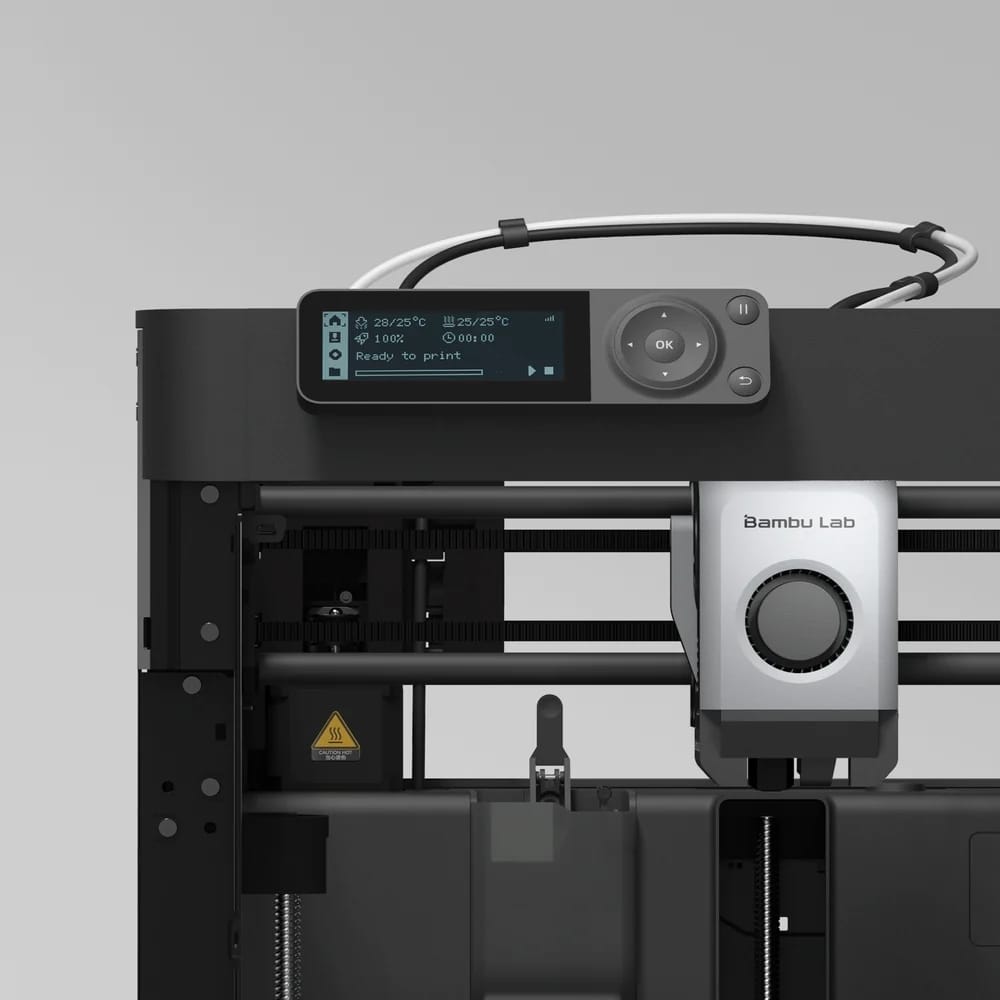
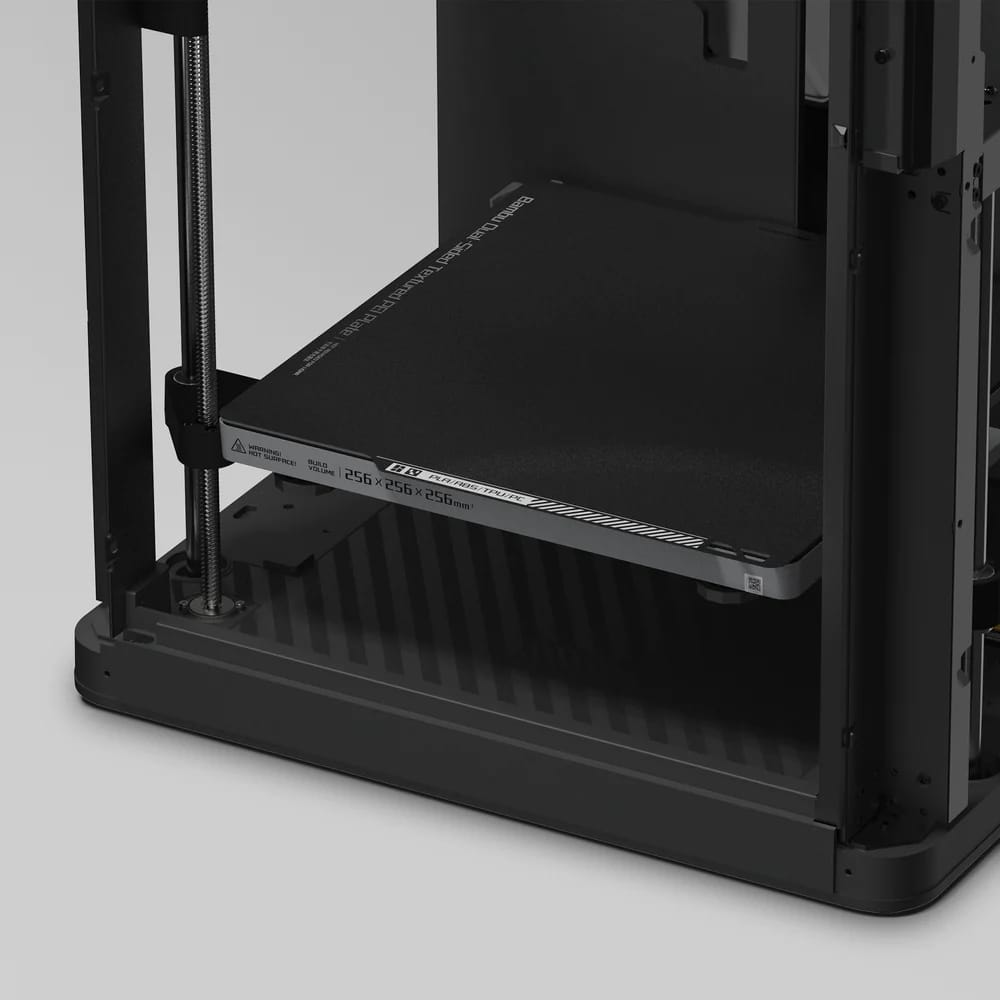
From the very beginning, the P1P was designed as a working tool. It was aimed at users printing primarily with classic materials such as PLA, PETG, or ASA, who expected stable, day-to-day production.
In practice, the differences between the P1P and more expensive models turned out to be much smaller than the price might suggest. The mechanical core, electronics, and motion-control algorithms remained at the same very high level, which was quickly reflected in real-world applications.
And then, just a few months after its market debut, something happened that most observers and analysts did not expect...
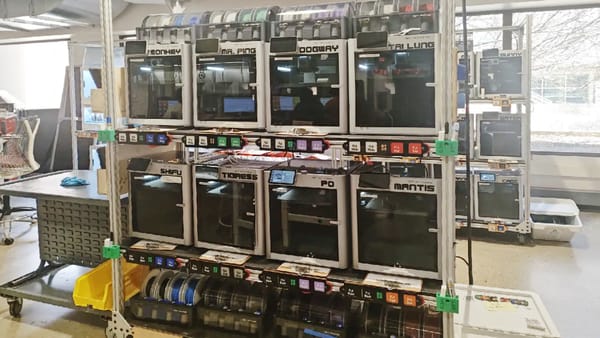
The P1P began to appear en masse not only in workshops and design studios, but also in production halls and facilities scattered all over the world. Videos started circulating online showing dozens, sometimes even hundreds, of identical printers running continuously and producing end-use parts in series.
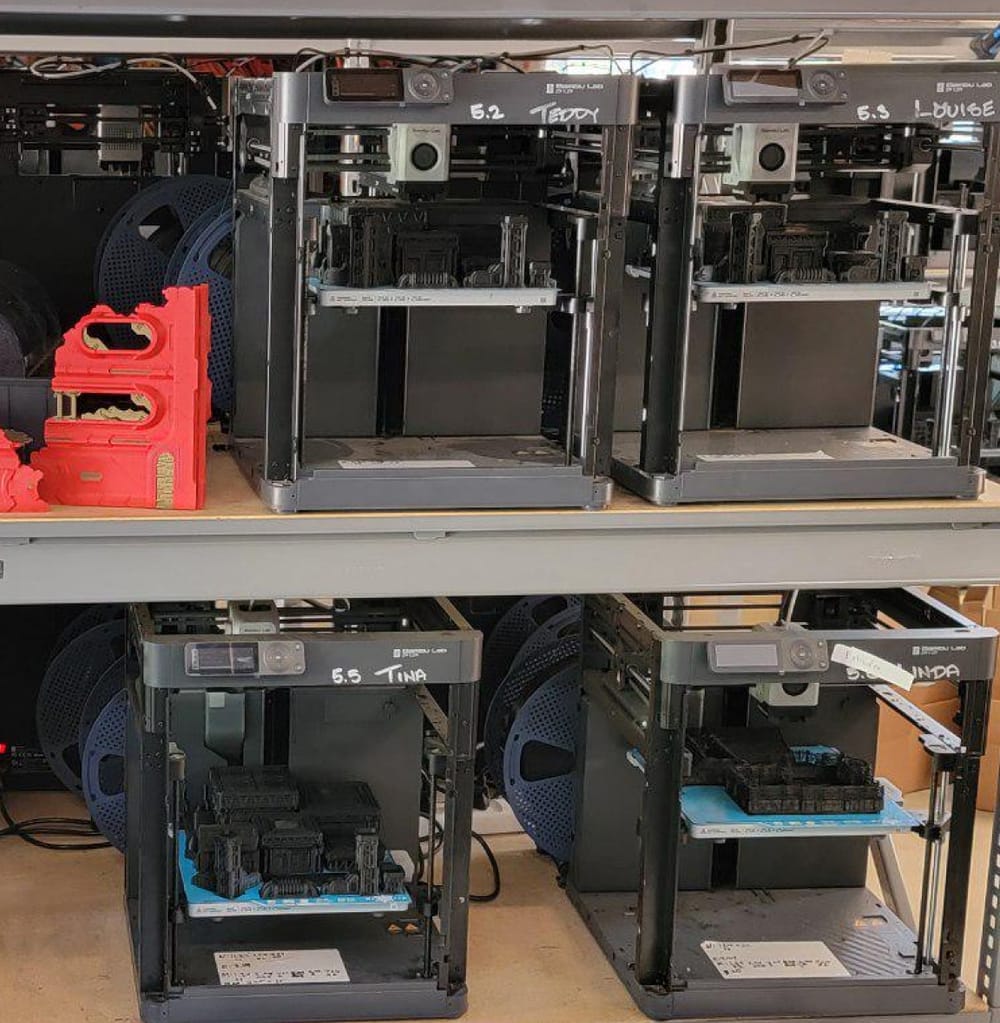
In these environments, 3D printing stopped being a supporting technology and became the very foundation of production.
The ease of use of the P1P played a key role in this transformation. Printer setup, file preparation, and daily operation did not require teams of specialized technicians.
The machines could be deployed quickly, scaled almost linearly, and operated by people without years of experience in 3D printing.
Combined with a low purchase price, this created the conditions for the emergence of a new generation of entrepreneurs who built entire business models around P1P print farms operating around the clock.
In July 2023, the P1S model was introduced - an expanded version of the P1P, featuring a factory-enclosed build chamber and a set of upgrades tailored to more demanding material applications.
Thanks to this duo, 3D printing, which had previously been seen as a supplementary technology, began to play the role of a full-fledged production tool capable of delivering large volumes in short timeframes.
Modders’ favorite 3D printer
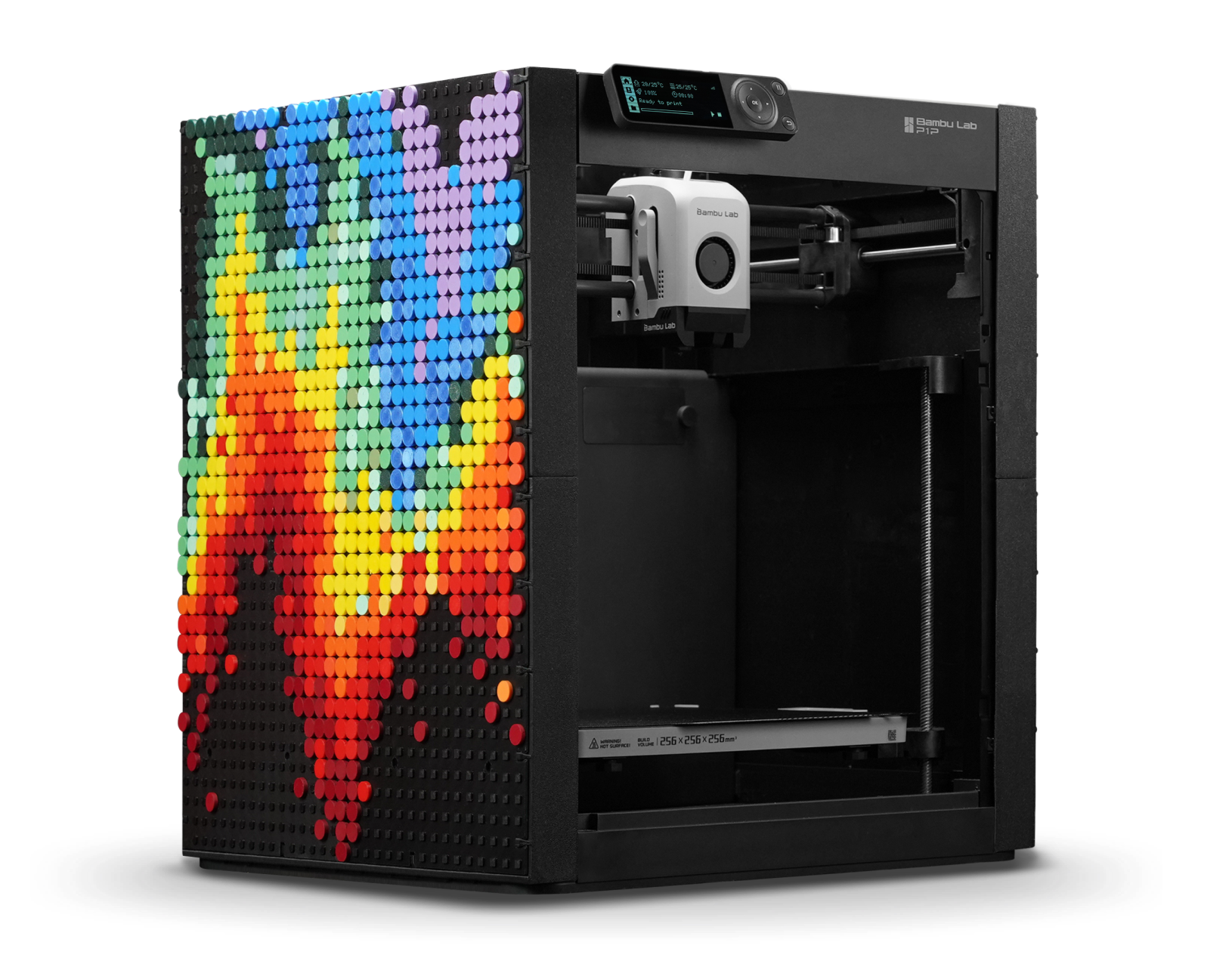
But the P1P also had a completely different, far more down-to-earth side. Thanks to its open design, it became a highly popular platform for modification within the 3D printing community.
On one hand, creativity focused on aesthetics and personalization flourished, with the best examples being monumental projects shared for free on MakerWorld. “Companion Cube”, "Borg Cube" or “Minecraft Block” created by neil3dprints are far more than simple modifications. They are comprehensive part kits that allow the P1P to be completely transformed into iconic objects from the world of gaming.
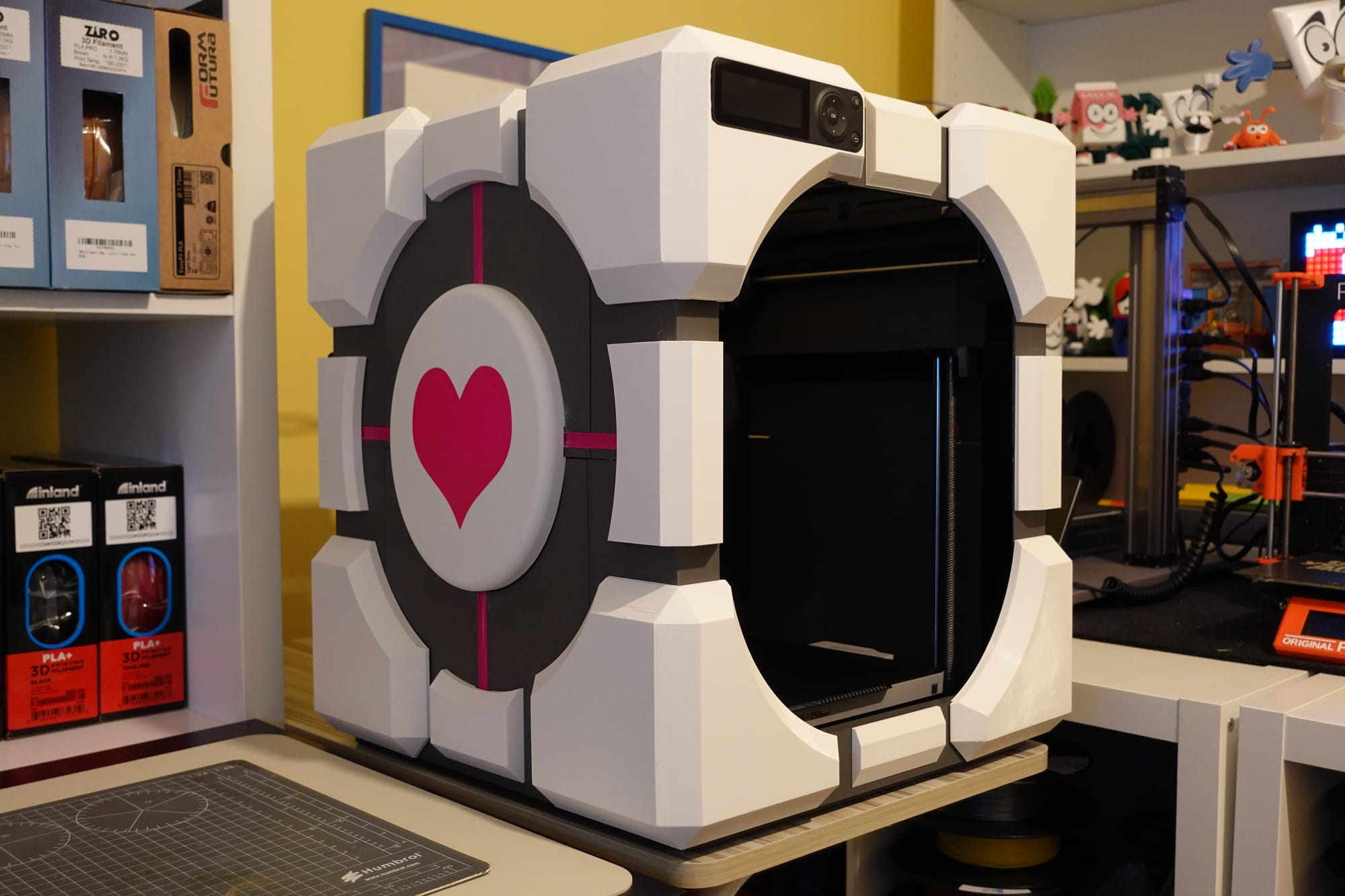
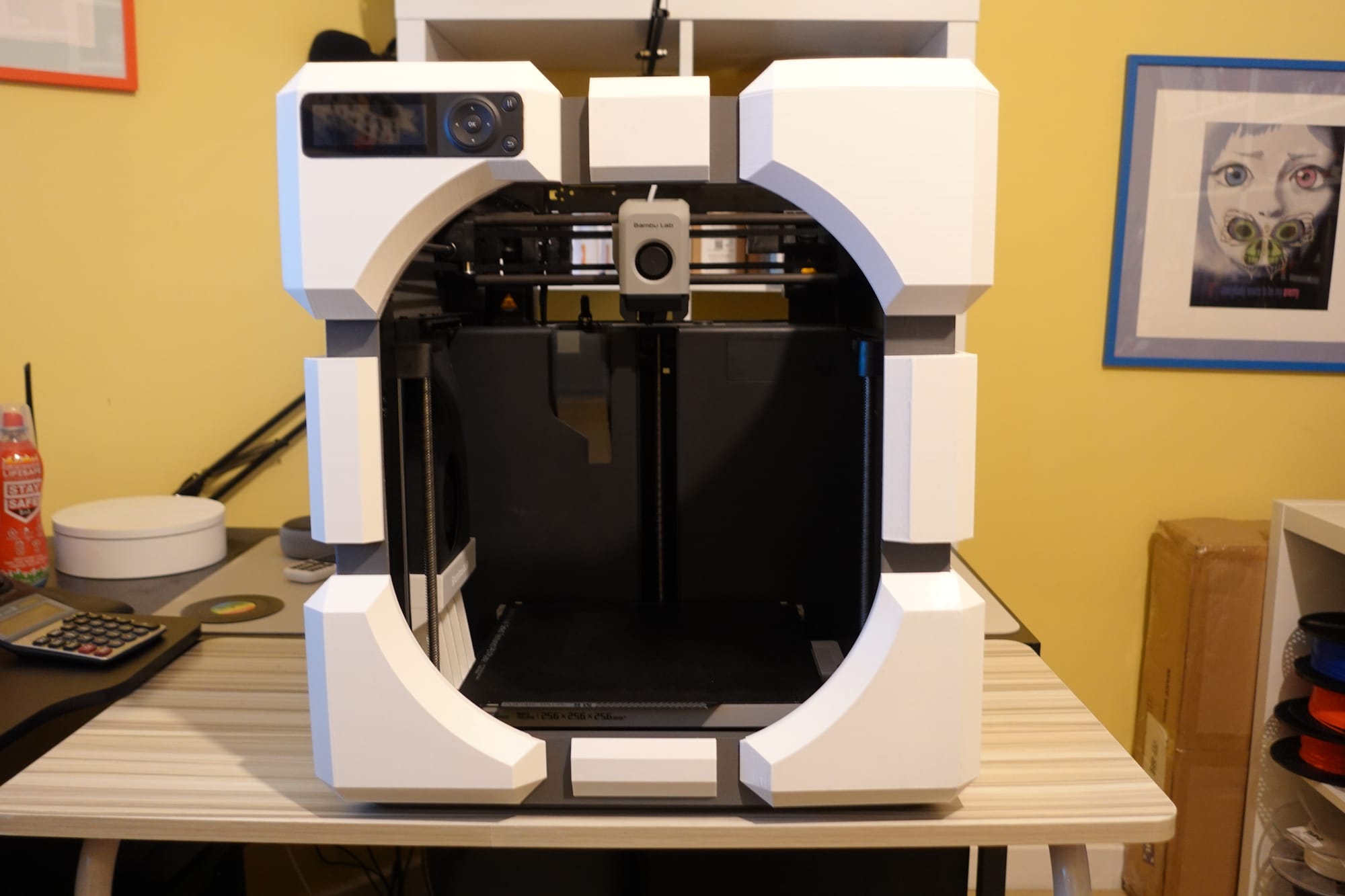
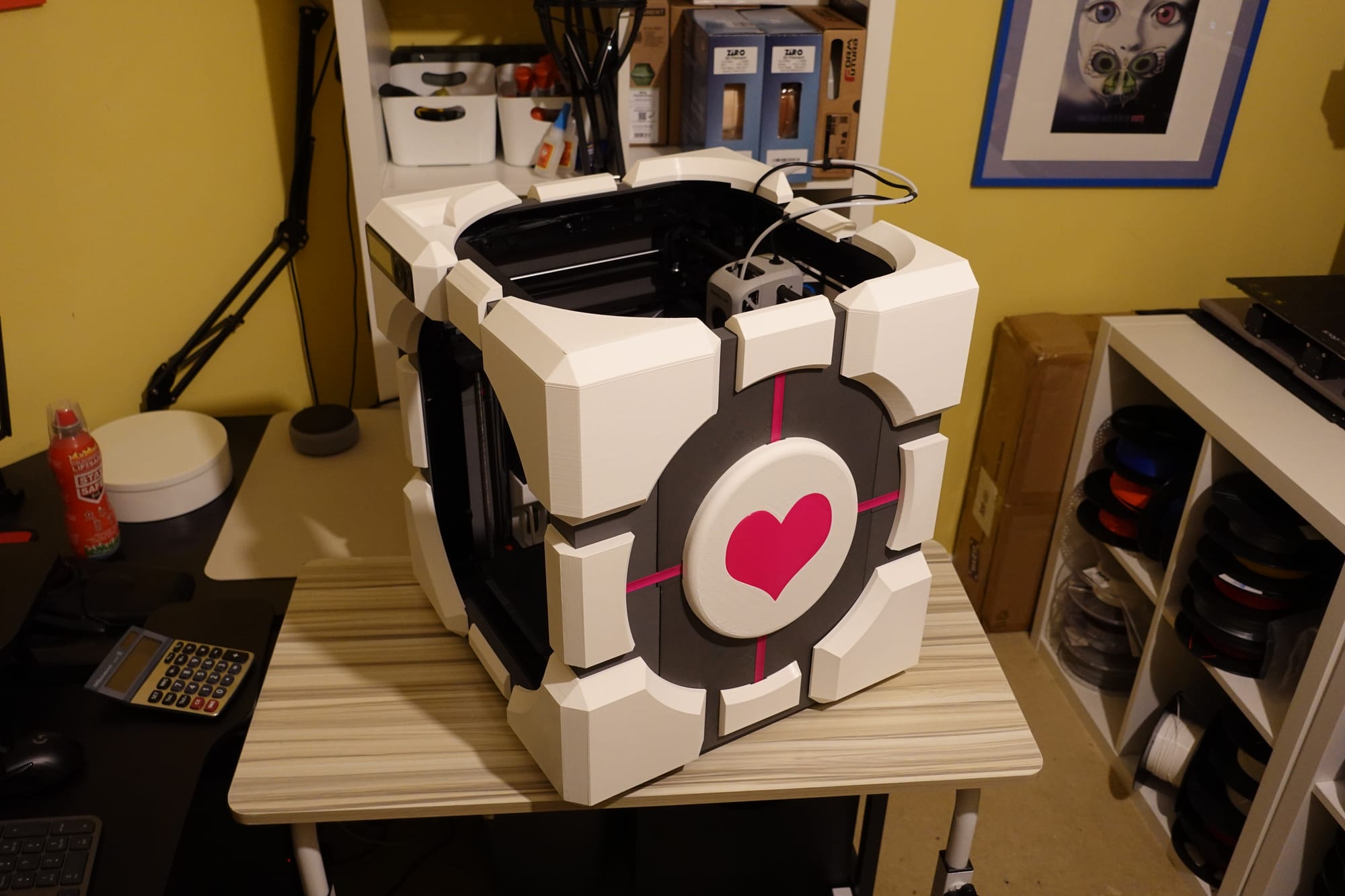
Companion Cube by neil3dprints
These mods, created in cooperation with Bambu Lab itself, are a testament to the maker spirit - they are labor-intensive, require several kilograms of filament and dozens of hours of printing, and their assembly is a project in its own right.
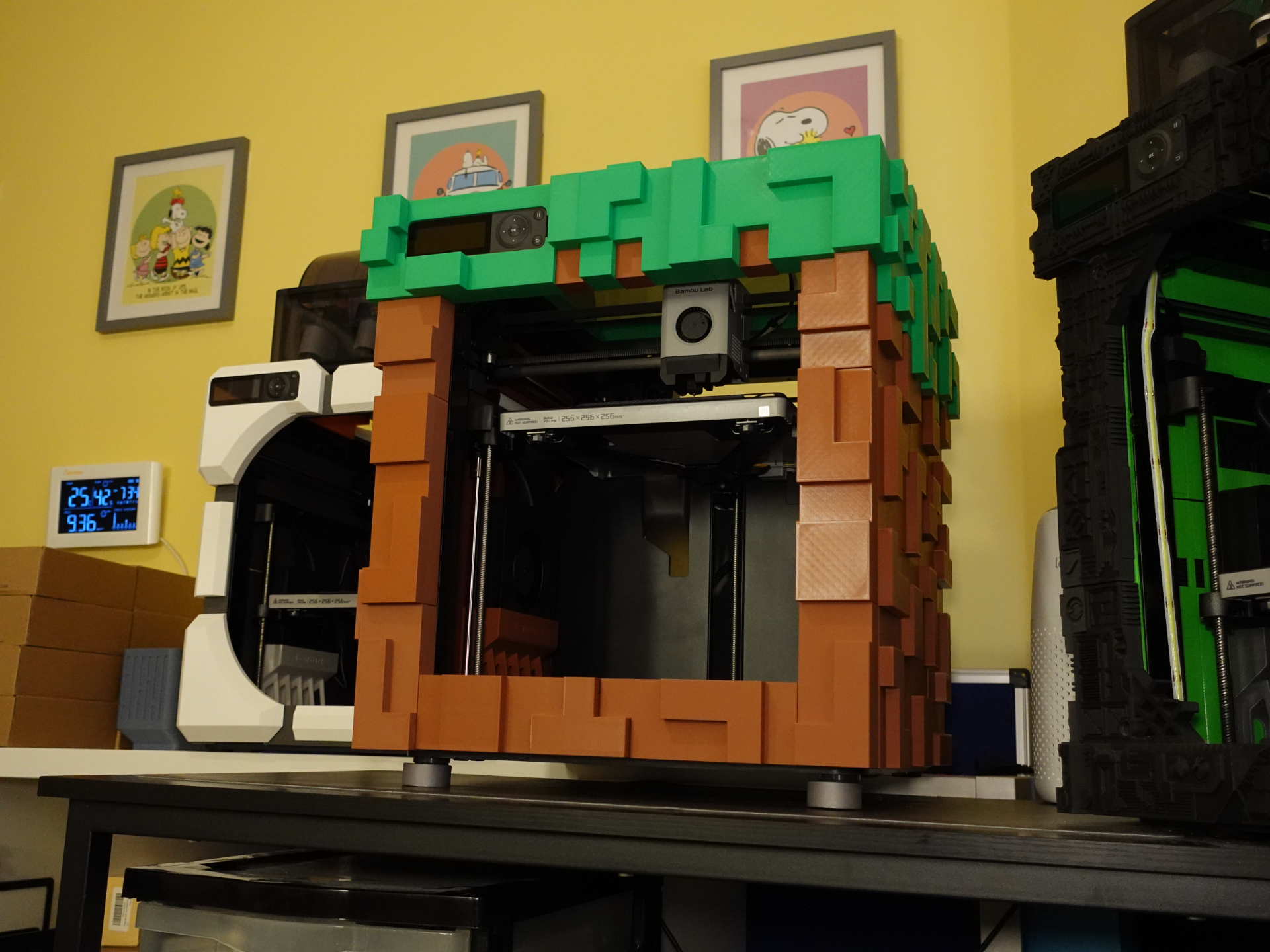
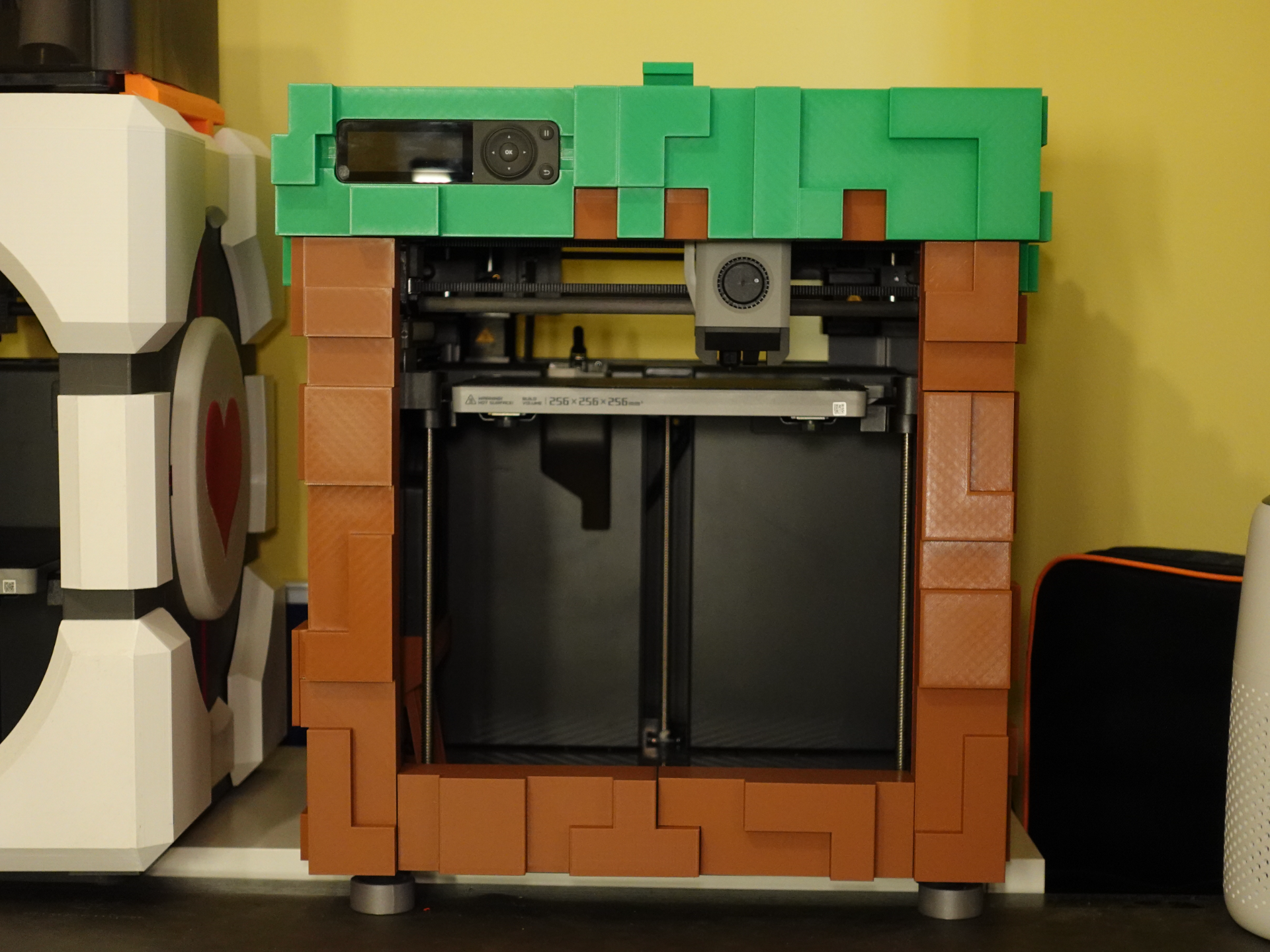
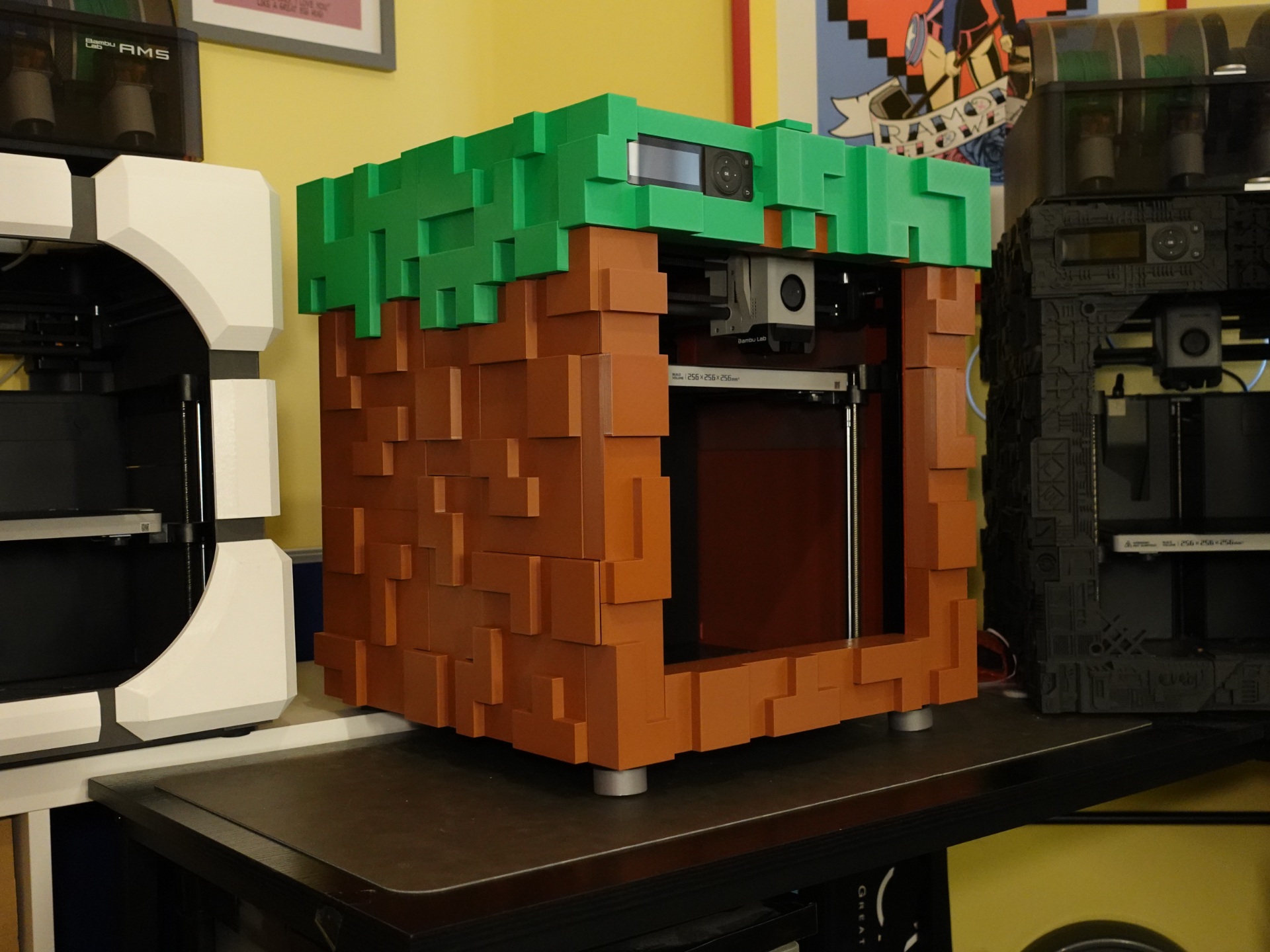
Minecraft Block by neil3dprints
What was crucial is that even such advanced modifications largely remained non-intrusive to the electronics, proving how well thought-out the base design of the P1P was.
It allowed for extensive visual changes without the need to interfere with the internal components or disassemble the machine.
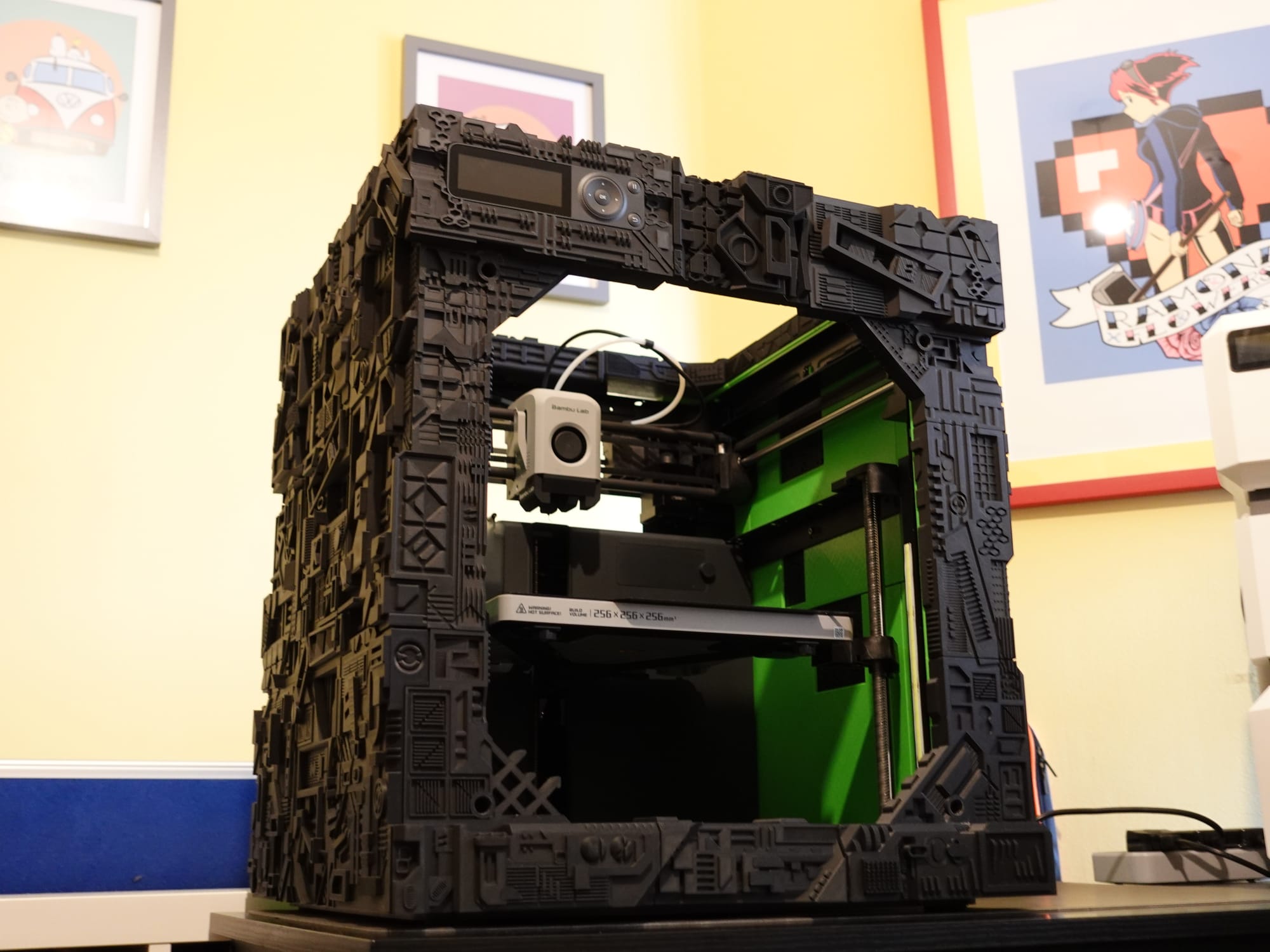
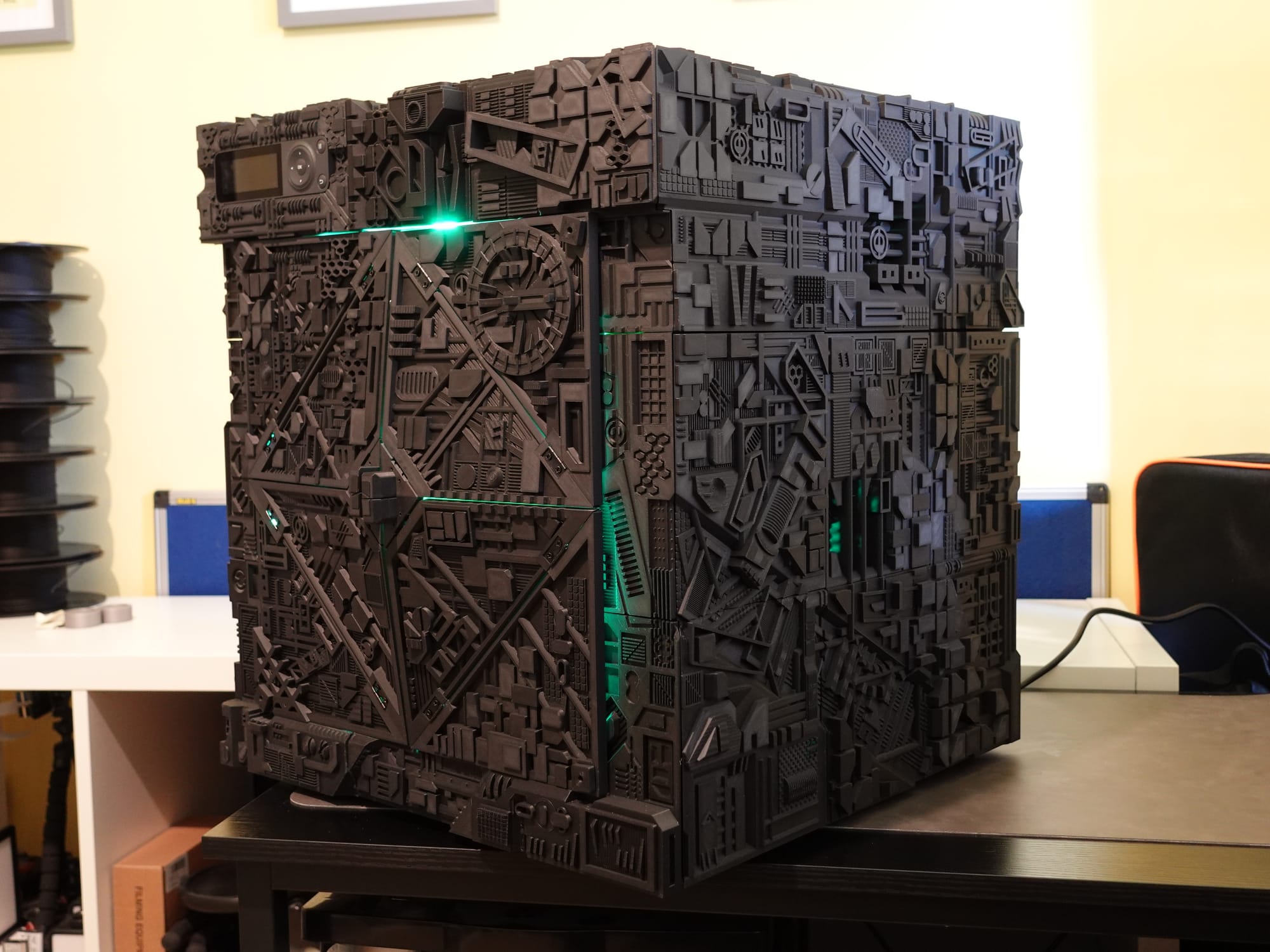
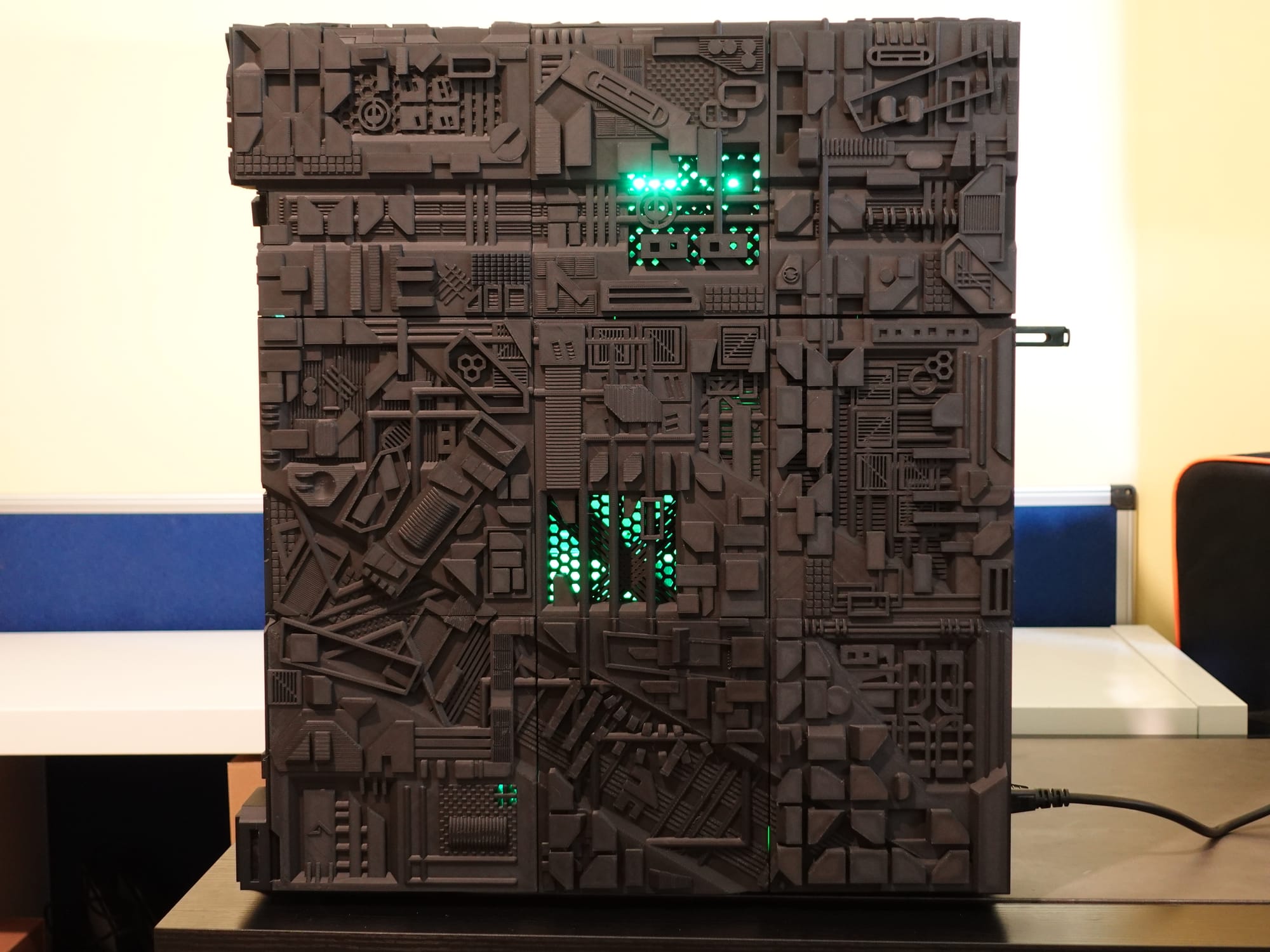
Borg Cube by neil3dprints
At the same time, a second stream of modifications developed, focused on functionality, performance, and durability. Here, users were not looking to change the appearance of the printer, but to “extract” more from it or adapt it to specific tasks.
This wealth of possibilities, from artistic transformations to engineering tune-ups, demonstrated the phenomenal flexibility of the P1P as a platform. The printer was not a closed, finished product, but a starting point for creativity and technical curiosity.
The community did not just use it - it actively co-created and redefined it, sharing projects that allowed each machine to become a personal showcase of its owner’s passion.
A farewell to an icon
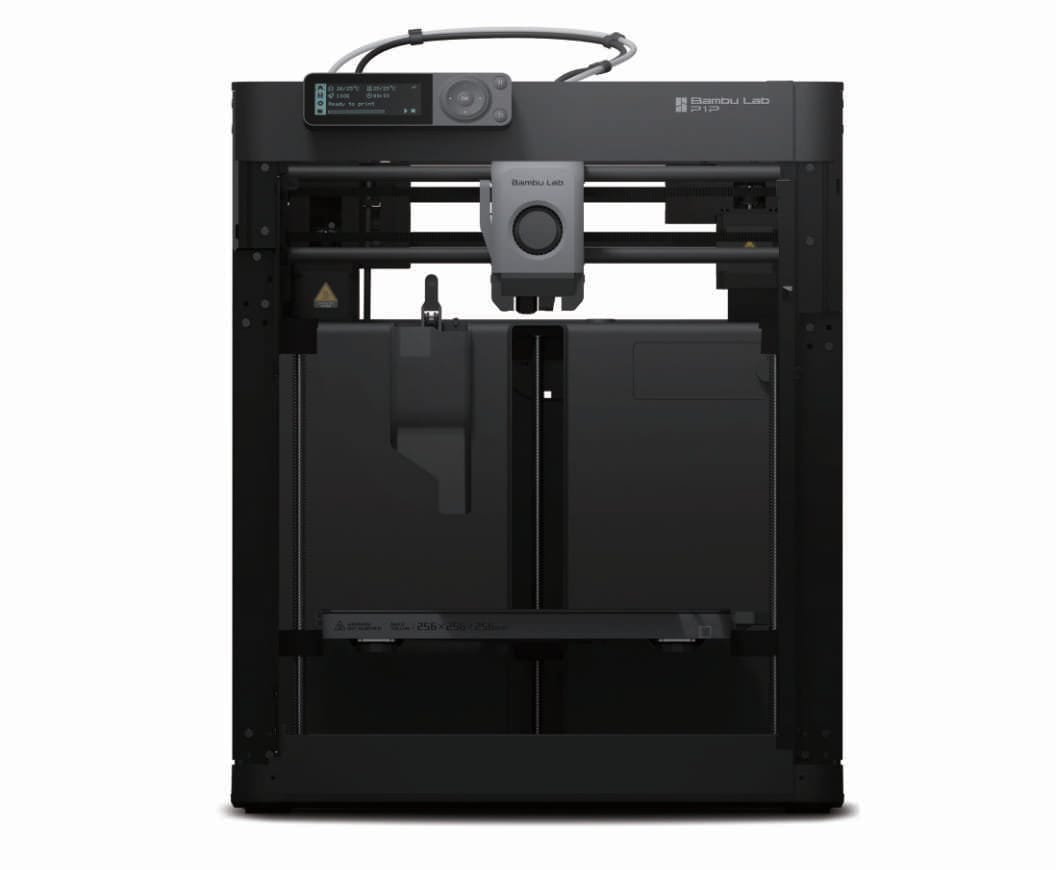
The decision to declare the P1P end-of-life is a natural business move. With the launch of the P2S, maintaining two P1-series models made less and less sense. Ultimately, the market itself decided, as consumers had long been choosing the P1S over the P1P, or opting for the newer and more advanced P2S.
But the end of the P1P’s life cycle does not mean the end of its story. Hundreds of thousands of units continue to operate around the world, producing parts, prototypes, and finished products.
For this reason, we will continuously provide technical support for 5 years service, until February 10th, 2031.
During this 5-year service period, related accessories will still be normally supplied through the official flagship store or other official channels. Most spare parts are interchangeable between the P1P and P1S, which will continue to be manufactured and sold.
However, please be advised, that some specific accessories may sell out early, so we recommend that you make your purchase in a timely manner.
We will also continue to provide P1P software and firmware updates:
- bug fixes and feature updates up to: 2027-11-14
- ensure security patches updates up to: 2029-11-14
After the end of the software upgrade support period, the same functions of Bambu Lab products will continue to be available until the end of the entire product lifecycle.
Five years of spare parts supply and technical support for the P1P, results in an eight-year product lifecycle.
For a consumer-grade 3D printer, this is an exceptionally long period that clearly exceeds typical market standards. It demonstrates that Bambu Lab follows a very responsible policy when it comes to after-sales support for discontinued products, providing users with long-term security and real value for their investment.