Bambu Lab P3C brings home its H3C technology at half the price
Flagship architecture, engineered for everyone. The Bambu Lab P3C is designed to offer the best value of any tool changer on the market.

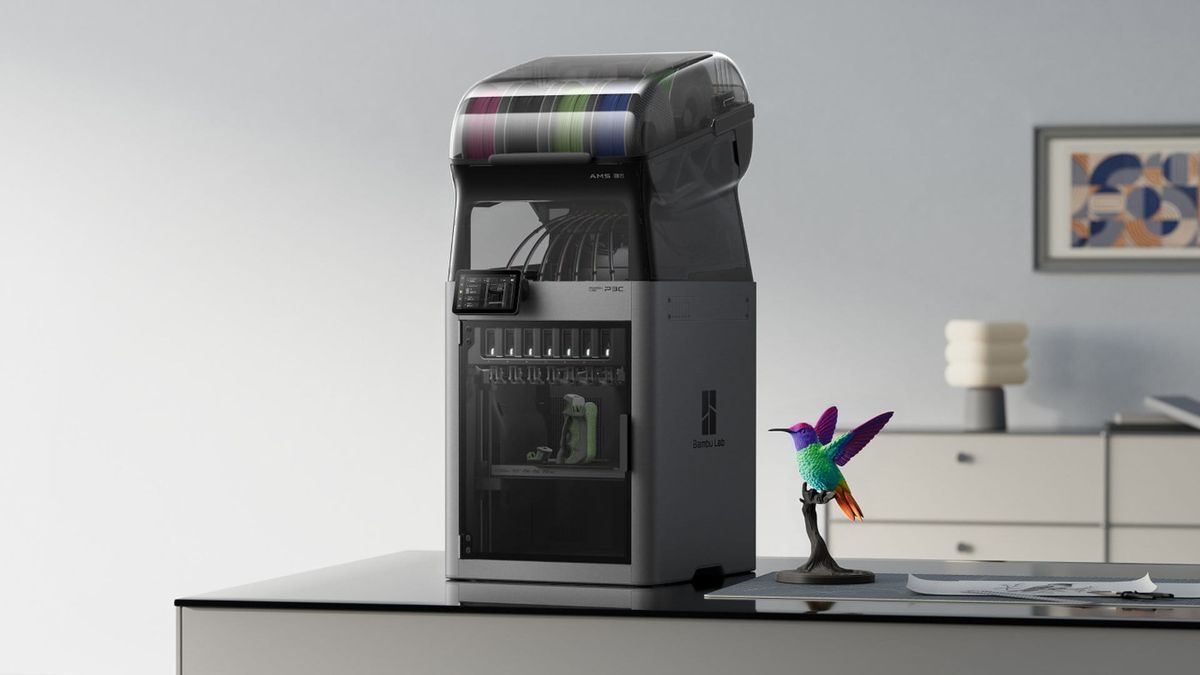
Bambu Lab introduces the P3C, a third-generation multi-material 3D printer that brings the flagship Swaptek™ tool-changing architecture of our H3C ($2,499) to your desk at half the price, starting at just $1,149.
The Bambu Lab P3C features a 7-slot Swaptek™ Tool changing system with 5 standard PrintTools pre-installed and 2 open slots for users to choose the ones they most needed, an integrated AMS 3P system, and a FlexFeed extruder supporting both 1.75 mm and 2.85 mm filament, with every material change taking just 6 seconds. It brings multi-material printing to a wider audience of creators who want to combine colors, materials, and processes in a single print.
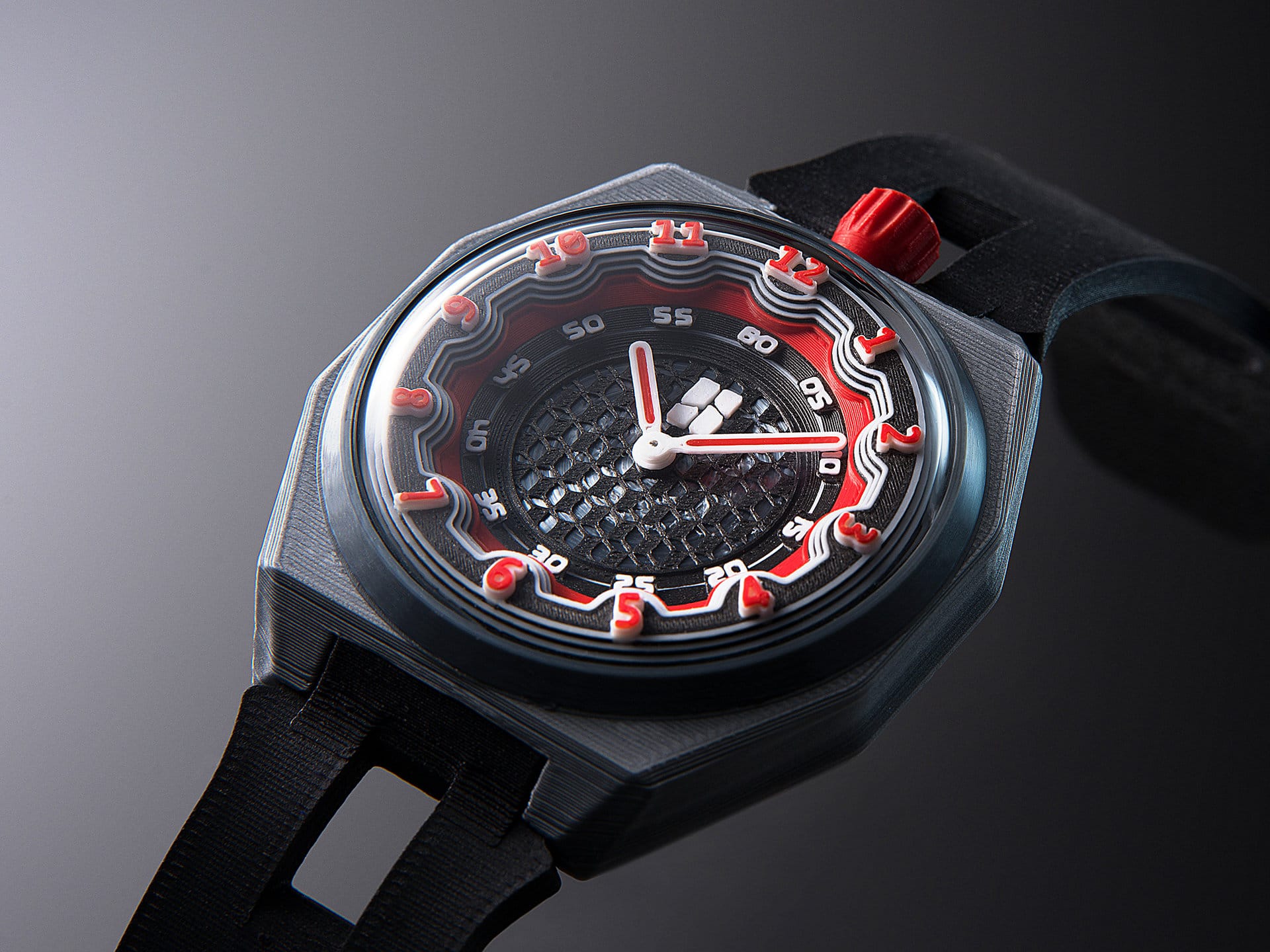
What does pro-grade tool-changing power actually look like in practice? A watch printed in one job.
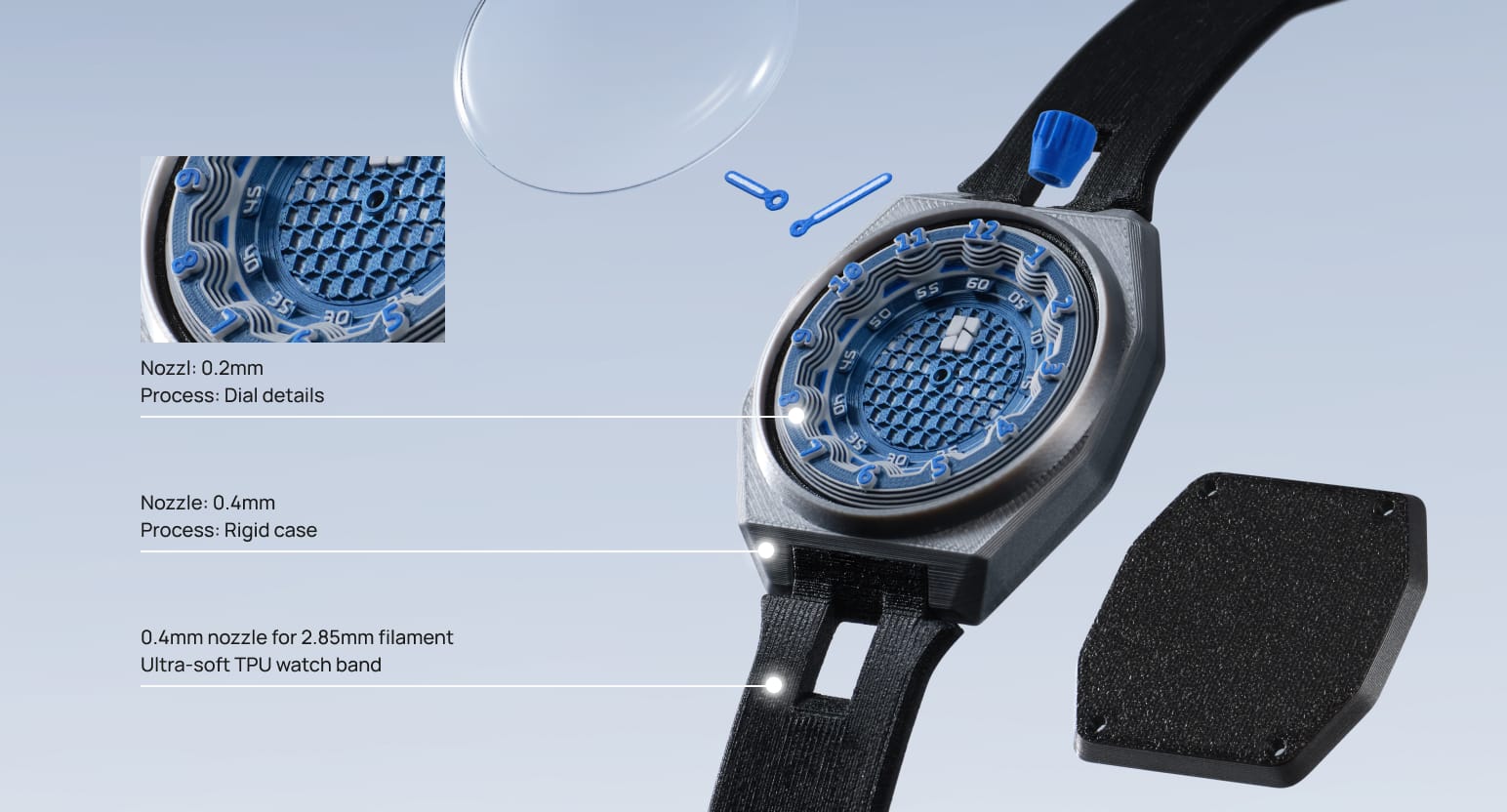
The dial, with its fine details, comes off a 0.2 mm nozzle. The rigid body is printed with a 0.4 mm nozzle, while the soft TPU strap uses another 0.4 mm nozzle, fed with 2.85 mm filament. The printer changes tools automatically. Every material change takes 6 seconds.
What multi-material printing unlocks
The watch is only the beginning. Projects like these once required several machines, manual tool changes, and a fair amount of patience. Today, each takes a single file sent to the P3C:
Less assembly
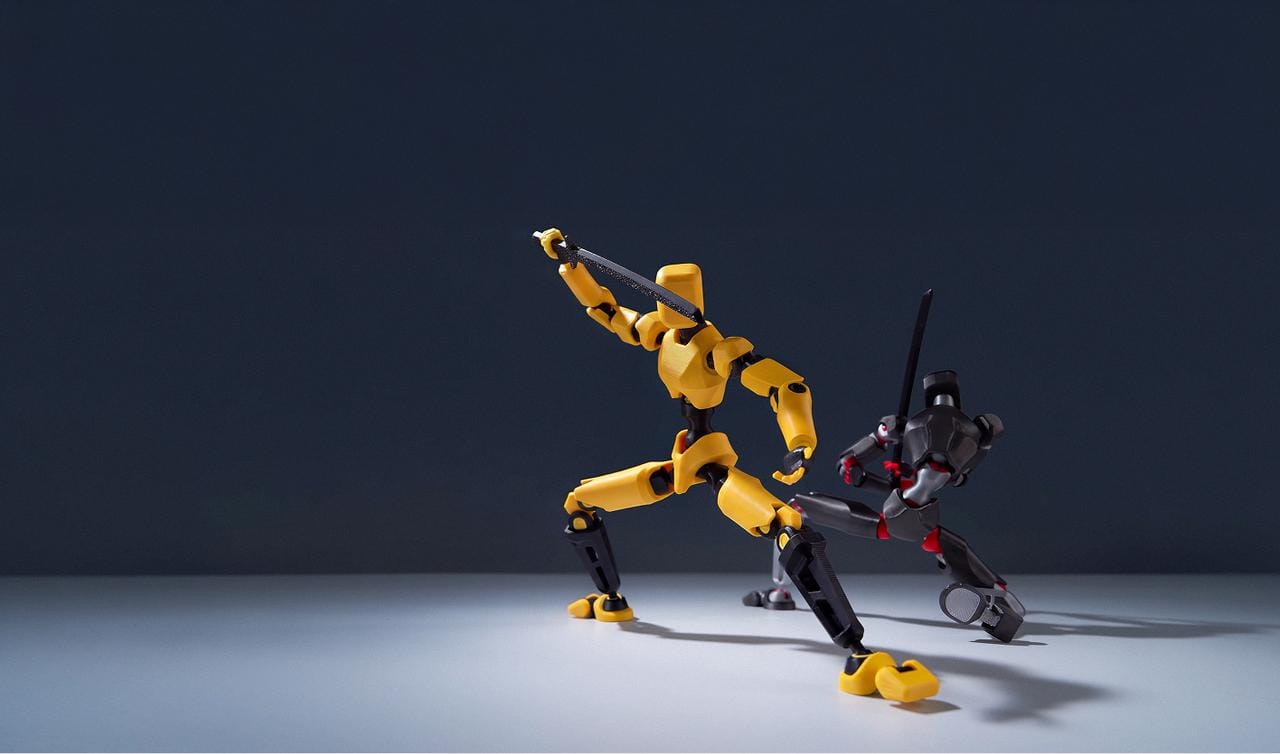
A robot printed in a single job, with every part in the color and material it needs. Its print-in-place TPU 75A joints mean it lifts off the build plate as a posable assembly: fewer separate components, no painting, and far less to put together.
Wearables, evolved
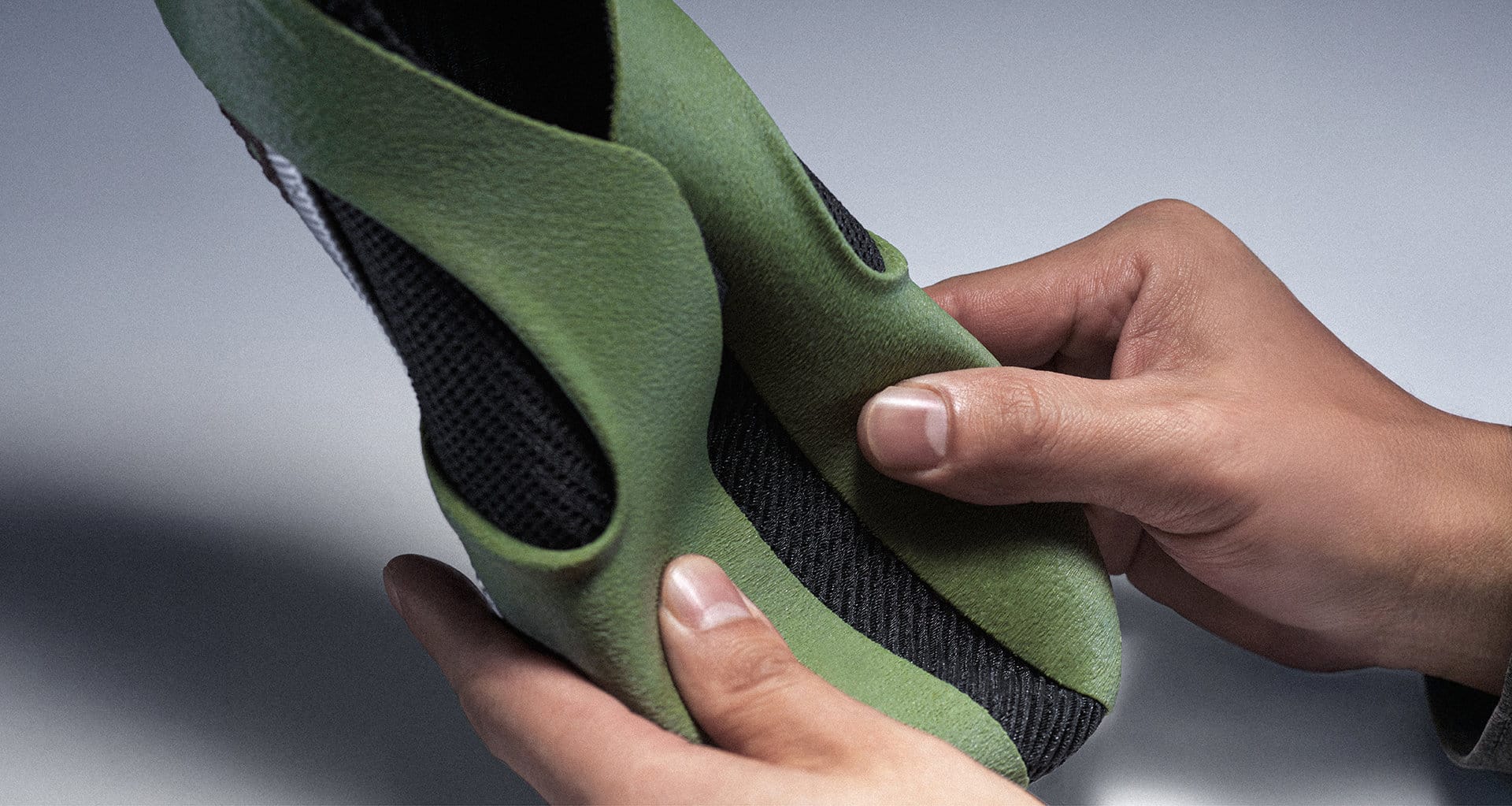
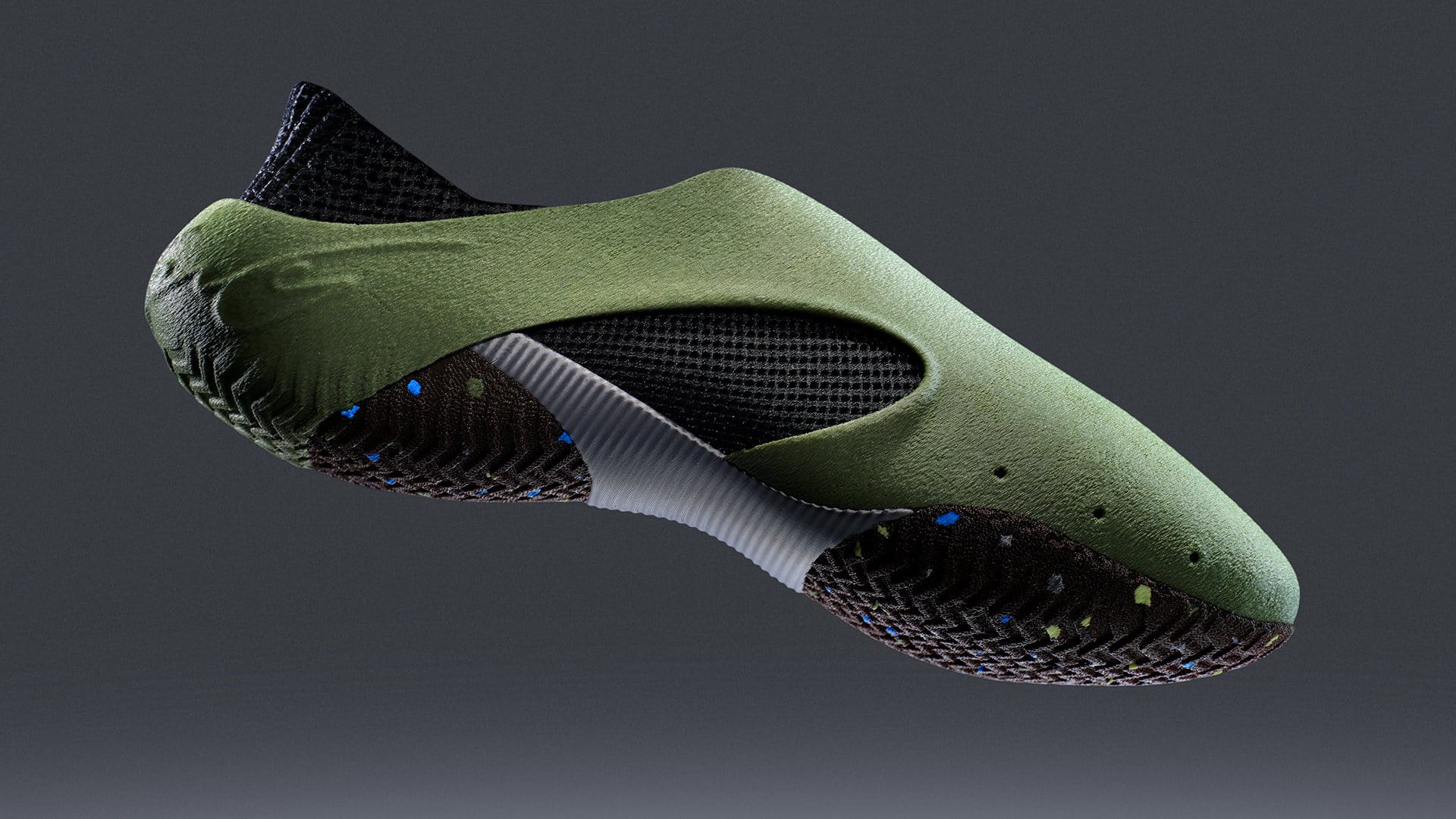
A shoe that combines TPU of different Shore hardnesses in one print, softer where it needs to flex and firmer where it needs support, in multiple colors. Until now, printing with flexible filament usually meant one material in one color.
AI-generated models made real
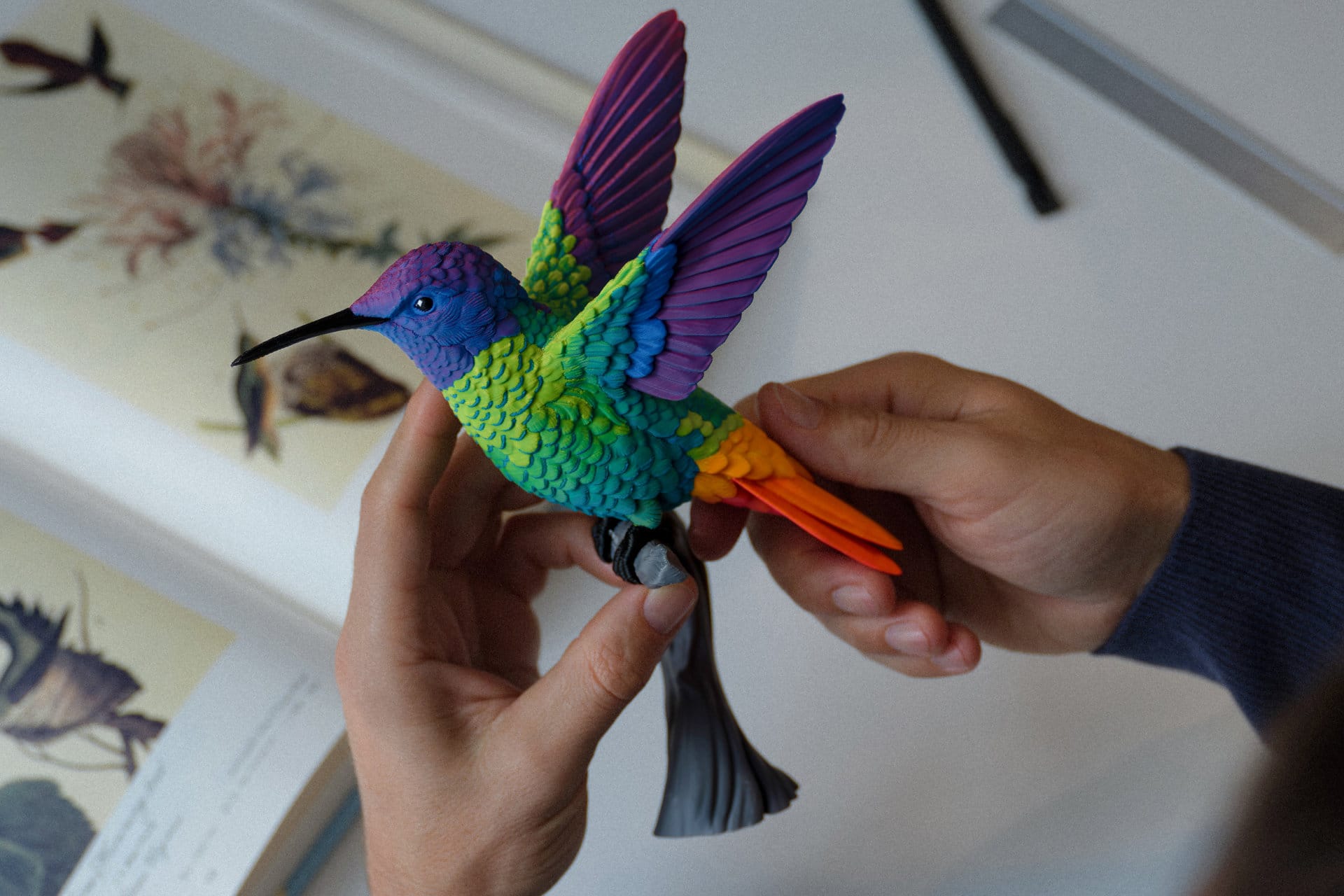
A bird designed with the help of AI, full of complex multi-color detail. Previously, models like this mostly stayed on screen: too many colors, too much purging, too much planning. On the P3C, it becomes an object you can hold.
Built for Everyone: who is the P3C for?

When we introduced the H3C a few weeks ago, we wrote that a new era of 3D printing begins where design meets genuine multi-material printing. We still believe that. But a new capability only starts changing reality when enough people have access to it.
The hobbyist maker
- Before: a multicolor print meant hours of tuning, planning every color change, and a waste bin full of purged filament.
- Now: choose your materials in Bambu Studio, send one file, and let the printer handle the rest.
The family creator
- Before: a child's idea for a toy with soft wheels and a sturdy body meant printing parts separately and putting them together.
- Now: rigid and flexible materials come off the build plate together, in one print.
The small studio
- Before: client prototypes were printed in pieces, often on different machines, then glued and painted by hand.
- Now: multi-color, multi-material prototypes in a single job, with CraftTools for cutting and embossing in the same workflow.
The print farm starter
- Before: multi-material jobs meant manual tool swaps, constant supervision, and purge waste that pushed up the cost of every part.
- Now: automatic tool changes in 6 seconds, minimal purging, and a setup you configure once and run in batches.
Inside Swaptek™: how we engineered a smarter tool changer
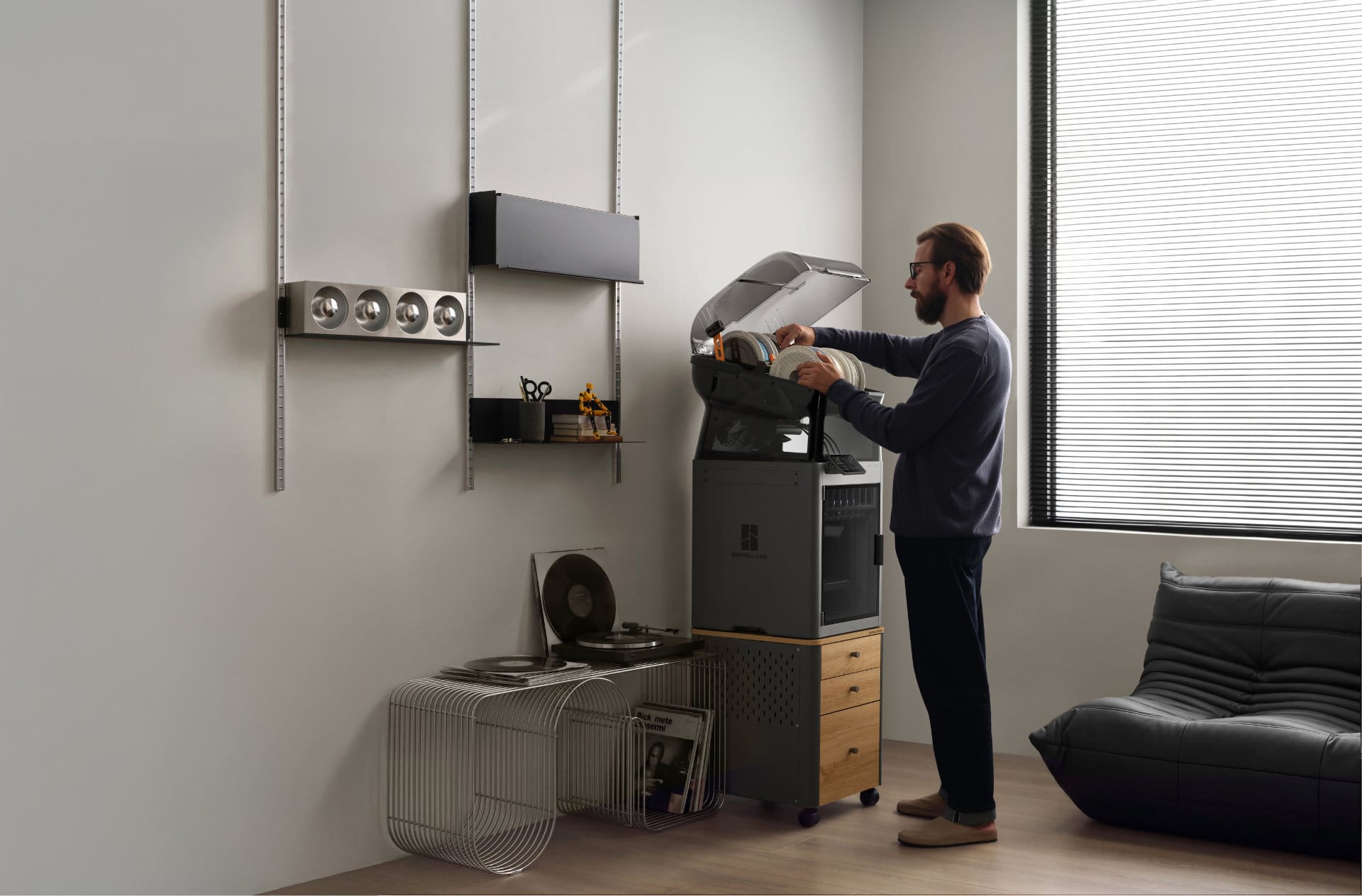
At first glance, tool-changing systems look similar. The difference lies in how much of the process each system actively controls.
Each PrintTool in Swaptek™ has its own filament path and heating system. Filament stays loaded in its dedicated tool, so there is no need to retract it before feeding the next material.
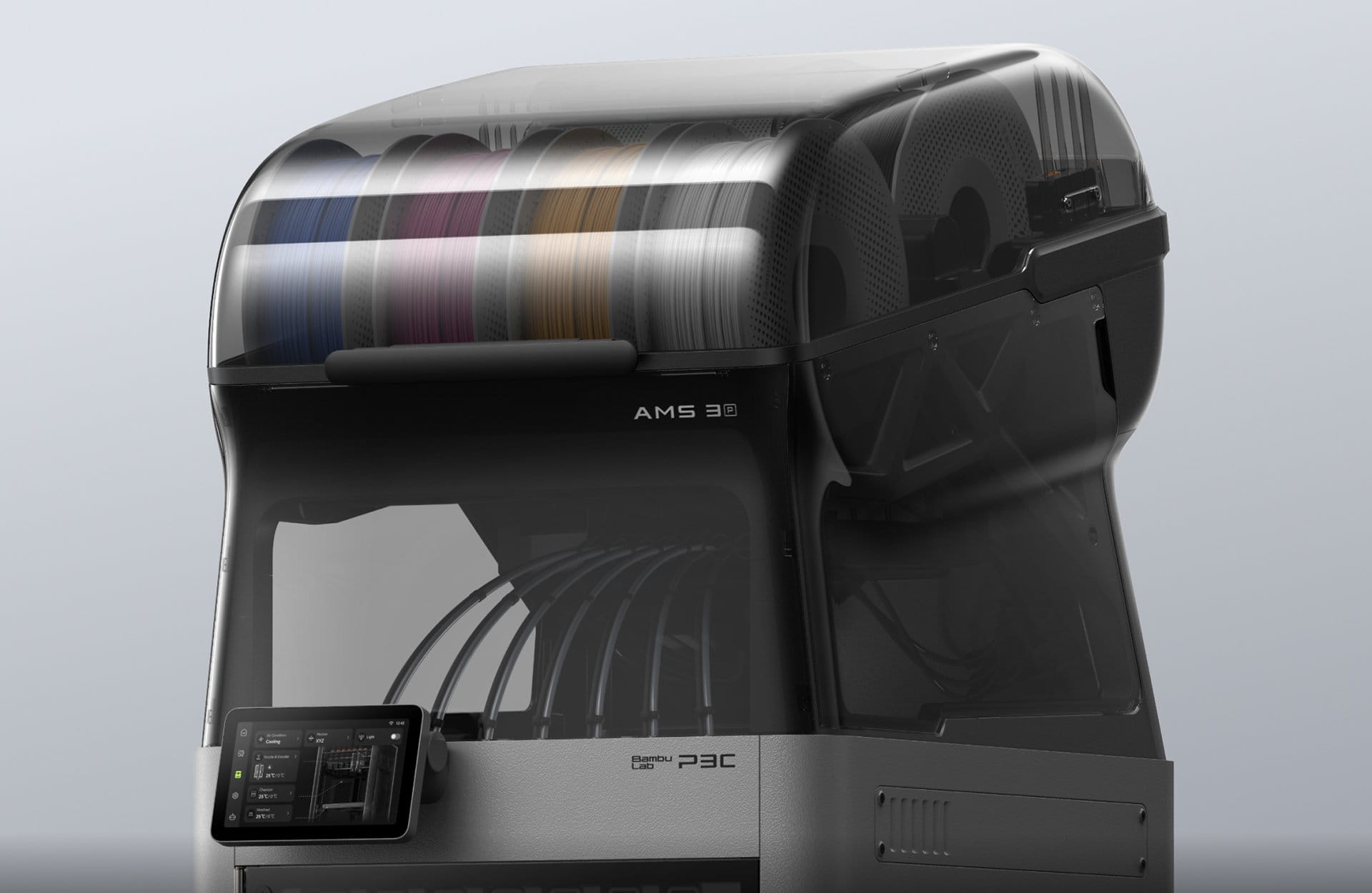
Every PrintTool in also has its own power and data connector. The system reads ahead to determine which tool will be needed next and starts heating its nozzle while the current tool is still printing, before the next tool even reaches the printhead. A dedicated contact sensor provides direct temperature readings. The new material reaches the model in just 6 seconds, with minimal purging. In contrast, systems based on passive mechanics only begin heating after picking up the tool and measure temperature using an infrared sensor, which is more susceptible to contamination.
FlexFeed is driven by a cam and a dedicated PMSM motor. Electronic control regulates the filament clamping force, addressing extrusion instability at its source. In fully mechanical solutions, the clamping force adjusts itself in response to extrusion force. The design is simpler, but direct control over filament pressure is more limited.
The retractable rack changes its position along the Z-axis as it delivers a tool to the printhead. Actively positioning both components during engagement maintains tighter tolerances than a fixed rack can provide.
Once retracted, the rack also moves the filament tubes away from the printing area, eliminating contact and vibrations that could compromise the model's surface finish. As a bonus, the front of the printer offers a clearer view of what's being printed (we know watching a model take shape is half the fun).
This design requires more mechanical components, and that is a deliberate choice. In return, you get faster switching and consistent results over extended periods of operation.
P3C vs. H3C: choosing your third-generation Bambu printer
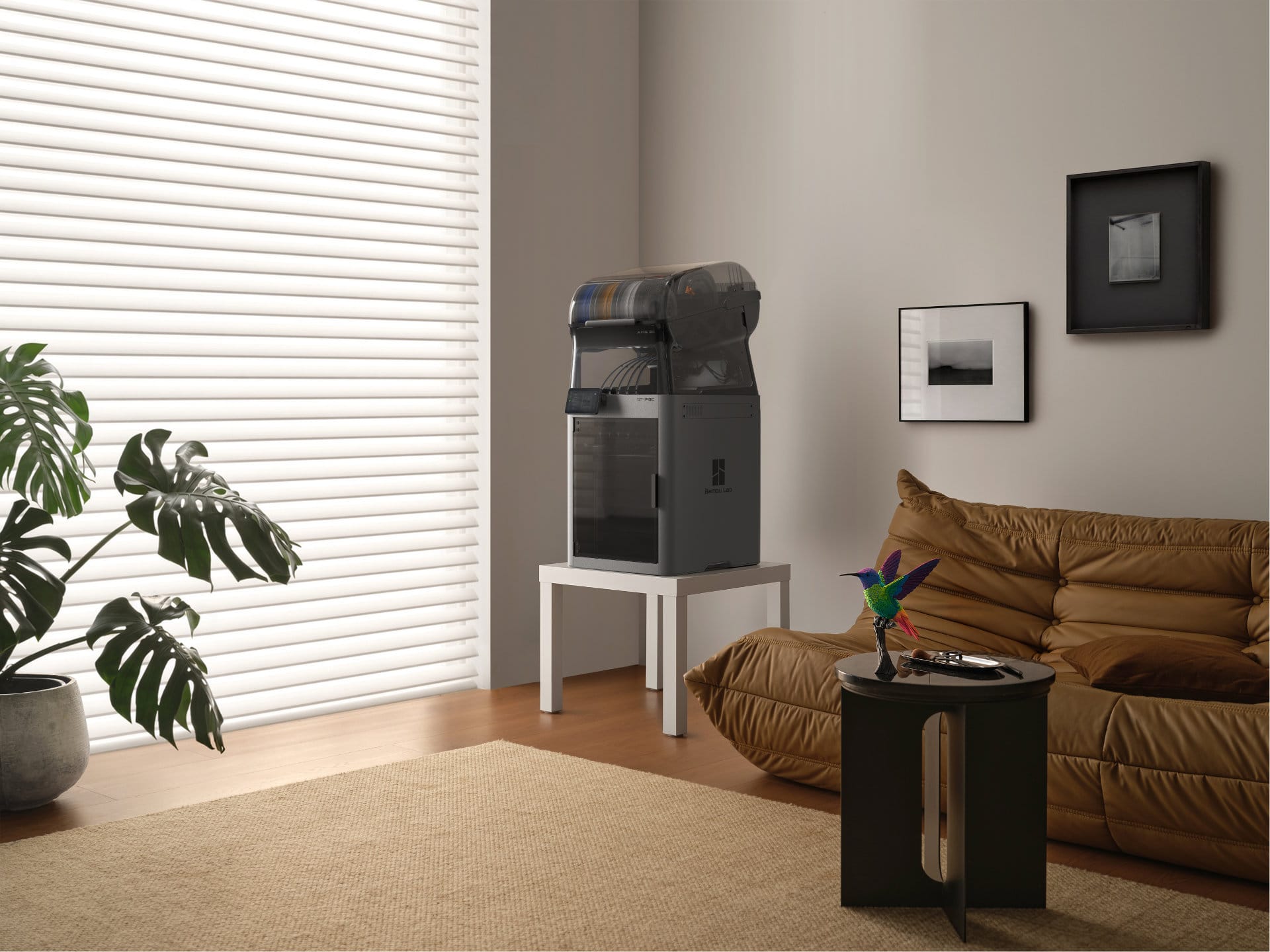
The P3C shares the exact same core and 6-second switching speed as the flagship H3C, streamlined for everyday desktop creators. Here is how the two compare:
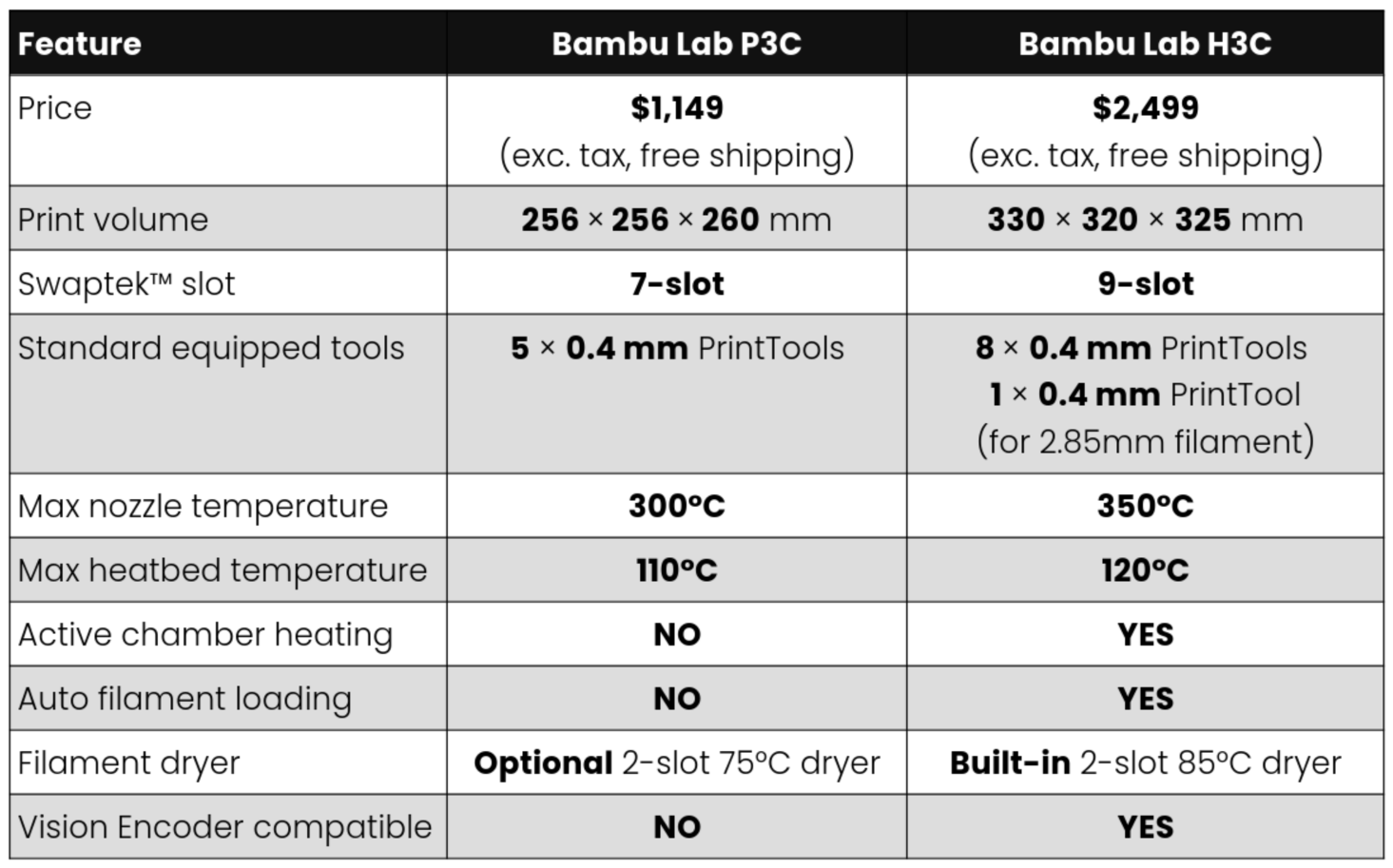
The P3C is designed to offer the best value of any tool changer on the market.
The P3C comes equipped with five PrintTool units, each featuring a 0.4 mm nozzle and a standard 1.75 mm filament path. Two additional open slots allow users to install more PrintTools, enabling the use of 2.85 mm flexible filaments or, more simply, expanding the printer's color capabilities.
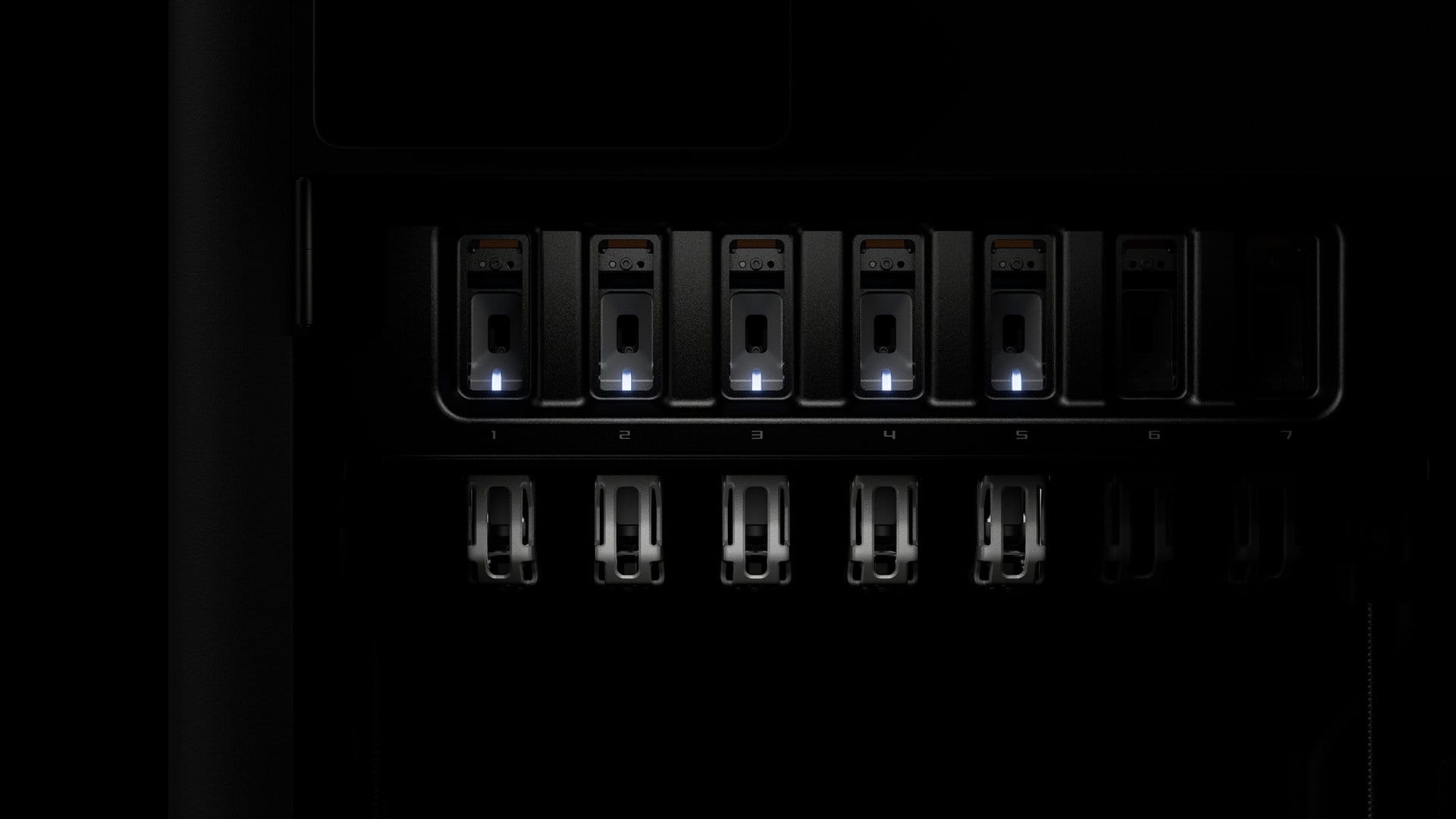
Nozzles in 0.2 mm, 0.6 mm, and 0.8 mm are available as optional add-ons. Every nozzle in the P3C is made of fully hardened steel with a hardness rating of HRC 55+, making it suitable for abrasive filaments, including carbon-fiber- and glass-fiber-reinforced materials.
And because the spools sit in enclosed compartments inside the integrated AMS 3P rather than on open, externally mounted holders, the P3C is well suited to humid environments.
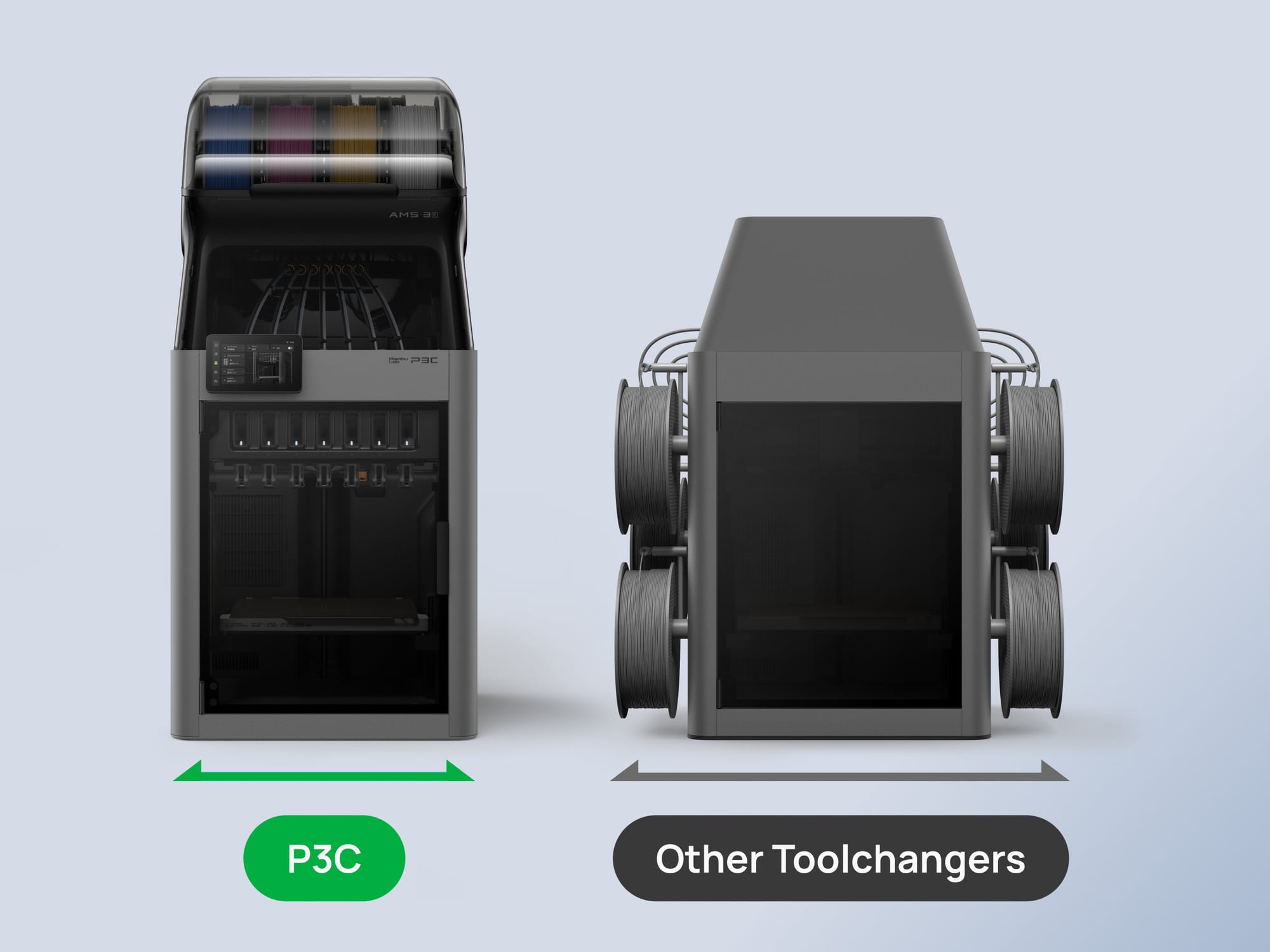
The printer is equipped with 2 additional open slots for users to choose their preffered tools, expanding overall capacity to 7.
If 7 materials are not enough, an optional buffer connected to PrintTool No. 1 allows you to attach up to 4 external AMS units. Together, they enable printing in up to 22 colors.
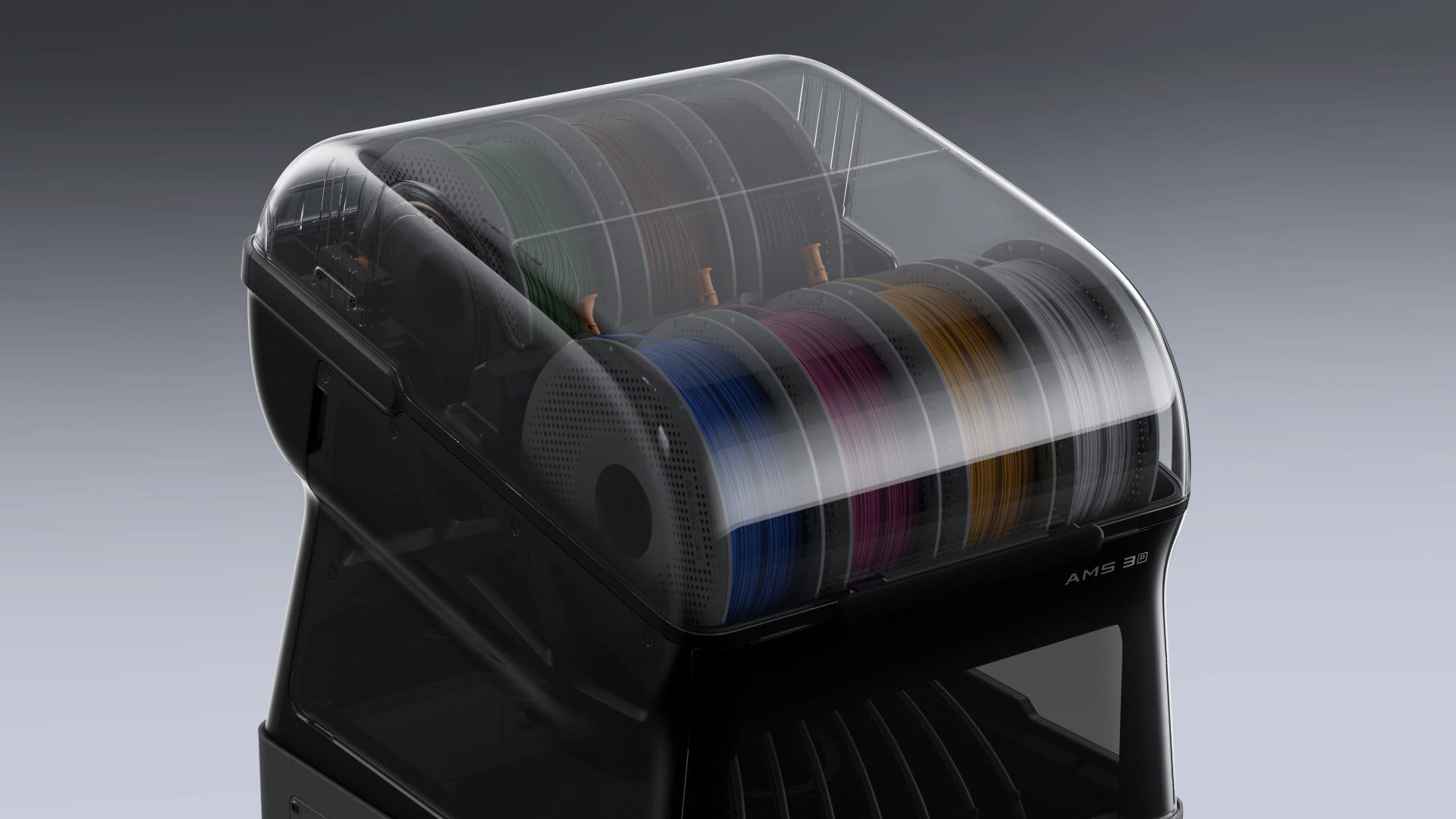
Every spool in the AMS 3P sits in an enclosed compartment that protects it from moisture. If your materials require it, you can add a drying module operating at up to 75°C, which dries filament in two slots simultaneously.
Why only two? Drying means many hours of operation at high temperatures, and every additional heater increases power consumption and the amount of heat generated inside the machine. Drying all 7 slots would significantly increase the hardware cost and complicate power distribution and temperature control.
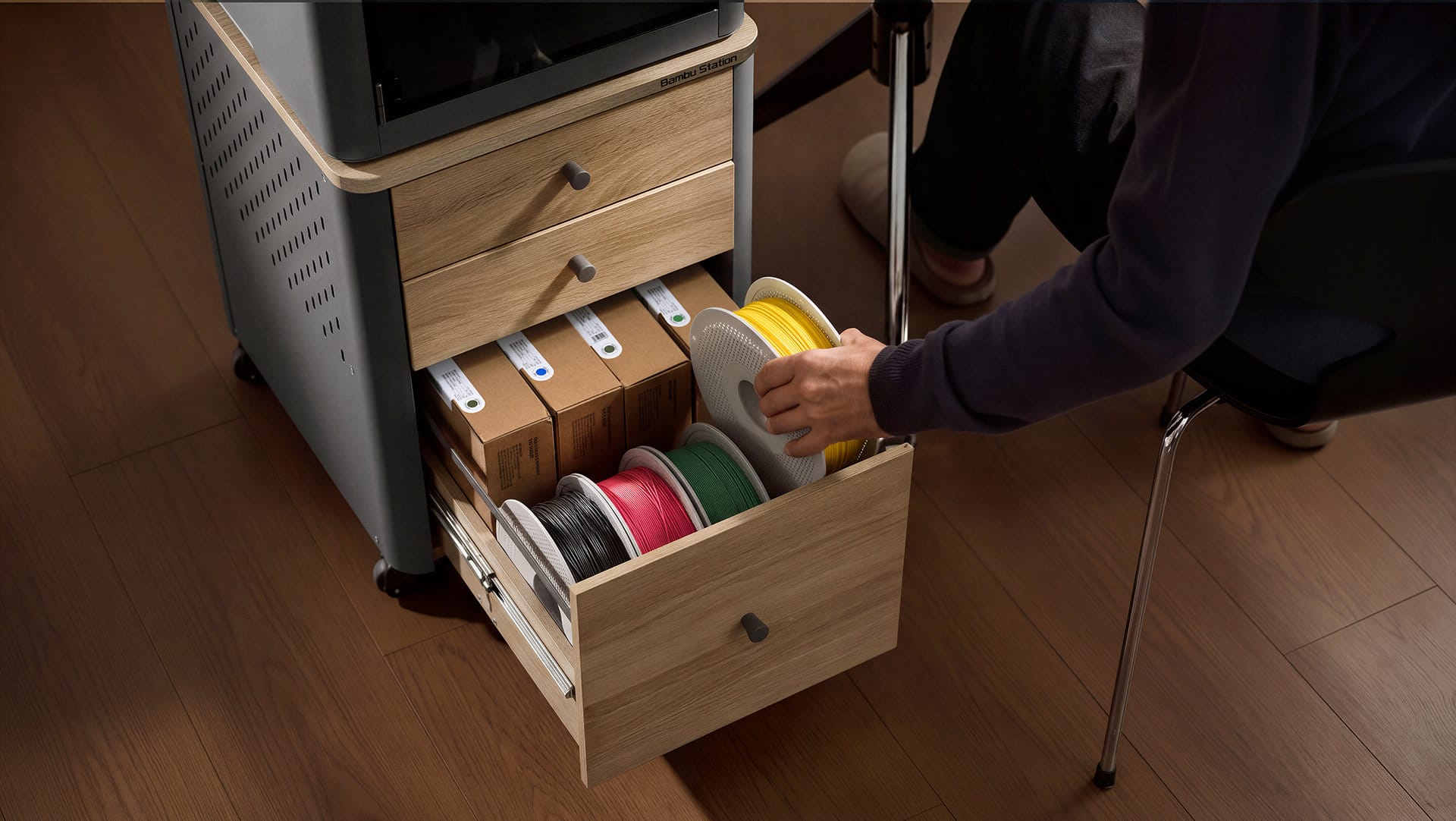
Customer feedback shows that two slots are sufficient for most everyday tasks, including drying one or two spools while printing. If you need to dry more spools, it is worth planning ahead and starting with the materials you will use first.
From the P1P to the P3C: 4 years of breaking the barriers
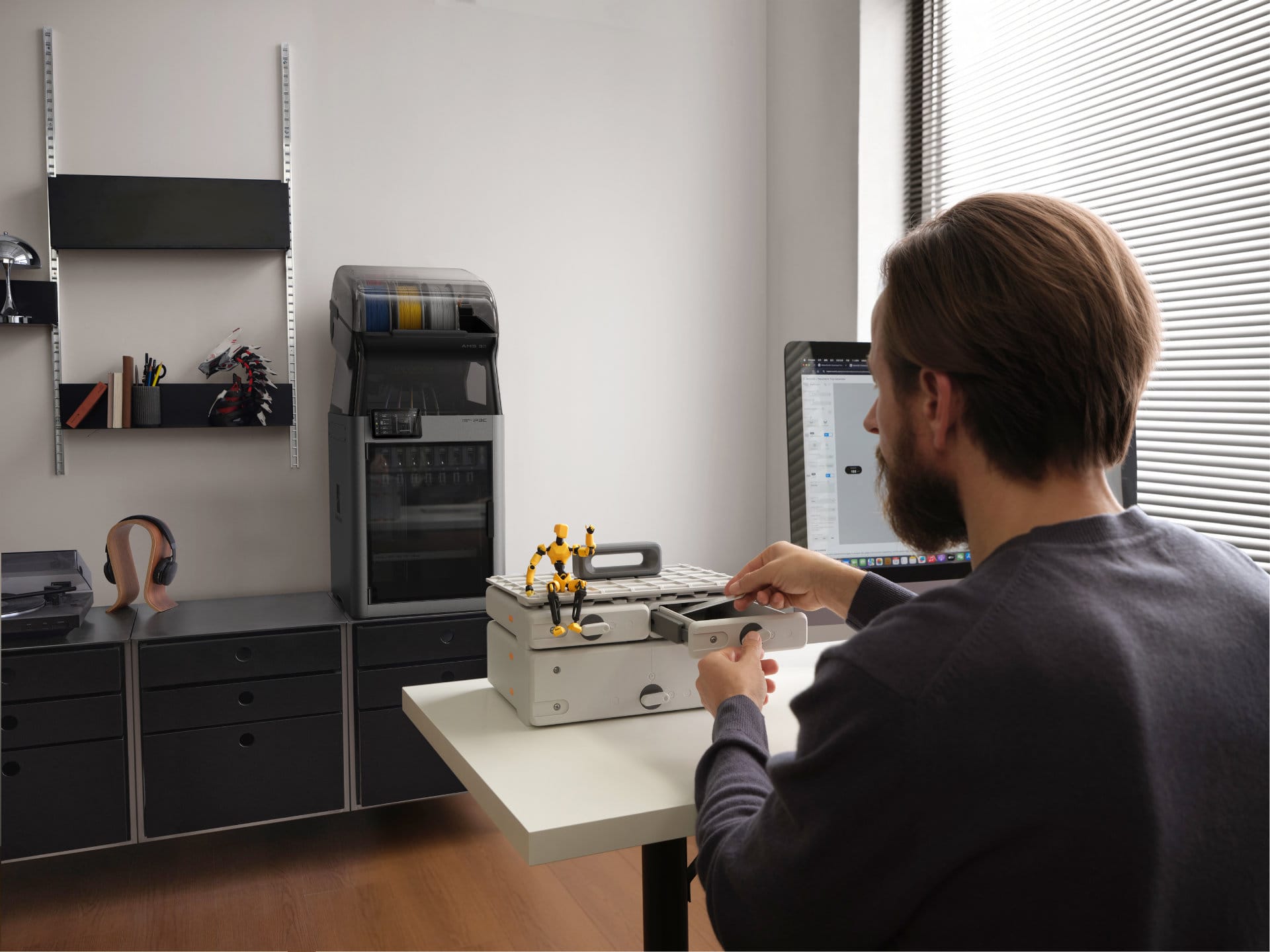
At Bambu Lab, making pro-grade technology accessible means solving three distinct barriers as engineering problems:
- Price: the most obvious hurdle to getting advanced hardware onto more desks.
- Knowledge: multi-material printing used to demand endless parameter tuning, color-change planning, and purge calculations. Without that expertise, creators were stuck with single-color prints.
- Confidence: when every print begins with worrying whether the first layer will even stick, people abandon ambitious ideas before they try.
Our philosophy is simple: keep the hard work inside the machine so you can focus on creating.
That mission began on Kickstarter in May 2022 with the X1 series, which paired unmatched speed and auto-calibration with the AMS for multicolor printing. Months later came our first real test of accessibility: the P1P. By keeping the X1’s core mechanics and motion algorithms while stripping away non-essential extras, we made high-speed printing affordable. Unexpectedly, users put thousands of P1Ps onto production floors running around the clock, blurring the line between hobbyist and professional forever.
Yet one problem remained that a single nozzle couldn't solve. A single-nozzle printer is like a painter with just one brush, before every color change, the brush has to be rinsed, sending purged filament straight to the waste bin.
So, our second generation started handing out more brushes. The H2D introduced dual nozzles; the X2D brought mechanical nozzle switching tested to over one million cycles; and the H2C pushed boundaries further with its wireless, induction-heated Vortek hotend system.
Those breakthroughs taught our printers how to switch tools rapidly and reliably, laying the exact foundation for third-generation Swaptek™ architecture, and bringing us to the P3C.
P3C technical specification
- Build volume: 256 × 256 × 260 mm
- Maximum Nozzle Temperature: 300°C
- Maximum Bed Temperature: 110°C
- Extruder Gear: hardened steel
- Included Nozzle Material: hardened steel
- Supported Nozzle Diameter: 0.2 mm, 0.4 mm, 0.6 mm, 0.8 mm
- Supported Filament Diameter: 1.75 mm, 2.85 mm (bypass feed only)
- Air Purification: HEPA Filter Grade H11
- Filaments Supported:
- PLA, PETG, PCTG, TPU, EVA, PE, PP, PHA
- PVA, BVOH, support filament
- ABS, ASA, HIPS, PA, PAHT, PC, PET, PPA
- PLA, PETG, ABS, ASA, HIPS, PA, PAHT, PC, PET, PPA carbon / glass fiber reinforced
- Filament Drying: optional
- External Dimensions: 413 x 538 x 540 mm
- Weight: 26.5 kg (including AMS 3P)
Prices:
P3C Combo
P3C + AMS 3P + 5 x 0.4 mm standard PrintTools (two slots left open for user customization)
$1,149 (excl. tax, free shipping)
£999 (incl. tax)
€1,149 (incl. tax)
P3C Multi-Colorist Combo
P3C Combo + 1.75mm PrintTool (×2)
Prices before December 3rd, 2026
$1,269 (excl. tax, free shipping)
£1,099 (incl. tax)
€1,259 (incl. tax)
Prices after December 3rd, 2026
$1,299 (excl. tax, free shipping)
£1,129 (incl. tax)
€1,299 (incl. tax)
The combo for anyone who prints in colour
2 additional PrintTools for you to fully experience the 7-tool multi-color printing.
P3C Printer and AMS 3P will be shipped in separate packages and may arrive at different times
P3C Colorist Combo (with filaments)
P3C Combo + 1.75mm PrintTool (×2) + PLA Basic Red + PLA Basic Bambu Green
Prices before December 3rd, 2026
$1,289 (excl. tax, free shipping)
£1,129 (incl. tax)
€1,289 (incl. tax)
Prices after December 3rd, 2026
$1,319 (excl. tax, free shipping)
£1,159 (incl. tax)
€1,319 (incl. tax)
The combo for anyone who prints in colour
2 additional PrintTools for you to fully experience the 7-tool multi-color printing
P3C Printer and AMS 3P will be shipped in separate packages and may arrive at different times
P3C Multi-Material Combo (with 2.85 mm TPU PrintTool)
P3C Combo + 1.75mm PrintTool + 2.85mm PrintTool + TPU 75A (Grass Green)
Prices before December 3rd, 2026
$1,299 (excl. tax, free shipping)
£1,149 (incl. tax)
€1,299 (incl. tax)
Prices after December 3rd, 2026
$1,319 (excl. tax, free shipping)
£1,159 (incl. tax)
€1,319 (incl. tax)
The combo for anyone who prints in colour
2 additional PrintTools for you to fully experience the 7-tool multi-color printing
P3C Printer and AMS 3P will be shipped in separate packages and may arrive at different times.
P3C Complete Experience Combo
P3C Combo + 1.75 mm PrintTool + 2.85 mm PrintTool + PLA Palette CMYKW filament + TPU 75A (Yellow) + E1 Air Purifier + Bambu Lab Station
$1,699 (excl. tax, free shipping)
£1,499 (incl. tax)
€1,699 (incl. tax)
The complete way to start with P3C: the printer & PrintTools, the materials to push it, and the space around it.
2.85 mm filament PrintTool for 75A TPU - the softest TPU most printers won't touch, printed reliably at up to 3× the flow rate on P3C.
PLA Palette CMYKW - a full spectrum from as few as five base filaments, mixed layer by layer. Your palette is no longer limited by your slots.
Bambu Lab E1 Air Purifier - syncs with P3C and filters from the moment printing begins, capturing what you can smell and everything you can't: VOCs, PM 2.5, and the microplastics released during printing.
Bambu Station - lifts P3C to a comfortable working height, with storage underneath for tools, spare filament, and print essentials. Industrial-grade castors lock the whole setup in place.
P3C Printer and AMS 3P will be shipped in separate packages and may arrive at different times.