Faster robot iteration with Bambu Lab technology at the University of Michigan
How Bambu Lab 3D printers enabled Michigan Task-Based Robotics to accelerate design, iteration, and competition-ready manufacturing


Until recently, the process of creating physical components was one of the greatest constraints in designing technical devices. Producing even small parts required access to specialized workshops, expensive materials, and the time needed to prepare tooling and manufacture details.
For academic or student teams, this often meant the need for compromises - projects had to be adapted to manufacturing capabilities, rather than the other way around.
As a result, many ambitious concepts remained at the stage of sketches or computer simulations, never progressing to real-world testing.
The development of 3D printing technology has significantly changed this situation. Modern 3D printers make it possible to produce functional parts with complex geometries, optimized for weight, strength, and cost.
Moreover, the growing availability of increasingly intuitive design and production tools means that 3D printing is becoming a natural part of the design process - from the initial idea all the way to the finished product. In educational environments, this is particularly important, as it enables students not only to learn theory but also to acquire practical engineering skills.
Student robotics is one of the best examples of a field where this approach delivers tangible results.
Teams operating at universities often function like small technology startups - they design systems, test them in competitive settings, and continuously refine their solutions in response to new challenges.
A key factor here is the ability to iterate rapidly, meaning to improve designs repeatedly within a short time frame. An excellent example of this approach can be found at The University of Michigan, where student robotics projects combine education, competition, and technological innovation.
One such initiative is Michigan Task-Based Robotics - a team that demonstrates how modern manufacturing technologies can translate into a real acceleration of the robot design and development process.
Michigan Task-Based Robotics
Michigan Task-Based Robotics is a 53-member, student-run organization at the University of Michigan that designs and builds competitive VEX robotics systems.
The team brings together students from engineering, liberal arts, and business disciplines, combining mechanical design, software development, and operational planning within a single organization.
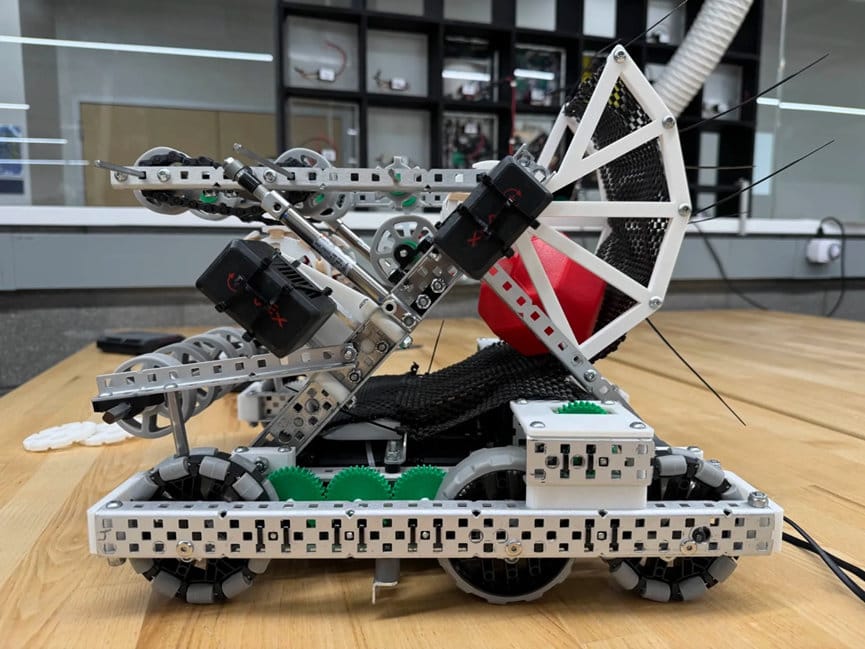
Over several years, the team has transitioned experience gained in high school robotics competitions into a more demanding collegiate and commercial robotics environment, while also maintaining a strong commitment to STEM outreach through tournaments and workshops in Detroit public schools.
Competition is central to the team's work. During a single season, Michigan Task-Based Robotics competes at collegiate events across the United States, participates in international tournaments in Canada and China, and represents Team USA at the VEX Robotics World Championship.
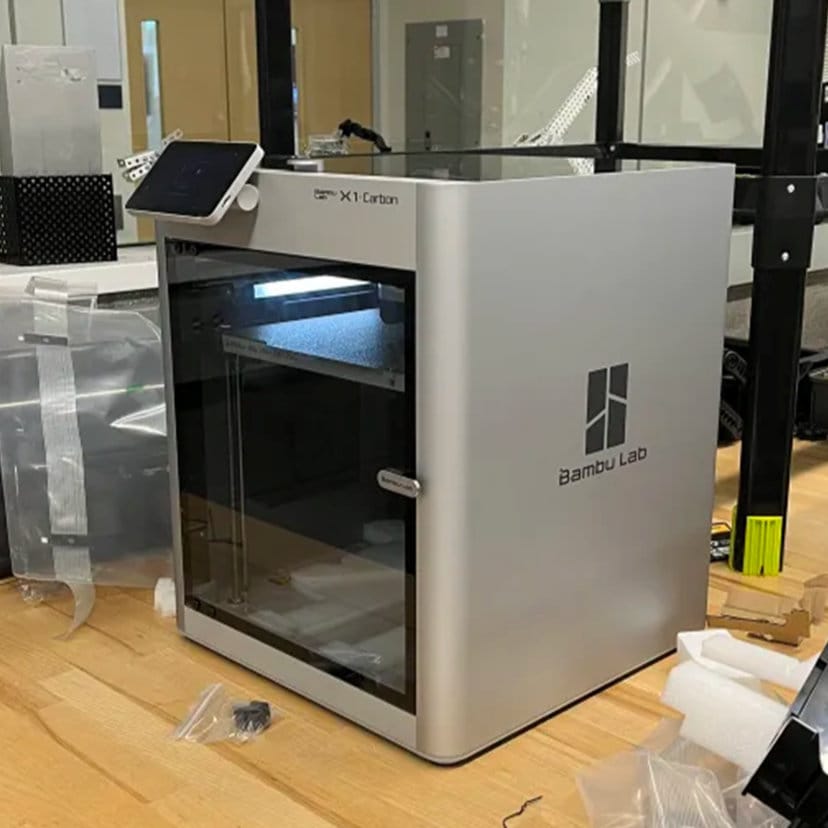
To support this pace, the team relies heavily on in-house manufacturing, including 3D printing for both robot components and presentation materials.
Challenges faced before adopting Bambu Lab technology
Before using Bambu Lab printers, the team primarily relied on their own old version's FFF printers and other university-available 3D printers. While accessible, these machines often produced inconsistent results and required significant time investment to calibrate and maintain.
Team members spent considerable effort "dialing in" printers before they could reliably produce usable parts, which slowed iteration cycles and reduced confidence in printed components.
As a result, 3D printing was treated as a limited tool rather than a foundational part of the design process.
Certain components were avoided entirely because the variability and surface quality of prints made tchem unsuitable for high-speed or high-torque applications on the robot.
Bambu Lab solution
The introduction of Bambu Lab printers marked a shift in how Michigan Task-Based Robotics approached manufacturing.
Ease of use and print consistency allowed 3D printing to move from a secondary option to a core part of prototyping and production. New team members were able to onboard quickly, design parts, and begin printing with minimal training, reducing bottlenecks during peak development periods.
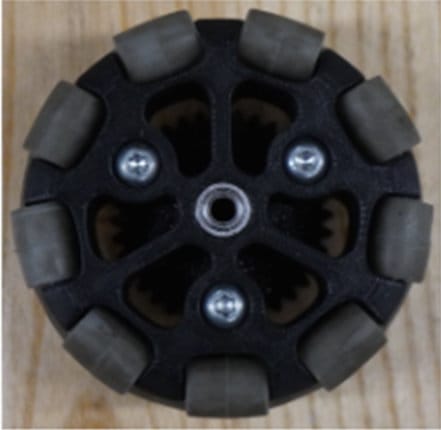
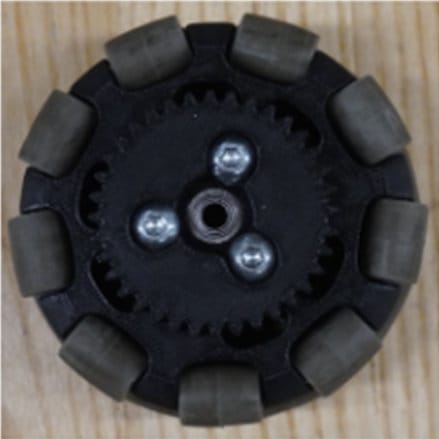
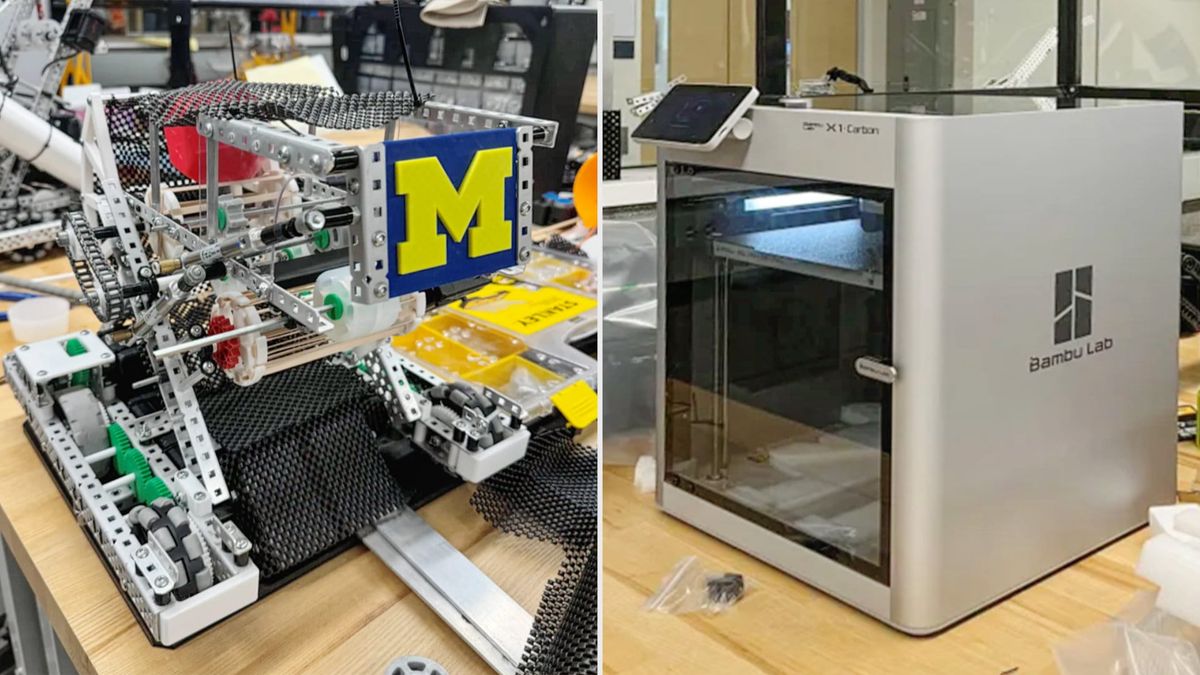
The 3D-printed robot wheel sets precisely manufactured by Bambu Lab
The team primarily uses standard PLA for early prototyping to ensure dimensional accuracy and repeatability. For final components, PLA-CF is used to achieve improved strength while maintaining low weight. This material strategy enables designs that would be difficult or impractical using traditional metal manufacturing, expanding what the team can build within competition constraints.
Process optimization and technical results
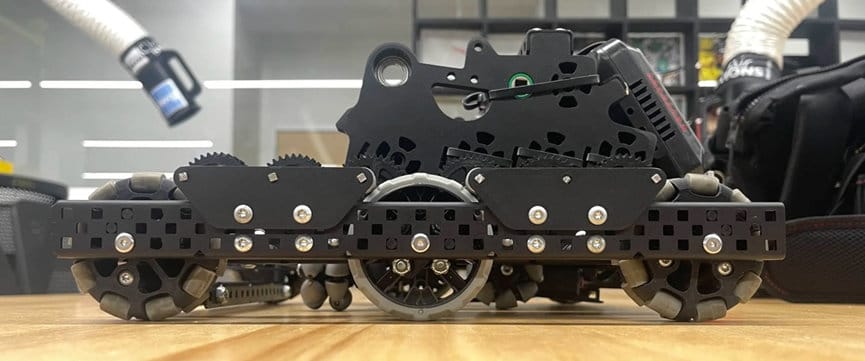
Beyond material selection, the team invested time in refining slicing and post-processing techniques. Gear development became a focal point, as earlier attempts with other printers produced large layer lines that increased friction and limited performance.
By adjusting layer height, temperature, surface finishing, and slicer parameters, the team achieved gear surfaces comparable in feel and performance to injection-molded parts, making them viable for demanding applications on the robot.
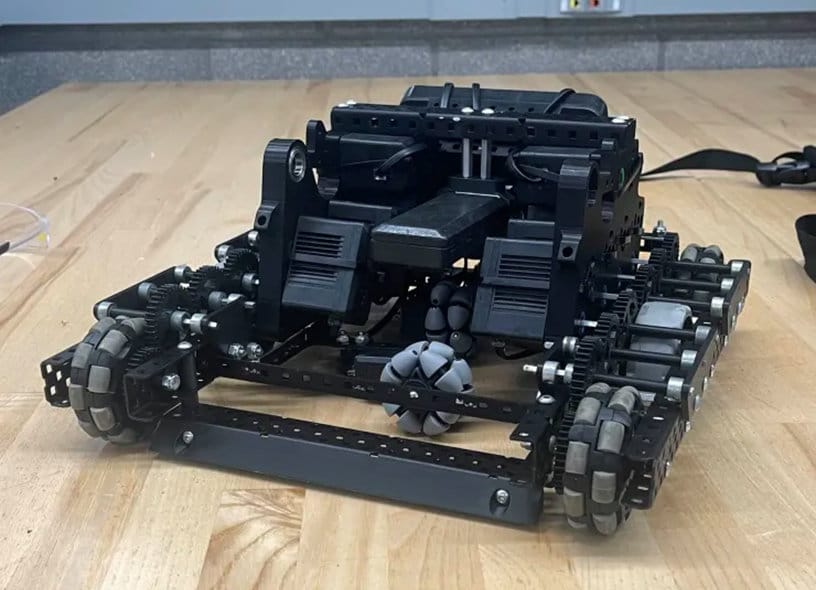
Bambu Studio played a central role in this process. Its default settings supported rapid prototyping, while advanced features such as ironing were used to improve the surface quality of final parts.
Remote monitoring and AI-based failure detection also reduced wasted filament, preventing failed prints caused by adhesion or support issues and saving both time and material compared to earlier workflows.
Future outlook
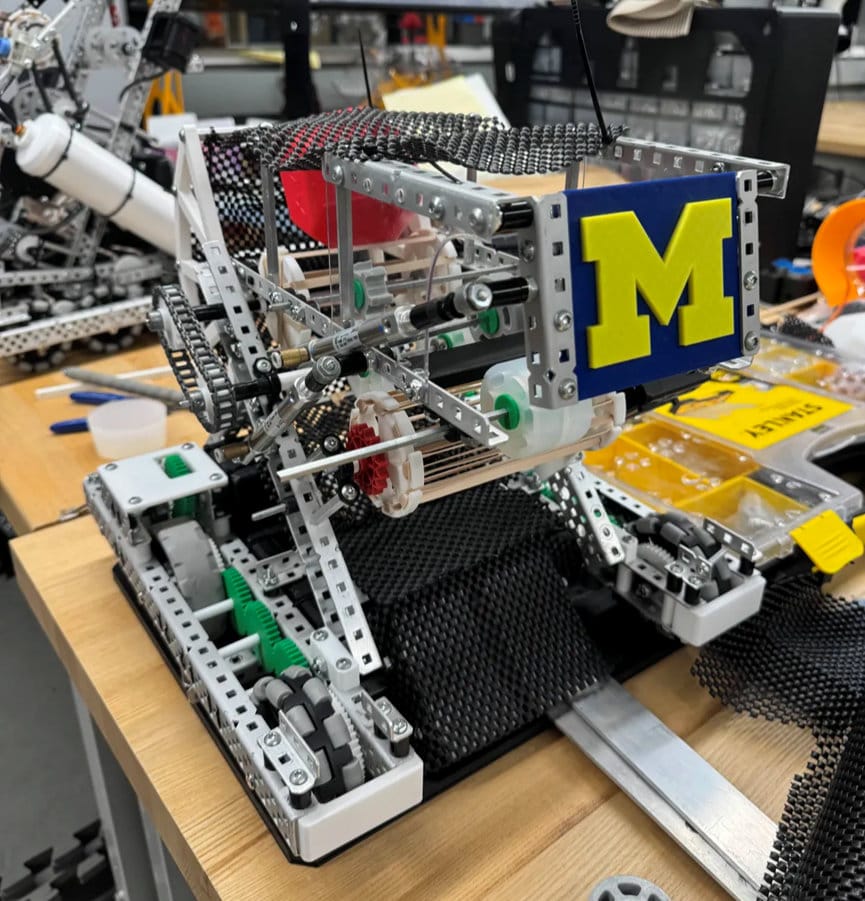
The University of Michigan, Michigan Task - Based Robotics plans to deeply integrate 3D printing technology into the entire life cycle of robotic products (from design → prototype → structural components → assembly verification → low → volume manufacturing), creating an agile, efficient, and scalable robotic development and manufacturing platform.
Moreover, topological optimization designs will be carried out for load - bearing parts, complex support structures, lightweight skeletons, etc., and printing will be realized using high - performance materials.
With reliable 3D printing integrated into daily operations, the overall manufacturability of the robot improved significantly. The team was able to iterate faster, test more ambitious designs, and push closer to performance limits without the delays associated with external manufacturing or repeated print failures.
This shift supported stronger on-field performance and helped ensure that both the robot and supporting materials met the standards expected at international competitions.