What H3C brings to Makers
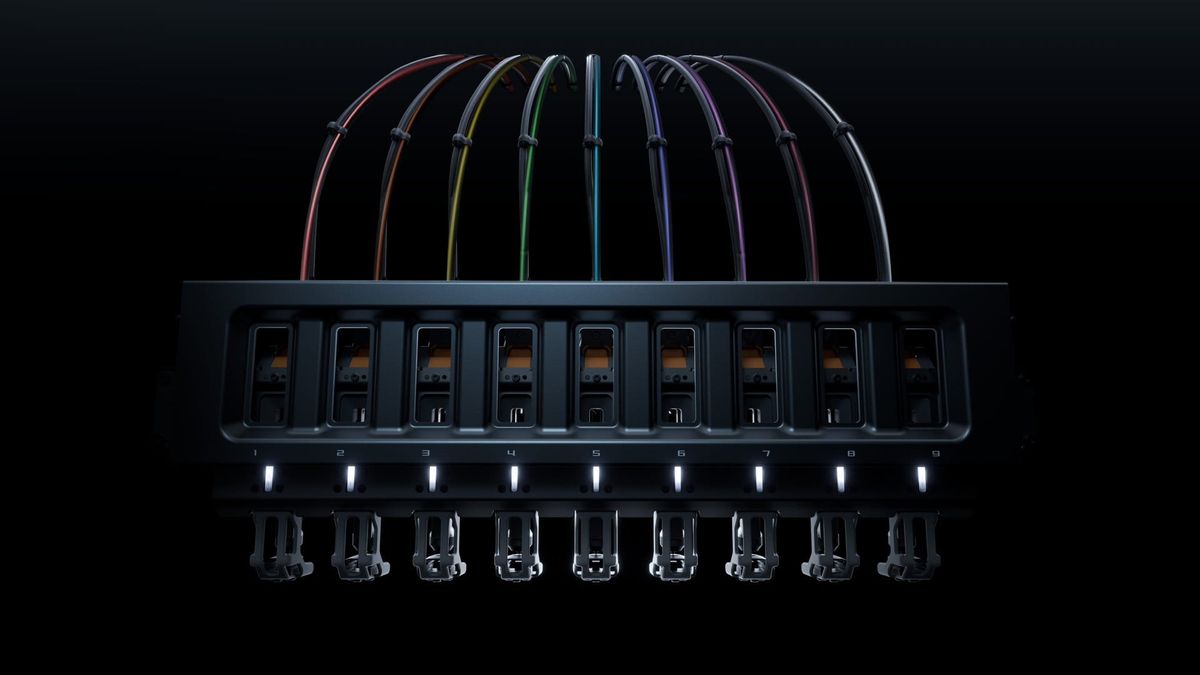
The Swaptek mechanism itself is impressive from an engineering standpoint, but its true value only becomes apparent when you look at what it enables the user to do

H3C takes operations that once required preparation, knowledge, and patience and moves them into the realm of ordinary, everyday printing.
There is no special preparation or complicated process involved - you simply choose what a given part requires and print it. It may seem like a small change, but in practice, it shifts the boundary of what is worth designing in the first place.
Color mixing
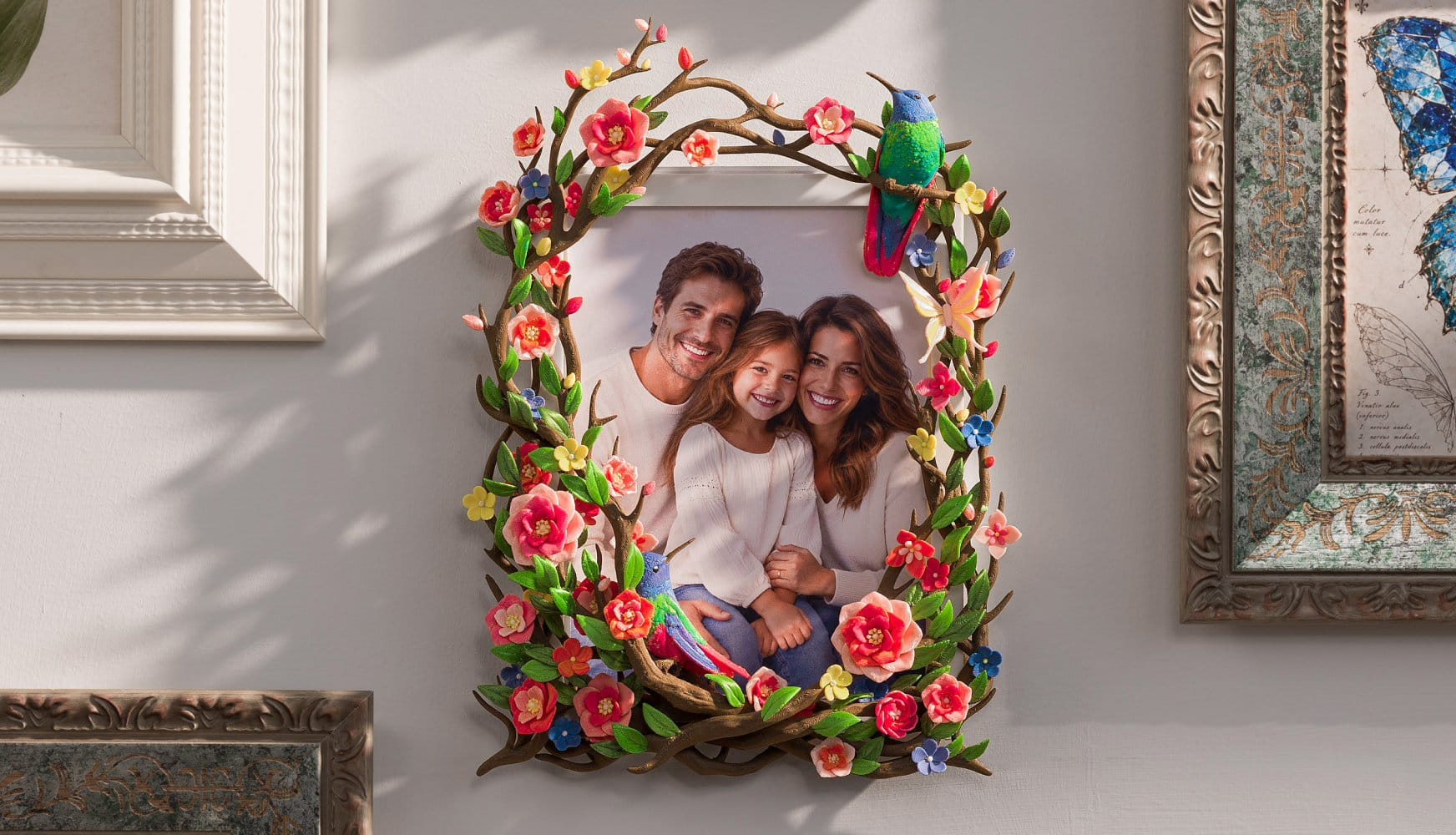
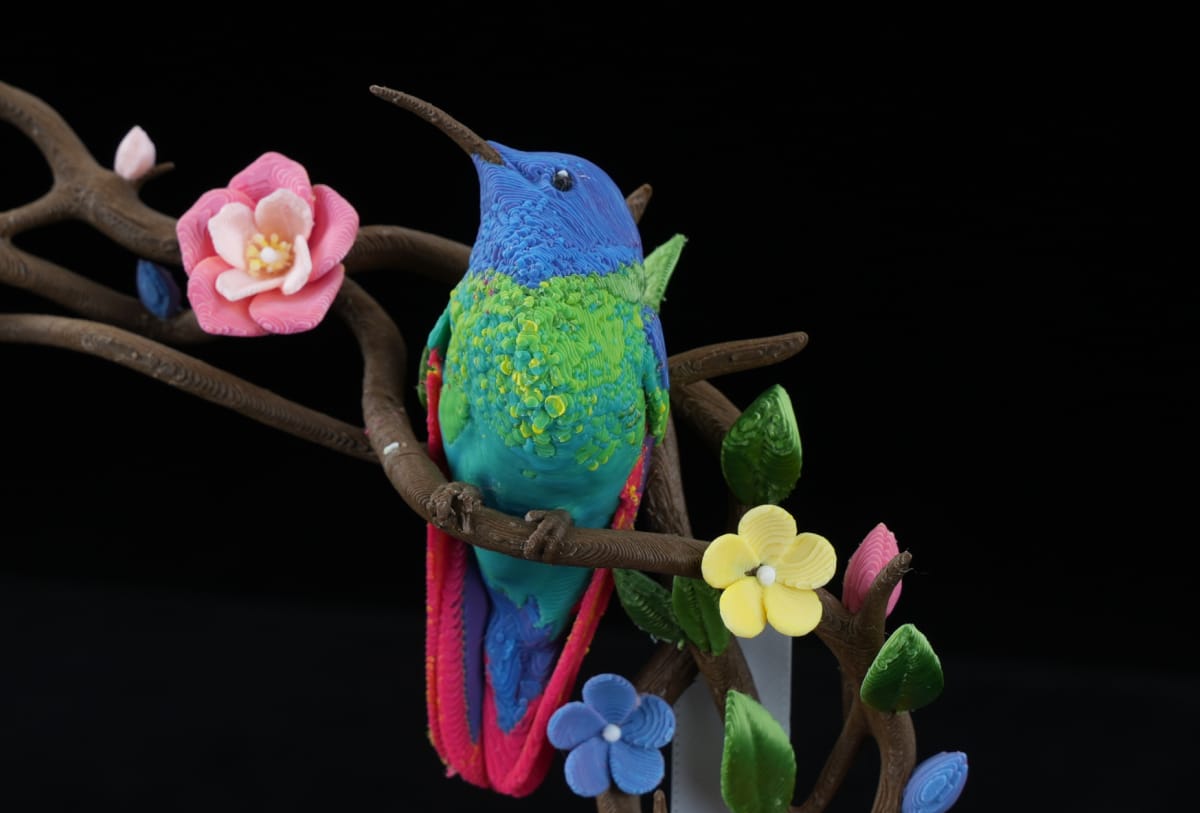
The first, and perhaps most visually impressive, possibility is the freedom to mix colors. Because changing colors now costs only a fraction of what it used to, color mixing becomes a practical solution rather than something that is merely possible in theory.
By layering colors in precisely calculated proportions, almost the entire color wheel or smooth gradient transitions can be achieved from just five base filaments in the CMYKW model.
Color stops being something you have to plan around the number of available slots and becomes something you can use freely. Colorful figurines and highly detailed models enter a genuine full-color era, without having to buy a separate spool simply to print a single colored section.
In practice, this means the end of compromises in which the number of colors was limited by the number of available slots, while every additional shade meant another spool to buy and install.
Printing with different nozzle sizes
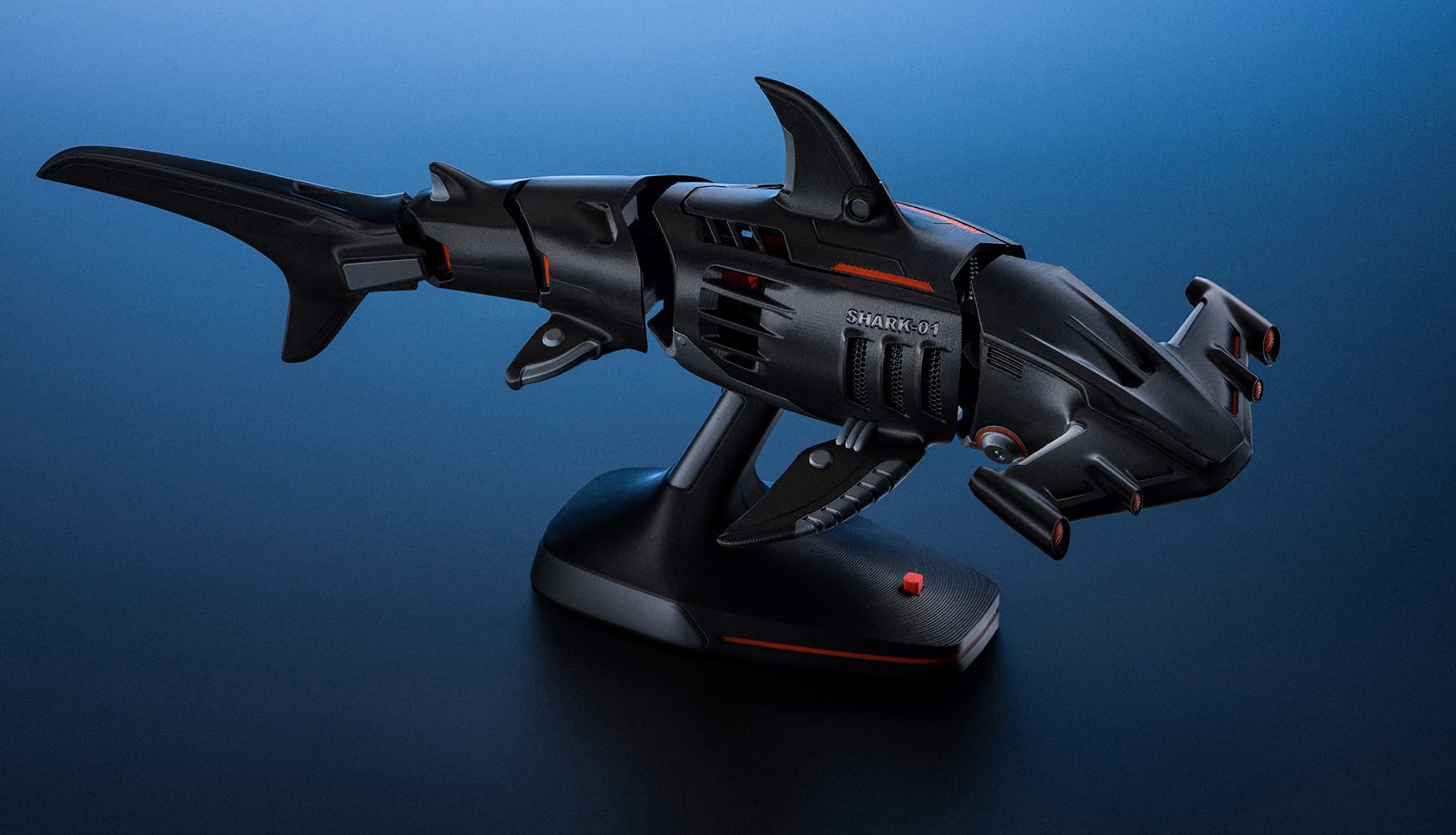
The second possibility is combining different nozzle sizes within a single print. Until now, this has been a hard choice: a 0.2 mm nozzle preserves detail but can dramatically extend printing time, while a 0.4 mm nozzle shortens the print but smooths over and loses finer details.
With Swaptek, a larger nozzle can handle the bulk of the model while a smaller one takes care of the areas where detail actually matters. The result is that even large prints can retain their fine details.
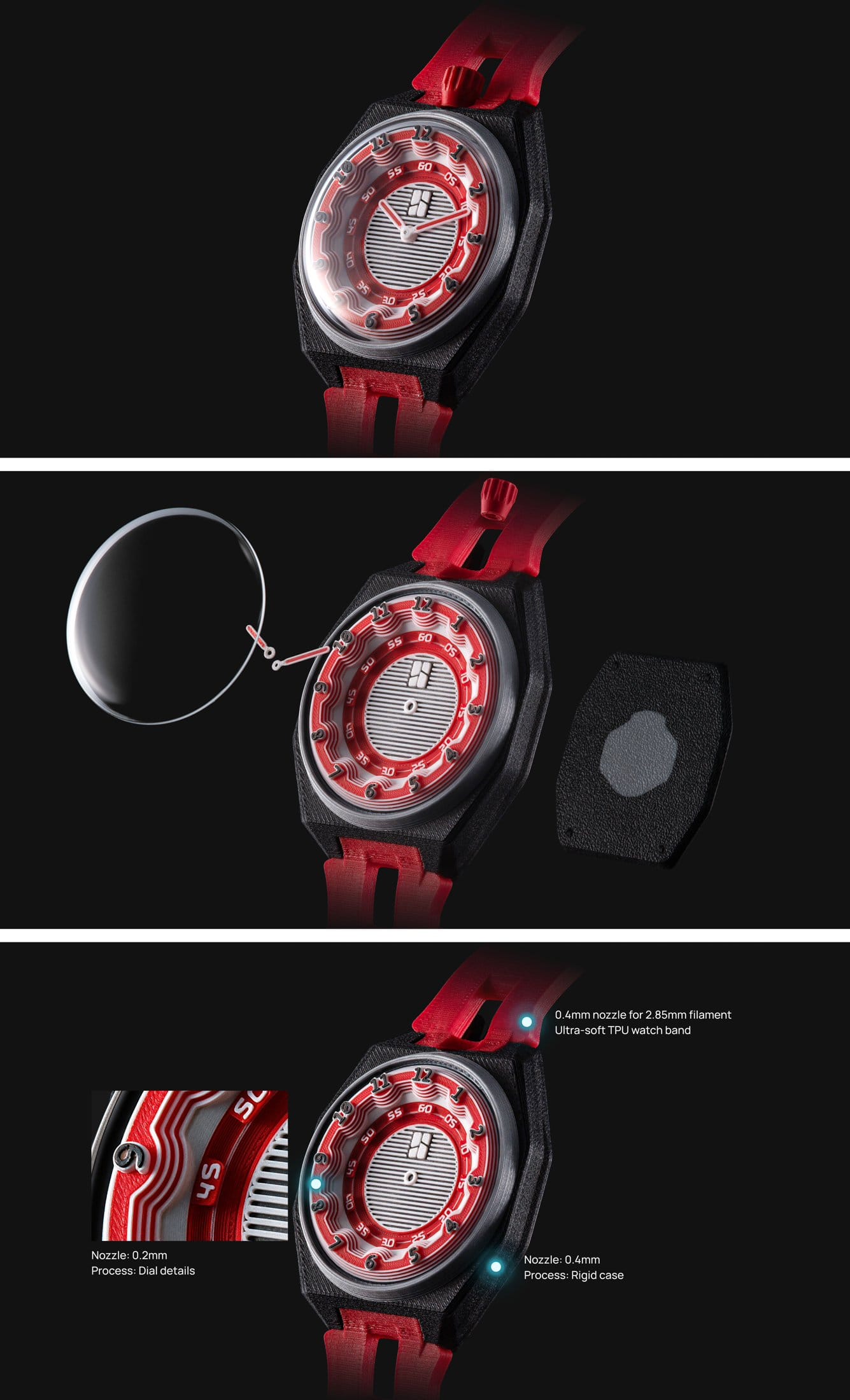
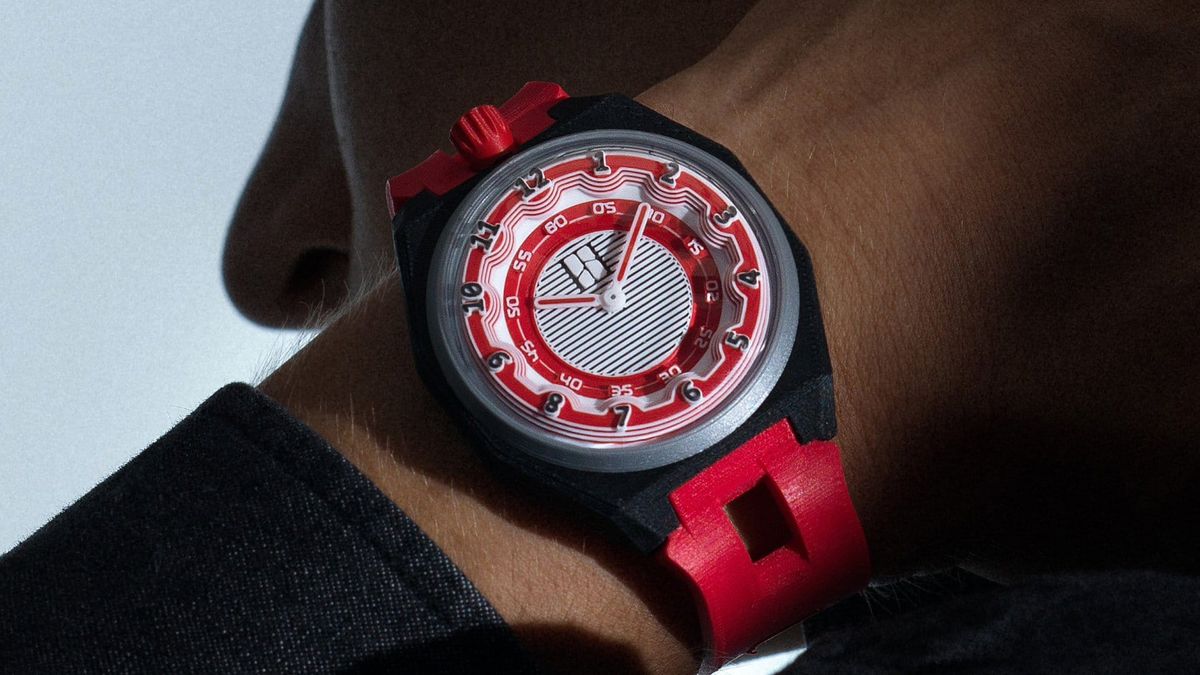
A good illustration is a watch produced in a single job: a 0.2 mm nozzle for the dial details, a 0.4 mm nozzle for the carbon-fiber body, and a 0.4 mm nozzle feeding 2.85 mm filament for the soft TPU strap. Three different materials, three different requirements — and one continuous print, with no interruptions for manual tool changes.
The real multitool
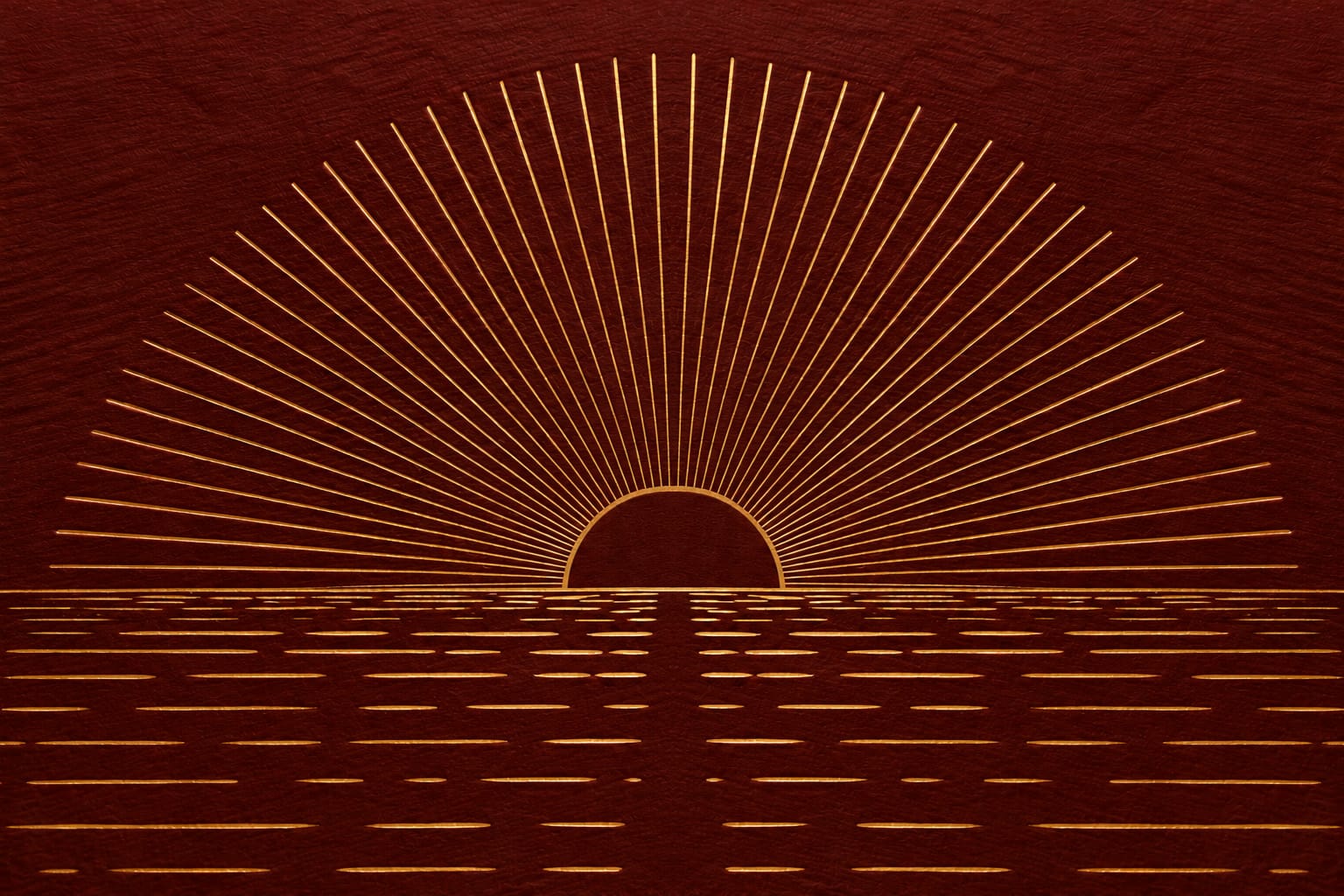
And the possibilities do not end there, because Swaptek supports more than just printing tools. A single machine can print, cut, draw, and deboss, all automatically and without human intervention.
A multi-stage project no longer requires several devices, manual tool changes, or repeated setup. What is more, tools for 2D operations can remain loaded and ready at all times, allowing the machine to move directly into cutting or engraving without any prior preparation.
That translates into real time savings for tasks that previously had to be broken down into several stages and performed on several machines.
Multi-material in single print
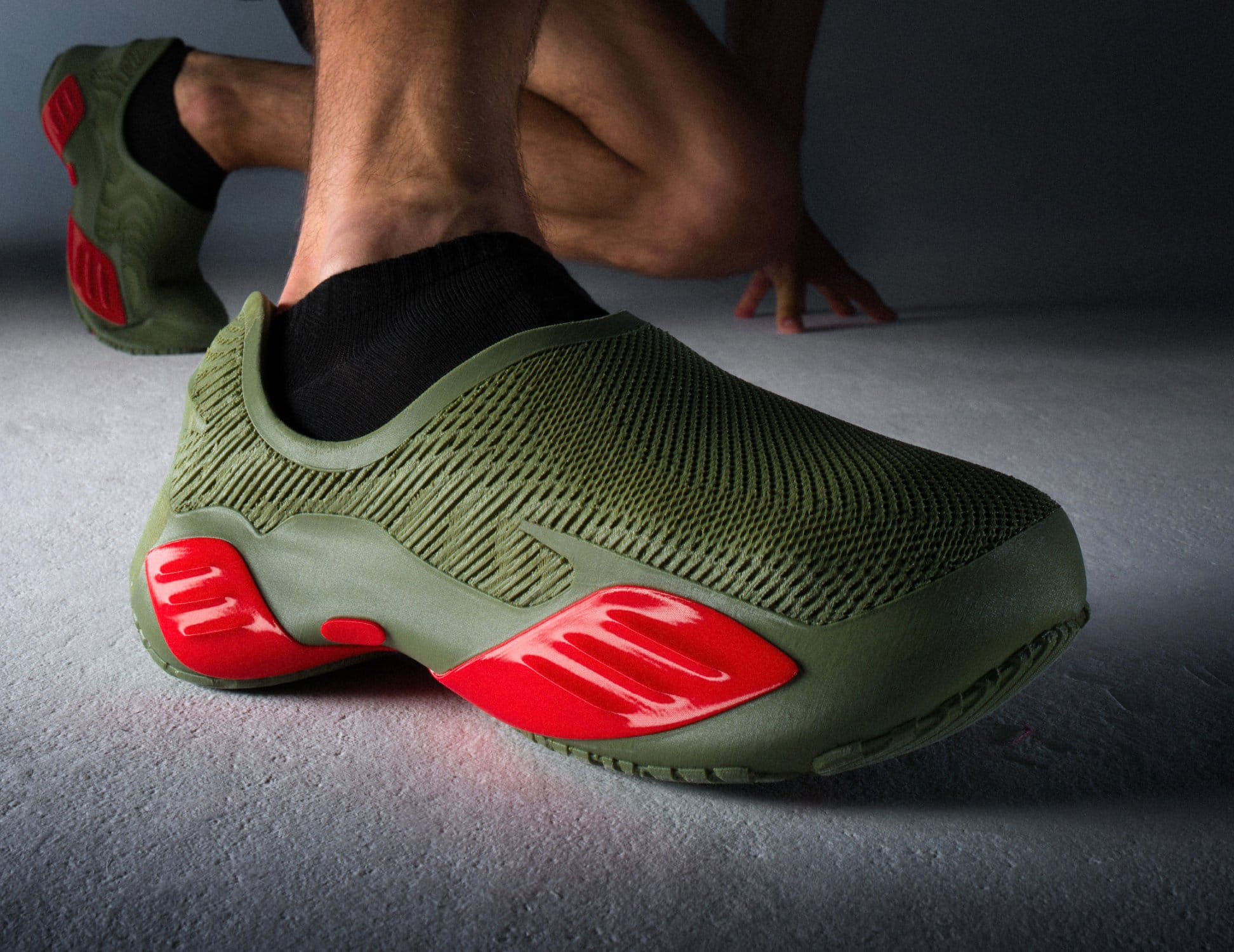
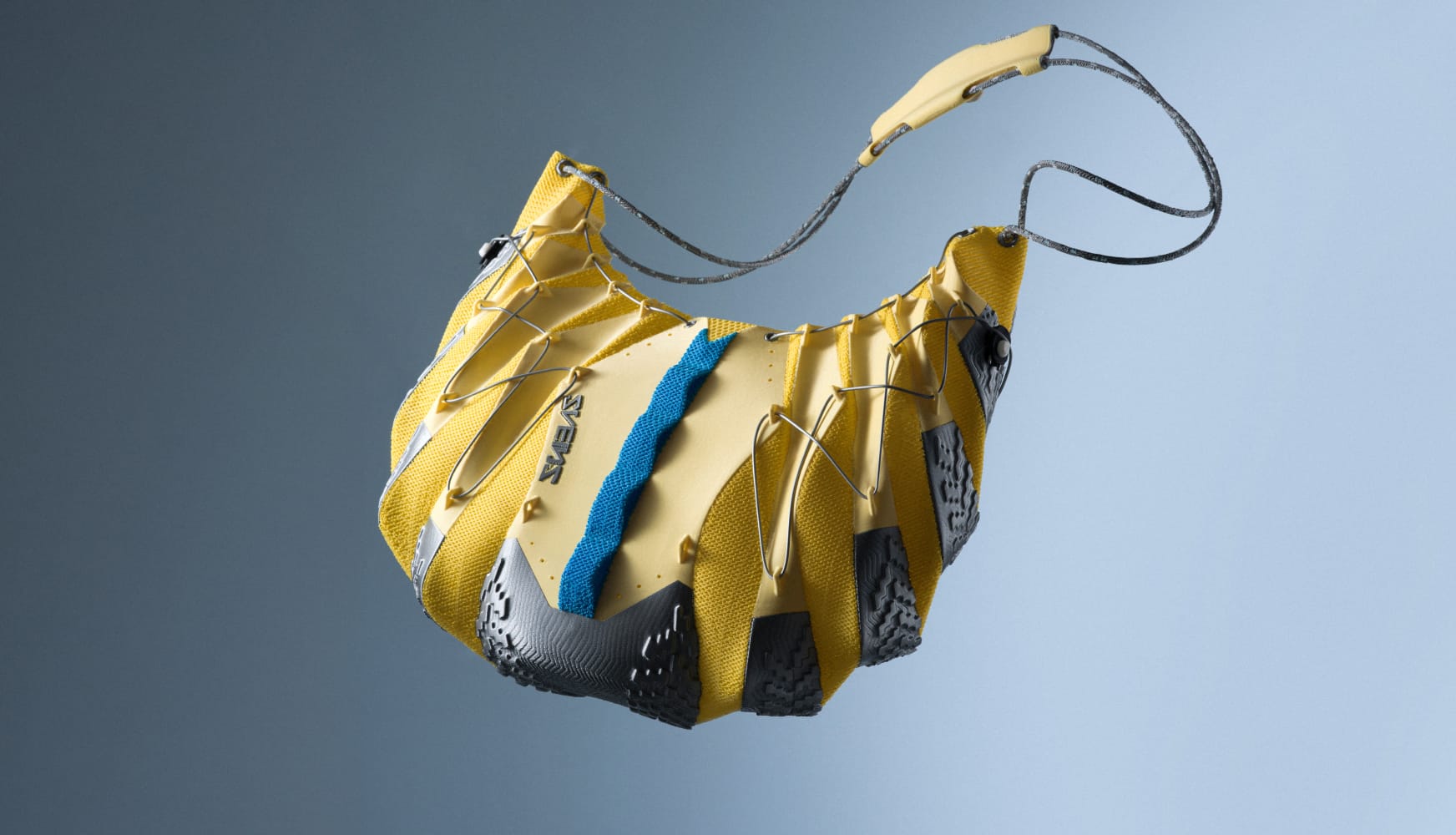
A particularly interesting group of applications is multi-flex products that combine several flexible materials within a single part. An ultra-soft material can be used where comfort matters, while a harder material can be placed where additional support is required.
In practice, this can mean lighter, better-fitting footwear and more durable, sculptural bags in which the material properties are selected individually for each section.
These are things that were previously difficult to produce as part of a single process, but can now be created in one go as a single, coherent component. Material is no longer a design constraint — it can be selected locally, precisely where a particular function requires it.
H3C - all you need in one single machine
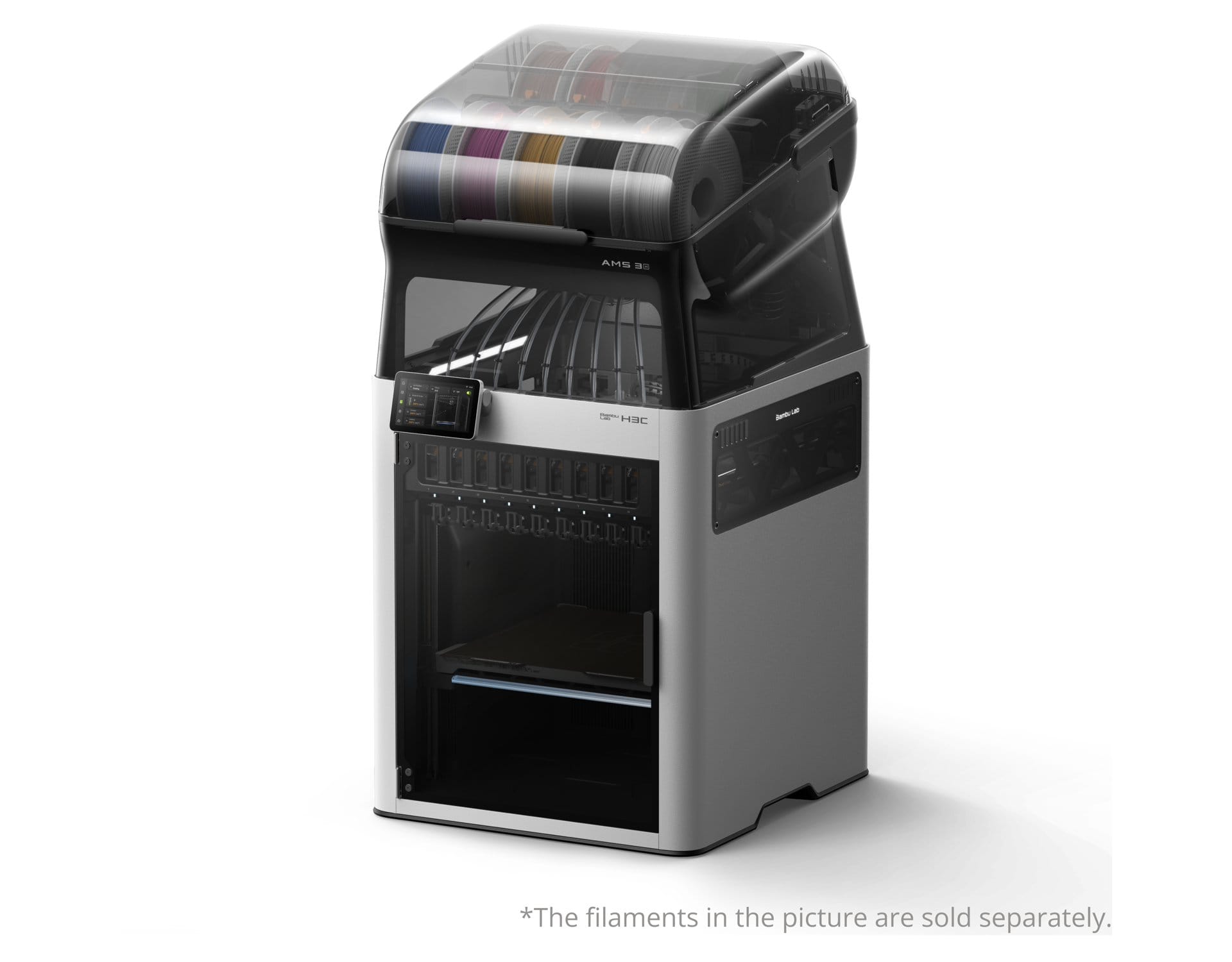
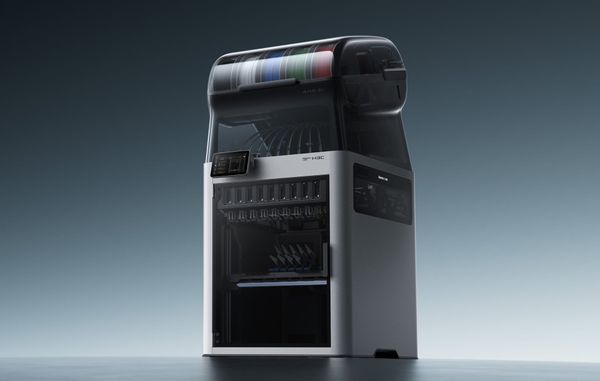
All of these possibilities are tied together by one common idea: detail, speed, and function can coexist within a single job. Mixed nozzle sizes and different materials can come off the same machine as part of one continuous print, allowing large components to retain fine detail even when they combine materials with radically different properties.
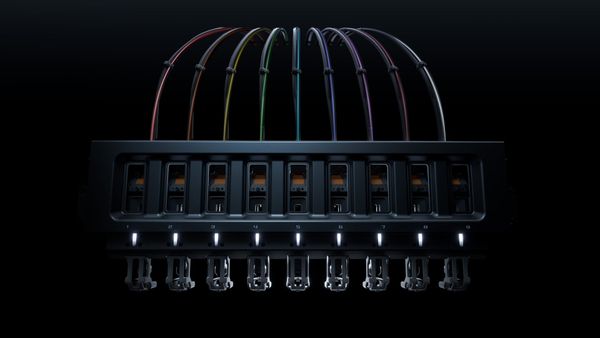
Full-color figurines, meanwhile, enter a genuine era of color, thanks to lightning-fast switching between nine tools and CMYKW mixing that can reproduce almost the entire color wheel.
It is also worth looking at the change taking place on the user side. The entry barrier that previously discouraged less experienced users largely disappears, while more advanced users regain the time that was previously consumed by the machine itself.
This is the essence of what Swaptek brings to the user.
It is not simply about saving a few seconds on each material change, but about unlocking an entirely new range of things that can be designed and produced on a single machine, in a single run.
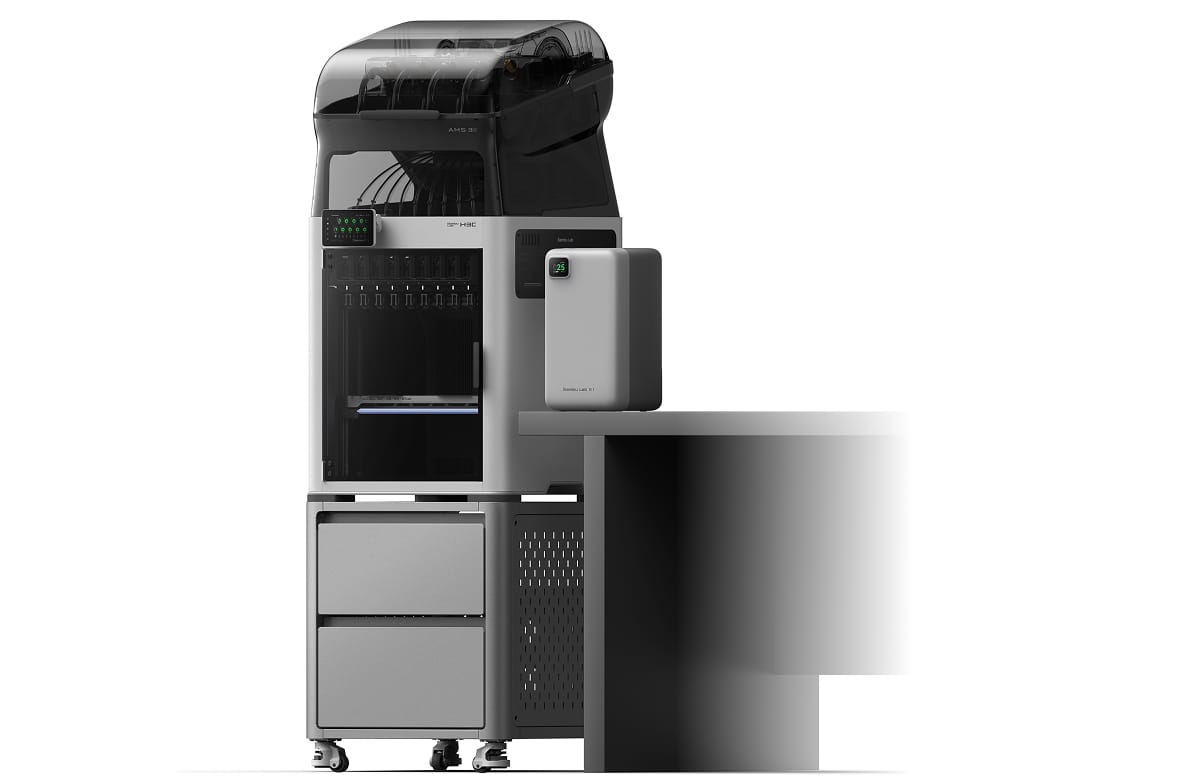
Reaching for nine materials becomes as natural as reaching for one — and that opens the door to projects that previously either required several machines or simply did not make economic sense at home or in a studio environment.
In the end, it is no longer the hardware that dictates the limits of an idea. The idea itself becomes the only real limitation.
Go deeper:
 Bambu Lab
 Bambu Lab
 Bambu Lab