Design once - print anywhere: CRAWLAGON's blueprint for a digital-first RC business
CRAWLAGON uses Bambu Lab 3D printers to build the ultimate modular RC crawling experience


Few technologies have reshaped small-scale manufacturing and creative entrepreneurship quite like 3D printing. As the hardware has matured and the software ecosystem around it has grown more capable, an entirely new category of business has emerged:
one built not on inventory or logistics, but on design, precision, and community.
The RC (remote control) hobby market is a particularly compelling example of this shift. Once dominated by large manufacturers offering fixed product lines, it has gradually opened up to smaller creators who can offer something the big players cannot: specificity.
Whether it's a custom body shell, a replacement bracket, or an entirely new type of course element, the ability to design and distribute printable files has allowed niche creators to build real businesses around highly focused audiences.
The economics play key role here - low overhead, no physical stock, and global reach from the first sale.
However, at the same time the technical demands are quite high. Designs must be functional, repeatable, and printable across a wide range of consumer hardware. Achieving that standard requires both creative skill and a reliable production environment.
This is where the choice of 3D printing hardware becomes more than a convenience - it becomes a competitive variable.
Consistency, speed, and the ability to test rapidly all affect how quickly a creator can build and refine a product library, respond to customer feedback, and scale. A printer farm that performs predictably and handles diverse materials without constant intervention is, for a digital product business, as important as any design tool.
CRAWLAGON - a digital-first RC accessories company, built its product development workflow around Bambu Lab hardware.
Their experience illustrates how the right printing ecosystem can accelerate innovation, reduce waste, and help a small operation compete on a global stage.
CRAWLAGON
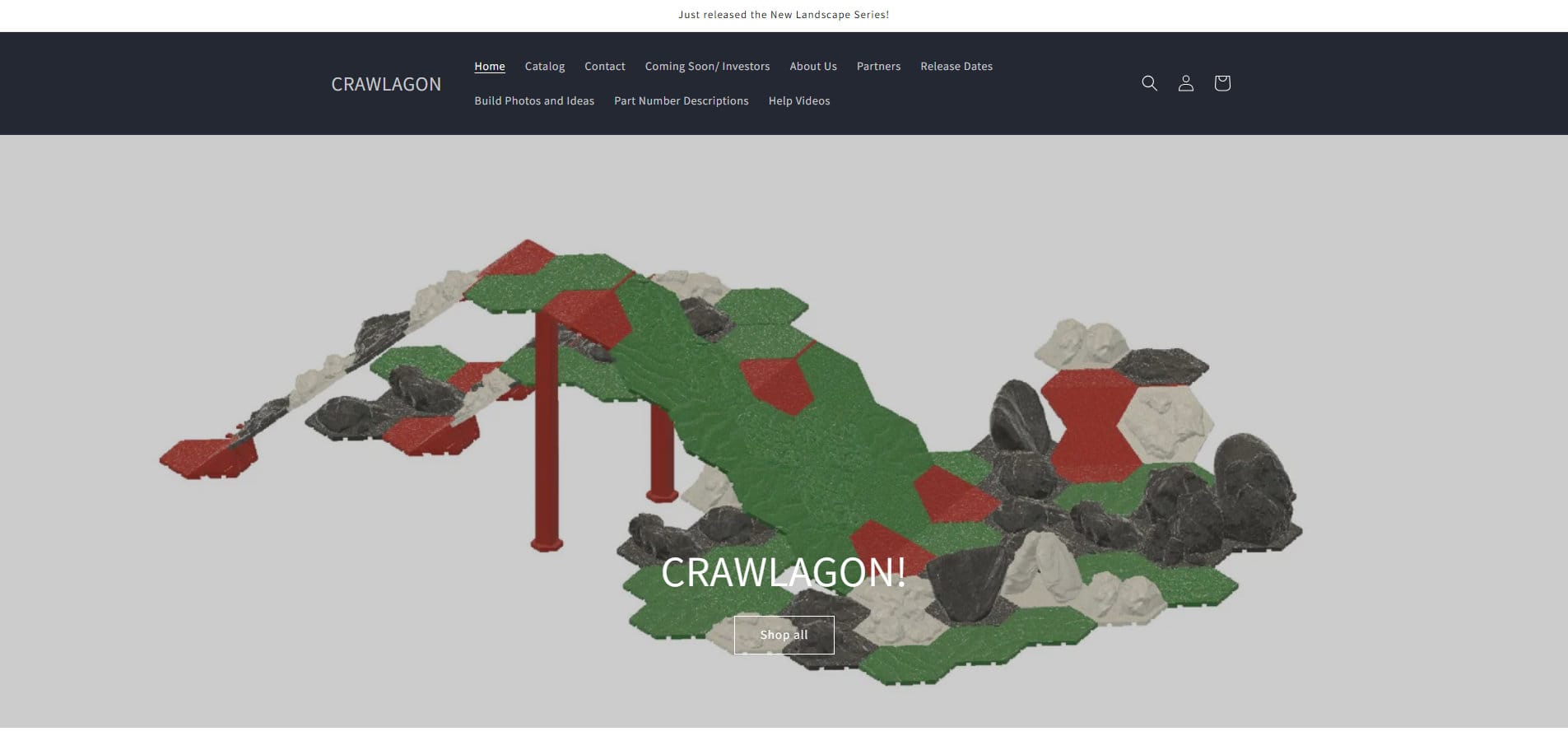
CRAWLAGON is a digital-first product business focused on the design and sale of modular, 3D-printable rock crawling courses for small-scale remote control vehicles.
Founded by Dirk Baker, the company produces highly detailed STL files that allow RC enthusiasts to build and reconfigure custom crawling environments at home.
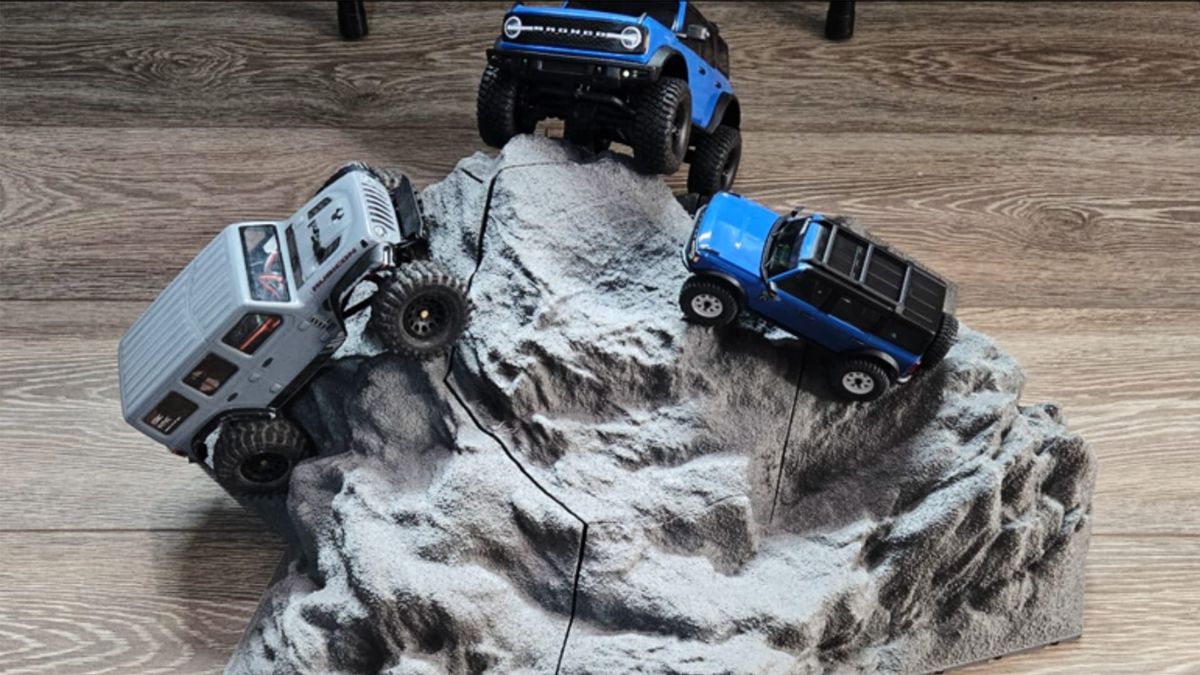
Designed for 1/32 to 1/64 scale vehicles, each course element is engineered to print without supports and to deliver realistic traction and durability, even at miniature scale.
At the core of CRAWLAGON's concept is an ever-expanding library of more than 200 unique tile designs. Many of these designs originate from real-world rock formations captured using LiDAR scanning technology at well-known off-roading destinations, including Moab, Utah.
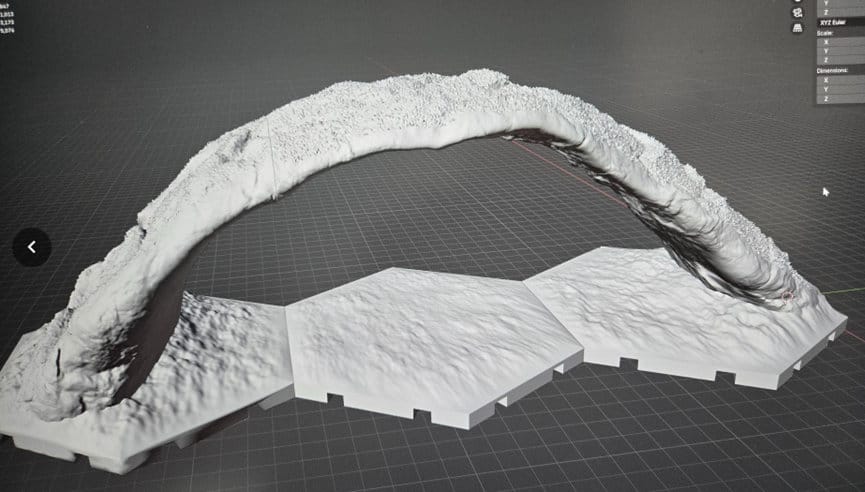
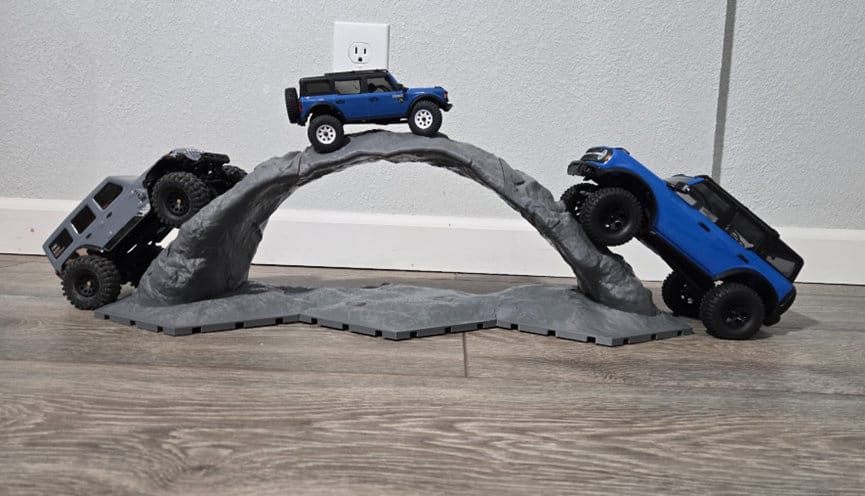
An RC off road vehicle track model designed and completed on a computer [left] and actual printing effect and testing [right]
These scans are scaled down and refined for consumer-grade 3D printers, allowing users to recreate iconic trails indoors. The company operates with extremely low overhead, selling exclusively digital files through its own website and third-party platforms - a model that enables high margins and global reach from day one.
Challenge: early production constraints and the Need for Speed and Accuracy
Before standardizing on Bambu Lab printers, CRAWLAGON relied on an older-generation machine. While dependable, it introduced limitations that increasingly conflicted with the company's design goals.
Print times were significantly longer, and maintaining consistent dimensional accuracy across intricate, interlocking tiles required constant manual adjustment. As the design library grew and customer expectations rose, these constraints slowed iteration cycles and restricted how far designs could be pushed technically.
Because every CRAWLAGON product is sold as a printable file rather than a physical object, reliability and repeatability are critical.
Each model must work not only in the designer's own environment, but also on customer machines with minimal friction.
Achieving that level of consistency required faster printers, better motion control, and more advanced slicing tools than the existing setup could provide.
Solution: transitioning to a Bambu Lab Printer Farm
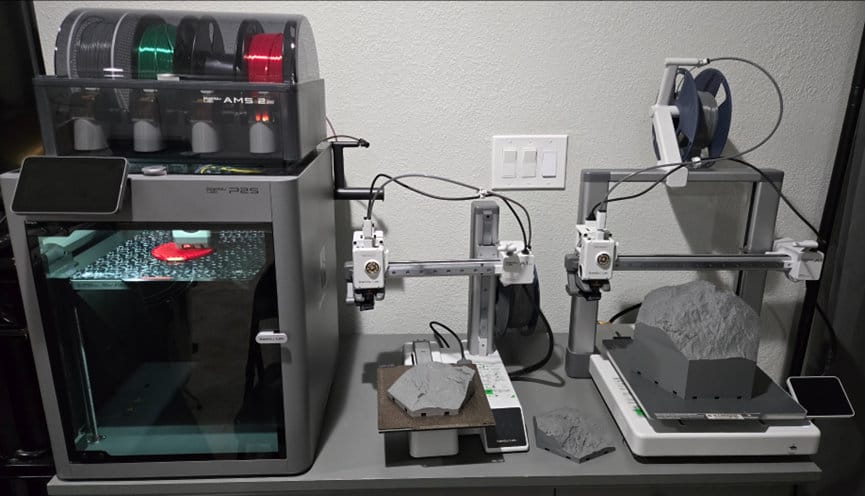
To address these challenges, CRAWLAGON built a dedicated print farm around Bambu Lab hardware.
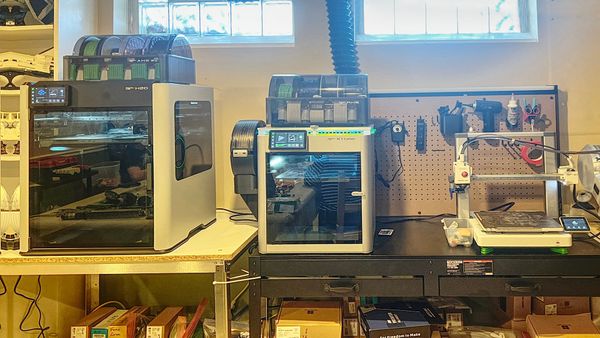
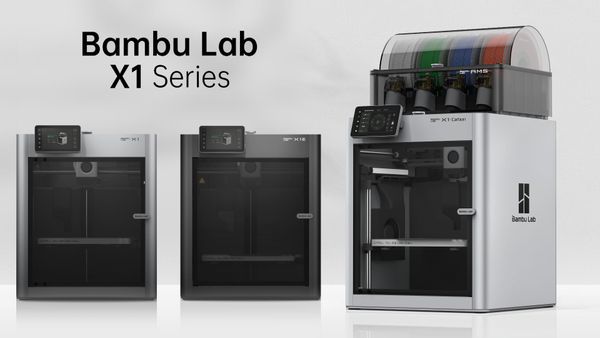
The current setup includes multiple A1 and A1 Mini printers, several AMS-equipped systems, and higher-end enclosed models such as the P2S, with additional units on order.
This combination allows the company to test a wide range of materials, geometries, and production scenarios while maintaining a compact footprint.
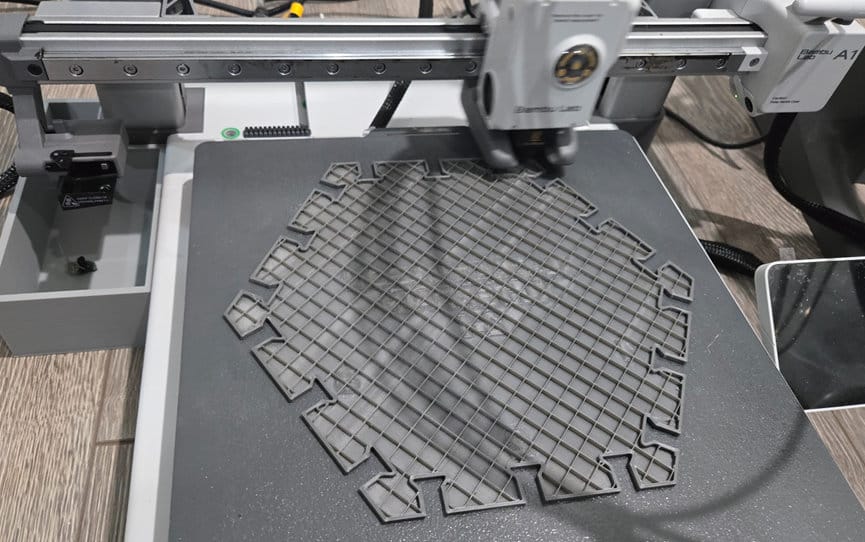
The decision to adopt Bambu Lab printers was driven by a combination of speed, print quality, automation, and reliability. Features such as automatic bed leveling, resonance compensation, and fast material changes significantly reduced setup time and operator intervention.
Over more than a year of near-continuous operation, the machines have proven stable enough to run around the clock with minimal downtime - an essential quality for a workflow built on constant testing and refinement.
Results: accelerating design iteration and expanding the product library
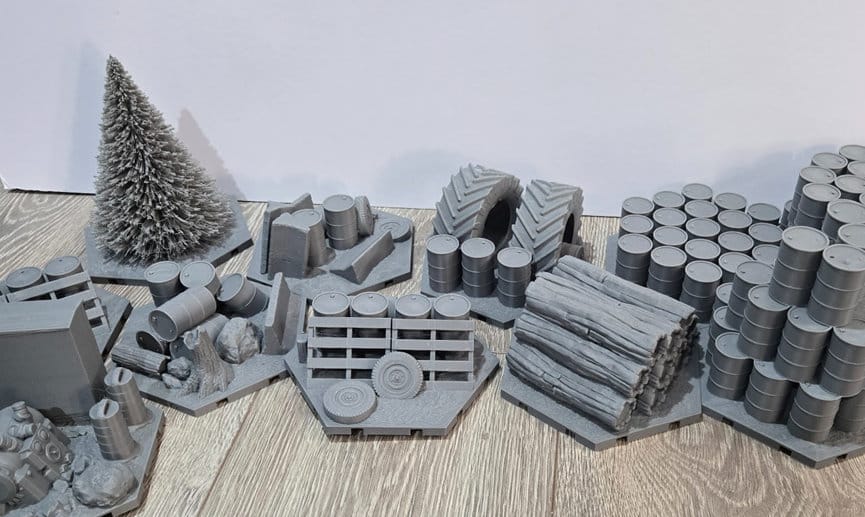
Every CRAWLAGON tile goes through extensive test printing before release. Faster print speeds have shortened iteration cycles dramatically, allowing new designs to move from concept to release up to three times faster than before.
This has enabled rapid expansion of the tile library and quicker responses to customer feedback, both of which are central to the brand's growth strategy.
Bambu Studio has become a key part of this process.
Its balance of accessibility and advanced control allows for precise tuning of infill patterns, wall thickness, layer heights, and print speeds. Tools such as automatic non-manifold repair and model simplification are especially valuable when working with complex LiDAR-derived geometry, reducing preparation time while preserving surface detail.
Through careful use of modifiers and optimized infill strategies, CRAWLAGON has reduced filament usage by as much as 60 percent on certain models without sacrificing structural integrity.
This has lowered testing costs and improved material efficiency - benefits that extend directly to customers as well.
Each product now includes a fully tuned project file, giving users a reliable starting point for successful prints on their own machines.
Most CRAWLAGON tiles are printed in PLA or PLA+, chosen for their ease of use, dimensional stability, and ability to capture fine surface detail. For outdoor or weather-exposed applications, PETG is used selectively to provide improved resistance to moisture and temperature variation.
With the addition of enclosed printers, the company is also preparing to explore ABS and higher-temperature materials for future vehicle-related applications.
During peak development periods, the print farm consumes approximately 15 kilograms of filament per week, making efficiency and output predictability essential.
The combination of hardware reliability and software control has made this level of sustained production manageable for a small operation.
Future outlook

CRAWLAGON's first full year of operation has been marked by steady growth and increasing momentum. Revenue generated through third-party platforms and the company's own website has been reinvested directly into product development and marketing.
A recent increase in targeted advertising has driven a sharp rise in direct website sales, reinforcing the value of owning the customer relationship and distribution channel.
From a production standpoint, Bambu Lab printers have enabled faster releases, lower material waste, and greater confidence that customers will achieve consistent results. These factors have helped transform CRAWLAGON from a personal project into a scalable digital business with genuine global reach.
As CRAWLAGON continues to grow, plans include expanding into advanced materials and exploring larger-format printing capabilities. Ongoing development will remain focused on realism, modularity, and ease of use, while continuing to leverage high-performance 3D printing to translate real-world terrain into accessible, printable designs.
Through its integration of reliable hardware, advanced software tools, and a clear product vision, CRAWLAGON demonstrates how a modern 3D printing ecosystem can support rapid innovation, efficient scaling, and a highly specialized creative business.