How a University drives regional adoption of 3D printing
PrintCity at Manchester Metropolitan University

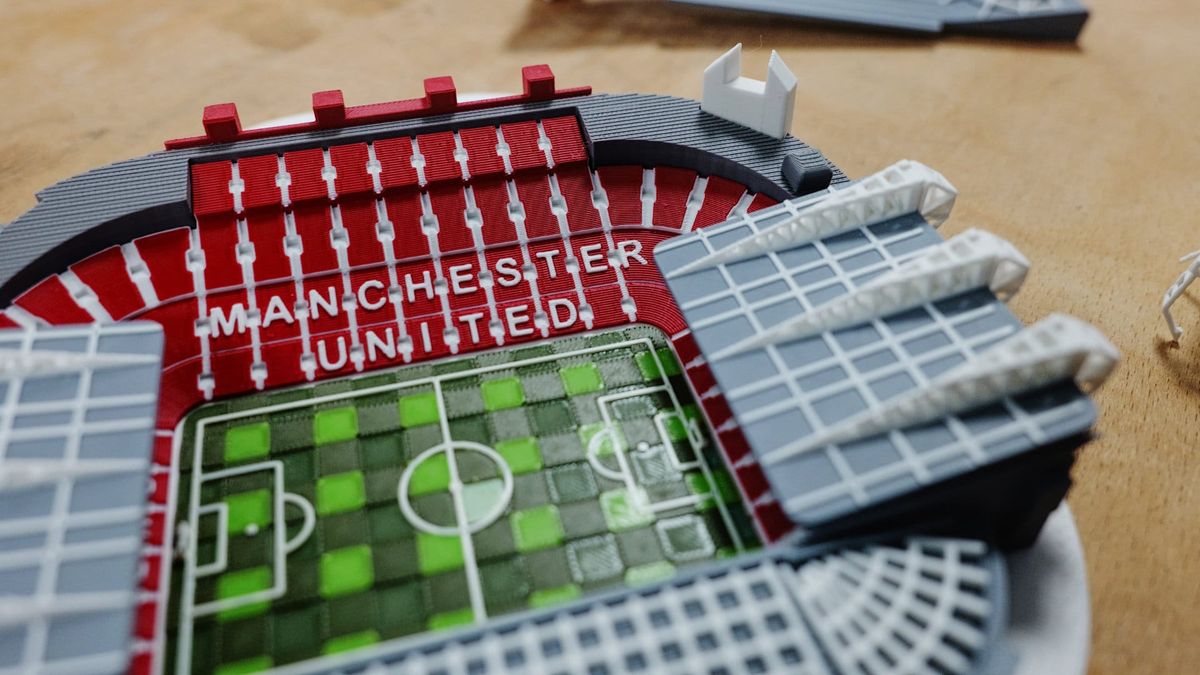
DSIT (Dept. of Science Innovation and Technology) report recently found that Manchester has roughly double the additive manufacturing adoption rate of anywhere else in the UK outside London - and cited PrintCity as a key driver of that achievement.
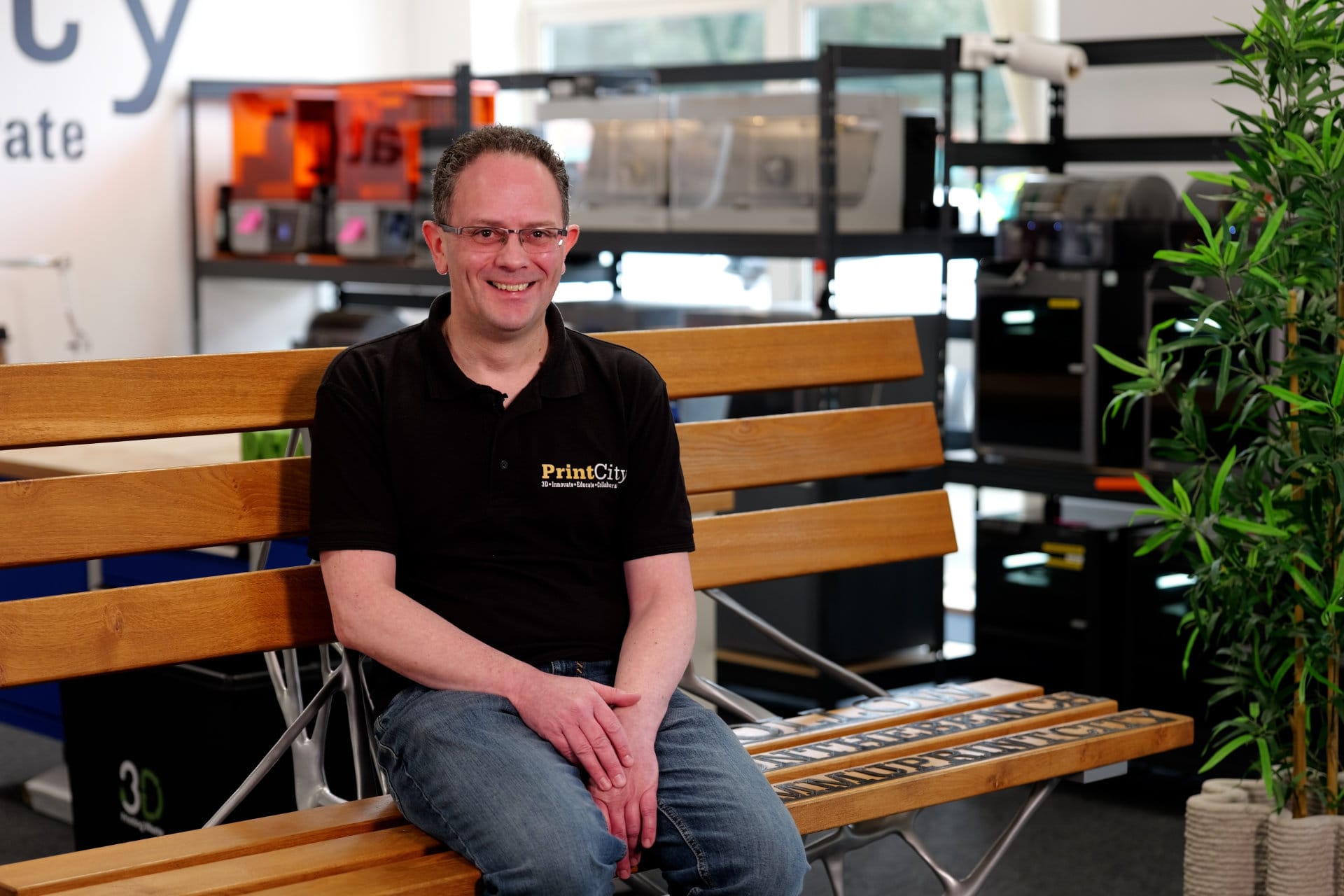
PrintCity, the digital manufacturing hub embedded in Manchester Metropolitan University (Manchester Met), has become a national reference for university-led industrial technology adoption.
Drawing on interviews with Carl Diver, Professor of Innovative Manufacturing and Director of PrintCity, and Sam Hitchin, the Technical Officer running the facility’s 3D print bureau, it reveals a model that bridges education, research, and industry to de-risk, democratise, and accelerate the uptake of additive manufacturing.
Context: manufacturing heritage meets a new industrial revolution
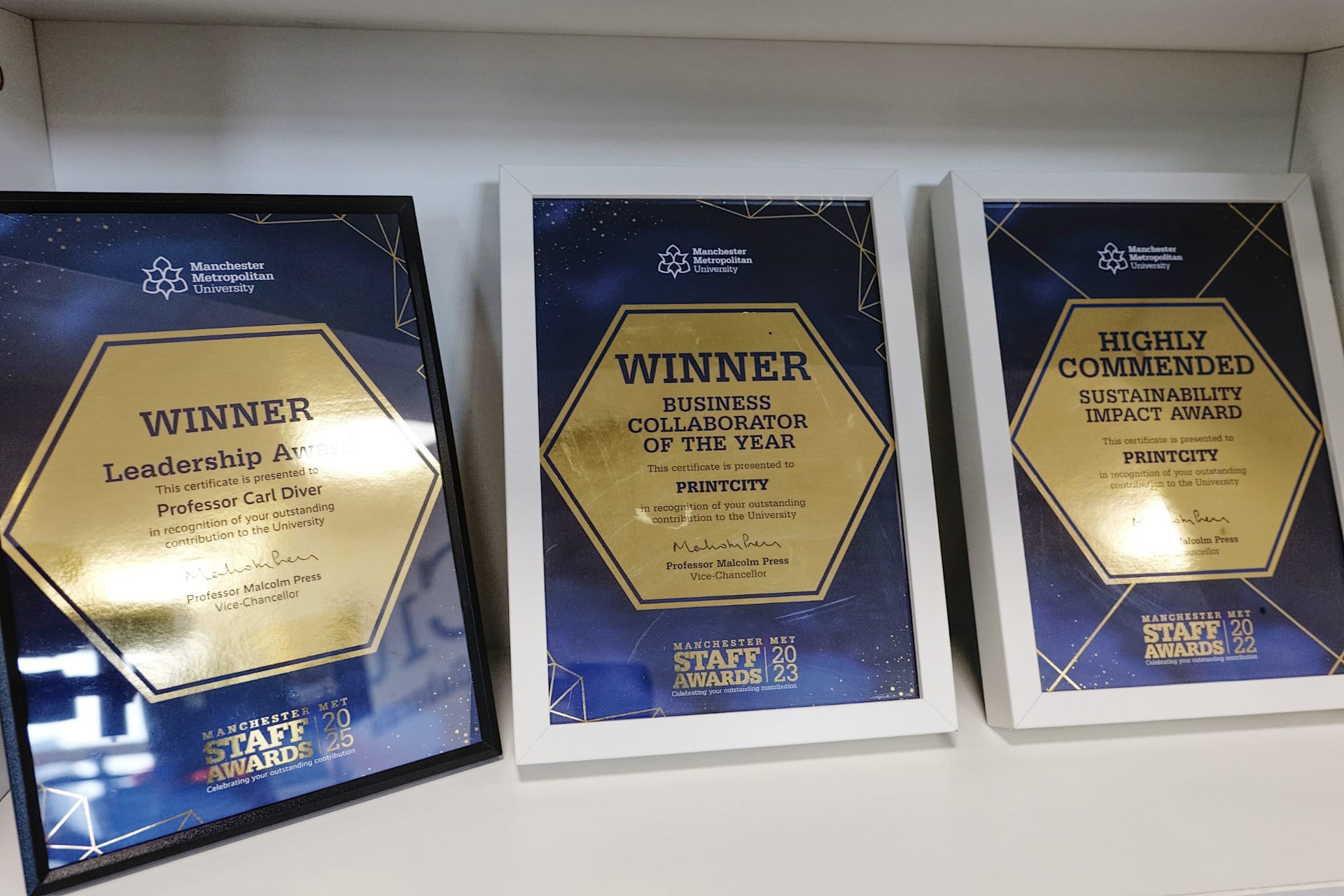
Manchester is widely regarded as the birthplace of the first industrial revolution. That heritage - a deep culture of engineering, production, and pragmatic innovation - has shaped how the city approaches the next wave of manufacturing transformation.
When additive manufacturing began to mature as an industrial technology in the mid-2010s, the UK government identified a growing skills gap and looked to universities to help bridge it.
PrintCity was established in 2018 in direct response to that policy challenge. Starting with just two or three printers, the facility was designed from the outset not as a conventional university lab, but as an open, industry-facing hub where students, researchers, and businesses could explore the possibilities of additive manufacturing side by side.
Manchester is considered the home of the first industrial revolution. There’s a real history of engineering and manufacturing in the city region, and a real can-do attitude. PrintCity has built on that — it’s that springboard for companies to go to the next level.
says Carl Diver, Director of PrintCity & Professor of Innovative Manufacturing, Manchester Met.
The Facility: a living laboratory at University scale
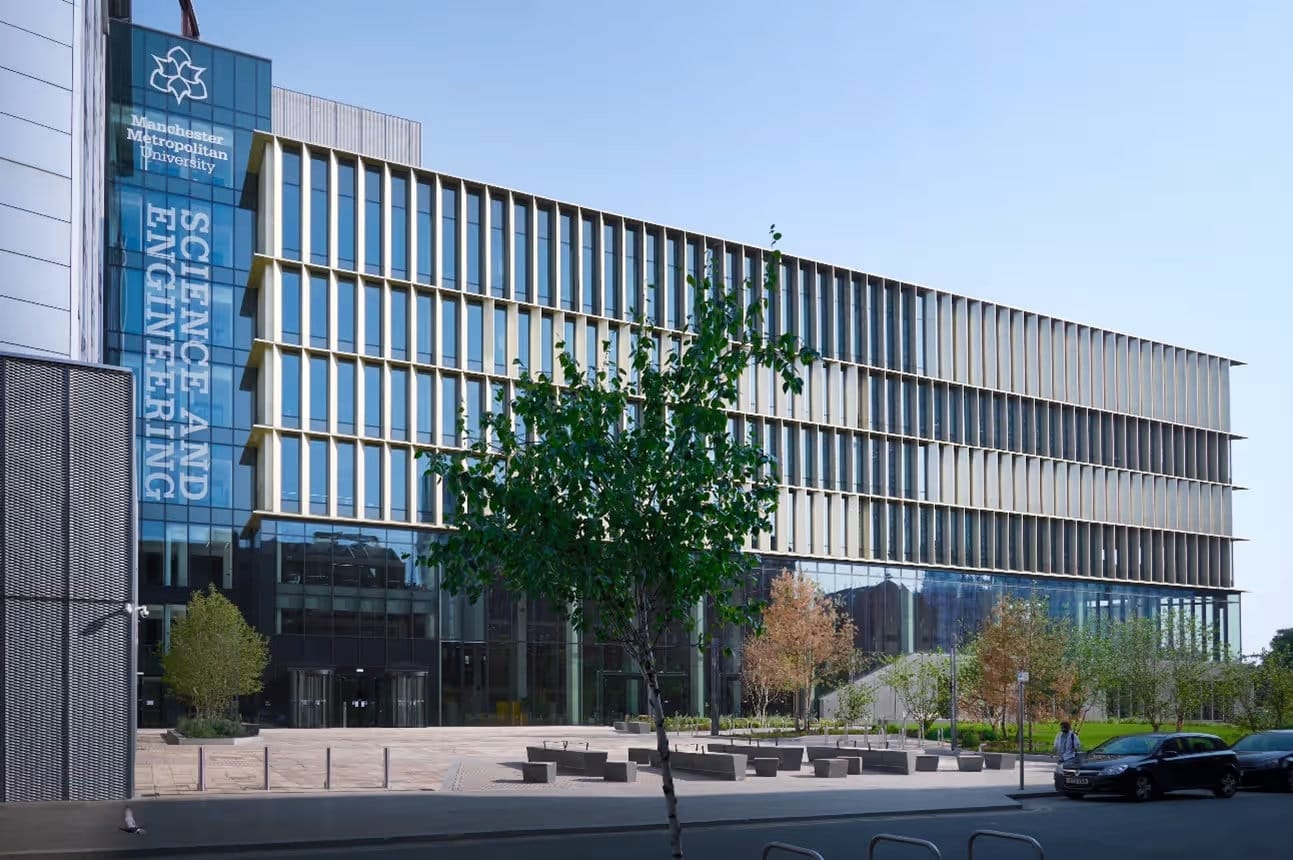
PrintCity sits within Manchester Met’s Department of Engineering and operates as a multidisciplinary digital manufacturing hub.
With more than 100 machines - ranging from desktop FFF printers costing around £100 to industrial systems valued at up to £300,000 - it offers a spectrum of technology matched to the needs of every type of user, from a first-year design student to an established aerospace supplier.
Technology breadth as a strategic choice
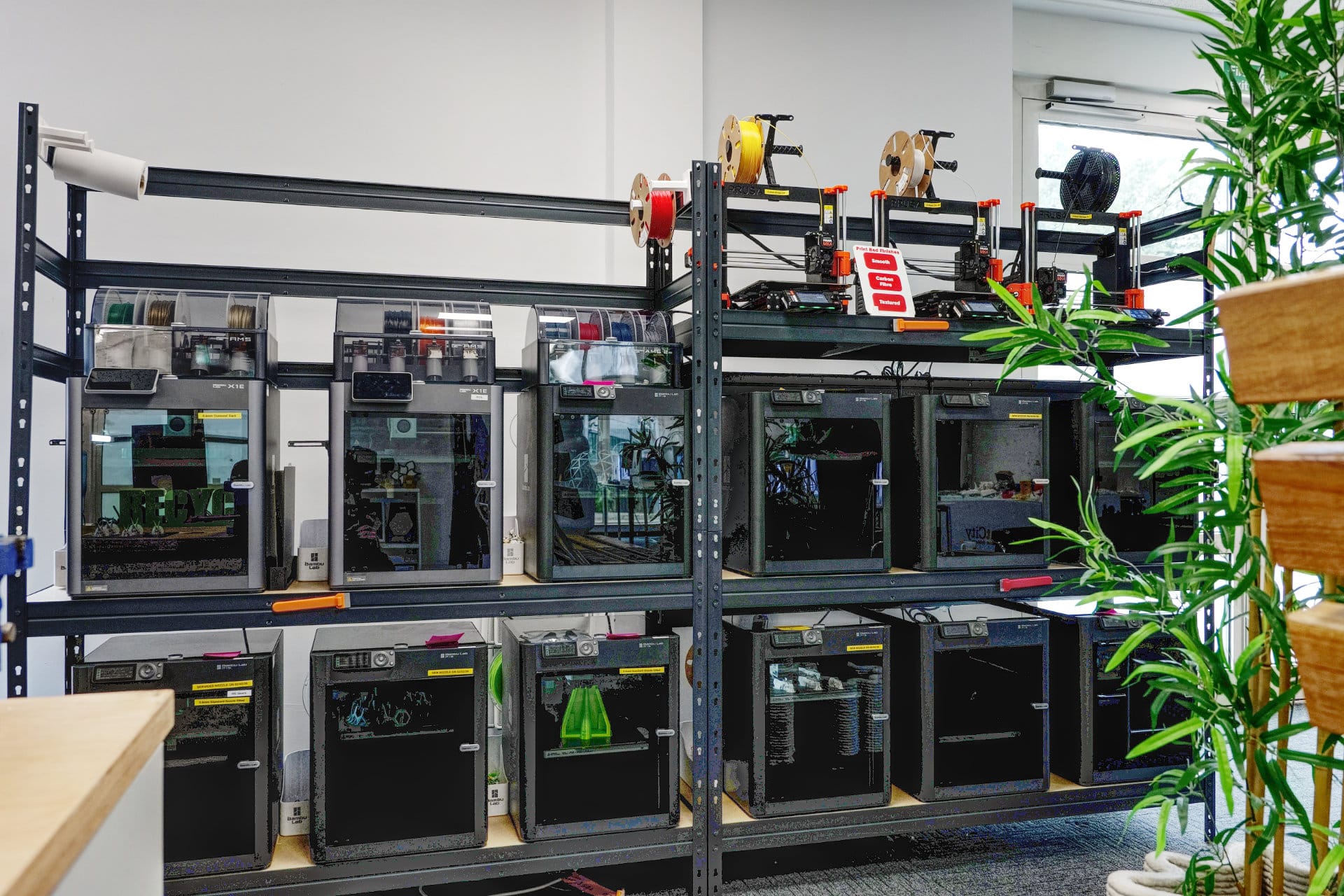
Around 30% of the printer fleet consists of FFM (material extrusion) machines, which serve as the entry point for the vast majority of students.
These workhorses - predominantly Bambu Labs P1S and P2S models - are fast, reliable, and forgiving enough to let learners experiment without prohibitive cost.
Beyond FFF, PrintCity deploys SLA, SLS, DLP, LFAM, concrete, and continuous-fibre technologies, ensuring that when a company or researcher needs an industrial-grade solution, it is available on site.
Technology investment decisions are deliberate. The team analyses sector demand across the North West and wider UK, benchmarks against what leading OEMs are using - including a research visit to major German manufacturers - and prioritises machines that are not already widely available through commercial bureau services.
The aim is to fill a genuine gap, not to compete with the private sector.
The 3D Print Bureau: delivering quality at pace
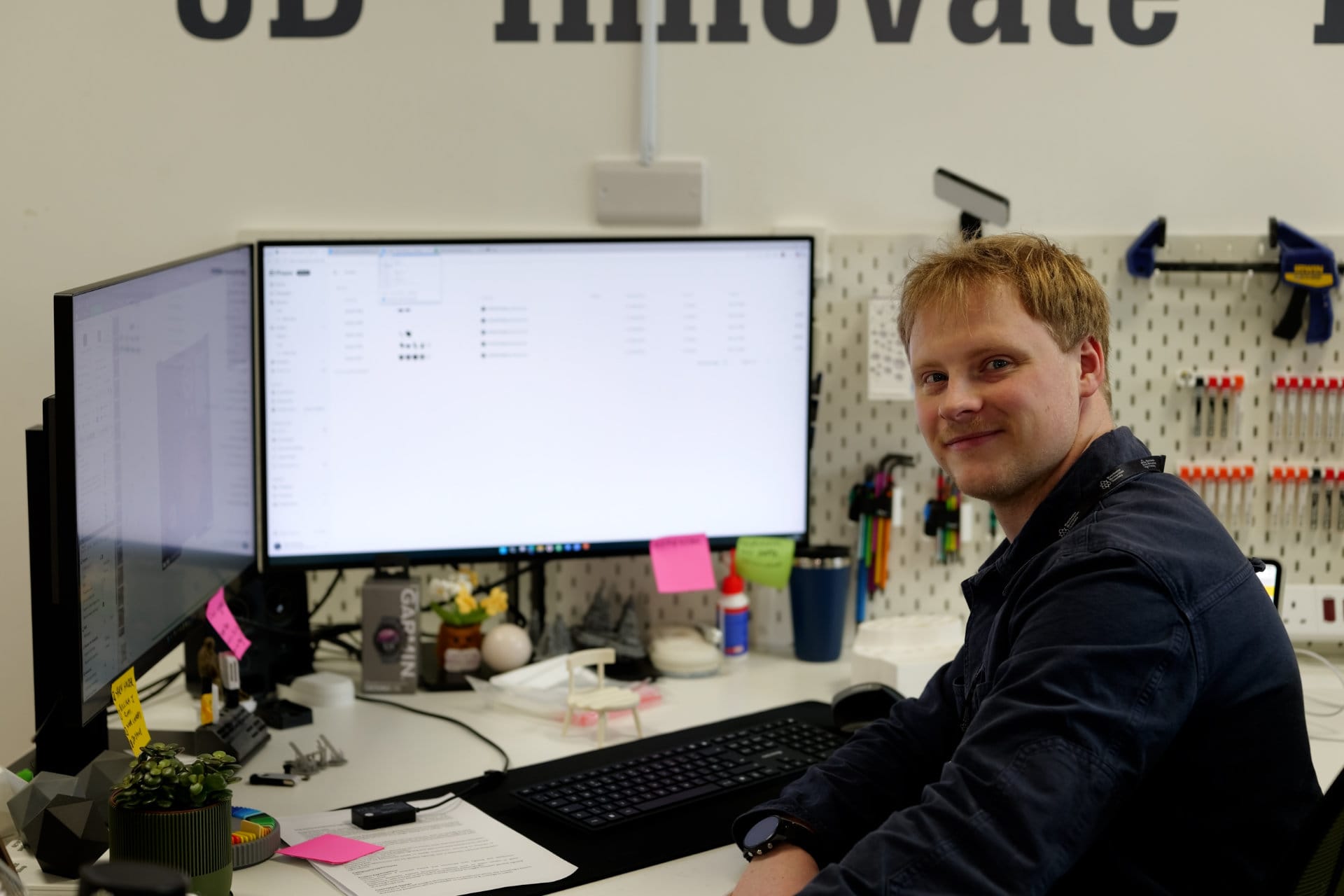
Within PrintCity, Sam manages a dedicated 3D print bureau - a managed print service for students who want high-quality parts without operating the machines themselves. It is important to note though, that it serves only as an internal print bureau service for staff and students , and does not handle external, commercial projects.
Students from architecture, fashion, interior design, product design, engineering, and beyond submit orders through an online system and receive printed parts within tight academic deadlines.
What makes the bureau operationally distinctive is its data-driven approach to quality management.
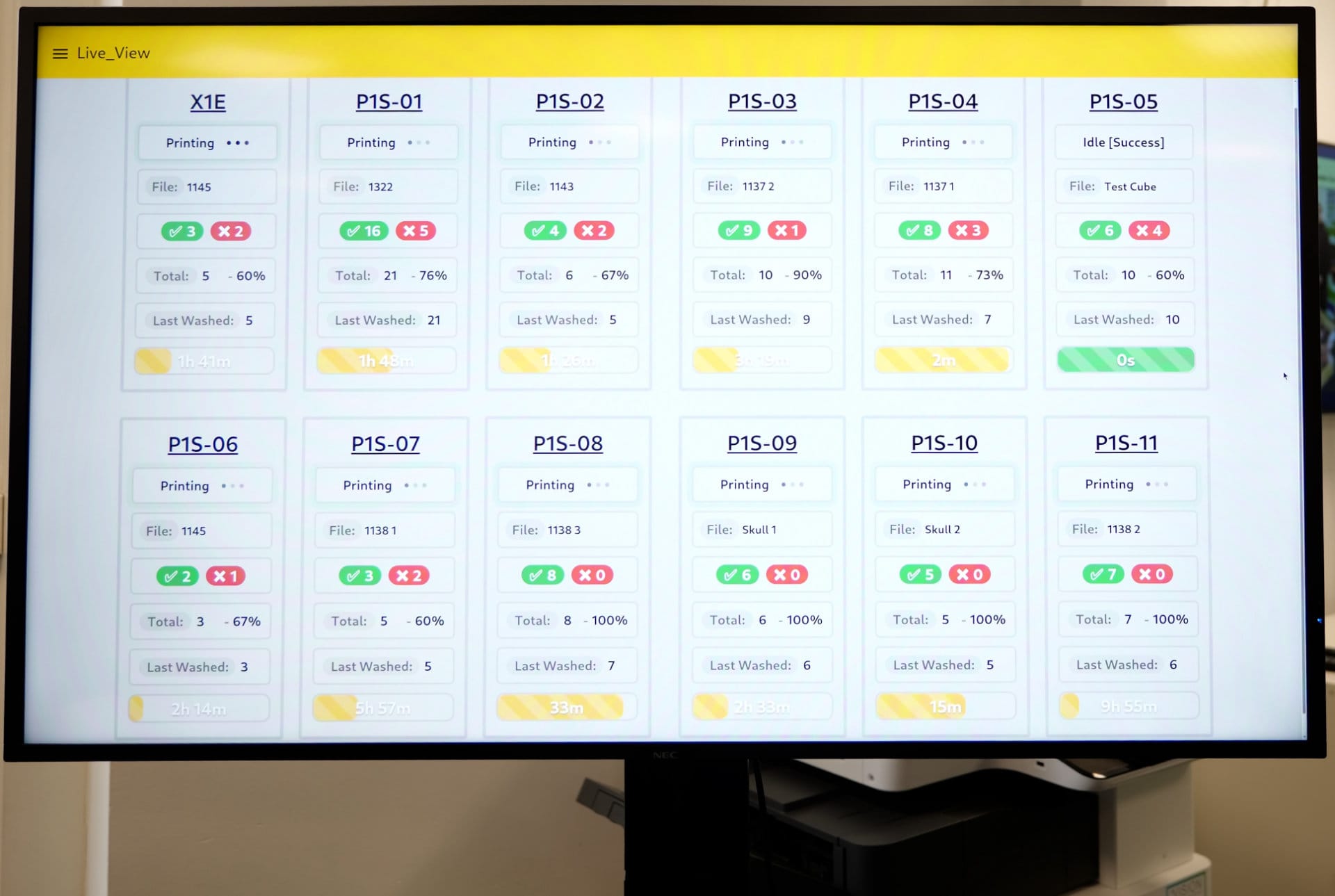
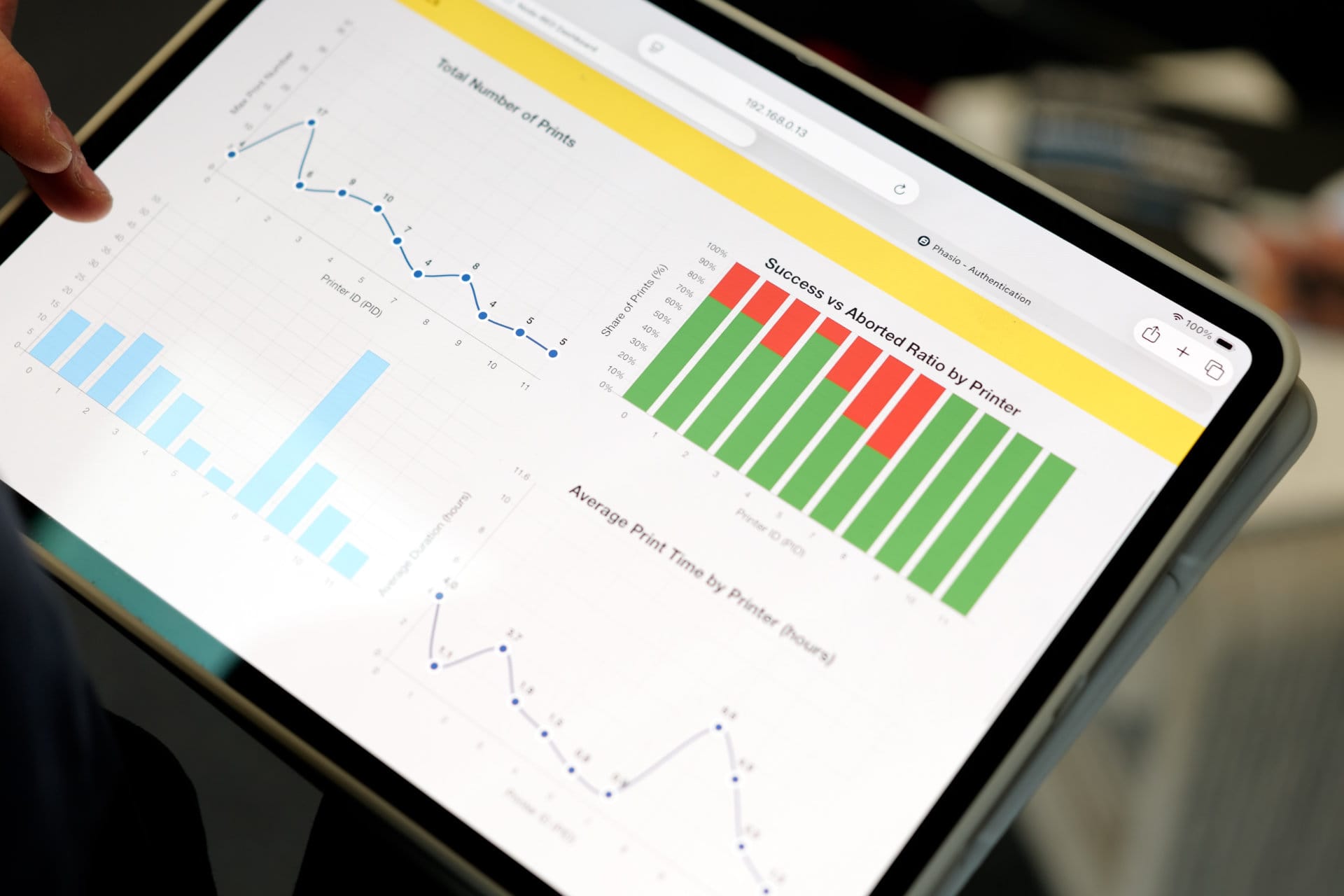
The team has developed a custom dashboard - built entirely in-house by PrintCity engineers - that aggregates real-time telemetry from every printer: remaining print time, success and failure rates, failure categorisation (nozzle clogs, bed adhesion issues, slicing errors, under-extrusion), and maintenance histories. Every Tuesday, the team reviews the previous week’s data to identify systemic issues and refine maintenance protocols.
Instead of just printing and hoping that it works, we use data to make sure that everything is as scientific as possible. We’re doing our own internal experiments to find the optimum conditions for getting as many successful prints out as possible.
says Sam Hitchin, Technical Officer & Bureau Manager, PrintCity.
This analytical rigour has a practical payoff: faster turnaround, fewer failed prints, and reduced material waste - all of which matter both financially and environmentally. The dashboard is also used as a demonstrator for visiting companies, showing them how a well-managed additive manufacturing operation is run.
The Model: Four Pillars of Adoption
PrintCity’s impact on regional additive manufacturing adoption does not stem from a single programme but from a model that operates simultaneously across four interconnected areas.
1. Widening Participation: Reaching the Next Generation
Each year, PrintCity welcomes approximately 200 secondary school students from across the Greater Manchester region through its widening participation programme.
Many of these young people encounter industrial 3D printing for the first time at PrintCity. By creating that first point of contact early, the facility helps build a pipeline of future engineers, designers, and entrepreneurs who already have a conceptual and practical familiarity with the technology before they reach higher education or the workplace.
2. University Teaching: Embedding Skills Across Disciplines
All 40,000 MMU students can access PrintCity’s facilities. Crucially, the facility serves every discipline, not just engineering.
On any given day, the bureau processes parts for architecture students modelling building concepts, fashion students exploring structural accessories, interior designers prototyping layouts, and mechanical engineers testing load-bearing components.
This cross-disciplinary exposure means that additive manufacturing becomes a familiar tool across professions that will collectively shape how UK businesses design and make things in the coming decades.
Students who want to develop deeper expertise can enrol on the university’s Masters in Digital Design and Manufacturing, which is based physically inside PrintCity. Students on this programme do not just learn about the technology - they work in it every day, alongside industry partners and research academics.
3. Research: Expanding the Technology Frontier
PrintCity supports researchers from across MMU and from institutions across the UK, providing access to equipment and expertise that would be prohibitively expensive to replicate independently.
Current research activity ranges from exploring advanced metamaterials - lattice structures and materials that respond to temperature, moisture, or mechanical loading - to applied sustainability work on recovering and recycling SLS powder and resin waste. Manchester Met currently ranked #1 Most Sustainable University in the People and Planet Green League and has been in the top 10 for over a decade.
PhD students, part-funded by industry partners, work alongside the facility’s technical team, creating a continuous cycle of practical knowledge generation.
4. Industry Engagement: De-risking Investment
The fourth and arguably most commercially significant pillar is PrintCity’s structured programme of industry engagement, funded through a series of multi-year government grants. Over 300 companies have been supported in the past four to five years, spanning a structured pathway from initial exploration to full technology transfer.
The process begins with an open-door visit or a facilitated workshop. PrintCity’s approach is deliberately agnostic: if 3D printing is not the right solution for a company’s challenge, it says so. This intellectual honesty is core to its credibility.
If additive manufacturing is appropriate, the company progresses through a short technical feasibility phase, and, where real potential is identified, into a structured project of three to nine months, during which the PrintCity technical team works alongside the company to develop and validate a real application.
This process is supported by collaboration across the wider Greater Manchester ecosystem, particularly with colleagues from the Business School’s Centre for Enterprise, who contribute to the early-stage ideation and innovation workshops.
We want to give companies the opportunity to explore the technology, understand the limitations, so that when they make a decision on what investment to make, we’re supporting them in that decision-making and de-risking the investment they’ll ultimately make.
comments Carl Diver, Director of PrintCity.
The funding model behind this is as important as the content.
PrintCity secures three- to five-year government programmes that pre-fund the team and equipment. This means the facility can react to a company’s need within weeks, rather than the 12 to 18 months that traditional grant cycles impose. Speed of response is not a secondary consideration - it is a structural design feature.
Talent as technology transfer: Sam story
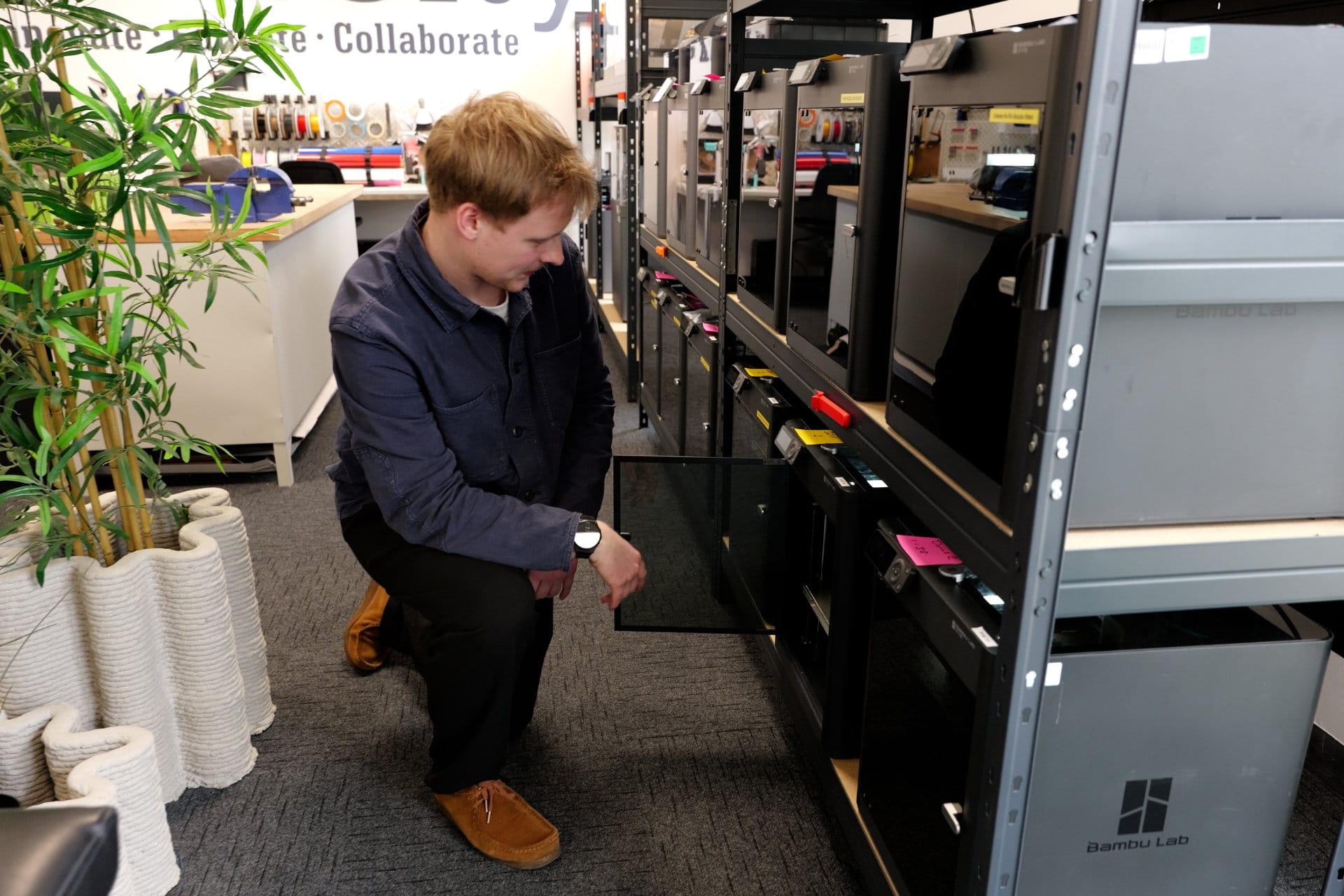
One of PrintCity’s most significant - and least visible - contributions to additive manufacturing adoption is the talent it produces and retains. Carl Diver illustrated this with the story of Sam, now the bureau’s technical officer, whose career arc encapsulates the facility’s human dimension:
He went on to complete the Masters in Digital Design and Manufacturing, working part-time in PrintCity throughout, then joined full-time when a technical role opened up. In less than a year, he had transformed the bureau - supporting colleagues to build the custom monitoring dashboard, systematising maintenance, and raising print quality and throughput.
This is not an isolated case. PrintCity alumni are working at Formula 1 in its additive manufacturing team, with four to five graduates now employed there and two PhD students part-funded by the same team.
The facility has also created indirect employment pathways: an encounter at a PrintCity networking event between a prospective student and a past student working for a local company led to that individual being hired directly into the additive sector, bypassing the Masters route entirely.
Each of these individuals carries deep, practical knowledge of additive manufacturing into the companies and sectors they join. They are, in effect, human vectors of technology adoption - and they are a direct product of the PrintCity model.
Measured Impact: double the national average
The regional impact of this multi-layered approach has been independently verified. A DSIT report found that Manchester’s rate of additive manufacturing SME adoption is approximately double that of any other region outside London.
PrintCity was explicitly cited as one of the influencing factors behind that outcome.
A recent government report highlighted that Manchester is about double the adoption rate of additive manufacturing compared to anywhere else in the UK outside of London. And PrintCity was cited as one of the influencers for creating that opportunity for companies.
says Carl Diver, Director of PrintCity.
This is a striking finding.
Additive manufacturing adoption is notoriously difficult to accelerate: the technology landscape is complex, the capital costs are significant, and the skills required are scarce.
That one region has achieved double the national rate - and that a university facility has been identified as a causal factor - suggests that PrintCity’s model addresses the actual barriers to adoption in a way that pure market mechanisms do not.
What makes it work: key success factors
FOCUS AND INSTITUTIONAL COMMITMENT
Sam’s advice to other universities is unambiguous: the critical success factor is dedicated, specialist staff. PrintCity does not ask a machine-shop technician to manage 3D printing alongside their other duties. It employs people whose entire role is additive manufacturing. That focus, backed by genuine institutional investment, is what allows the facility to build deep expertise and deliver consistent quality at scale.
- Dedicated technicians focused exclusively on additive manufacturing
- University-backed investment in equipment and staffing
- A range of technologies and materials allows the correct technology, material and specialist support to anyone using PrintCity
- Industry funding channelled into new technology that doesn’t duplicate commercial services
- Open culture: PrintCity welcomes visits from other universities and shares its operational practices
STRUCTURE, SPEED, AND INTELLECTUAL HONESTY
- A funding model that pre-places resources, enabling response times measured in weeks rather than months
- Honest, technology-agnostic advice that tells companies when 3D printing is not the right answer
- A wraparound support model that follows companies beyond the initial project to ensure skills are embedded
- An open-door, no-barriers culture that makes the facility physically and culturally accessible
Looking ahead...
Both Carl and Sam are looking to the next phase of PrintCity’s growth with enthusiasm.
On the technology side, Carl sees the emerging generation of functional and responsive materials - those that react to temperature, moisture, or mechanical load - as a frontier where PrintCity’s research community is already producing significant results.
He is also watching developments in industrial reliability and repeatability, which remain barriers to wider adoption in production environments.
Sam is focused on sustainability.
The recycling of SLS powder and resin waste is an active area of collaboration with PhD students and, increasingly, with materials manufacturers. PrintCity is also exploring in-house filament production with novel additives, positioning itself as a partner in materials innovation rather than merely a consumer of it.
Both are clear that the next five years are about deepening, not just broadening. More students, more industry partners, more community engagement - and, in Sam’s words, making sure that additive manufacturing gets the reputation it deserves.
Lessons for other institutions
The PrintCity model offers a template that other universities and technology hubs can adapt. Its core lessons are not about scale or budget — they are about design choices:
- Specialise rather than generalise: a facility with dedicated staff and focused remit outperforms a generalist workshop with additive manufacturing as a side activity.
- Serve multiple communities simultaneously: the convergence of students, researchers, school pupils, and industry in the same physical space generates value that none of those groups could create independently.
- Fund for agility: multi-year programmatic funding that pre-places resources is more effective for industry engagement than project-by-project grant cycles.
- Be honest about technology fit: credibility with industry depends on saying no when additive manufacturing is not the right solution.
- Measure and share: PrintCity’s willingness to open its doors to visiting universities and to benchmark its own operational data sets a standard for transparency that builds trust across the sector.