How Kit Crafters turned toy design into a living
A technical writer who never planned to become a designer now has nearly 200 models downloaded hundreds of thousands of times

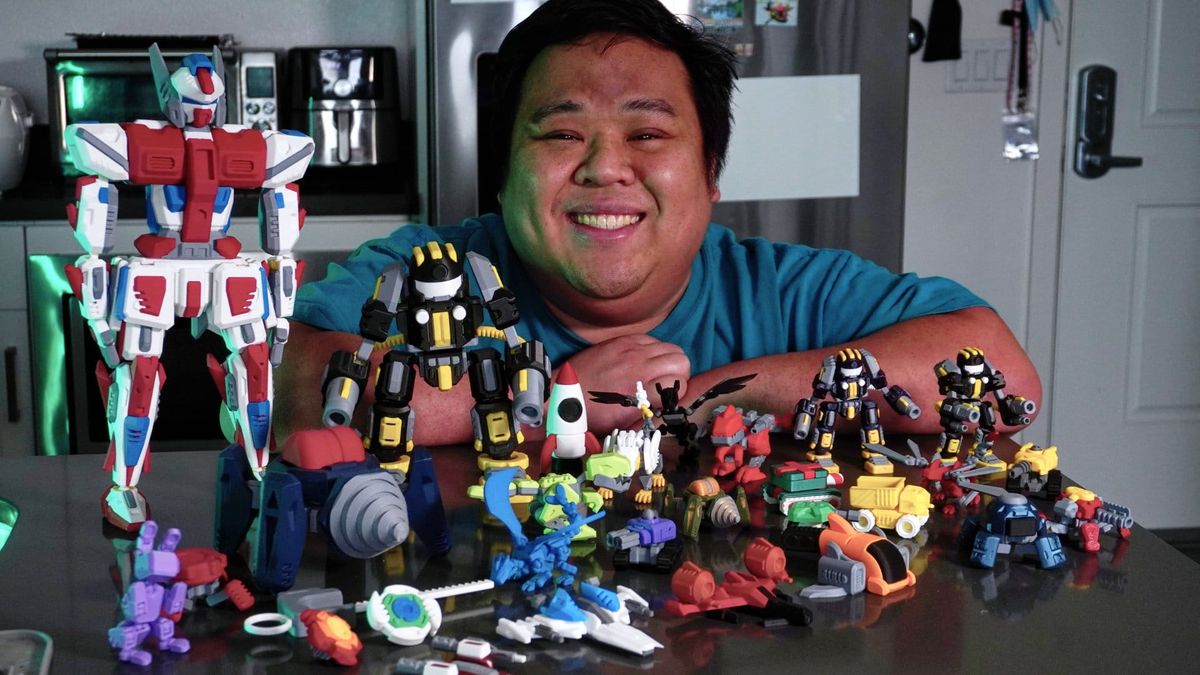
There's a detail about Mickey Hoang that tells you almost everything you need to know about him before he's said a single word about design. His name isn't Mickey. It's Michael. But he was born on Mickey Mouse's birthday, in the zodiac year of the rat, to parents who love Disney - so the nickname kind of stuck.
There's something fitting about that. A name that arrives by coincidence, that nobody planned, that becomes inseparable from the person.
Mickey didn't plan to become one of MakerWorld's most prolific toy designers either. That happened the same way his name did: almost by itself.
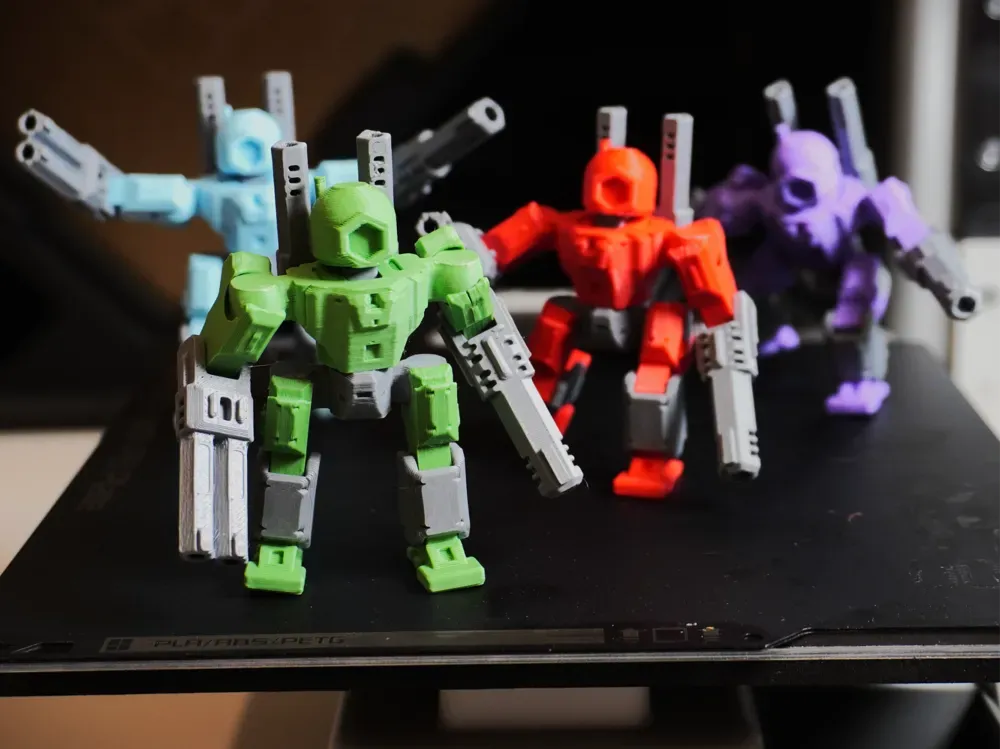
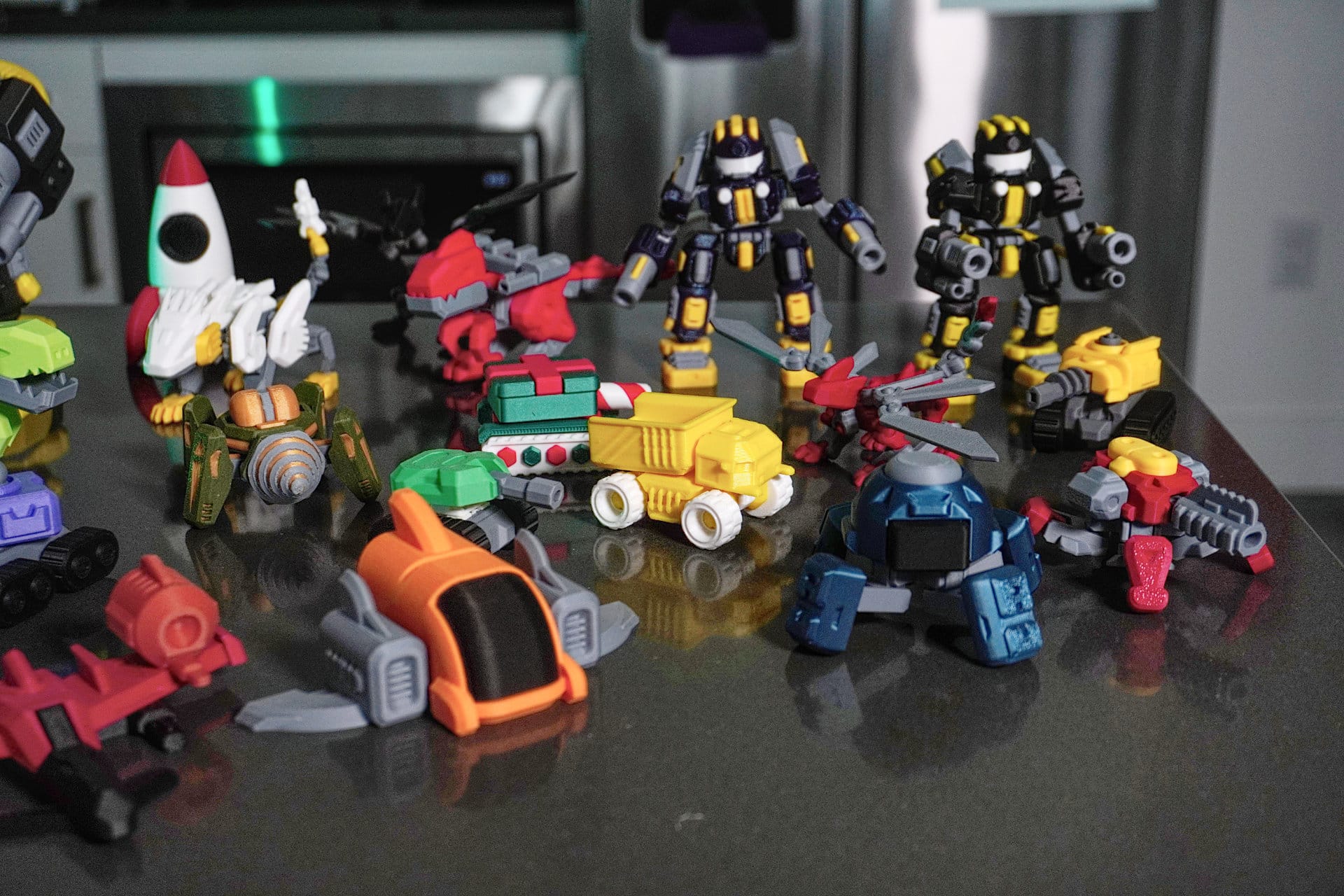
On MakerWorld, he goes by Kit Crafters. If you've spent any time browsing the platform, you've almost certainly come across his work. The modular robots with their interlocking joints. The fidget clicker. The dragon model that became his first crowdfunding project. The flamethrower microphone - a personal favorite, even if the numbers don't reflect it.
Nearly 200 designs, and the catalog keeps growing.
Ask him what he does for a living, and he'll say he's a toy designer. The answer is precise and a little playful - because when you look at what actually fills his days, that's not wrong.
The origins
His path to 3D printing started the way a lot of people's do: somewhere else entirely. Before COVID, he was working at a video game company making educational games for children. The office needed protective cases for a micro:bit chip - a small programmable board - and nobody knew how to print them.
Mickey volunteered.
He didn't know how either, but he wanted to learn. The company got a printer. He set one up at home. That was the beginning, though it didn't feel like a beginning at the time.
He had an Ender 3. Then Ender 5. Anyone who started with either of those machines knows the rhythm: level the bed, adjust the Z offset, print a test square, level the bed again.
The printers demanded constant attention and rewarded you with mostly functional but occasionally baffling results. He used them through college. Then, after a gap of two or three years, he stopped. The machines sat. Life moved on.
And then his wife gave him an X1C.
I got it and I was printing out all these designs and I was like - I should just learn to make it. You know, you can make way more.
That sentence is the pivot point of the whole story. Because the jump from an Ender to an X1C isn't just a hardware upgrade. It's a change in what the machine asks of you.
The old printers asked for your time, your patience, your tolerance for calibration rituals. The new one just printed. And suddenly Mickey had nothing left to do with his hands except design.
He opened FreeCAD. He's still using it today.
FreeCAD, Formula 1, and the first hundred models
Most people who try FreeCAD come away with a specific kind of frustration. The software has a reputation. Forums will tell you it's unstable, counterintuitive, and something you should only use if you genuinely enjoy pain. Mickey heard all of that. He stayed anyway.
I just didn't want to pay for anything. So I stuck with it.
His first project was a small clip to vent a filament dryer. The kind of thing that takes an experienced modeler fifteen minutes. It took him two hours. He finished it, printed it, held it in his hand, and felt something click - not the clip, but the understanding that he could make a physical object from nothing but an idea and some software. It wasn't efficient. It didn't matter.
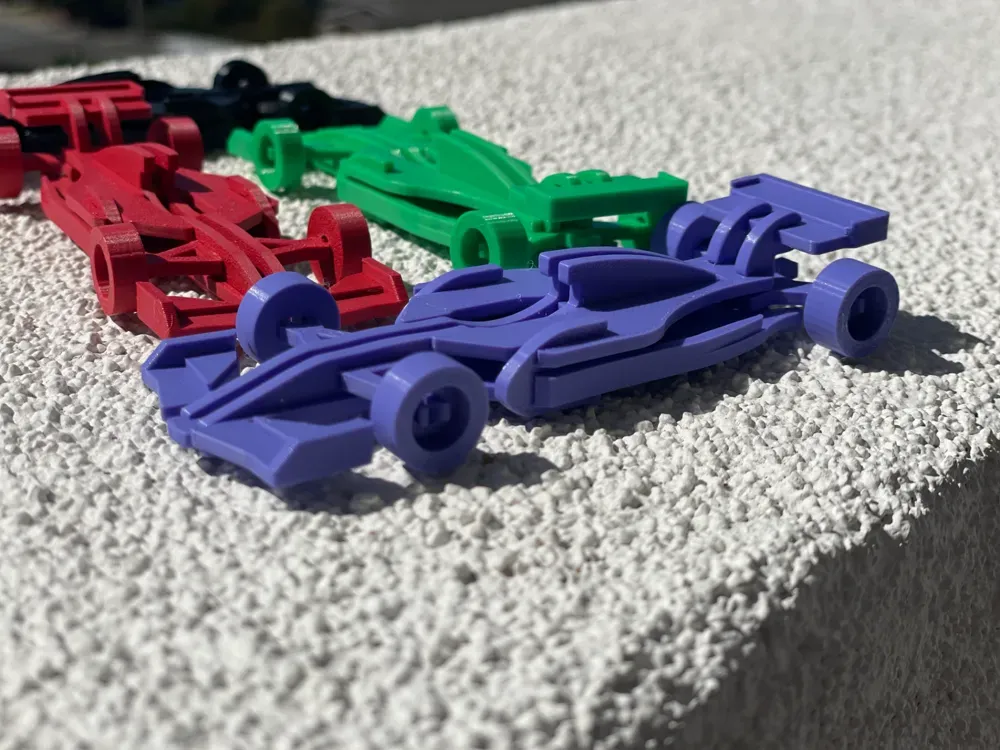
The second design was a Formula 1 kit card. He's a big F1 fan. He made a small card that kids could print and build - and then, because it was Halloween and he had a printer running and the idea seemed genuinely fun, he gave them out with candy. The kids loved them.
When MakerWorld launched, Mickey was among the first hundred creators to upload a model. He posted the filament dryer clip. Then the F1 card.
And then something unexpected happened: the F1 card took off.
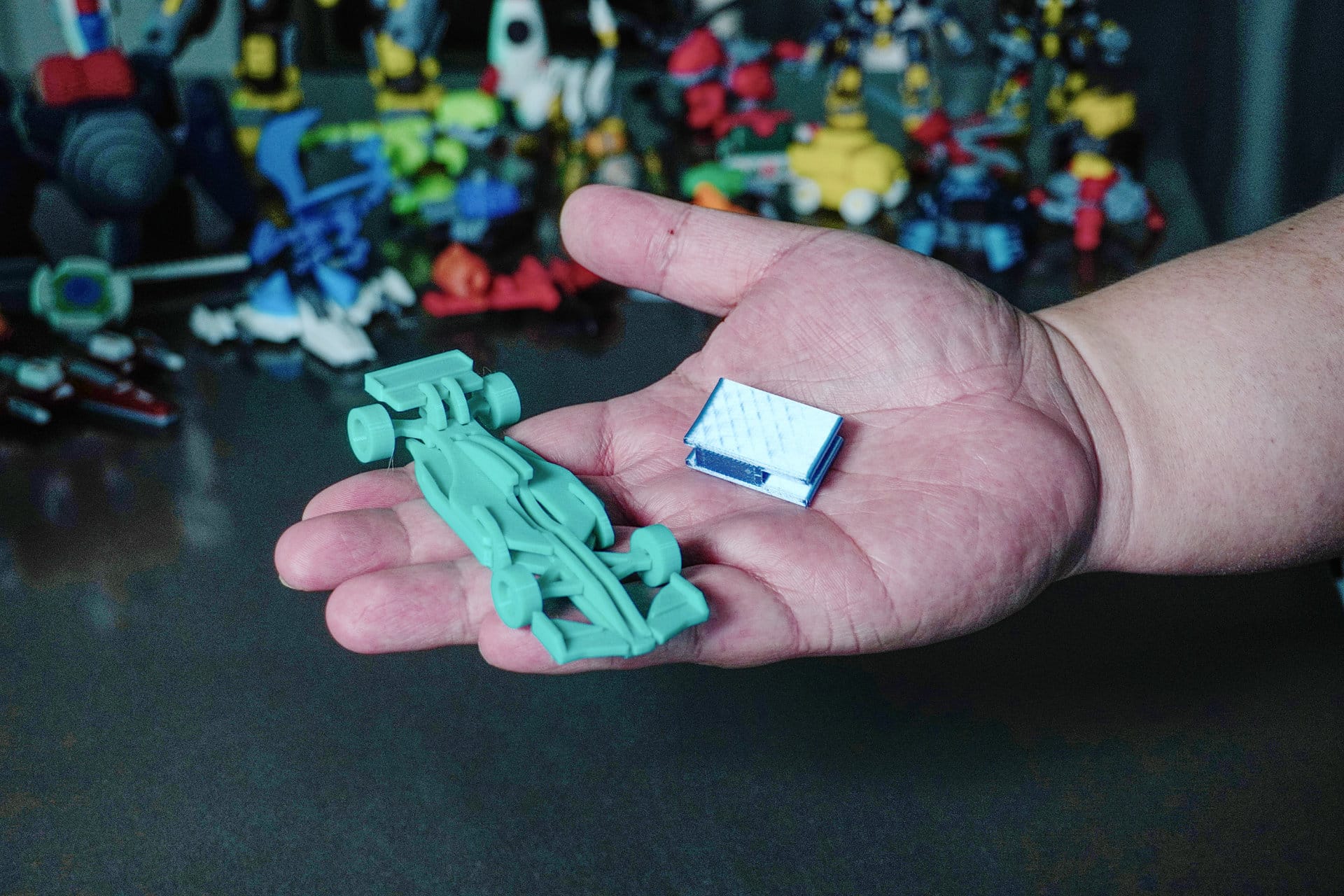
Downloads piled up. Comments appeared. People were printing his thing - a thing he had made on a Tuesday because he liked Formula 1 and had a printer running.
That got me motivated.
He started studying 3D print design seriously. YouTube tutorials. Online resources. The specific constraints of designing for FDFF printing - wall thickness, tolerances, print orientation. He taught himself everything.
Then FreeCAD improved. And he improved with it. And the catalog of designs began to grow, one model at a time, each one a small problem to solve and a small lesson to absorb.
His style emerged the way styles usually do: not from a plan, but from the intersection of what he liked and what the tools made easy.
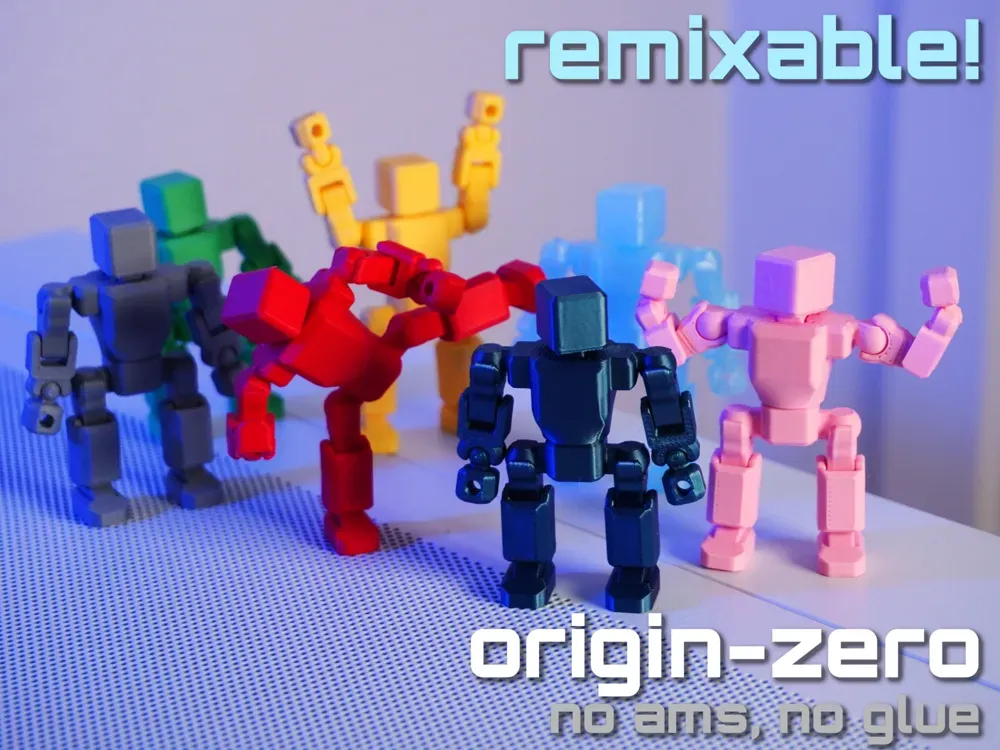
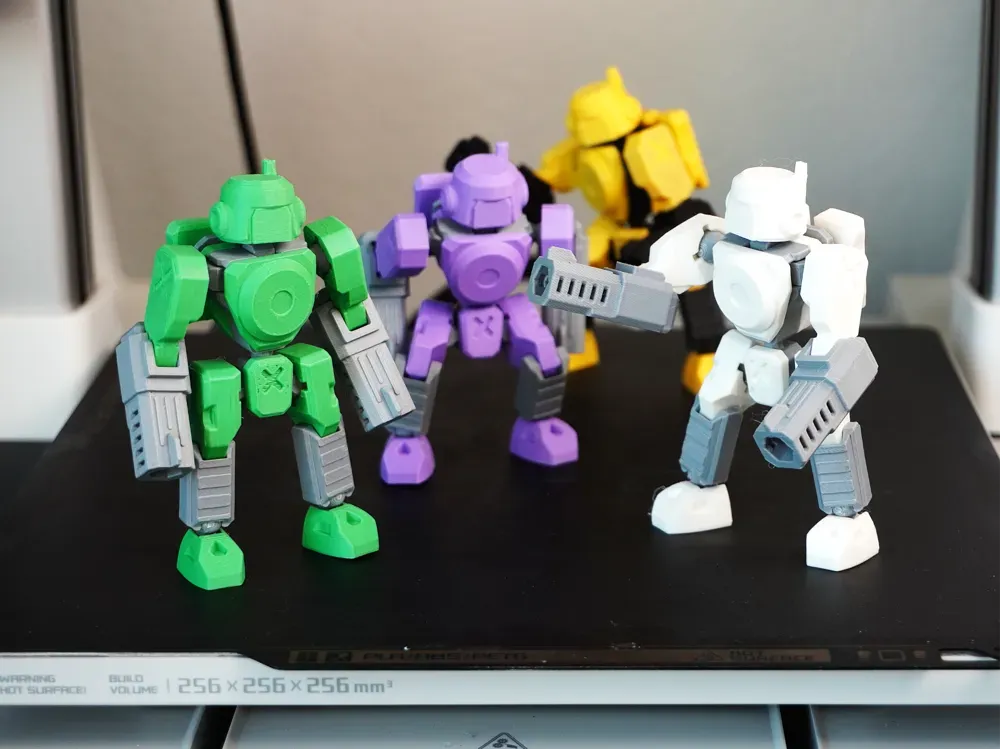
He liked robots. He used CAD software. CAD software is good at hard angles, precise fits, mechanical logic. The modular robots came naturally from that combination - designs with interlocking parts, swappable components, a satisfying click when everything fits together.
His wife, scrolling through MakerWorld, can pick out his work without being told. That's not a small thing.
I've developed my own style. People can say, 'Oh, this is made by you.' Sometimes I'll scroll on MakerWorld and my wife will be nearby and she'll be like, 'That one, is that you?' And I said, 'That's me.' She doesn't know all my designs, but she can tell.
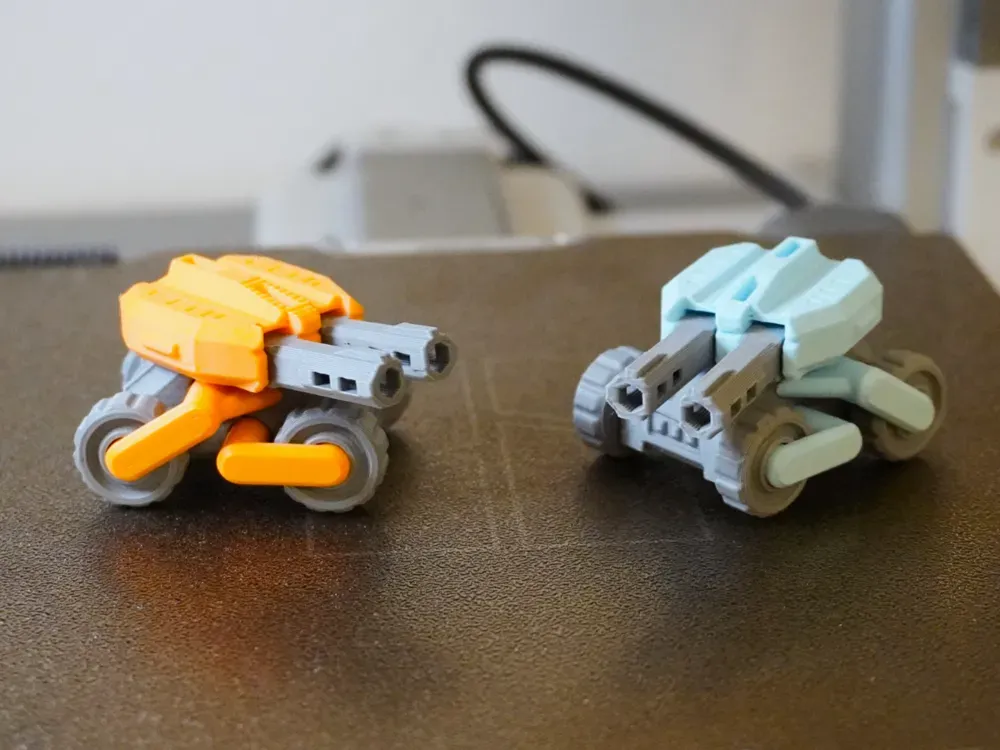
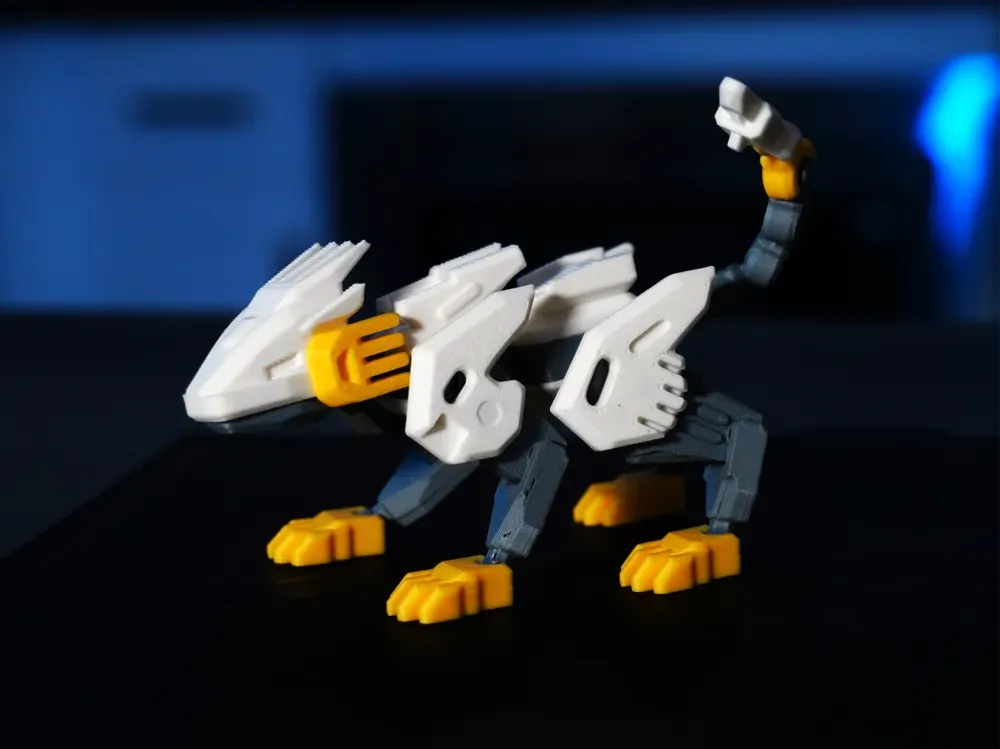
He tried Blender. It didn't click. Organic modeling - the sculpting, the mesh-pulling, the kind of fluid form that makes characters and creatures - requires a different instinct, one that Mickey hadn't developed. But recently, something changed. He discovered VR 3D modeling. And that one clicked immediately.
The reason might seem strange at first: Mickey used to do clay face sculpture. Physical, hands-on, building shape with his hands in real space. VR modeling transferred that instinct. The hands knew what to do. He released a few organic designs. He's still working out how to integrate the freeform shapes of VR modeling with the precision tolerances of FreeCAD - because the thing that makes his designs distinctive, the functional joints and interlocking parts, still needs the exactness of CAD. A millimeter is a millimeter.
The CAD modeling allows me to make the parts that click together. After about a month I was able to make my joint system very good. So hopefully I can combine the organic modeling into that.
There's one more thing that sets Mickey apart from most creators on MakerWorld - he didn't just participate in the platform's contest culture. He started it.
Before MakerWorld had any official creator contests, Mickey had already drafted a full remix contest proposal: a Google Doc, a Reddit post ready to go, the whole thing. He brought it to MakerWorld asking for permission to promote it.
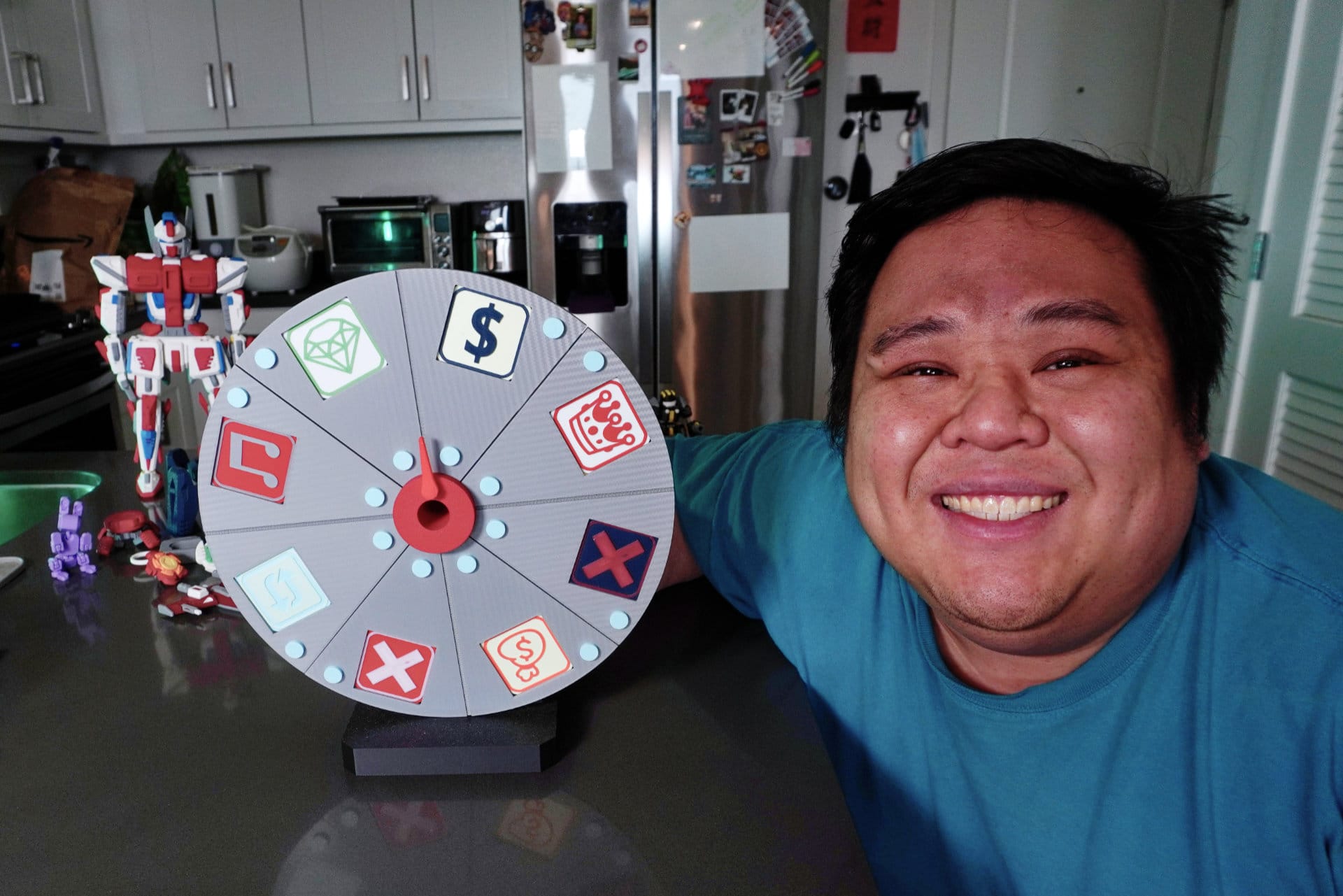
Their response surprised him: wait a couple of weeks, because we want to do this officially - and your idea is exactly what we had in mind.
The contest launched under MakerWorld's banner. It drew over a hundred entries. Mickey had expected fifty.
He went through every single submission. Some of them really surprised him - designs so good he wished he'd thought of them himself. For a contest organizer, there's no better sign that something worked.
The Clicker, the Dragon, and what people actually want
Here is the thing about the clicker fidget.
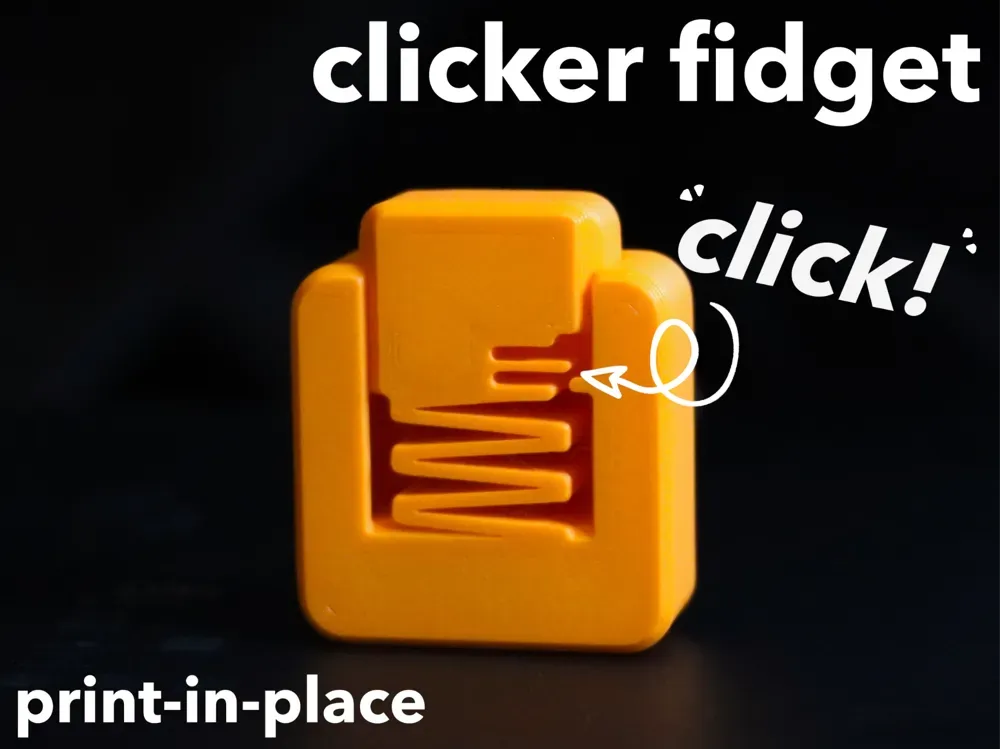

It took thirty minutes to design. Mickey saw people using mechanical keyboard switches in clickers, thought he could recreate that, sat down, and built it. Thirty minutes. It is, by a significant margin, his most downloaded and most financially rewarding design. Over 70k downloads at the time of writing, and still counting...
He has spent days on designs he's proud of - complex mechanisms, careful color ratios, engineering that took weeks to get right - and none of them come close.
It used to bother me. But now it's less important. Sometimes people just like something else more and you can't control that. And I'm glad that the other thing they like more is still one of my things.
That acceptance took time to arrive. It's the kind of thing every creator figures out eventually, or doesn't, and the ones who don't tend to stop creating.
Mickey figured it out, and it freed him up to make what he actually wants to make.
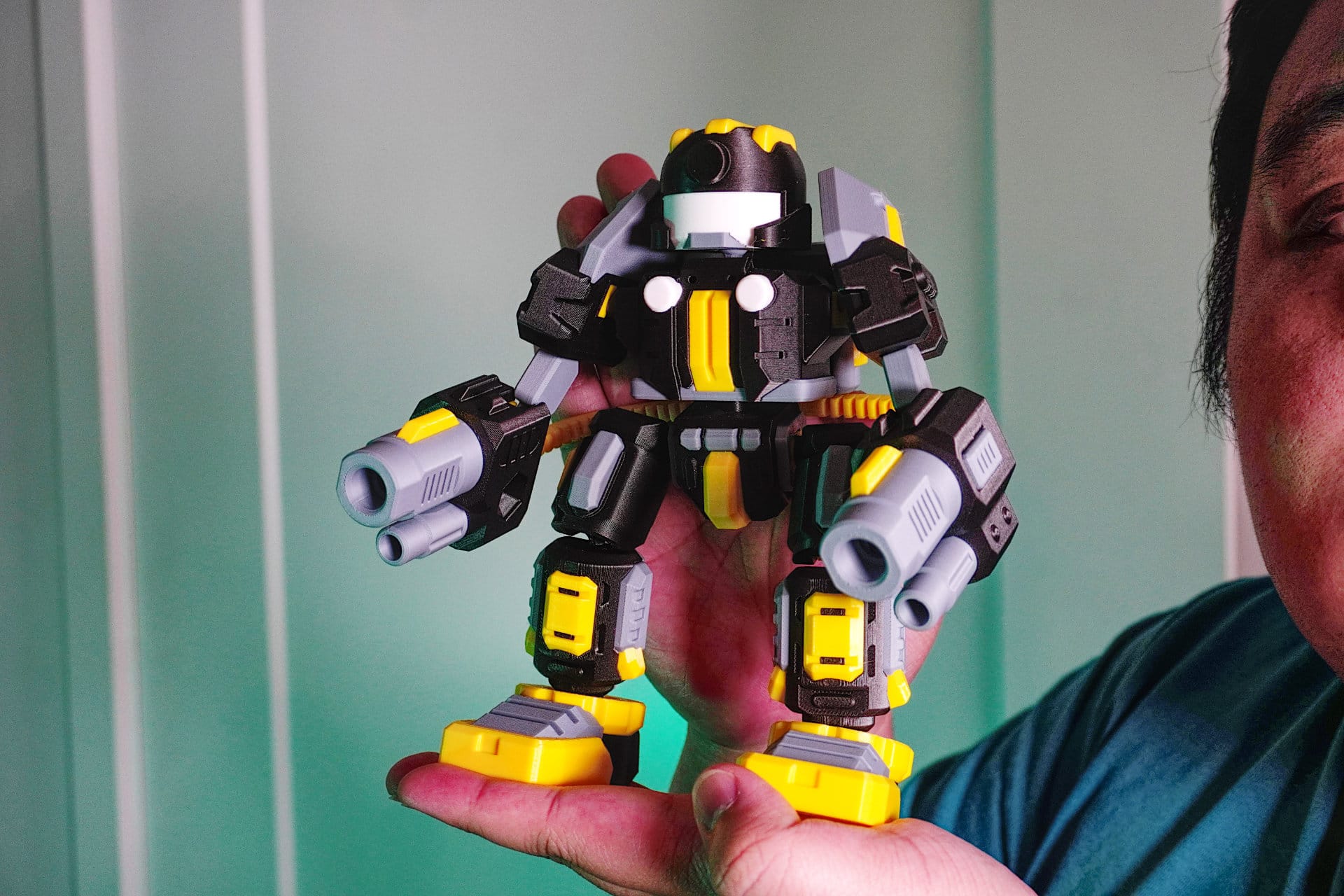
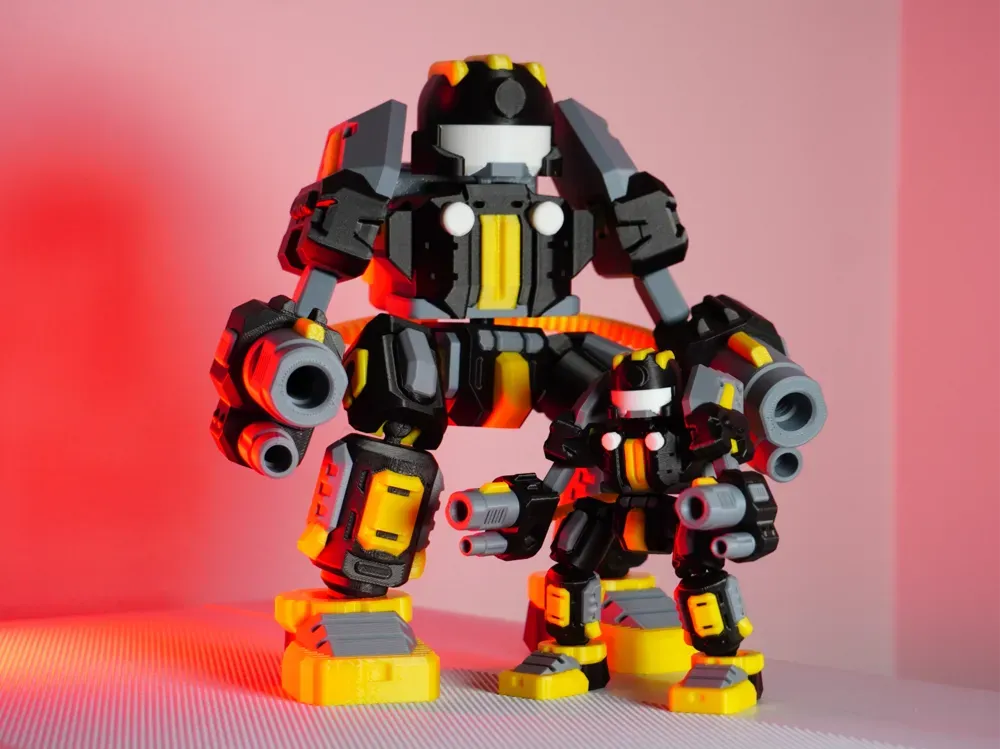
That's the case with his personal favorite - the flamethrower mech.
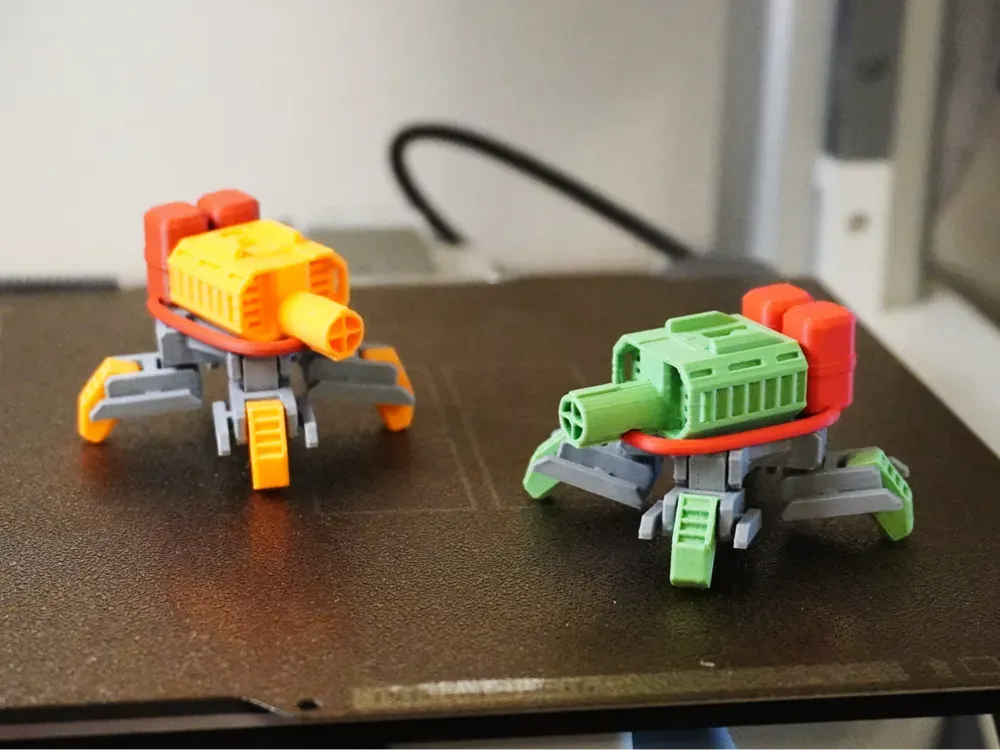
Three colors, proportioned carefully, something in it that makes him happy when he looks at it. It's not in his top ten most downloaded. But he doesn't seem particularly bothered.
The H2C opened up new possibilities for multicolor work - he now does a third test version in multicolor for his more complex builds.
He runs surveys of the people who follow his work. The data on multicolor printing is consistent: people love the results, but they dislike the filament waste that comes with AMS-based color switching. It's not the time. It's the pile of purged filament sitting next to the printer at the end of a job.
When he asks what would change their mind, the answer is usually the same: a more efficient multimaterial setup.
People definitely love it when you don't need to use an AMS for the design. I have so many more designs that I want to release but unfortunately it's not really feasible because nobody will download it right now.
How to make a living out of it
Consistency, he'll tell you, is the real answer to the question of how to build something sustainable on MakerWorld. Not any single viral design, not chasing what's trending, not a brilliant strategy. Consistency.
If anyone asked me, I would say that posting consistently seems to boost your exposure in the algorithm. Consistency is definitely the number one point.
At his peak, he was uploading a model every week. Now it's closer to one every two weeks - time is tighter, and he's more careful about testing. Each design takes roughly a day to build.
But the longest part isn't the modeling. It's the testing.
Mickey tests on at least one bed slinger and one Core XY machine, because the constraints are different: Core XY handles tall prints more easily, while bed slingers require more care about height and mass. He designs for both, which limits certain choices and expands the audience for every model.
The color choices are deliberate too. Mickey uses PLA almost exclusively, because it has the most color options and it's what most people have. He's avoided PETG because he prefers matte finishes and PETG's shine doesn't suit the look he's after. He's been experimenting with TPU for joints, because it bonds reasonably well with PLA and gives the moving parts in his designs a better feel.
The crowdfunding project - a large dragon model - was his first experiment with a paid campaign on MakerWorld.
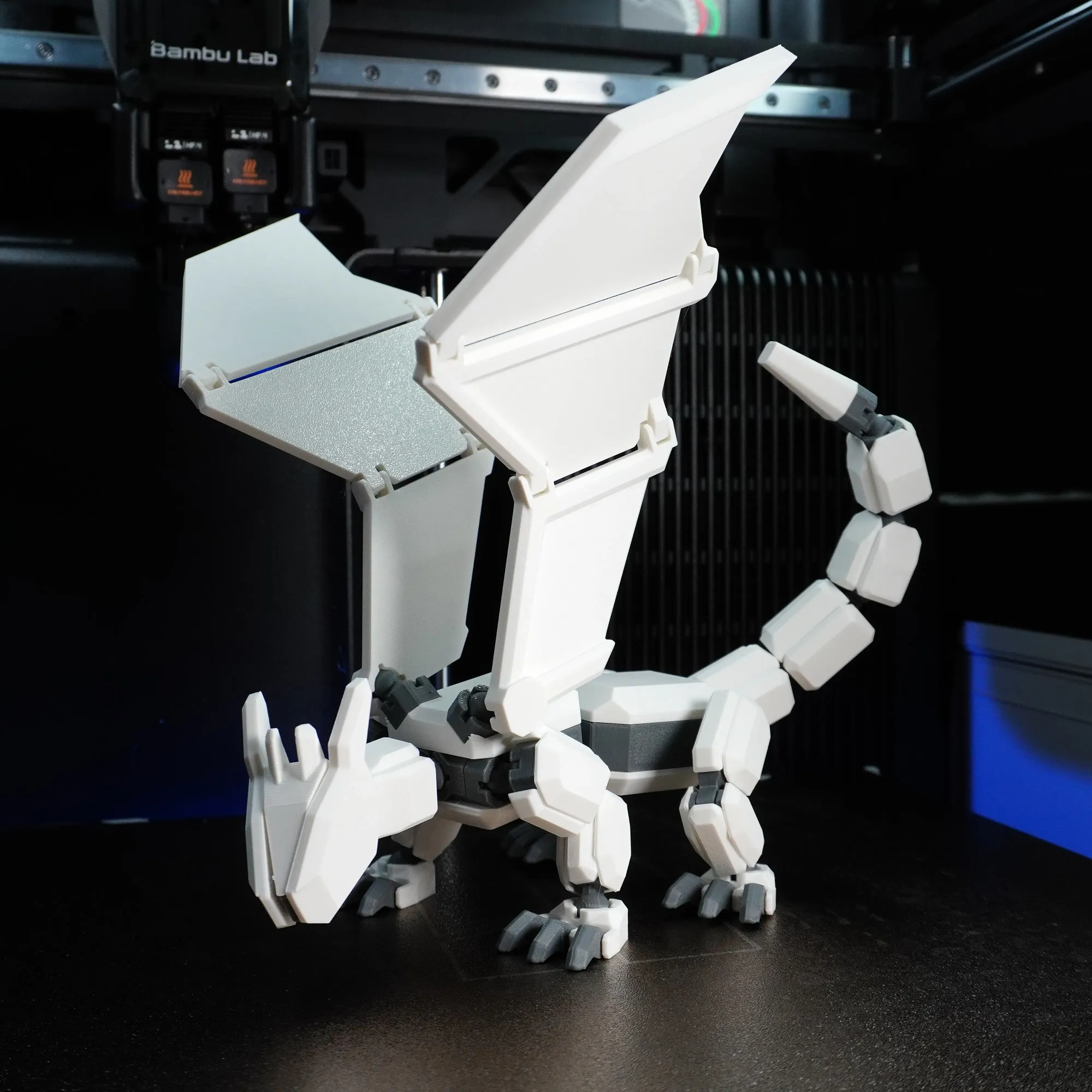
He was skeptical going in. The crowdfunding format felt like it might suit miniatures, where the community was already accustomed to paying for files. But what surprised him was the stretch goals. He'd planned three. He ended up delivering six or seven, because the response kept coming and he kept wanting to give more.
I didn't expect to reach so many stretch goals. People kept wanting more. And I'm happy to add more because so many people are getting in on it. For the same price, people were able to get more and more - and I was excited to give it.
Another campaign is coming. He has four ideas. A different dragon style. A modular robot system with five variants per limb - right arm, left arm, legs, all swappable - so people can design and customize their own version. He hasn't decided yet. He's started prototyping both.
A designer, an artist, or something else entirely...
Mickey Hoang has thought about the question of what to call himself.
He'd been using the word "designer" - toy designer, specifically - and standing by it. Design, in his definition, means thinking about the person who receives the outcome. What they'll feel when they hold it. Whether the pieces fit together the way they should. Whether someone with no instructions and no context can assemble it successfully. That's the work. That's what drives the decisions.
But he's not willing to throw away the word "artist" entirely, even though he's more comfortable with the other one.
I feel I've developed my own style. Because I have to focus so much on functionality, I usually say toy designer instead of artist - I have to focus on how it actually works for people to use. So I guess it's a kind of functional art.
The phrase is careful and exact. Functional art. Not art that happens to work, and not design that happens to be beautiful, but something that holds both in tension and doesn't resolve in either direction.
He's thought about this more broadly too. He used to be a software developer, and he knew engineers whose code was genuinely beautiful - not just functional, but elegant, readable, structured in a way that had aesthetic weight.
He'd call that art.
The label isn't reserved for paintings or sculptures or things in galleries. It belongs wherever someone has developed a distinctive way of seeing and making.
His mother has five A1 printers at home. He bought them for her because she loved printing pots and kept wanting more. She now runs what amounts to a miniature print farm - not for business, but for the pure pleasure of making things and sharing them with friends and family.
There's something in that story that rhymes with Mickey's own trajectory: the realization that 3D printing has moved past the era when it required a particular kind of technical devotion, and into something more accessible, more personal, more about making than about machines.
Maybe ten years ago it was a little tougher. You had to be very into it to do it. But now anybody could do it. My mom can do it.
He was invited by Bambu Lab to Shenzhen for a store opening event - a gathering of mostly Chinese creators and a handful of international ones.
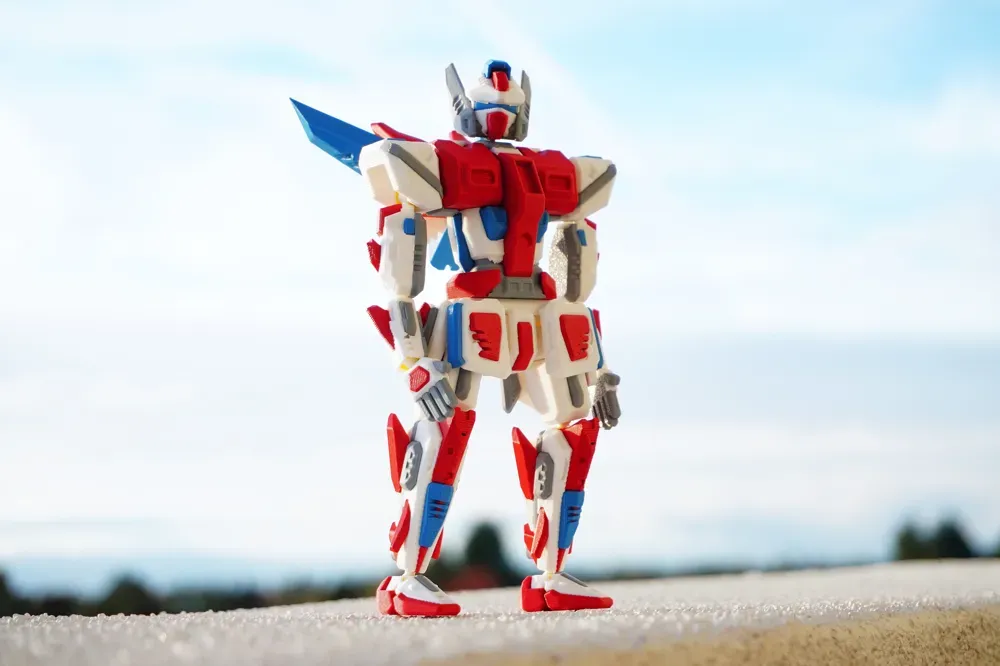
He went there. And at the new store and at the company's headquarters, he saw his designs on display - life-size versions of things that had existed, until recently, only as files on a screen and prototypes on a shelf. He didn't know they'd be there...
That's the part of this work that still surprises him.
Not that the downloads happen - he's rational about the numbers now, he understands the algorithm, he has a process - but that the things he makes in a room, testing joints and adjusting tolerances and running color prints, end up somewhere he didn't expect.
On a shelf in Shenzhen. In a kid's hands at Christmas. In someone's home thousands of miles away, printed for free, making someone happy.
MakerWorld made that specific thing possible.
The model where designs are free for the people who download them, while the platform compensates creators based on that usage - it's the thing that changed the equation for Mickey.
He started posting designs for fun. He discovered the reward system. And gradually, without any grand plan, designing became what he does.
I feel extremely lucky and grateful that I get to do this. It's so fun. I know some people are like, 'Oh, why do you release some paid models?' But even though I release some paid models, I don't think I'll ever stop releasing the free stuff. It's too satisfying. I really enjoy seeing people print it.
He has almost 200 models on MakerWorld. All of them earn something, even the quiet ones.
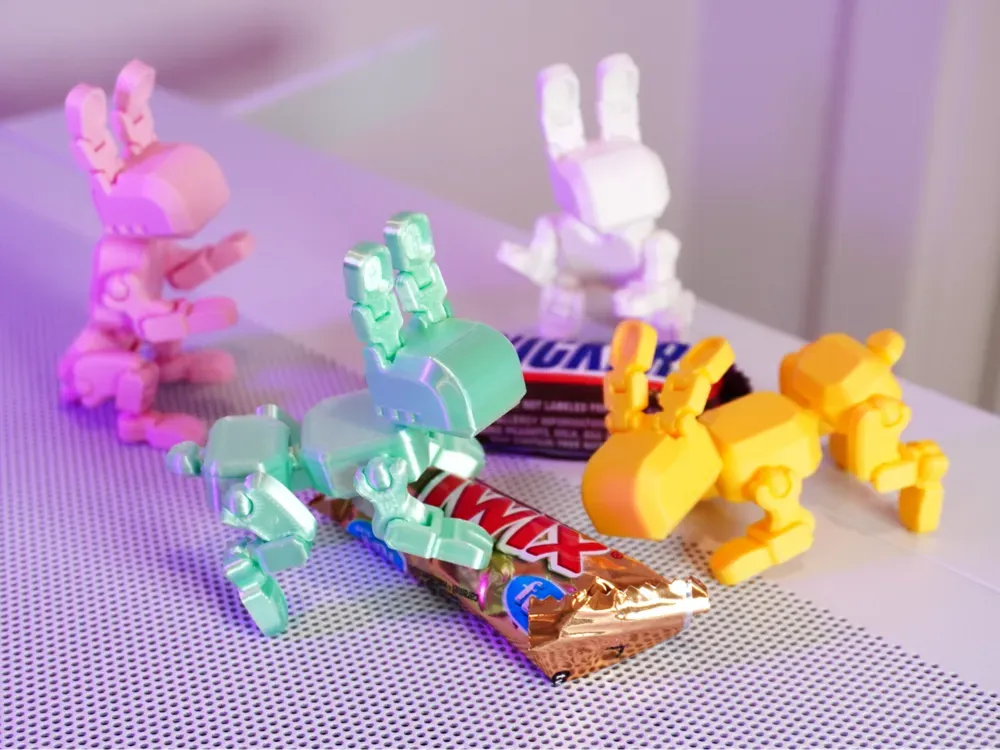
The catalog has become its own kind of stability - not dependent on any single hit, but on the accumulated weight of nearly 200 small decisions, each one a toy that someone, somewhere, decided was worth printing.
There's a shelf at his home with his favorite designs on it. Not the most popular ones necessarily. The ones he likes best. The flamethrower mic is probably on it. The clicker might not be.
He describes himself as a toy designer. His wife can pick his work out of a lineup. His mother has a print farm. His first model on MakerWorld was a filament dryer clip.
And somewhere, a child is holding a robot with swappable arms that clicks together exactly right.
That's the whole story, really. Except it keeps going.
All photos courtesy of Mickey Hoang. All right reserved.