Student rocket team puts 3D-printed parts on an actual rocket
How additive manufacturing helped UCI engineers slash their design iteration cycle from weeks to hours


Most people still see desktop 3D printers as machines that churn out plastic trinkets. But the technology has quietly matured into a serious manufacturing tool - one that is reshaping how engineers design, test, and build hardware across some of the most demanding industries on the planet.
And aerospace is chief among them.
What was once the exclusive domain of billion-dollar contractors is increasingly accessible to smaller teams willing to invest in the right workflow. Modern printers can handle engineering-grade polymers, deliver tight dimensional tolerances, and turn around parts in hours rather than weeks.
That shift has opened a new path for student engineering teams: instead of waiting on outsourced components or scavenging time on shared lab machines, they can run their own rapid design loops - on their own schedule, at a fraction of the cost.
The UCI Rocket Project Liquids Team is a compelling example of this shift in practice. A group of 30-40 undergraduate engineers based at the University of California, Irvine, they design and build liquid-fueled rockets powered by cryogenic methane and liquid oxygen.
The same propellant combination that SpaceX and Blue Origin have bet their deep-space futures on.
Their current vehicle, MOCH4, is designed to break the collegiate MethaLOX altitude record.
To get there, they needed to move fast, test often, and keep costs under control. Additive manufacturing - specifically, a standardized fleet of Bambu Lab printers - became central to how they do all three. Here is how it works in practice...
UCI Rocket Project Liquids Team
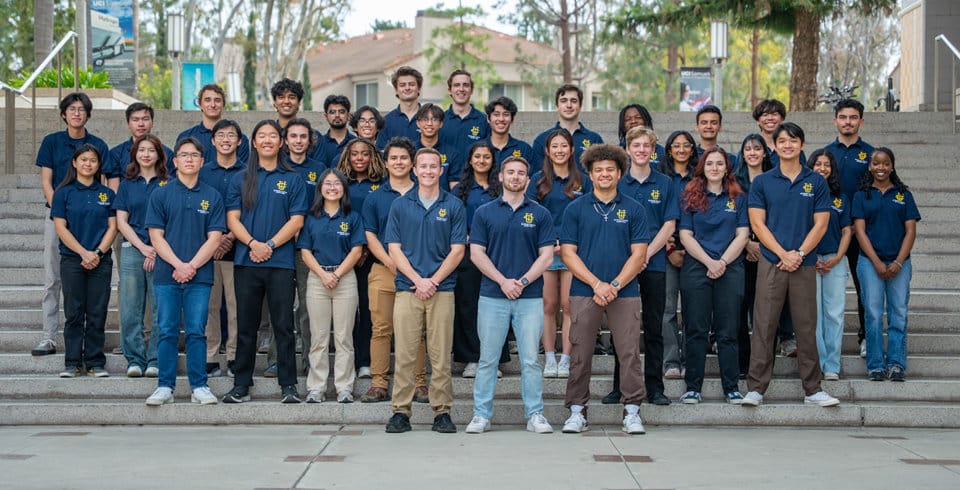
The UCI Rocket Project Liquids Team designs and builds liquid-fueled rockets while serving a broader educational purpose. The team brings together 30-40 undergraduate engineers and gives them direct ownership of a complex, flight-critical system.
Through hands-on development, members gain experience not only in engineering design and testing, but also in leadership, systems thinking, and professional collaboration. The rockets themselves serve as proof points for what a motivated student team can achieve when supported by the right tools, mentorship, and continuity of knowledge.
A defining technical challenge for the team is the use of cryogenic liquid methane and liquid oxygen (MethaLOX) propellants. These propellants demand extensive research, disciplined testing, and careful system-level integration.
At the same time, they represent a propulsion architecture increasingly adopted by industry for future deep-space missions. MethaLOX enables in-situ resource utilization, including the potential to generate return-trip propellant from Martian resources.
Companies such as SpaceX and Blue Origin have committed to this approach, making student experience with MethaLOX systems directly relevant to current industry practice.
In 2023, the team launched UC Irvine's first liquid rocket, PTR, to approximately 9,100 feet.
The lessons learned from that program were incorporated into MOCH4, a pressure-fed MethaLOX vehicle designed to challenge the collegiate MethaLOX altitude record of 13,205 feet.
As part of this redesign, the team focused heavily on the top-section aerostructures and recovery system. Additive manufacturing became a central enabler, allowing the team to produce fit-check prototypes, flight-adjacent mounts, housings, jigs, drill guides, cable management hardware, purge forms, and camera enclosures in-house.
Components that previously required weeks of lead time through outsourcing could now be produced within hours, enabling rapid iteration before committing to machined parts.
This workflow aligned closely with the capabilities of Bambu Lab printers.
The team required high-speed, reliable printing with engineering-grade materials such as PA-CF, PC, and ASA. These capabilities allowed rapid prototyping of top-section stringers, bulkhead interfaces, and skin cutouts, as well as the fabrication of durable recovery fixtures used during ground testing and solid-rocket rehearsals.
In addition, the printers supported the creation of integration tooling that reduced assembly time and rework.
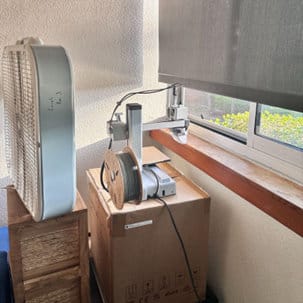
At the time of the case study, the team had access to several Bambu Lab systems.
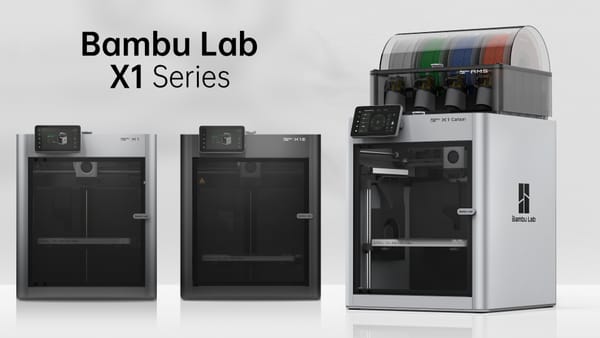
An A1 mini was used for quick, on-call prototypes, while a P1S supported larger parts and faster iteration. Through a long-standing partnership with MatterHackers, the team also had access to a Bambu X1 for higher-throughput or specialty print runs.
A BambuLab officially sponsored H2D printer was scheduled to be added, addressing the team's most significant constraint: limited on-campus printer availability and material access.
The decision to standardize on Bambu printers was driven by speed, dimensional accuracy, reliability, and ease of onboarding new members. Earlier generations of tuning-intensive printers consumed disproportionate engineering time. By contrast, the Bambu systems allowed the team to focus on design, testing, and integration rather than printer maintenance.
Challenges before adopting Bambu Lab technology
Before integrating Bambu printers into their workflow, the team faced several limitations. Printer access was fragmented across personal machines and partner facilities, resulting in long queues, inconsistent schedules, and restricted material choices.
Print quality varied, particularly on older platforms, which increased rework and slowed design loops for top-section aerostructures and avionics hardware.
The team identified an opportunity to centralize production around a dependable, high-speed system that could support same-day fit checks and functional prints. Reducing iteration time was critical to maintaining the program's test and launch schedule.
Bambu Lab solution: workflow changes and measurable benefits
After adopting Bambu Lab printers, the team saw immediate changes in iteration speed. Fit and clearance checks that previously took days could now be completed within hours. This accelerated the design-to-test cycle and allowed geometry, interfaces, and stiffness to be refined rapidly.
The expanded material range enabled practical use of PETG, ASA, PA-CF, and TPU for functional components requiring specific thermal, structural, or damping characteristics.
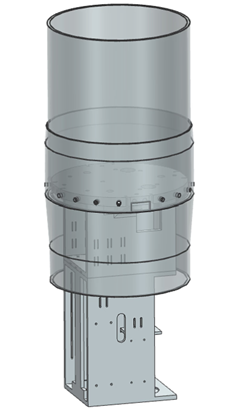
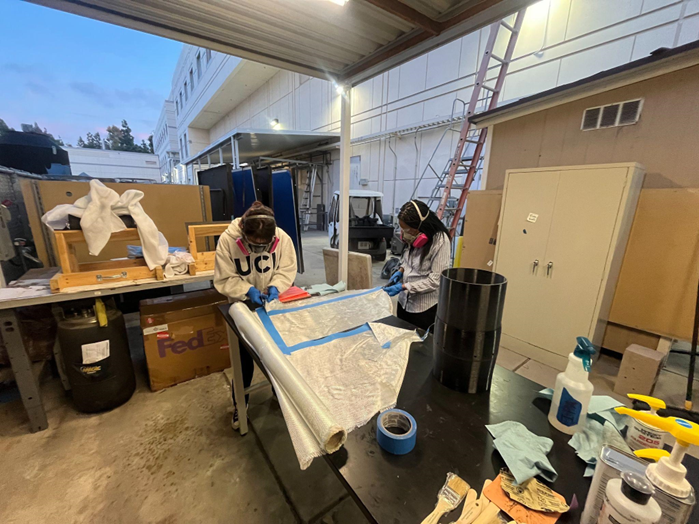
[1] The composite of the rocket structure and skin designed by students; [2] Students are processing the fireproof materials for the rocket, and the 3D printed skin part can be seen
Print quality and uptime improved significantly, with more consistent dimensions and surface finishes, reducing post-processing and reprints. New members were also able to learn slicing and print workflows quickly, lowering the barrier to contribution and preserving engineering time.
At the time of writing, the team had no substantive critiques of the platform and planned to provide further feedback after extended use of the H2D system, particularly for high-temperature polymers and long-duration prints.
Results
MOCH4 is the team's next-generation liquid methane/liquid oxygen rocket, designed to be reliable, recoverable, and capable of record-setting performance. To manage risk while moving quickly, the team uses SR-5, a solid-rocket test vehicle, as a full-scale flight testbed. SR-5 allows MOCH4 subsystems that do not depend on MethaLOX - such as the top section and avionics skins - to be validated in real flight environments.
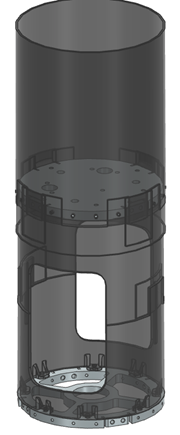
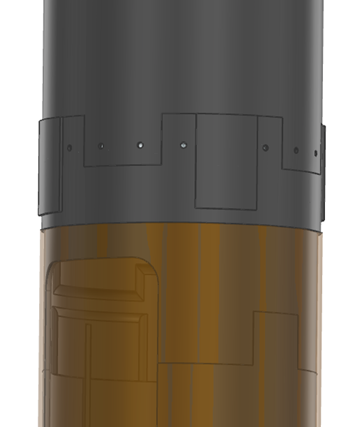
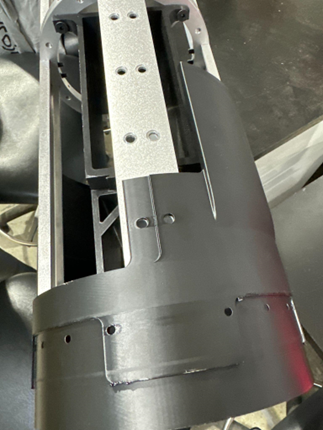
[1] The rocket skin structure designed by the team; [2] Detail drawing of the rocket skin structure; [3] The physical rocket skin processed by 3D printing, installed on the aluminum alloy main frame
The process is straightforward and repeatable. The team 3D-prints flight-like skins, subjects them to destructive ground recovery tests, and then flies successful configurations on SR-5. Data from these flights informs subsequent design iterations before the configuration is finalized for MOCH4.
Ground testing includes bonding printed skins to composite structures and taking them to failure using live black powder ejection events with parachute deployment.
Once a design passes ground tests, it is flown on SR-5 to validate in-flight aerodynamic, thermal, and shock loads that are difficult to replicate on the bench. The team then iterates and re-flies to refine wall thicknesses, rib layouts, and inserts.
The top and avionics sections require clean RF performance for cameras, telemetry, and GPS. Traditional carbon-fiber composites can attenuate RF signals. By printing skins from RF-transparent polymers and adding composite reinforcement only where necessary, the team preserved signal paths while meeting structural requirements.
Printed skins also offered significant integration freedom. Antenna windows, cable routes, shear-pin bosses, camera mounts, and access hatches could be built directly into the geometry, eliminating tooling changes and secondary operations. Most importantly, the team could move from CAD to print to destructive test to flight within days, which was essential during a launch-year schedule.
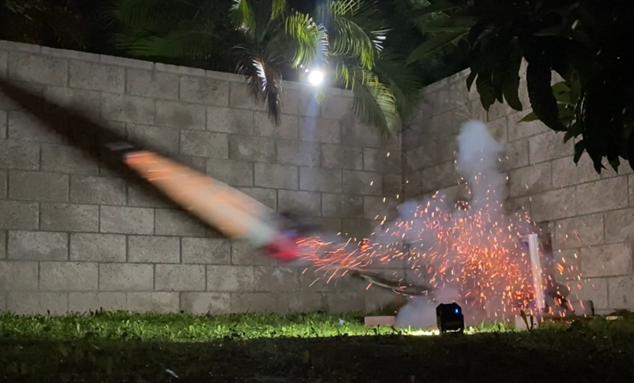
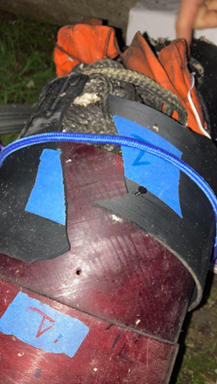
[1] The SR-5 rocket undergoing ground destructive tests; [2] The 3D printed rocket skin after the test
The target outcome is a flight-ready, RF-transparent top and avionics skin set that meets recovery loads with margin, validated first on SR-5 and then carried forward to MOCH4.
Bringing skin and avionics prototypes in-house reduced the iteration loop from 5-10 days to less than 24 hours for most parts. This cadence made it possible to ground-test midweek, reprint overnight, and fly SR-5 on the weekend.
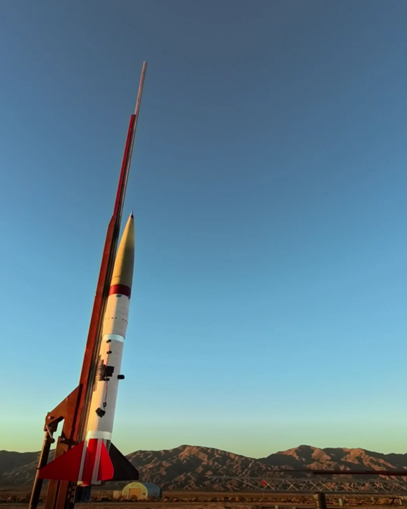
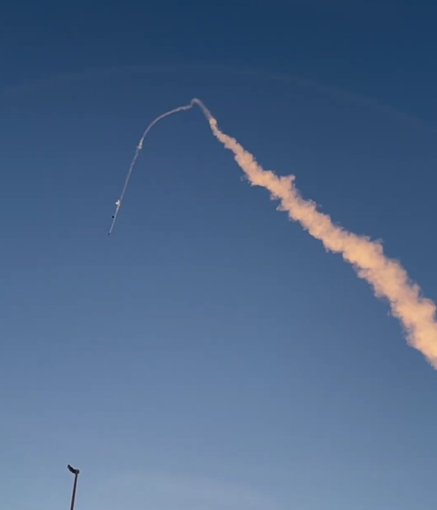
[1] The SR-5 test rocket waiting for launch on the launch pad; [2] The SR-5 test was a great success with a successful launch
Cost per iteration dropped substantially.
Comparable outsourced prints typically cost $150–$400 each, while in-house prints required roughly $8–$25 in filament and machine time. This cost reduction enabled frequent destructive testing without budget pressure.
Compared to legacy hobby printers, the Bambu systems delivered more consistent dimensions and cleaner overhangs, which was especially important for shear-pin interfaces, camera hatches, and antenna windows. Faster iteration cycles also allowed the team to bracket multiple design options and close structural questions with flight data rather than relying solely on analysis, directly reducing risk for MOCH4.
Looking ahead
The team plans to expand 3D printing from primarily prototyping into flight-like hardware. Future work includes tougher RF-transparent polymers, glass-filled nylons for avionics and top skins, hybrid shells with bonded composite ribs, and embedded features that reduce secondary operations.
With an H2D printer available on campus, the team expects to accelerate testing through access to higher-temperature print profiles, improved monitoring for long-duration prints, traceable print logs, and rapid turnaround for hot-swappable test articles.
3D printing technology has become deeply integrated into the entire life cycle of rocket development. It promotes innovation in structural design, shortens the manufacturing cycle, reduces costs, and improves performance reliability - helping the team build an efficient, agile, and capable aerospace manufacturing system.