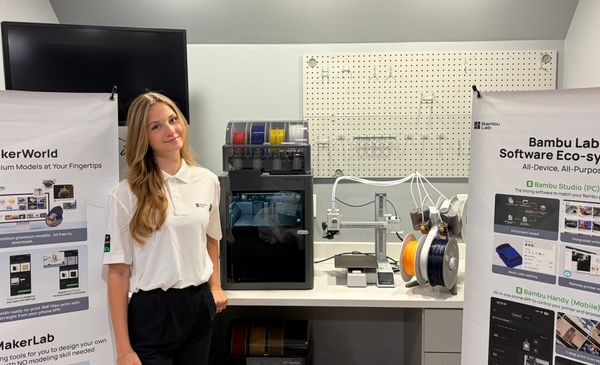
Xcellence made simple - Bambu Lab presents the X2D
No more compromises with supports

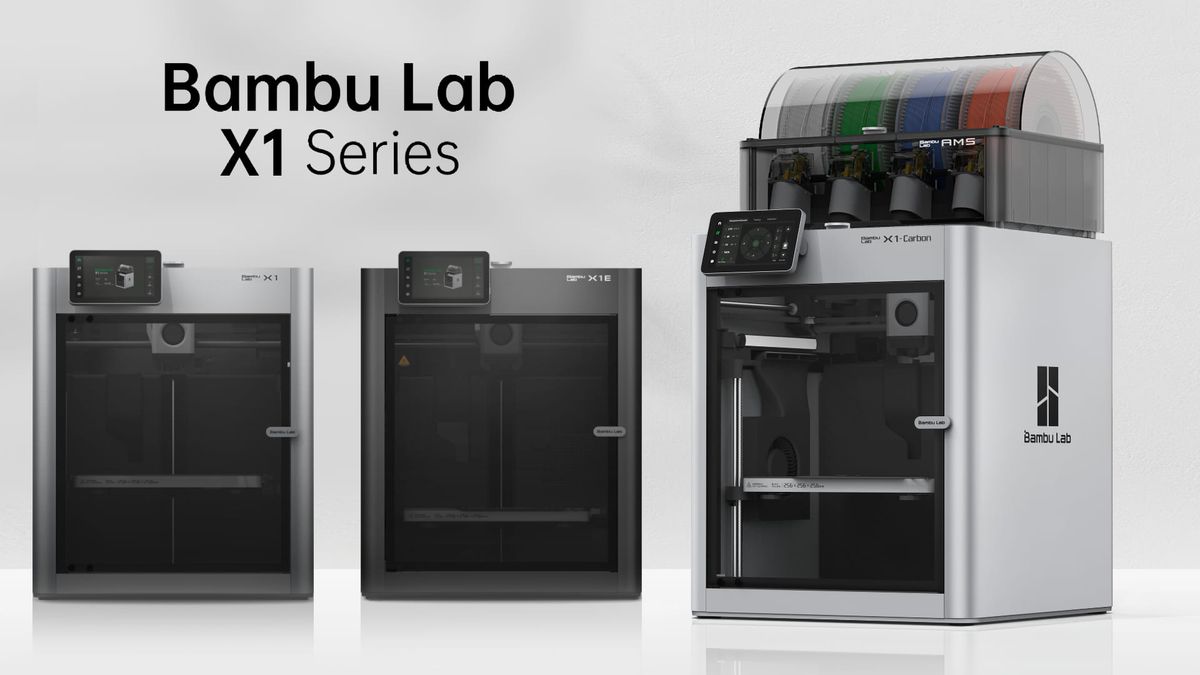
Bambu Lab stepped onto the 3D printing stage in 2022 and simply turned it upside down. The X1, and later the X1 Carbon and X1E, were not just better printers - they represented an entirely new kind of value. The proof that desktop 3D printing could be something far greater than it had ever been.
The market understood this quickly. Manufacturers around the world began copying Bambu Lab's solutions, and the virtual shelves of online stores filled up with their clones, which to this day are still trying to keep up with the original.
But Bambu Lab is not looking back. It is raising the bar. Again.
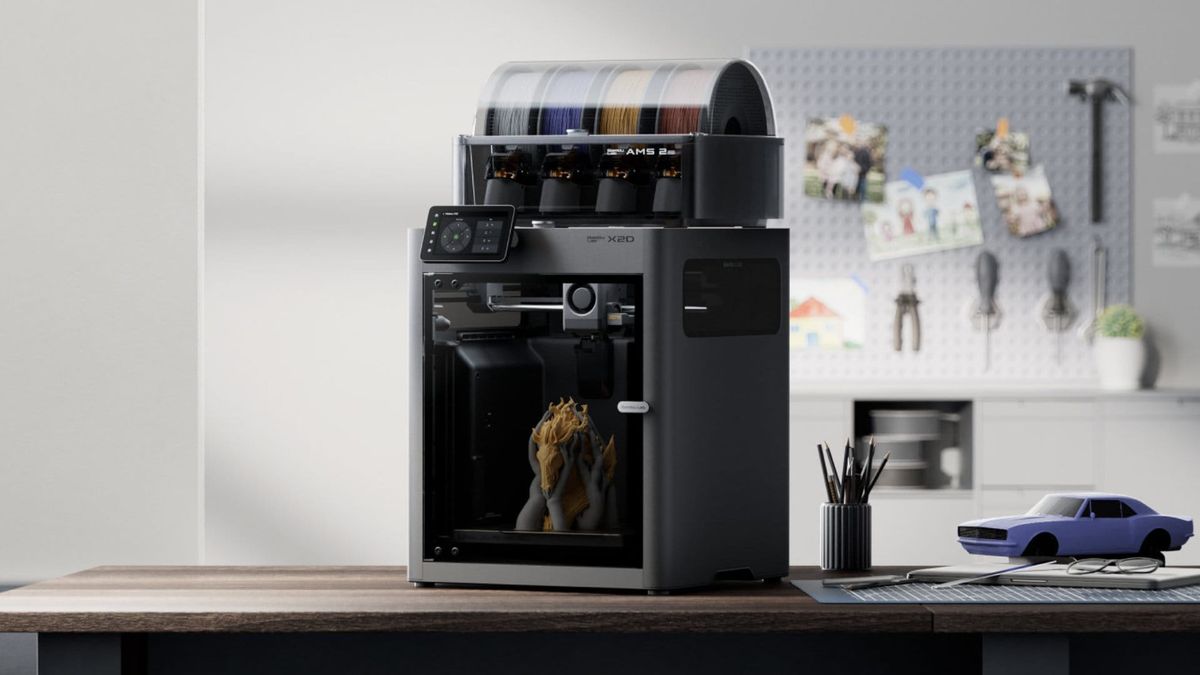
Meet the X2D - a printer designed to make marvels
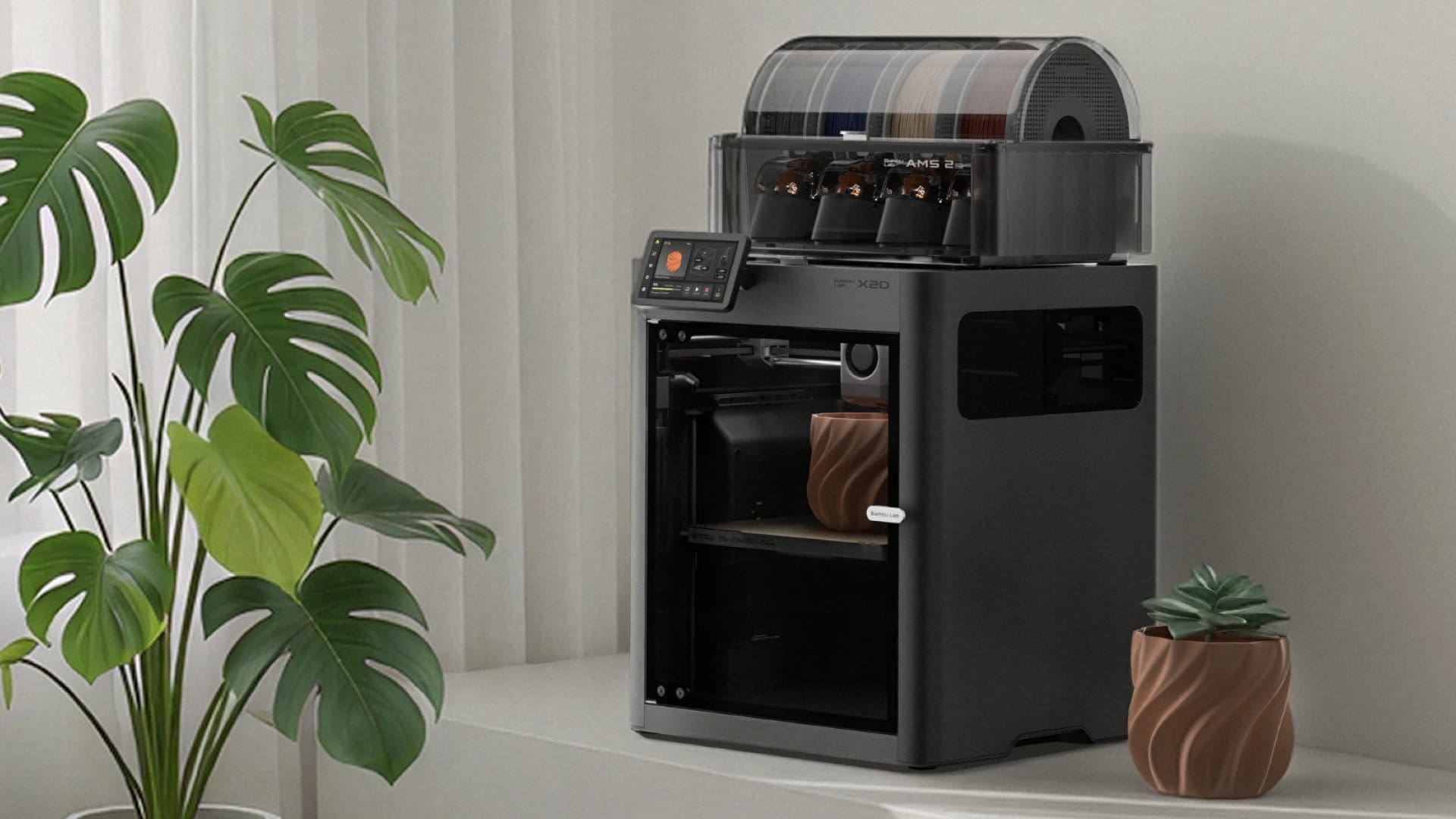
The X2D is the second generation of Bambu Lab's flagship X Series. It was designed with one idea: to unlock geometric freedom and enable easy 3D printing of advanced models.
At the same time, this is not an answer to the question "how do we make an even faster printer." It is an answer to the question every maker asks themselves while standing over a fresh print with a sander in hand: "why does this have to be so hard?"
At the heart of the X2D is something that has not been available at this price point before.
A dual-nozzle extrusion system with mechanical switching, AI algorithms inherited from the H-Series, and an intelligent thermal management system - all working together to ensure the printer performs just as well after a thousand hours of use as it did on the very first day, moments after being taken out of the box.
What's new - features that change everything!
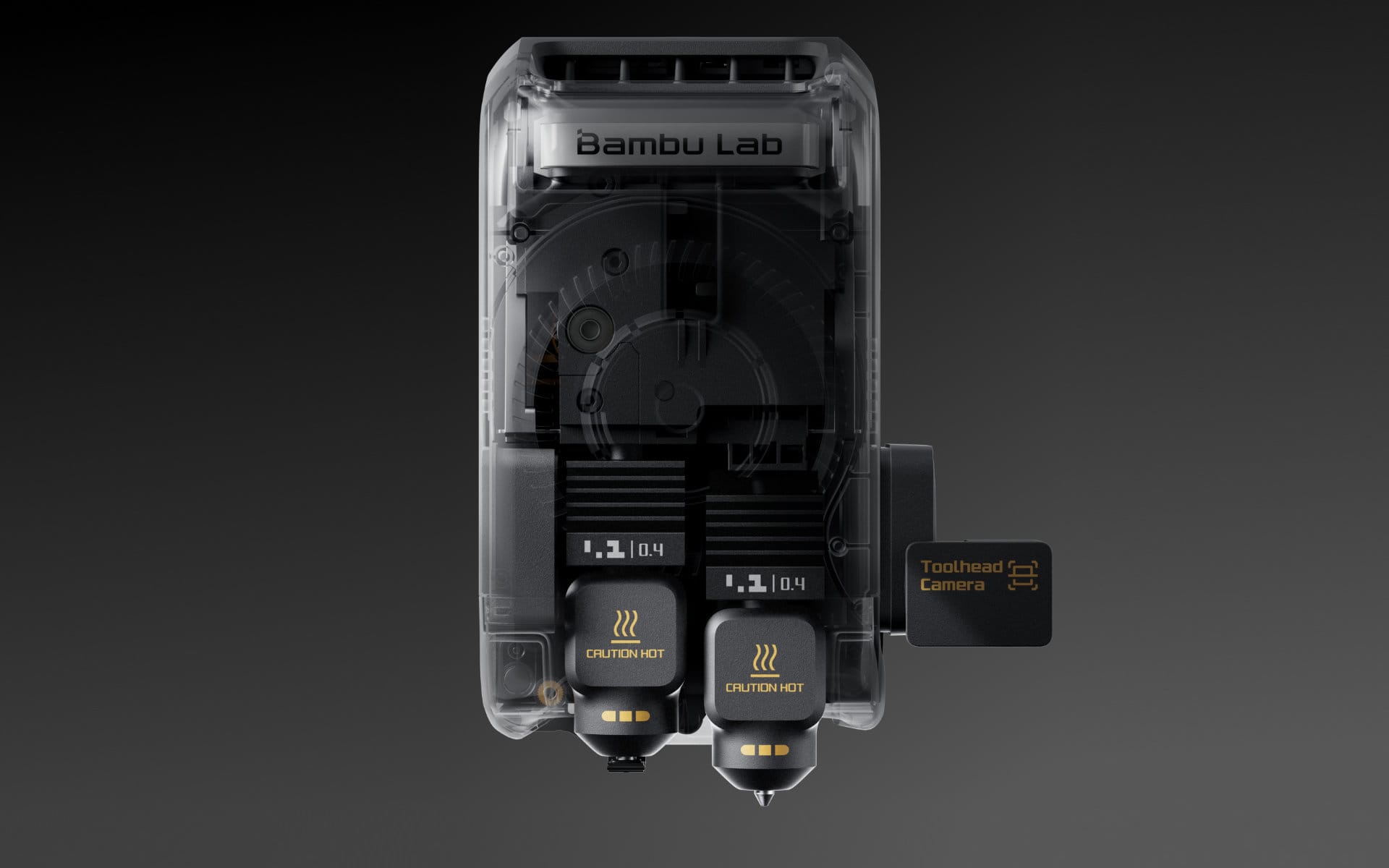
Dual-nozzle extrusion system - no more compromises with supports
The main nozzle prints the model while the auxiliary nozzle prints the support - using a different material, chosen so it releases cleanly. Instead of tools and brute force to remove supports, a gentle pull is all it takes.
What previously took half an hour of post-processing and left visible marks on the surface becomes part of the process - nearly invisible.
Switching between nozzles is purely mechanical, using a system of gears and triggers, with no additional motor on the toolhead. The result is twofold: the toolhead is lighter, reducing inertia and vibration at high speeds, which improves motion control, positioning accuracy, and overall print stability - ultimately leading to better surface quality and more consistent results. The new design also reduces the risk of failure, lowers maintenance requirements, and improves long-term reliability.
During life-cycle testing, the mechanism completed over one million switches without any loss of smooth operation.
Auxiliary Extrusion
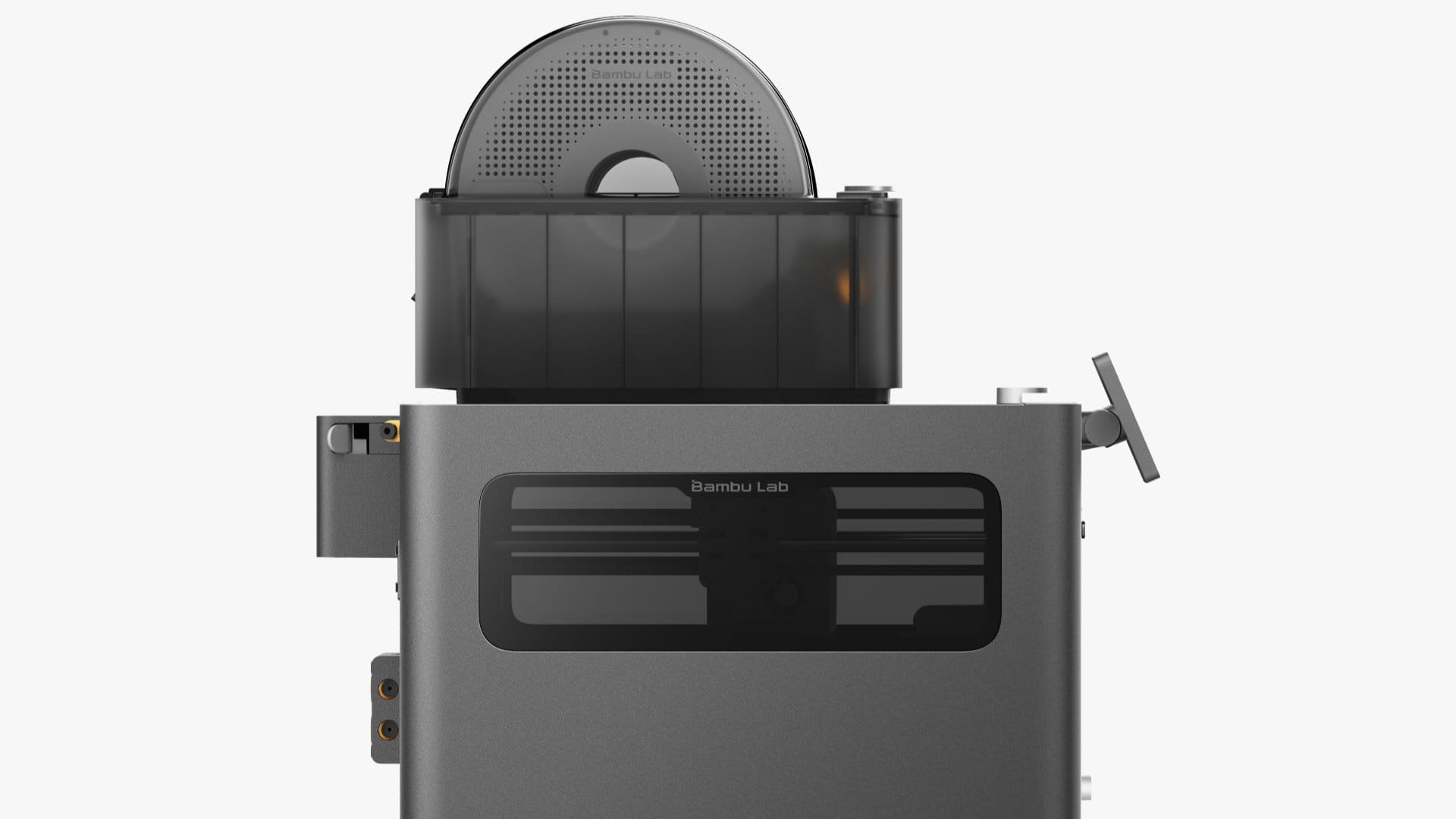
The X2D combines two filament feeding systems in a single machine.
The left nozzle uses a classic direct drive extruder - the motor sits directly at the toolhead, the filament travels a short path and reaches the hotend almost instantly. This delivers precision and broad material compatibility.
The right nozzle works differently. Its auxiliary extruder is mounted at the rear of the printer and connected to the toolhead via a PTFE tube. This is Bowden extrusion - the motor is far from the hotend, but more powerful, capable of pushing filament over a longer distance without losing feeding stability.
 Bambu Lab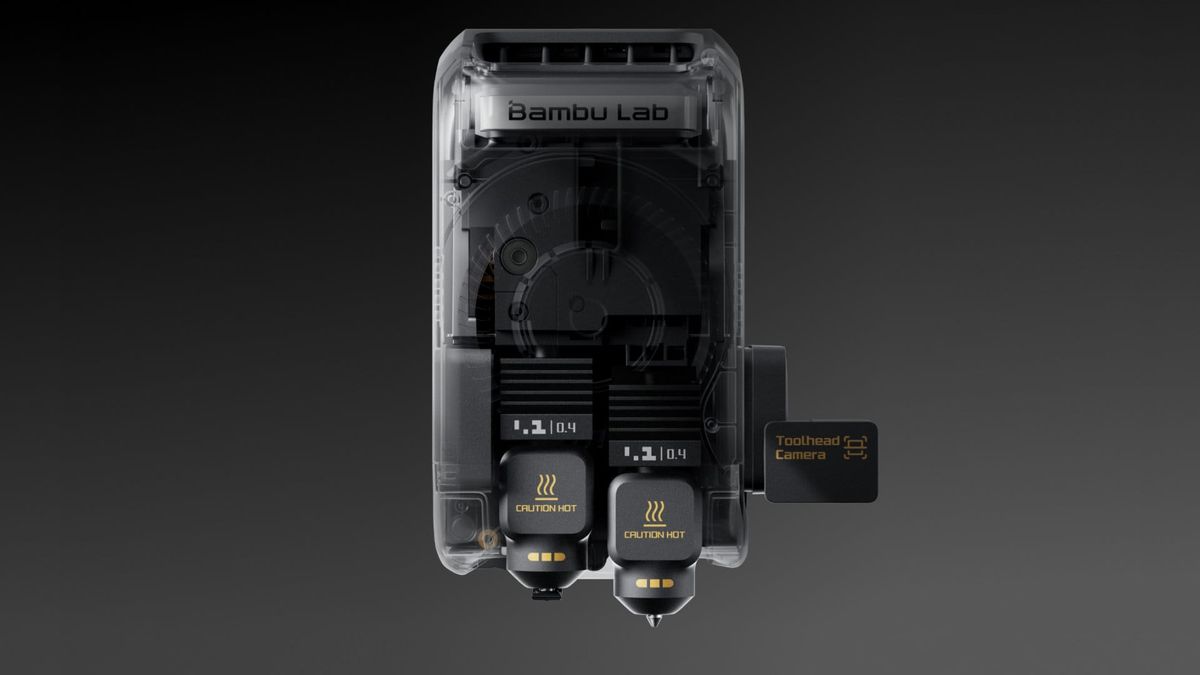
The end result: two systems, two extrusion philosophies - working together in a single toolhead.
Multi-color printing - faster, cleaner, with reduced waste
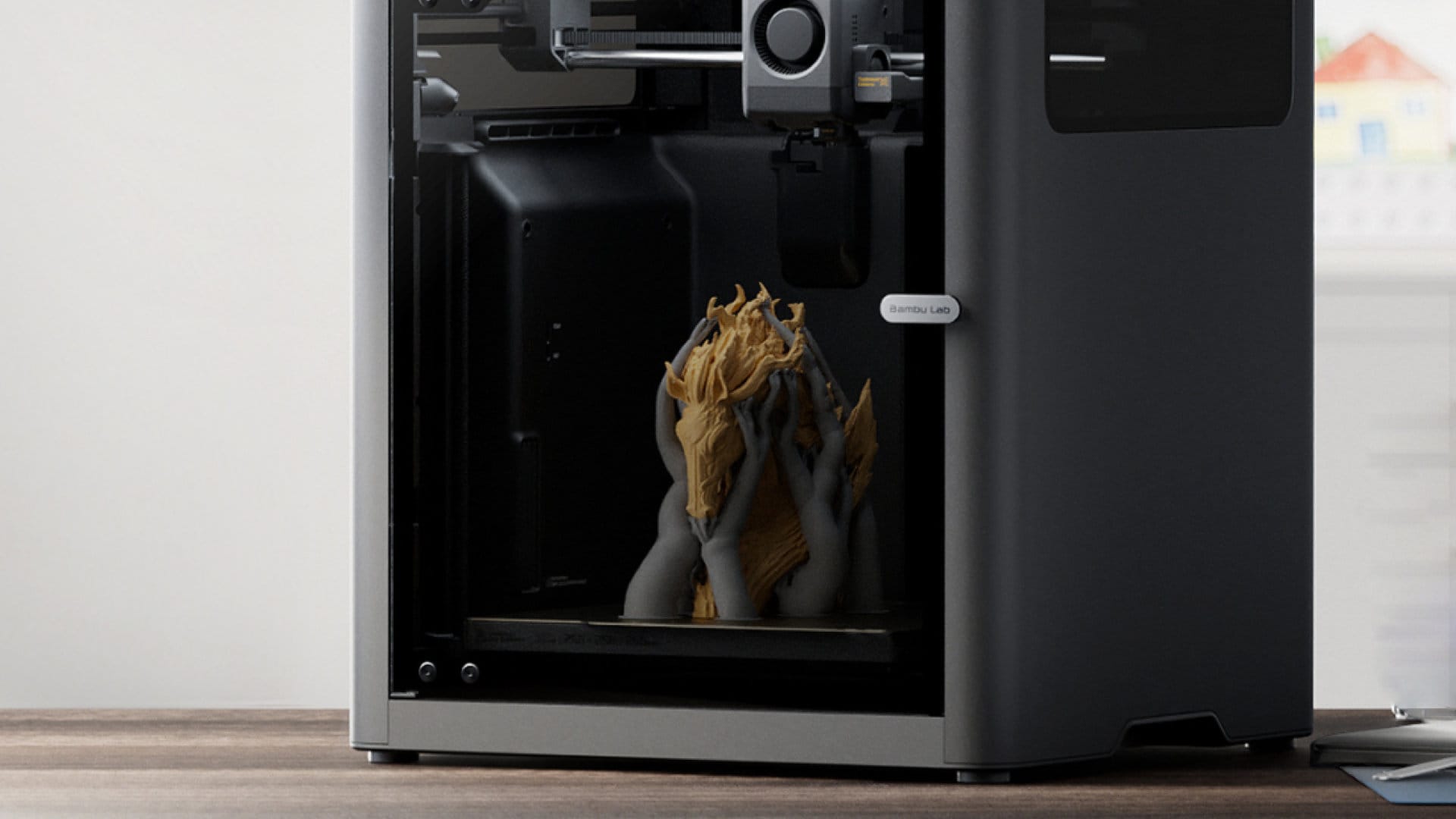
For multi-color prints in PLA or PETG, nozzle switching means instant color changes - no lengthy purges, no mountains of wasted filament. A maker who previously counted every color change as a cost - in time and material - can now take on projects they would never have dared to attempt before.
Bambu Dynamic Flow Calibration - a printer that learns itself
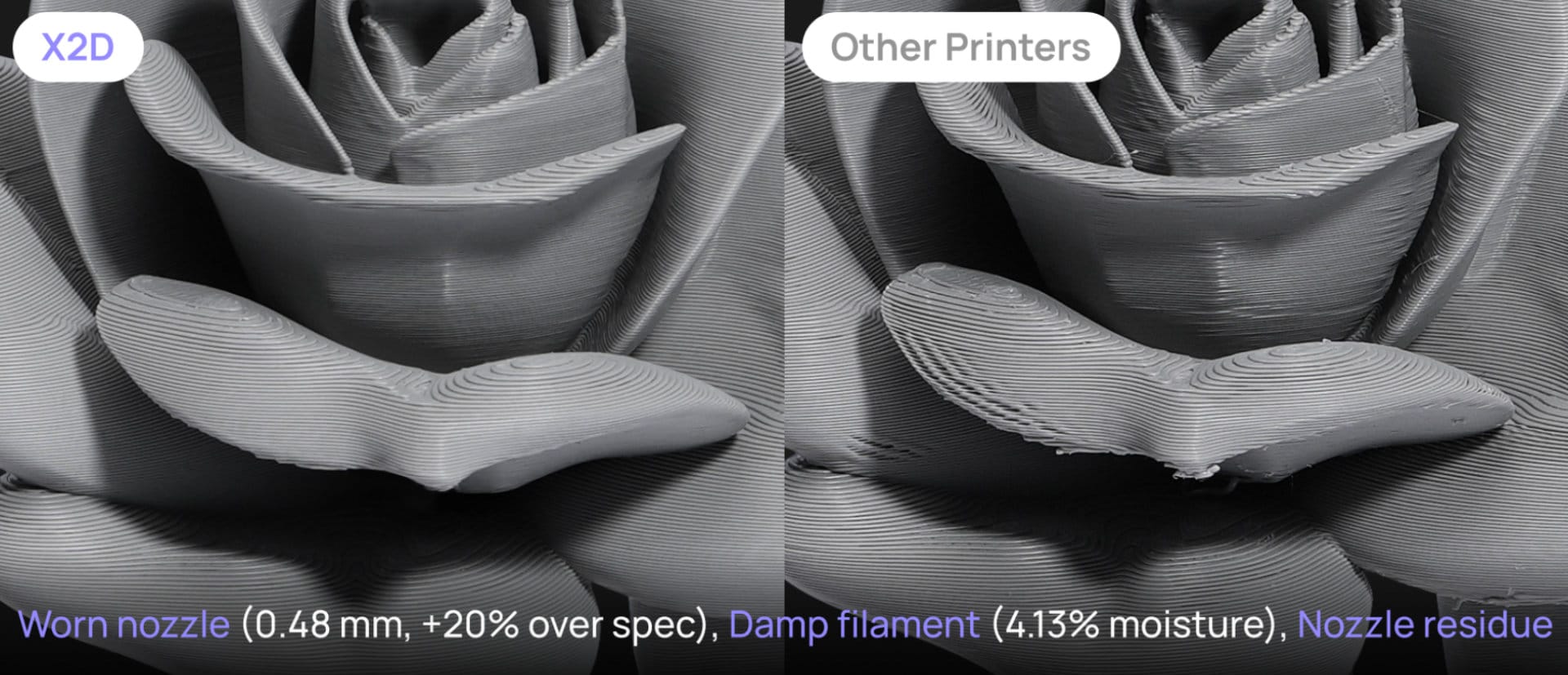
Nozzles wear down. Filament absorbs moisture. Printing conditions six months in are not the same as on day one. In most printers, these changes accumulate quietly and eventually show up in print quality.
In the X2D, the Dynamic Flow Calibration system simultaneously monitors the state of the extrusion motor, hotend, nozzles, and filament, compensating in real time for every deviation.
This is not a one-time calibration you perform before a print - it is an automated process carried out before each print, ensuring consistent results without requiring user input.
PMSM motor - extrusion under control
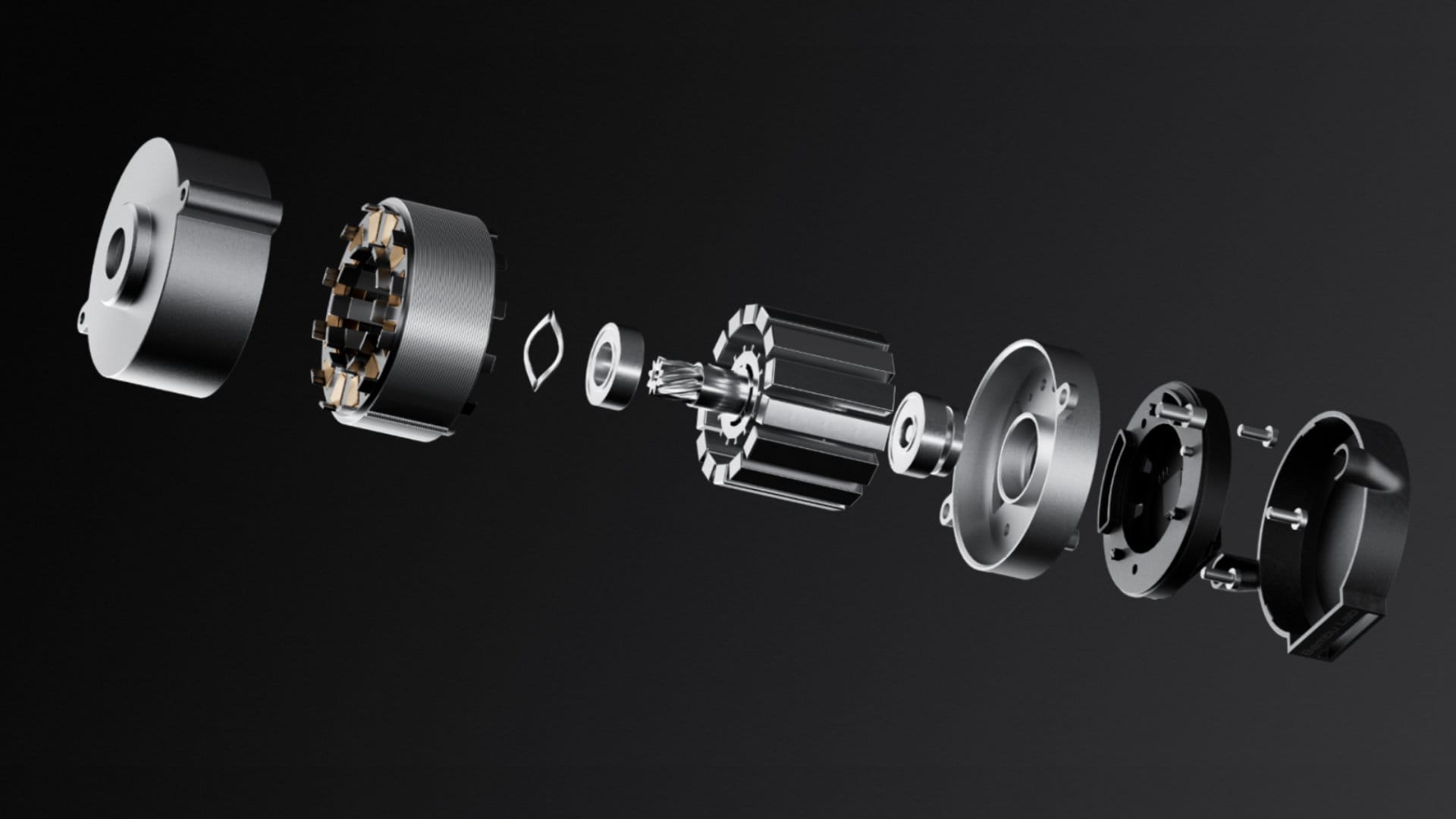
Bambu Lab's proprietary PMSM servo motor samples torque and position 20,000 times per second. In practice, this means the printer detects a filament jam before it becomes a problem - and responds before anything goes wrong.
Intelligent thermal system - because one mode is never enough
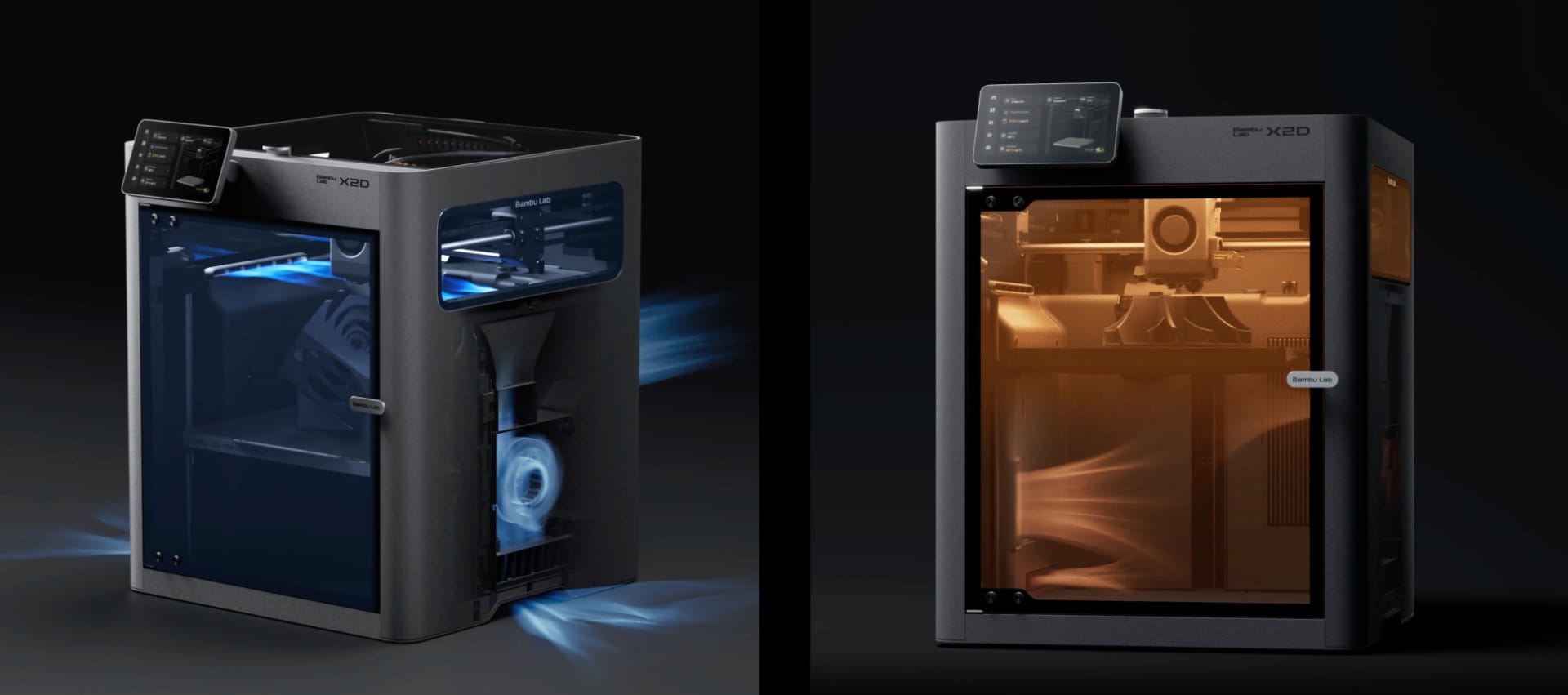
Cool Mode and Heat Mode are two entirely different chamber operating regimes. In cooling mode, fresh air is drawn in from outside and expelled along with warm air - overhangs and bridges print cleanly and crisply with materials like PLA.
In heating mode, the chamber is actively heated to 65°C while the nozzle reaches 300°C - opening the X2D up to engineering-grade materials like ABS, ASA, and Nylon, with minimal warping and strong layer adhesion.
Technical specifications
- Dual-nozzle extrusion system with mechanical switching
- Print area:
- Single nozzle at the main hot end: 256 x 256 x 260 mm
- Auxiliary hot end single nozzle: 235.5 x 256 x 256 mm
- Double nozzle intersection: 235.5 x 256 x 256 mm
- Double Nozzle Union: 256 x 256 x 260 mm
- 300°C nozzle and chamber heated to 65°C
- Three-stage air filtration (G3 pre-filter + H12 HEPA + coconut shell activated carbon)
- 31 sensors monitoring the feeding path, thermal environment, and safety status
- Optional Vision Encoder: 50-micron-class motion accuracy
- PMSM motor with 20 kHz sampling
- Noise level below 50 dB.
Prices:
X2D Combo
- US = $899 (USD; before tax)
- EU = €849 (EUR; including tax)
- UK = £769 (GBP; including tax)
- CA = $1199 (CAD; before tax)
- AU = $1349 (AUD; including tax)
- KR = W1,349,000 (KRW; including tax)
- JP = ¥165,000 (JPY; including tax)
- Global = $949 (USD; before tax)
X2D
- US = $649 (USD; before tax)
- EU = €629 (EUR; including tax)
- UK = £569 (GBP; including tax)
- CA = $949 (CAD; before tax)
- AU = $1049 (AUD; including tax)
- KR = W1,099,000 (KRW; including tax)
- JP = ¥126,000 (JPY; including tax)
- Global = $699 (USD; before tax)
How Bambu Lab created a new standard
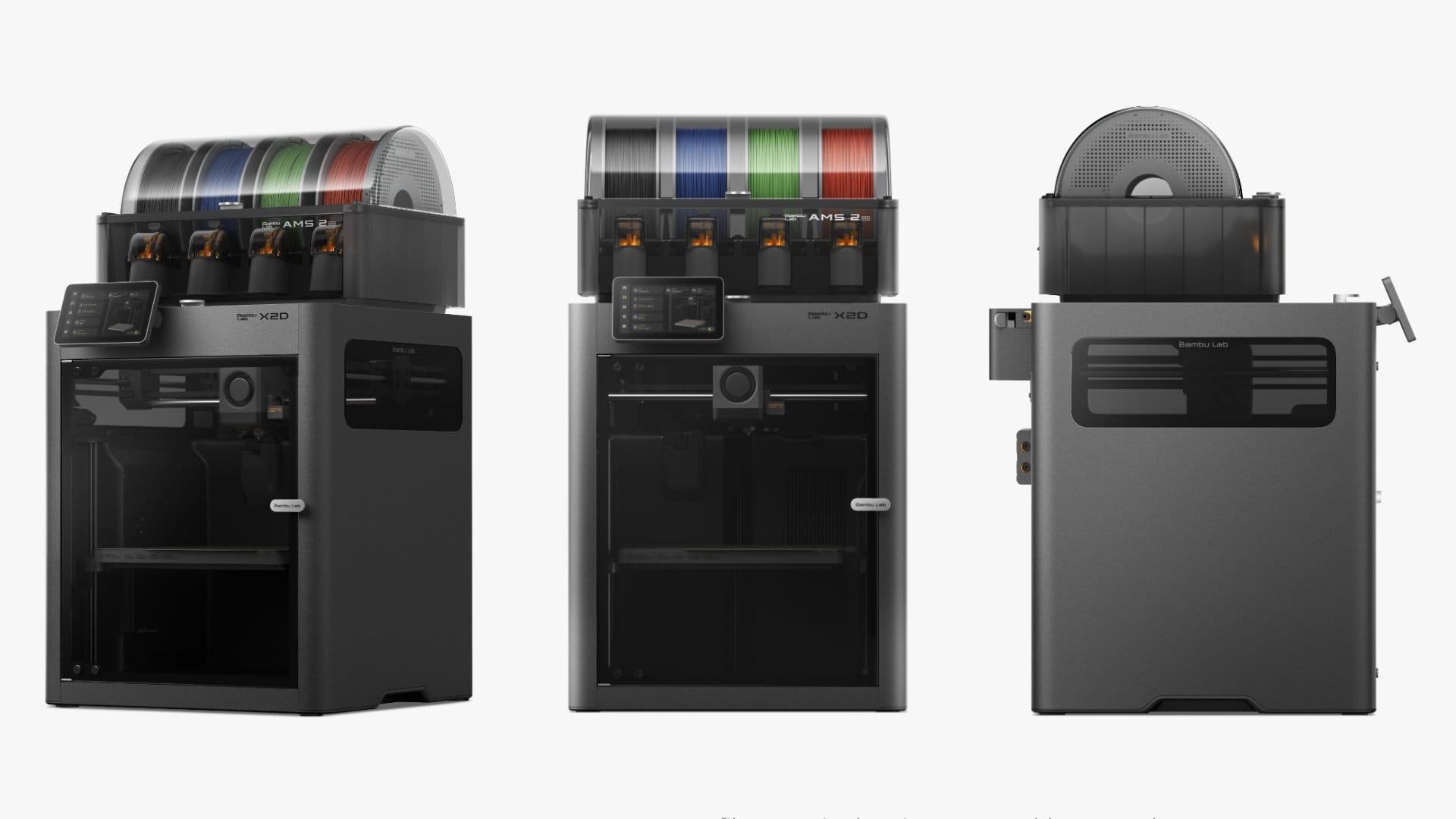
To understand the X2D, you have to go back to 2022 and the moment the X1 Carbon landed on the desks of its first users.
3D printing back then was a technology for the patient.
Calibration before every print, hours spent dialing in parameters, a constant search for the sweet spot between speed and quality. The first layers were a ritual - not an act of creation.
The X1C changed that.
Automatic calibration, an enclosed chamber, the AMS system for multi-material printing, speeds no one had seen before, sensors and a camera monitoring the print in real time. Suddenly, the printer stopped being a machine you operate and became a tool you simply use. A distinction that sounds subtle - but in practice is enormous.
Bambu Lab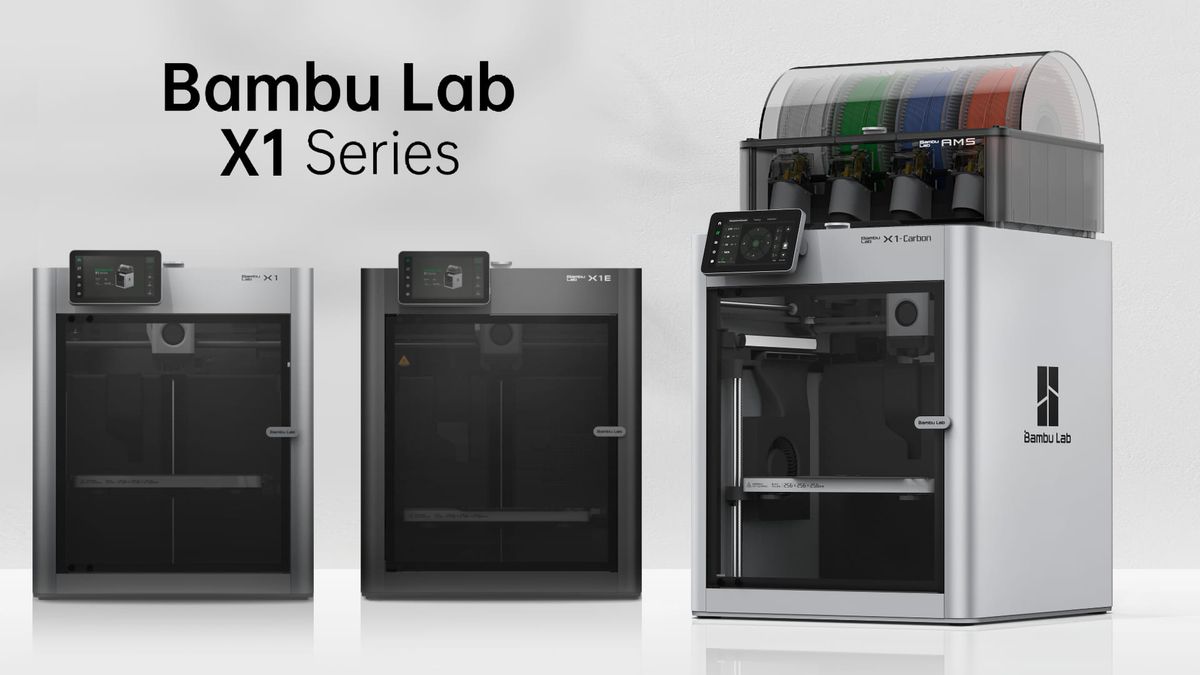
Bambu Lab treated the 3D printer from the very beginning as nothing more than the entry point to a far more sophisticated relationship with the user.
One who would not be buying a device - but buying a solution.
Buying an… experience.
The Bambu Experience - the printer is just the beginning

Imagine an environment that understands what you are trying to make?
Bambu Lab has been building this vision from day one. The printer is hardware - but the ambition was always broader: to create a path from idea to finished object so seamless that the only real effort required is deciding what you want to make. The ecosystem handles the rest.
Bambu Lab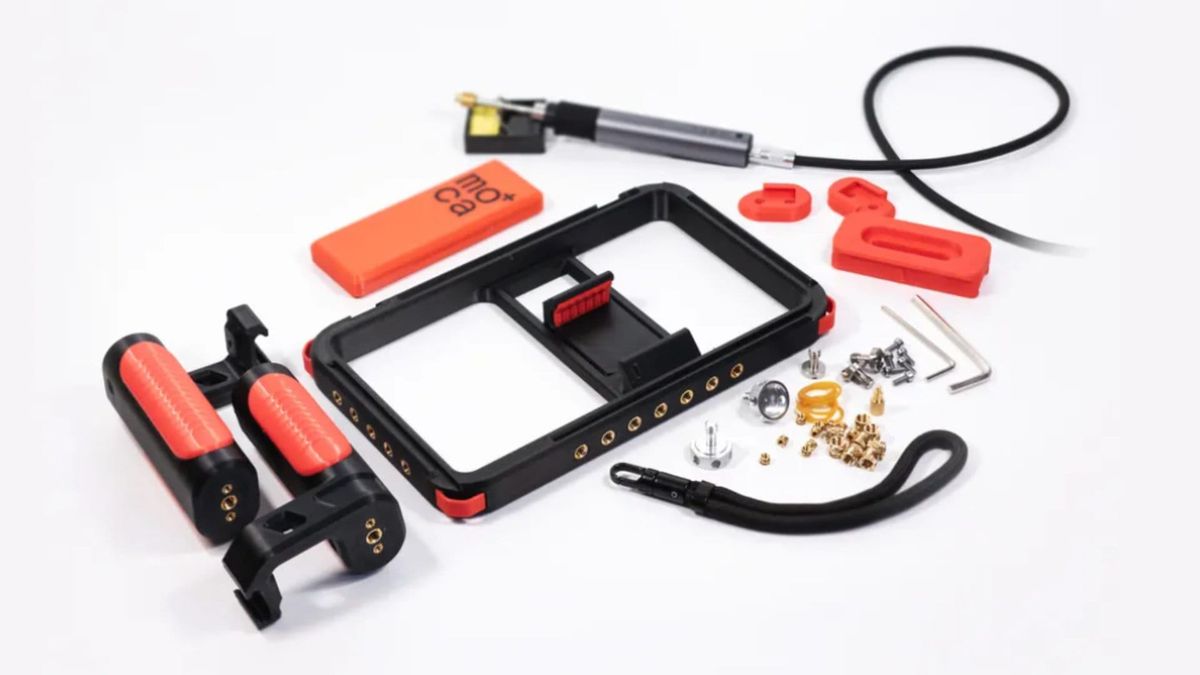
The printer and Bambu Lab materials form the foundation - hardware and filament designed together, not alongside each other. There is no compatibility lottery here, no experimenting with settings for a third-party filament. The machine and the material speak the same language.
Bambu Studio is a working environment in which print parameters are not a starting point for editing, but the finished result of thousands of Bambu Lab tests. Profiles for every printer and every filament are deeply coupled with the hardware logic. This is an integration that cannot be replicated.
Bambu Handy puts the printer permanently within arm's reach. You found a model, you are on the couch, you want to print it - one tap. The distance between maker and machine has shrunk to zero.
MakerWorld is a place where you will find basically everything you need to print - and beyond! It is currently the most popular and fastest-growing free 3D printing model platform in the world, with an exclusive selection of designers whose work you will not find anywhere else. Every model comes with a print profile optimized for Bambu Lab printers.
Maker's Supply is a single destination for the electronics and accessories needed to bring printed models to life - from vehicles to robots to household devices. No more hunting across different stores and wondering whether the parts you ordered will actually fit. Everything here is standardized.
Maker's Lab is the space where a user who only prints other people's models naturally becomes a designer themselves. Thanks to a growing library of design programs, a simple hobby gradually becomes something more.
Crowdfunding for designers closes the loop. The user community has real influence over the direction that design trends take, and it rewards the most talented creators. More than that, it gives them a path toward gradually commercializing the results of their work. A hobby transforms into a way of life.
This is not an ecosystem built for sales. It is an ecosystem built for the full experience of 3D printing.
What this launch means for the market
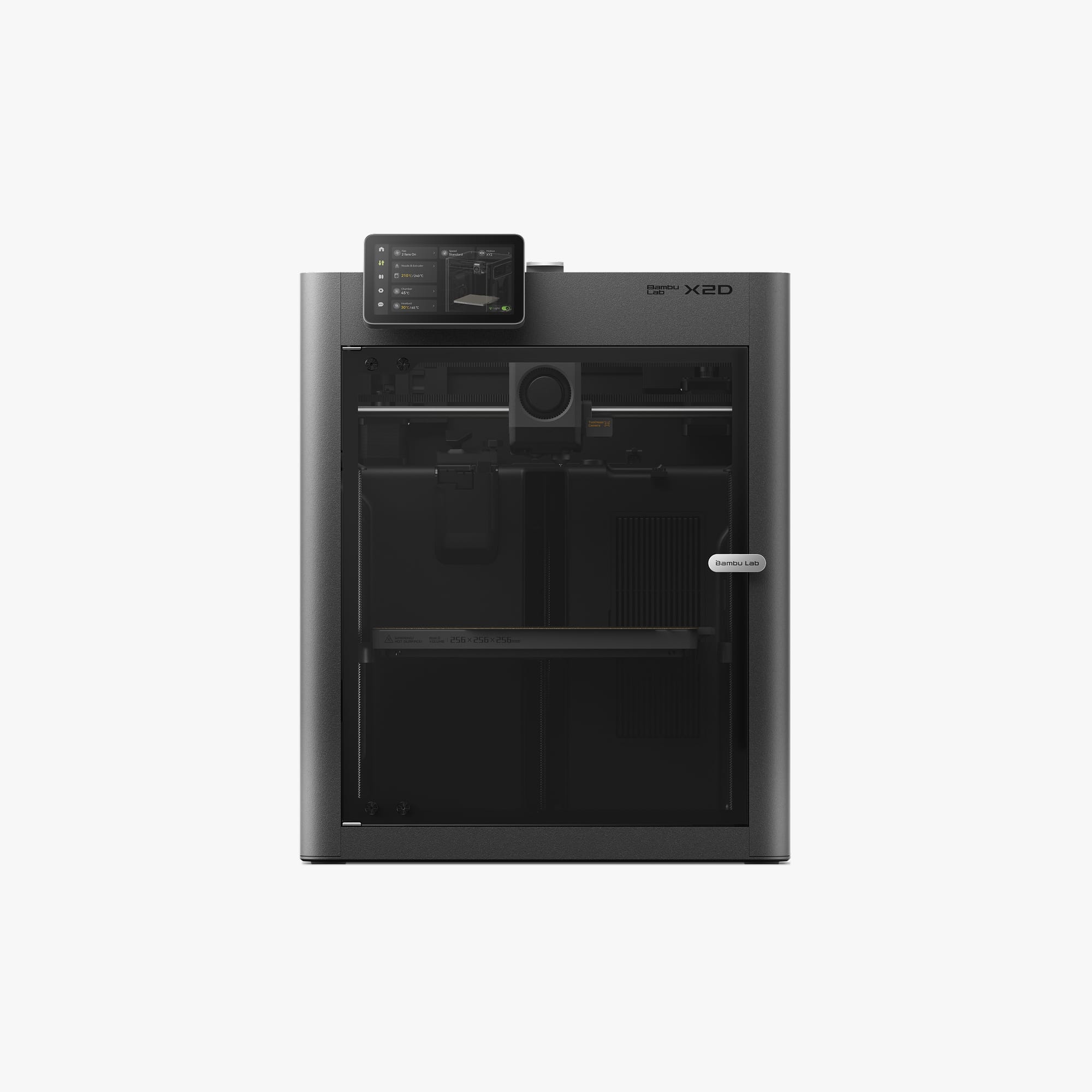
The X2D is not simply a better printer. It is an answer to what 3D printing is becoming for a growing number of people - a tool for everyday creation, not a technical project requiring specialized knowledge.
Bambu Lab is bringing flagship-level capabilities from the H Series - AI algorithms, precision, long-term stability - down to a place where a much broader community of makers can reach them.
For the market, the signal is clear: the standard has shifted again. For makers: hey, things got better and simpler!
The hardware has stopped being the limitation. What will you make?
Go deeper:
Bambu Lab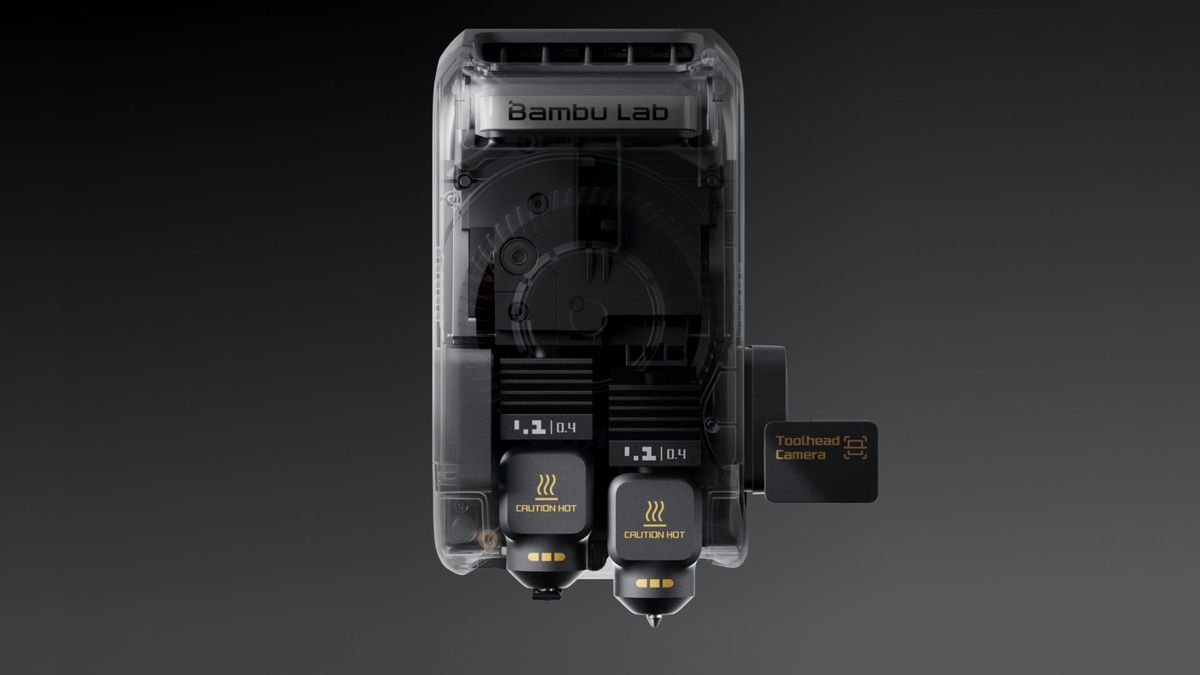 Bambu LabBambu Lab