Bambu Lab boosts student robotics performance
How faster, multi-material 3D printing improved robotics design, iteration speed, and STEM education outcomes

In student robotics programs, the ability to move quickly from concept to functional prototype often determines both learning outcomes and competitive success. 3D printing has become a cornerstone technology, enabling rapid iteration, customization, and hands-on experimentation.
However, not all 3D printing setups are equal - limitations in speed, material compatibility, and reliability can significantly hinder progress.
For many teams, early experiences with 3D printing involve trade-offs. Slow print speeds can delay testing cycles, while unreliable outputs introduce frustration and wasted resources.
The inability to work with advanced materials restricts functional performance, and multi-color or multi-material printing - although visually appealing - often remains impractical due to complexity or inefficiency.
These constraints not only impact the technical quality of robots but also shape how students engage with engineering processes.
As robotics programs expand their educational scope to include outreach, mentorship, and interdisciplinary learning, the role of fabrication tools becomes even more critical.
Upgrading 3D printing capabilities is not just a technical improvement - it represents a shift in how teams approach innovation, collaboration, and education.
Force Green Robotics Inc.
Force Green Robotics Inc. is a nonprofit organization based in St. Louis, focused on expanding access to robotics and STEM education for young people.
As a community-based high school robotics team, Force Green competes in the FIRST Tech Challenge, where students learn to design, build, and program competitive robots while developing collaboration and leadership skills.
Beyond competition, the organization runs coding and CAD camps, mentorship initiatives, and hands-on outreach programs aimed at students who may not otherwise have access to STEM resources.
Through projects such as Arduino-based demonstration robots and interactive systems like the “Space Cat Cruisers,” Force Green combines creativity with practical learning to support long-term engagement in engineering and technology.
Challenge - limitations of previous 3D printers
Before adopting Bambu Lab 3D printers, Force Green faced several technical and operational constraints that limited how effectively 3D printing could support robot development and outreach.
Existing printers required large parts to be split into multiple sections, slowing prototyping and introducing structural weaknesses. Multi-color printing was either unavailable or generated excessive filament waste, making it impractical for larger or visually complex designs.
Material limitations also posed challenges. The team struggled to reliably print engineering materials such as nylon, ABS, or TPU due to inconsistent temperature control, lack of enclosed build chambers, and frequent bed adhesion issues.
In addition, slow print speeds restricted how many custom parts could be produced during short design cycles, reducing iteration speed during competition season.
Solution - improved productivity with Bambu Lab
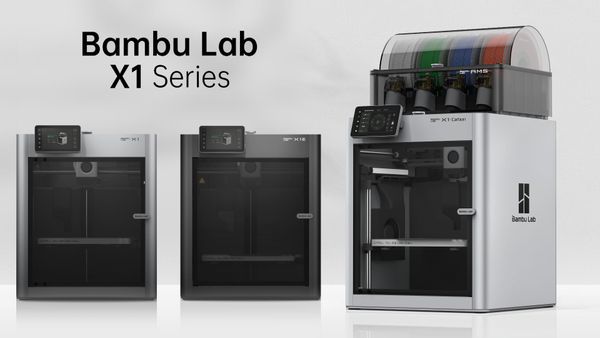
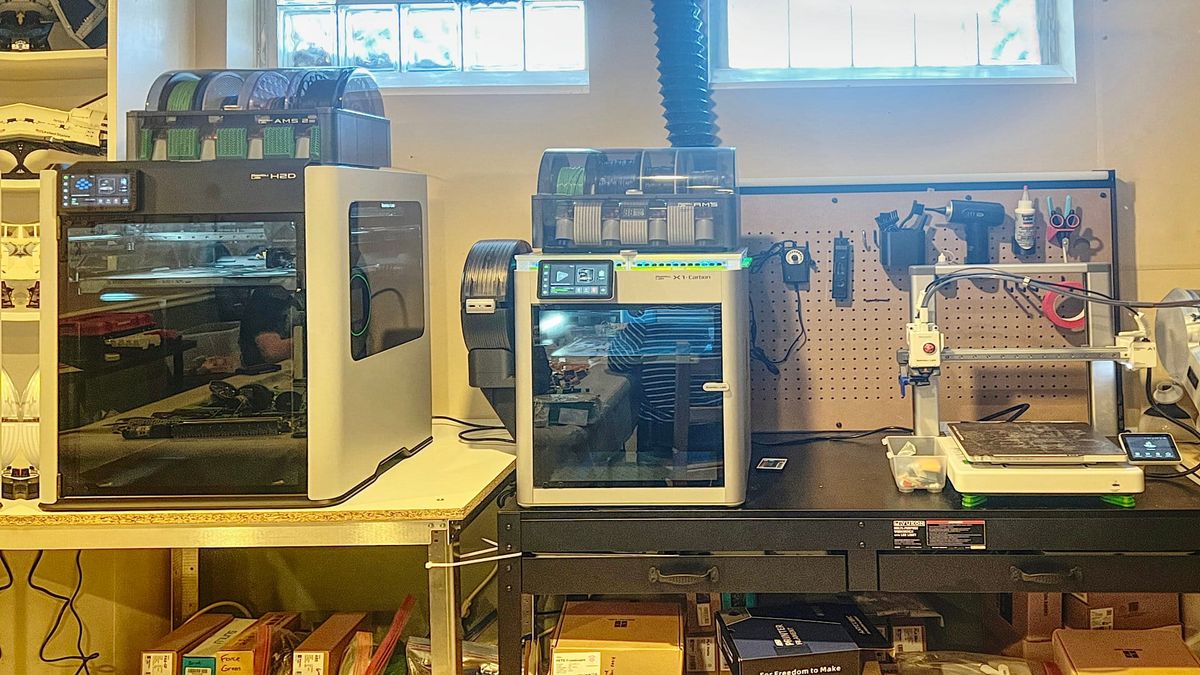
To address these issues, Force Green integrated several Bambu Lab printers into its workflow, including the H2D with AMS 2 Pro, the X1 Carbon with AMS, and entry-level A1 and A1 Mini systems.
Enclosed chambers and improved thermal stability enabled reliable printing of higher-performance materials while managing fumes more safely in a shared workspace. Automatic material systems supported multi-material and multi-color printing with better control and reduced waste.
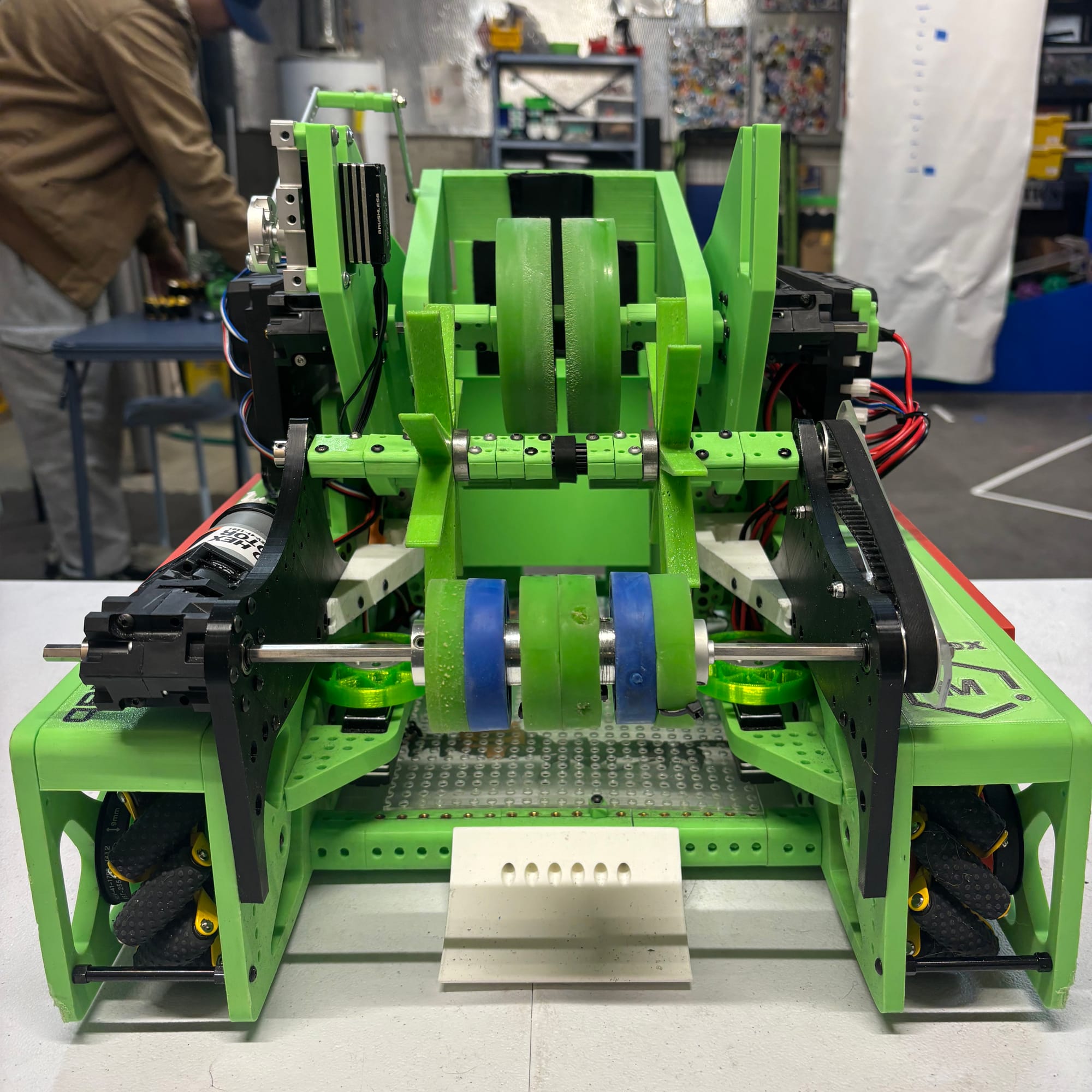
The larger build volume of the H2D made it possible to produce bigger, single-piece components, while faster print speeds supported rapid iteration. These systems were paired with Bambu Studio software, adopted as the team’s primary slicing and print management tool, allowing multiple students to prepare and send jobs from different computers under a shared account.
Force Green now relies on 3D printing for nearly all custom robot components, as well as organizational tools for its workspace.
PLA is used extensively for fast prototyping, while PETG serves as a support interface material and for selected functional parts. TPU is used for flexible, high-impact components such as wheels and ramps, and ABS is applied where higher heat resistance is required, including electronics mounts and large gears. The team has also experimented with PA6 and fiber-reinforced filaments for strength-critical components.
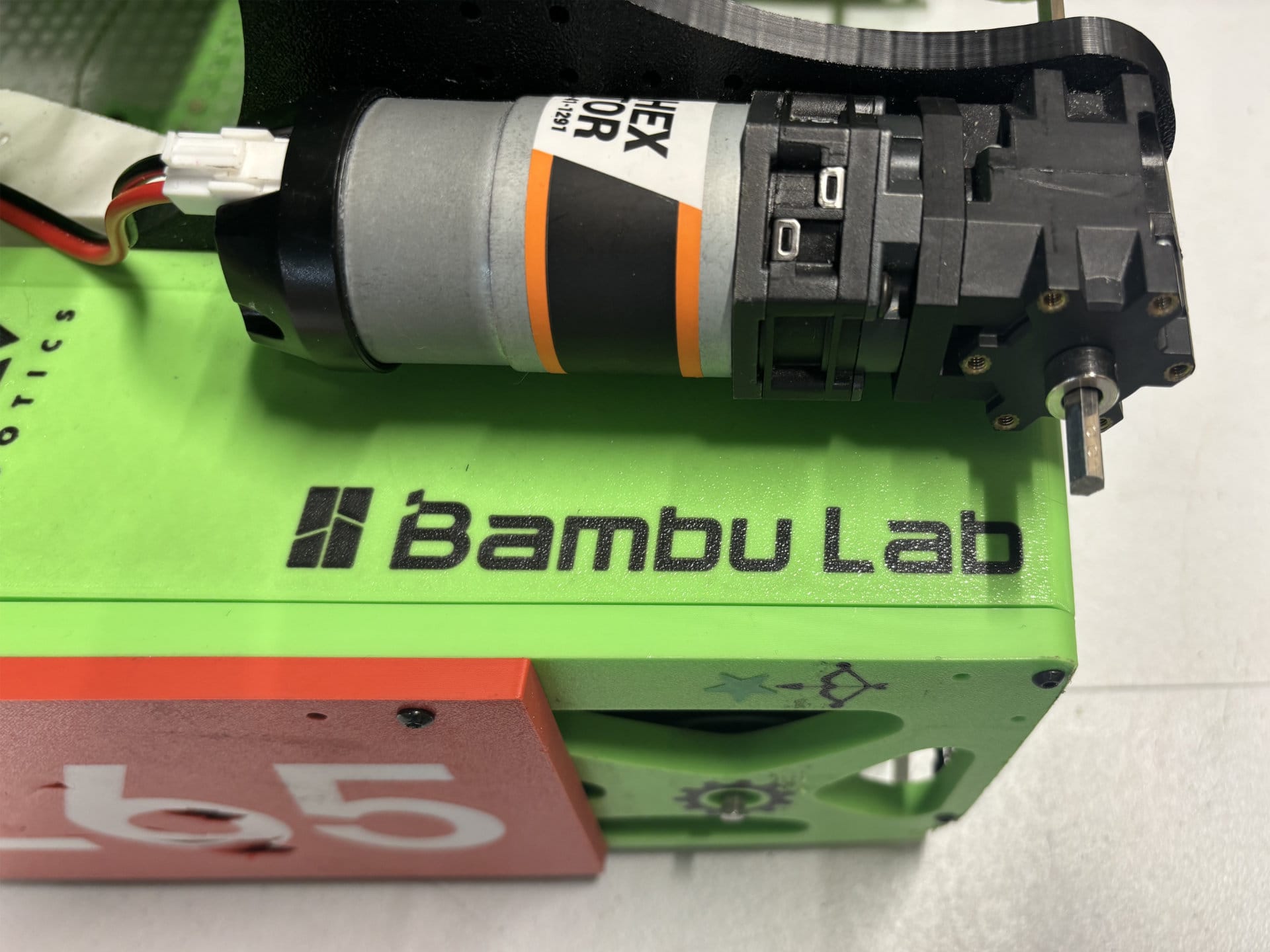
To improve performance and material efficiency, students actively apply advanced slicing strategies. These include optimizing infill patterns and wall thickness, using variable layer heights, reinforcing high-stress regions, and adjusting part orientation to reduce layer-line failures.
Design approaches tailored to additive manufacturing, such as internal pocketing, help balance strength and weight. Filament drying and basic post-processing are also incorporated to improve consistency.
Results and impact – measurable improvements
The adoption of Bambu Lab printers led to clear gains in reliability, speed, and print quality. Print times were reduced by approximately threefold compared to previous equipment.
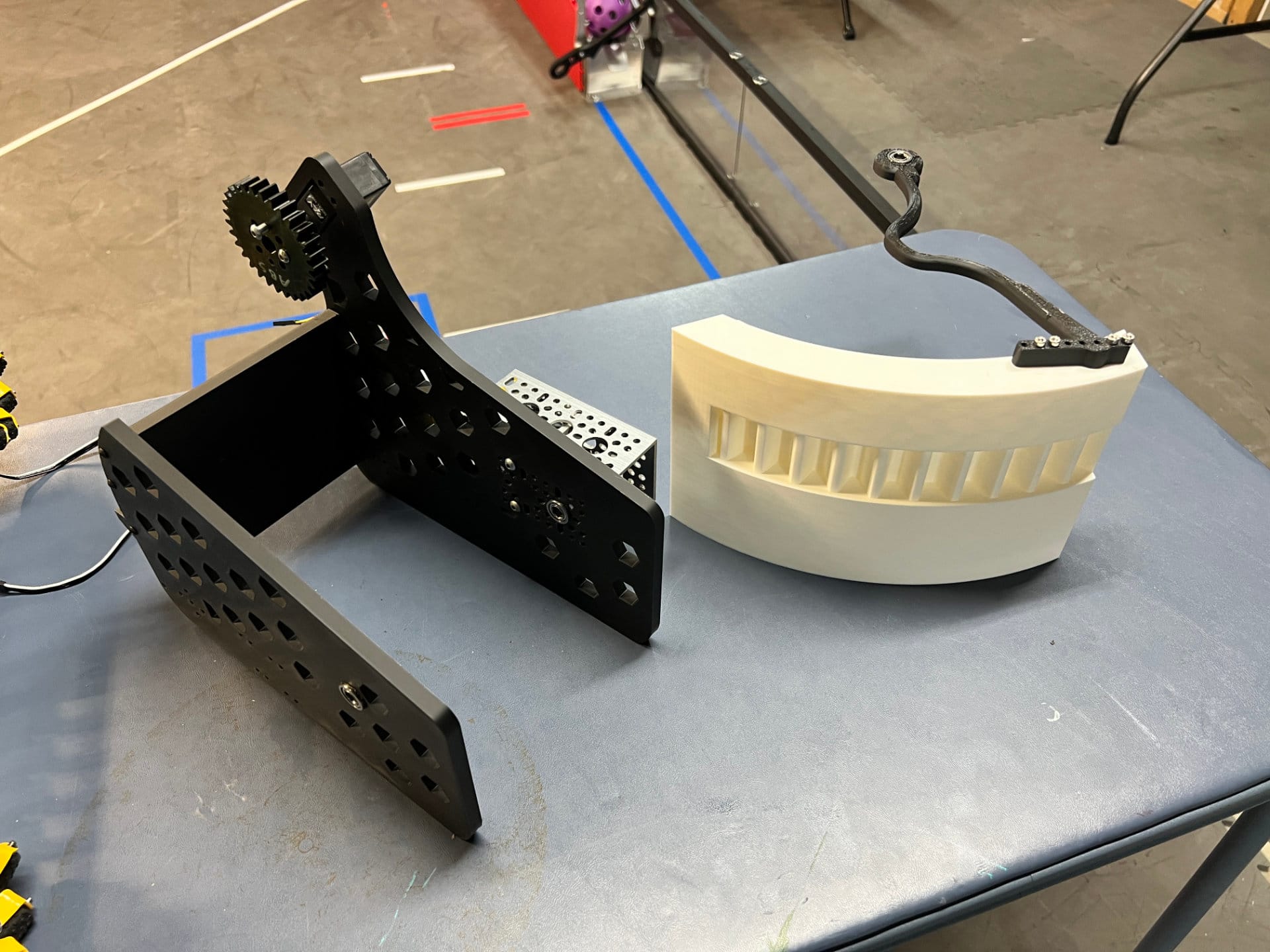
Failures such as warping, layer shifting, and “spaghetti” prints became rare, enabling the team to complete long prints - often lasting eight to twelve hours - with confidence. As a result, parts typically only need to be printed once, saving both time and material.
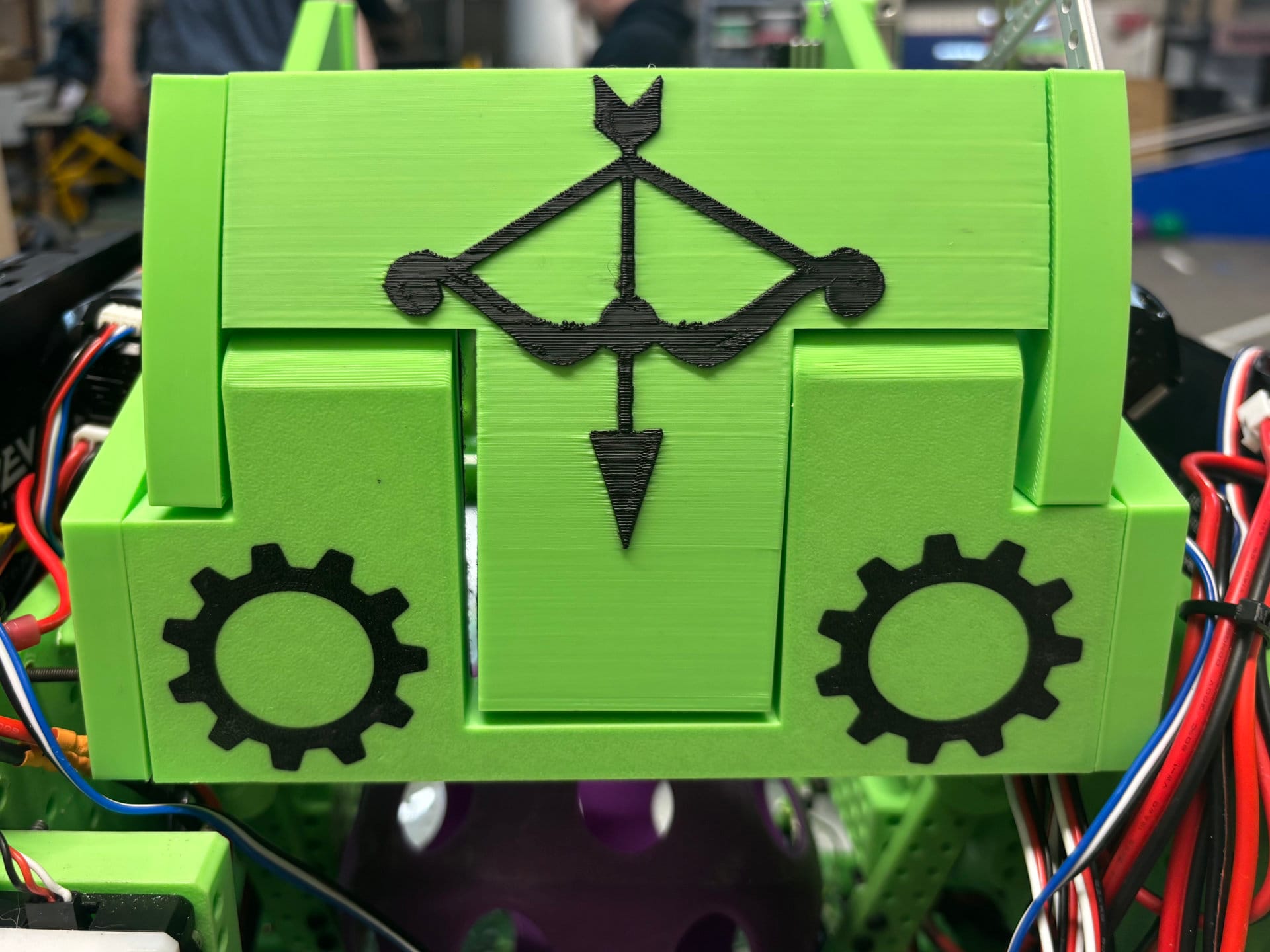
Reduced maintenance requirements also benefited the team, as straightforward upkeep tasks required less attention from mentors and students. Multi-material support printing improved surface quality by making support removal cleaner and less damaging.
Future outlook
Beyond robot construction, the printers play a key role in Force Green’s outreach and education programs. Tools from MakerWorld and MakerLab are used to create visually engaging prints for demonstrations and marketing, including image-based and multi-color designs that attract attention during community events.
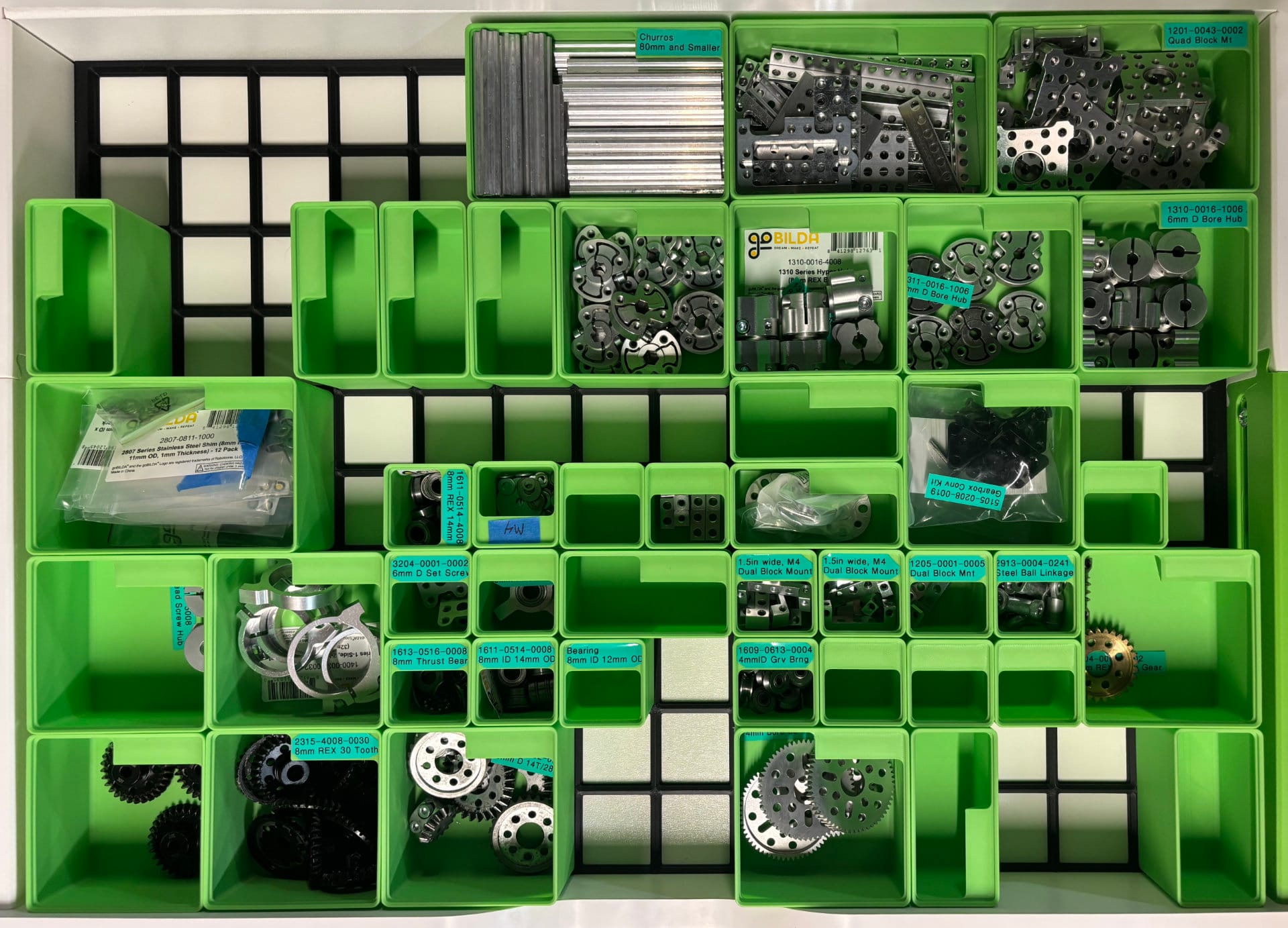
The organization also uses interactive robotic systems to introduce children and families to robotics and 3D printing in an accessible, hands-on way.
Force Green plans to further expand its use of engineering materials to improve durability and performance. The team is also exploring advanced features that could enhance multi-material printing and thermal control. Additionally, improvements in ventilation and more uniform heating within printer enclosures remain areas of interest for safer and more consistent high-temperature printing.
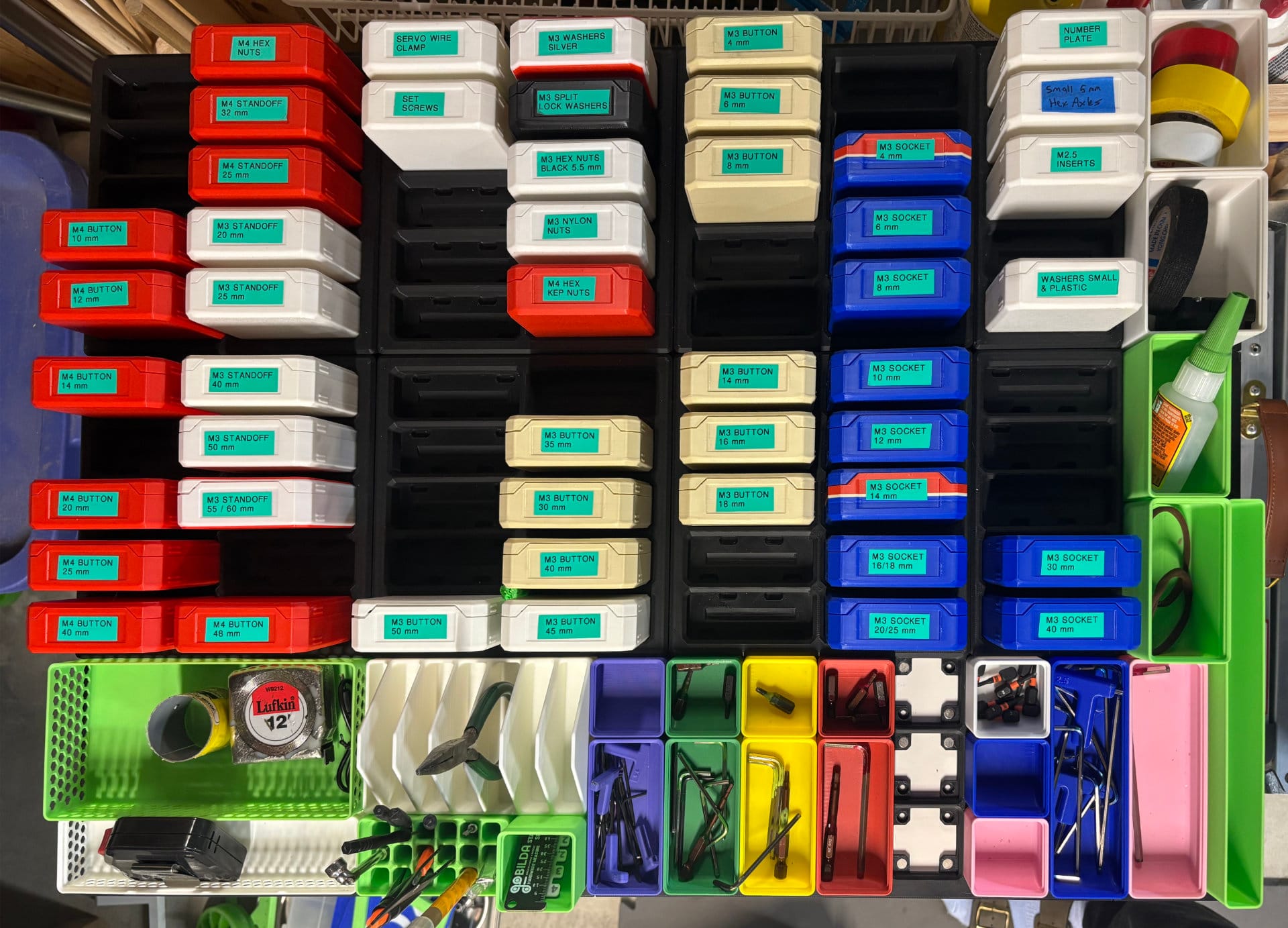
Overall, integrating Bambu Lab 3D printing solutions - with support from MatterHackers - has strengthened Force Green Robotics’ ability to design, iterate, and educate, supporting both competitive success and broader community engagement in STEM.