VFX Artist by day. Maker by night.
Daniel Mueri has been making a living as VFX Artist for Film & TV for over 15 years. MakerWorld found him on its own.

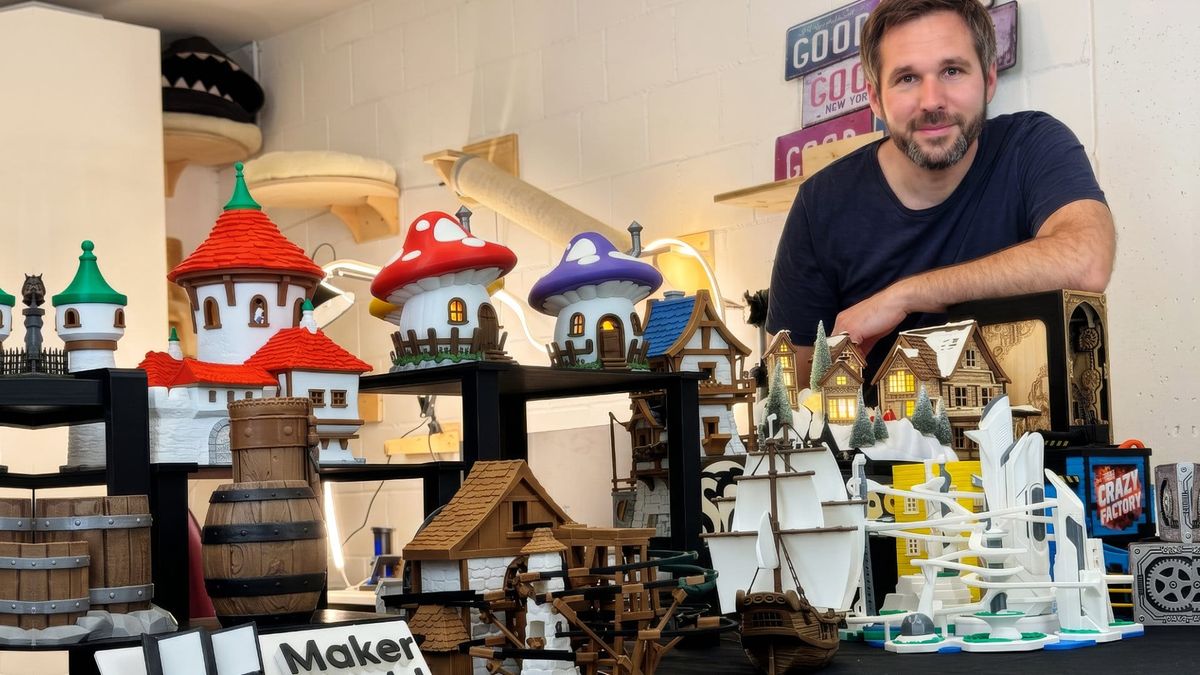
Few creators on MakerWorld have an IMDb filmography. Daniel Mueri is one of them.
By day, he works for Cloudscape, a company he founded with friends in Switzerland after their first major film project. He does compositing, 3D animation, and visual effects for brands, agencies, and small production studios.
In the evenings, he sits down at a 3D printer.
At the beginning of his journey, he didn't run a YouTube channel. He didn't have Instagram. When he first uploaded something to MakerWorld, he was not looking for reach or community. He was looking for a decent database for his own projects, a place where he could keep track of what he had created and when.
The community found him anyway.
On MakerWorld you know him by name Structales - Roadrunner4d.
Cargo, 2009
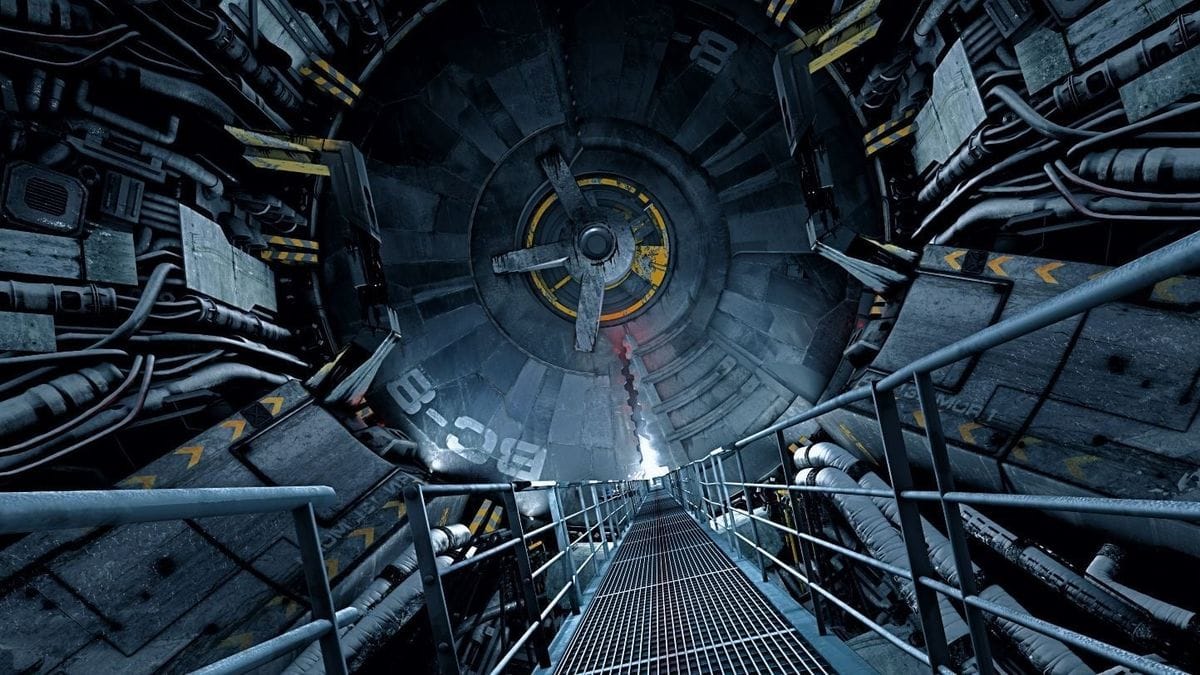
Daniel Mueri's name appeared on IMDb because of Cargo, a Swiss science fiction film from 2009 with a budget of around €5 million. The special effects were created by a nine-person team of 3D and VFX artists, including one twenty-one-year-old with no professional experience.
That twenty-one-year-old was Daniel.
It was my dream to do a sci-fi movie and it was my first opportunity to get started in this business. It was a great experience.
Before he got the job, he had been showing his projects on his own website. Someone saw them and called him. He had no portfolio from a real production, but he had enough material online to get a chance.
He spent a year working on Cargo. After that year, together with two colleagues from the crew he founded Cloudscape.
More than 15 years later, the company is still going strong.
Today, Cloudscape mainly works with commercial clients in Switzerland. Advertising films, product animations, instructional materials. Each project usually lasts two weeks. Then another one begins.
And that is the part Daniel likes: every assignment is a different world, different questions, a different level of access to things ordinary people never get to see.
Recently, I did some work for Pilatus, a Switzerland-based aircraft company. They build aircraft, and I was able to observe the manufacturing process so that I could create animations for their new aircraft.
There was also a project for a nuclear power plant. Access to every room in the facility, insight into how uranium is stored, a documentary-style animation of the entire process.
Every year we get to see some highlights from across Switzerland, where we can see all sorts of things everywhere. That's definitely the coolest part of my work.
Compositor, not modeler
Around half of Cloudscape’s work is not animation but compositing. Layering 3D renders onto live-action footage, tracking camera movement, smoothing transitions between what is virtual and what was filmed. Technically, it is completely different from modeling, but it requires the same eye for detail.
And modeling itself was, for years, the part of the job Daniel preferred not to touch.
The reason was simple: in his projects, the model is not the goal, only a means to an end. In a two-week commercial assignment, nobody models from scratch. You buy ready-made models or create product scans. Then come animation, lighting, rendering, and compositing.
In our daily business, we don't do modeling. That's something we haven't done in, I think, the last 15 years, because it's just a small part of the work.
For a decade and a half, models existed only on screens. As layers in scenes, rendering tools, temporary objects inside a shot. There was nothing about them that truly attracted him.
A 3D printer changed that.
I hadn't liked the modeling part since I started doing 3D. But that changed a lot in the last two years, when I discovered that I can do 3D modeling, print it out, and hold it here in my hands.
The model stopped being a layer. It became an object.
Ender, A1, and four kilograms of filament
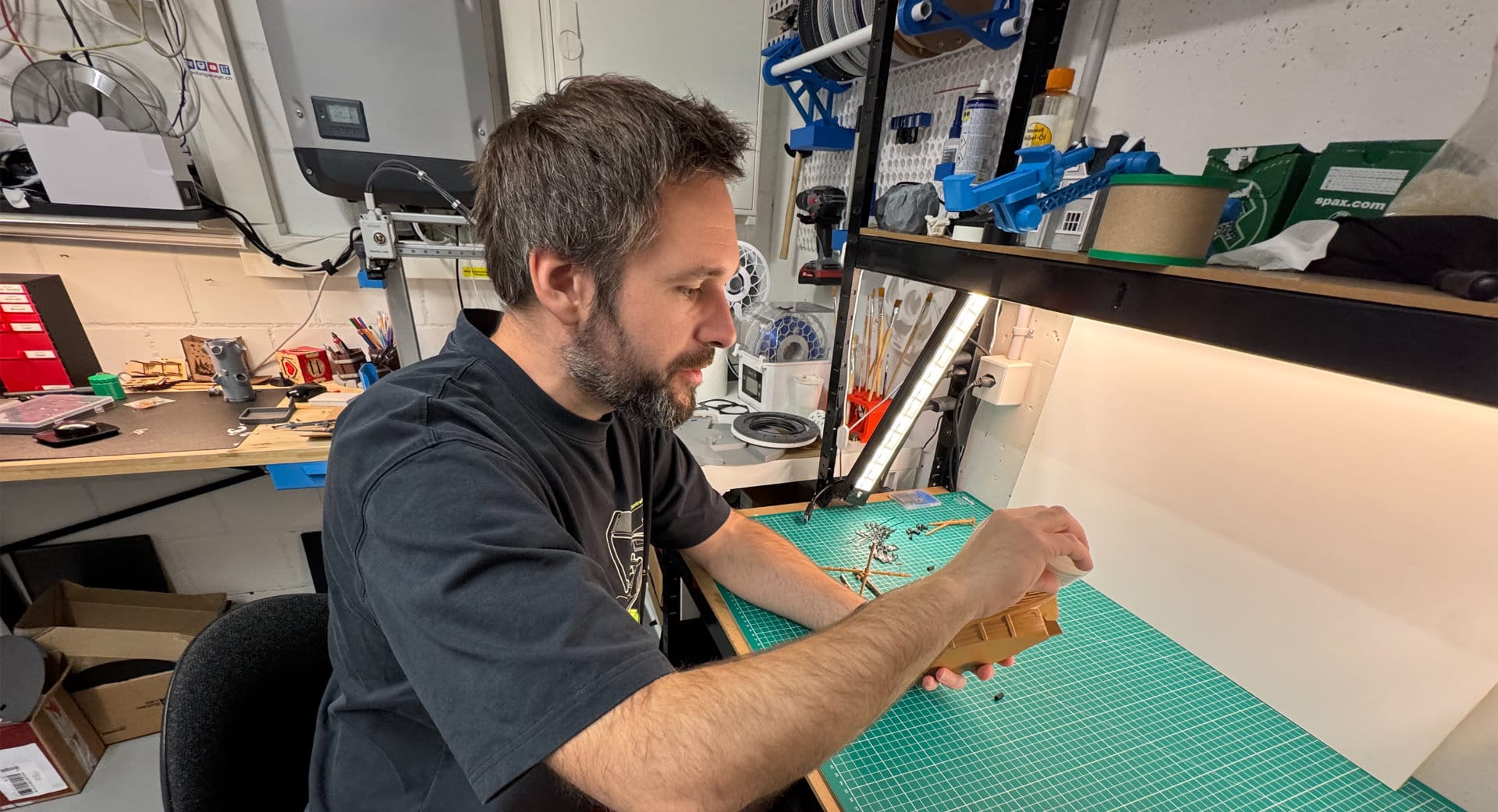
The first encounter with 3D printing was very typical. Year 2021, an Ender. Daniel needed enclosures for ESP modules, so he bought a printer to make them. The Ender did its job. Then it broke.
I think it broke about every two months. Pretty badly.
In 2024, a more serious project appeared: a hydroponic tower for the balcony. Large enough openings for tomatoes, not just lettuce. Stable enough to stand in the wind without being attached to a wall.
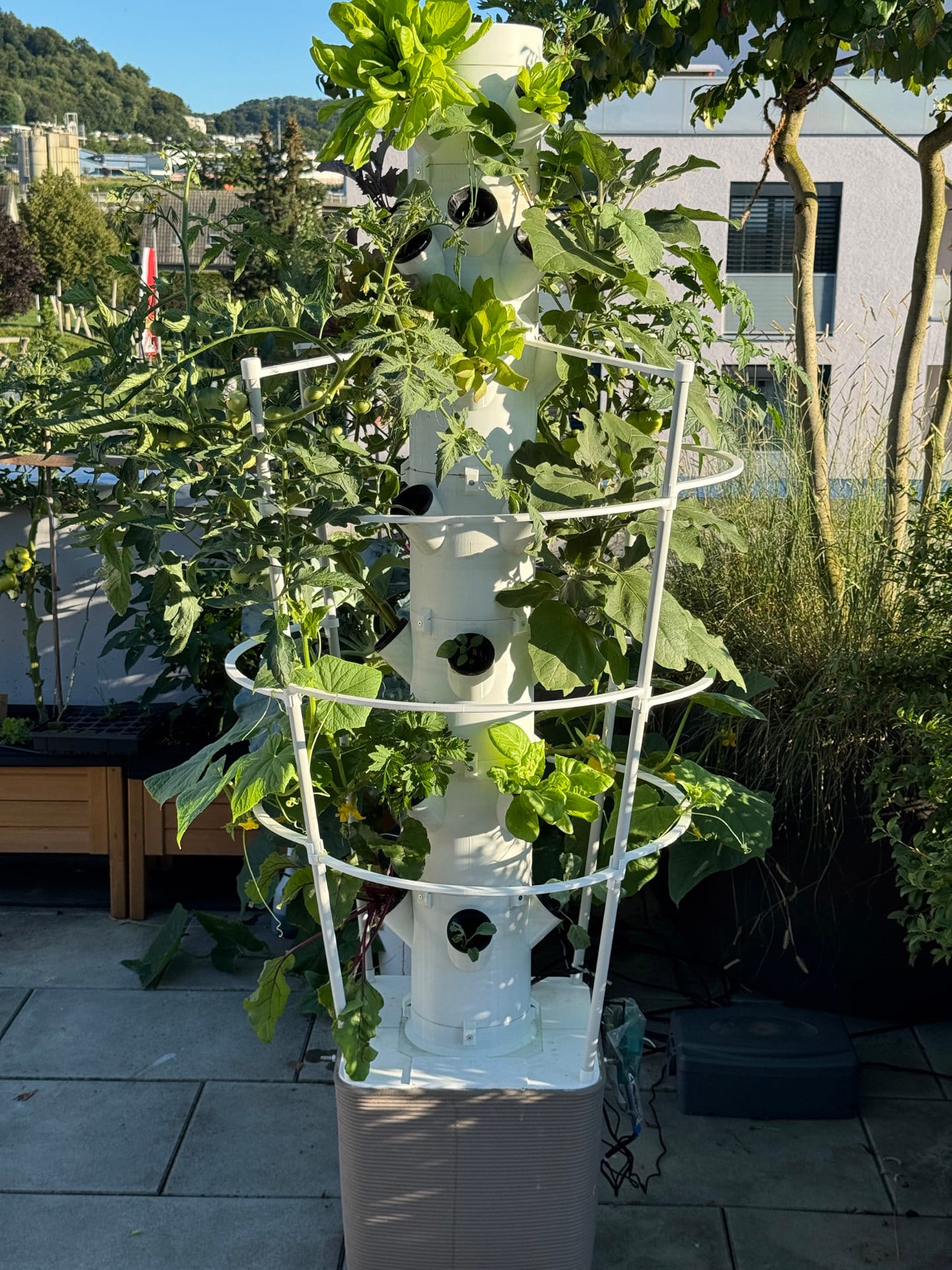
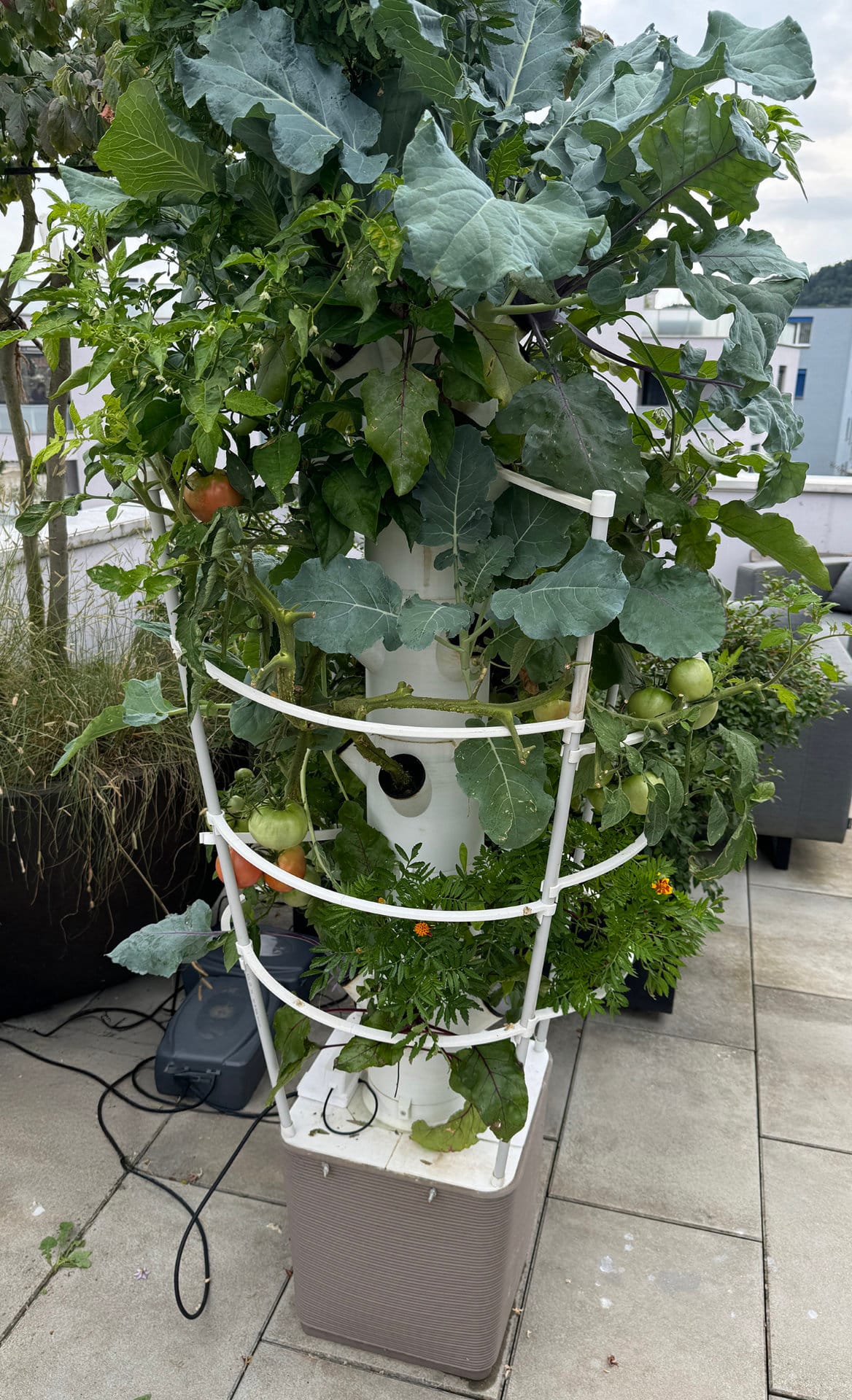
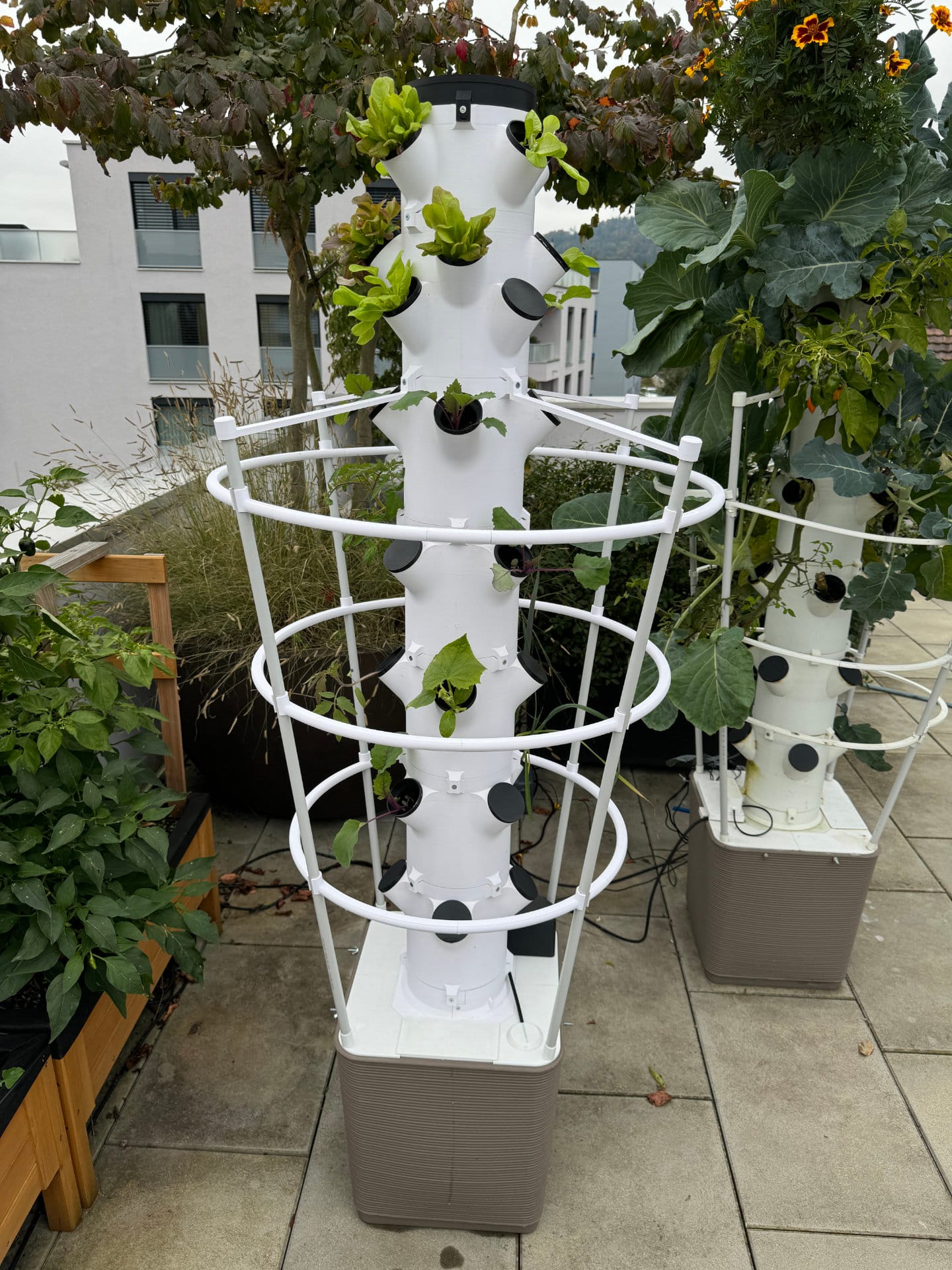
Daniel searched online and could not find a project that satisfied both conditions at the same time.
He tested one popular design from Printables, the same one many people had built. He printed it, assembled it, and looked at it.
This one isn't good. I can't use it for vegetables because it's too small. It's not stable and I'd have to do a lot of work to make it stable.
He decided to design his own. With the Ender, printing across the full build plate was impossible because leveling always failed near the edges. He needed something better.
Friends talked about Bambu Lab. Daniel also considered a Prusa, but it was too expensive. Then he looked at the Creality K1 but it felt pretty big. Eventually, he bought an A1 because his wife told him not to go overboard with size and price.
As he admits himself, it was the best decision he could have made at the time. He bought it right after the recall, so he immediately received the revised version.
The Bambu Lab A1 was (and still is) working really well without any maintenance and just doing what I want it to do, not something I have to manage.
The first hydroponic tower consumed four kilograms of filament. The prototype is still standing on the balcony.
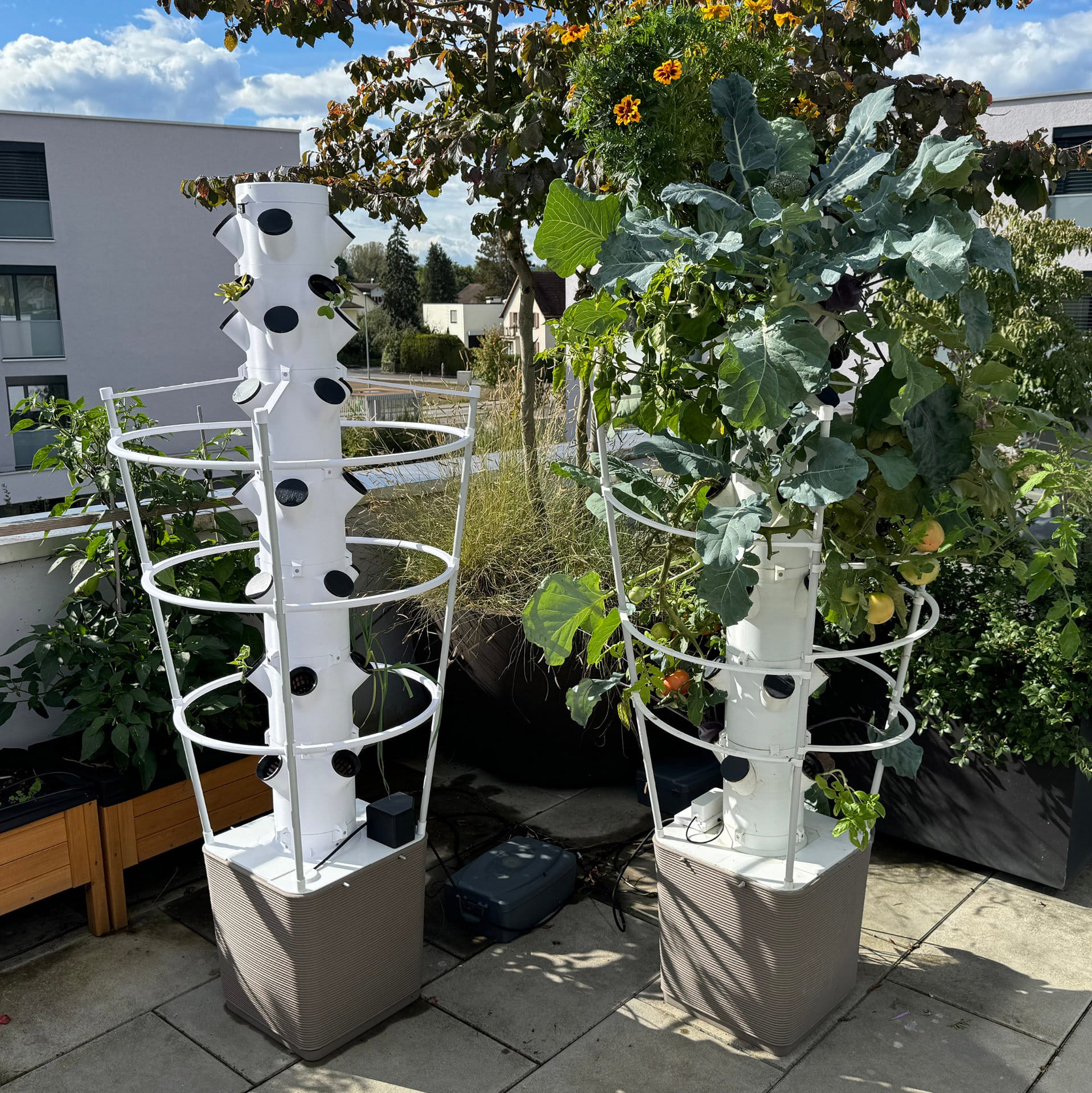
Version two was built in September 2024, and uploaded to MakerWorld in April 2025. It has over 6,200 downloads.
The castle competition
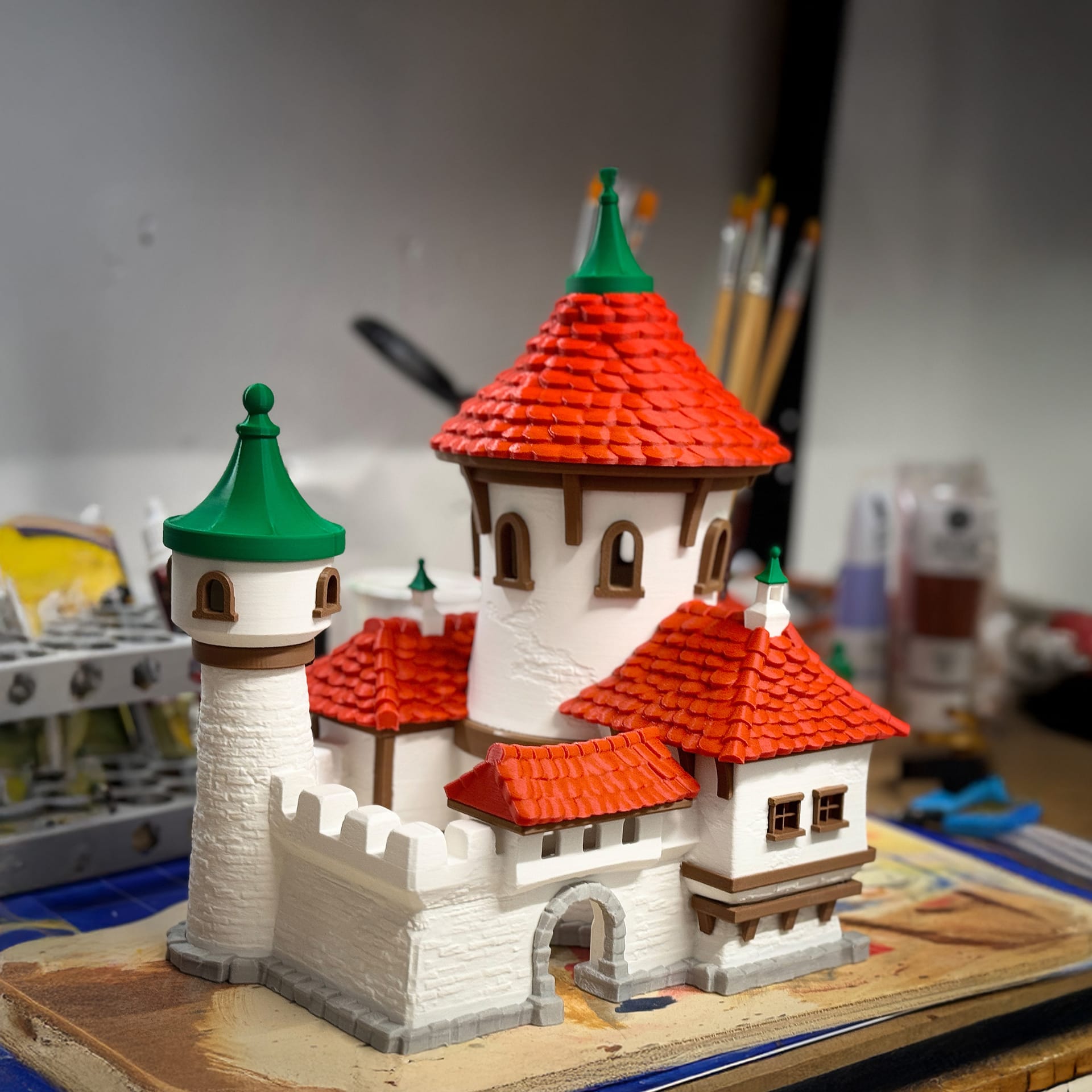
For several months, Daniel designed in Shapr3D, a CAD application for iPad. The hydroponic tower, a bottle washer for a brewer friend, several simple utility objects. Working on the couch without needing to sit at a workstation. He liked it.
But after some time, CAD stopped generating new ideas. Hydroponics and brackets had their limits.
Then he saw a competition on MakerWorld. The theme: castles.
That was basically the start of the creative side of my 3D printing. Before that, I hadn't made anything just to look at on the 3D printer - it was always something functional. That was the first thing I designed and printed purely as an object to sit there and be looked at.
The competition changed the question. Instead of asking “how should this work?”, Daniel started asking “how should this look?”
He returned to Cinema 4D, the Maxon software he has used professionally for more than 15 years.
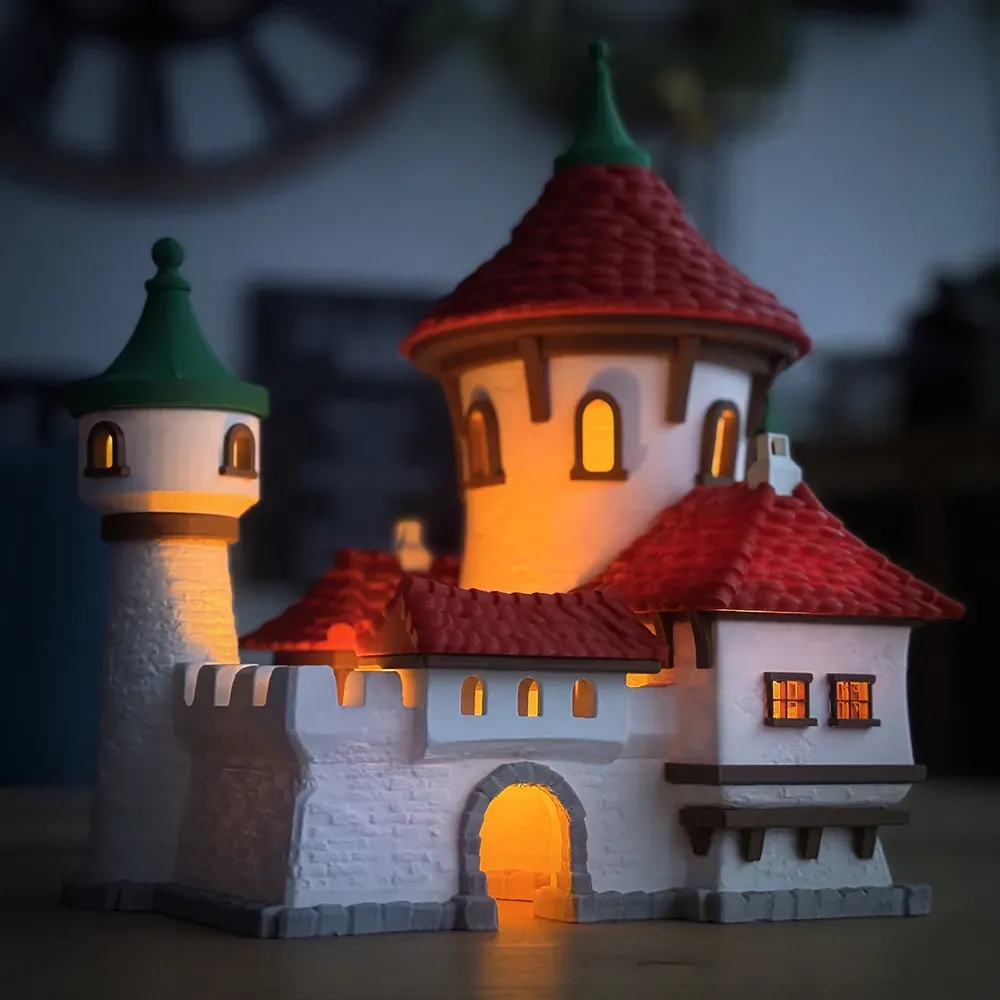
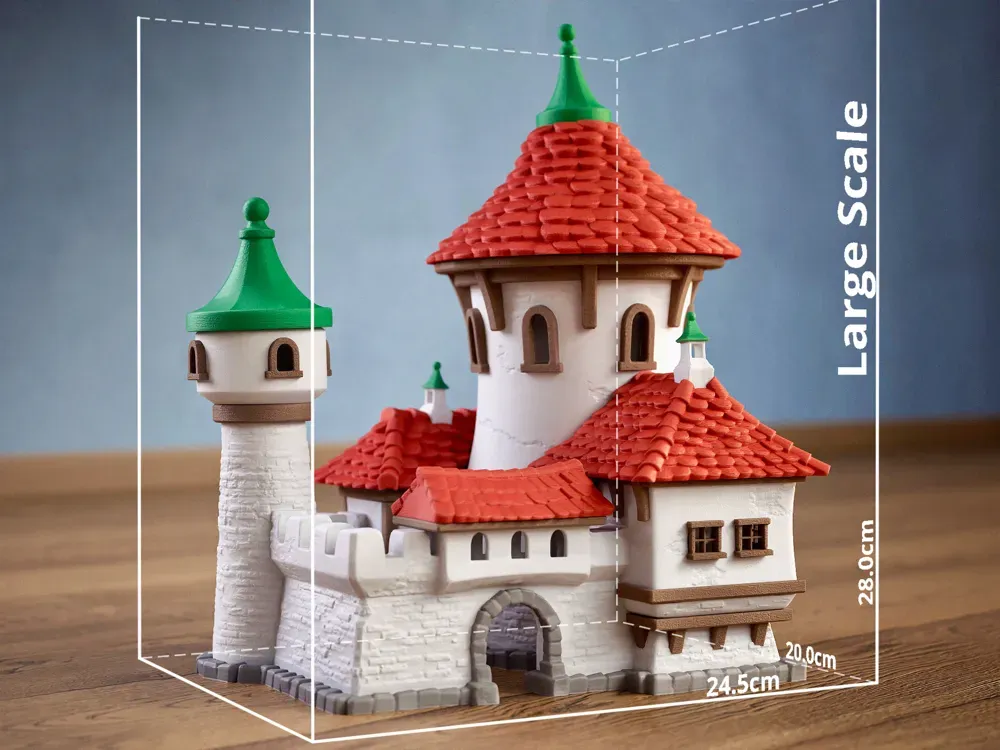
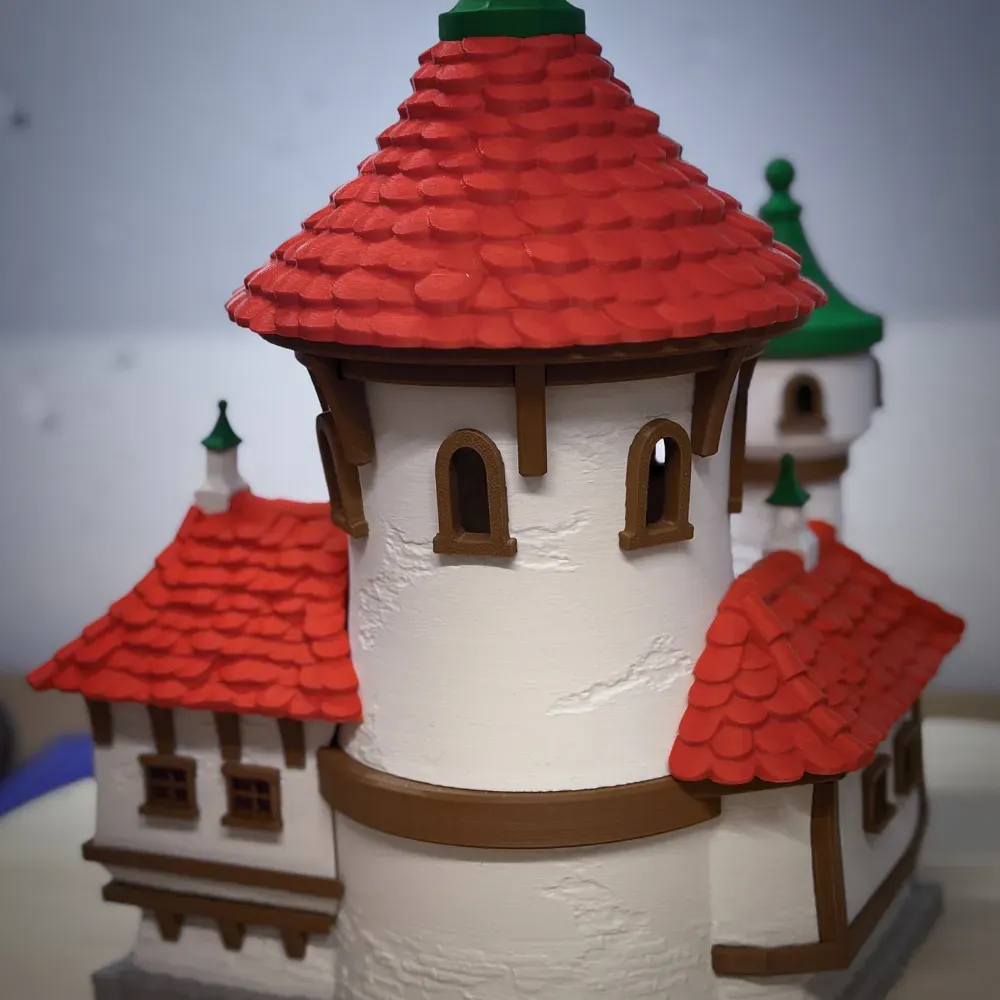
The difference between parametric CAD modeling and polygonal modeling is fundamental. In CAD, you enter numbers and get a shape. In polygonal modeling, you sculpt a mesh, pull vertices, build form by hand, almost like clay. The precision is different, the logic is different, the patience required is different.
Cinema 4D has something most programs do not offer in the same way: a volume modeler. A tool that takes any objects, merges them into a single solid form, automatically fills gaps, and generates a closed mesh ready for export.
You can just put any object into this volume builder and it connects everything. It generates about a million polygons for every object, which is a bit CPU-intensive, but it has one big advantage.
That major advantage is the ability to apply depth textures onto the generated form. Brick patterns, wood grain, every surface receives structure without needing to sculpt it manually.
Daniel developed that workflow on his own while working on the castle. The first version had stone wall textures and a bit of wood, essentially a test to see whether the idea worked at all. It did.
Since then, the technique has defined the aesthetic of everything he creates.
Style
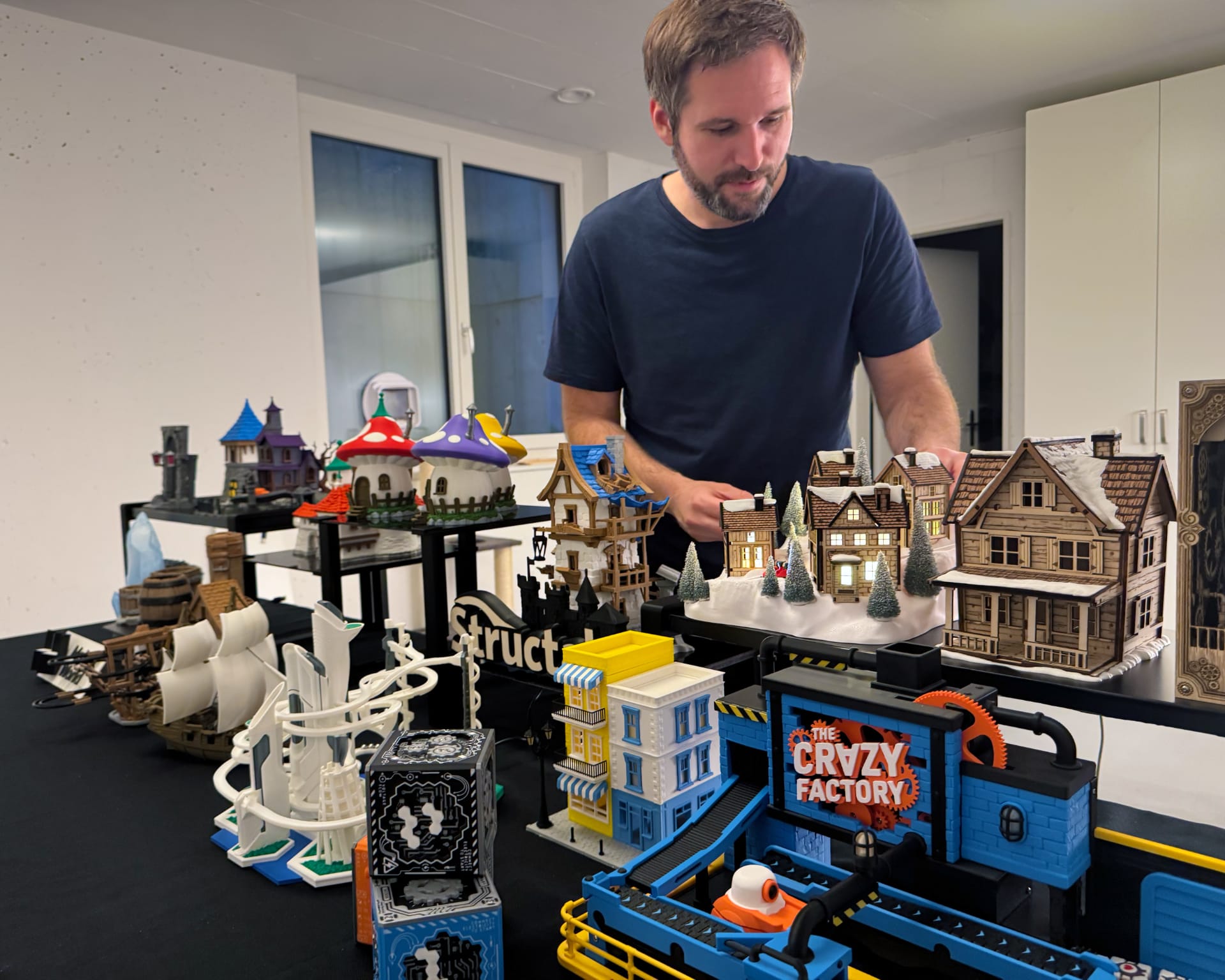
Daniel spends a lot of time on ArtStation and Pinterest whenever he starts a new project. He looks for forms that make him stop scrolling. Lines that are not straight. Shapes that feel a little Disney-like, and fairy-tale-like, as well as little realistic. Always somewhere in between.
Most projects on MakerWorld come from CAD software. Precise, sharp edges, forms dominated by geometry. Daniel aims for something else.
I always wanted it to look like a prop from a movie. It should work in such a way that, if you film it from the right angle, it could create a mood.
Someone might look for a clear label for this style. Daniel doesn't have one - instead, he points to Disneyland, which sounds unexpected at first.
As dumb as it sounds - I love Disneyland. I love roller coasters. I don't want to build roller coasters, but it should feel a bit like Disneyland combined with roller coasters. And yeah, that's how I got into these marble runs.
Marble runs are the logical consequence of that aesthetic. Something that not only stands there and looks good, but also works - something people can stand beside for half an hour just watching.
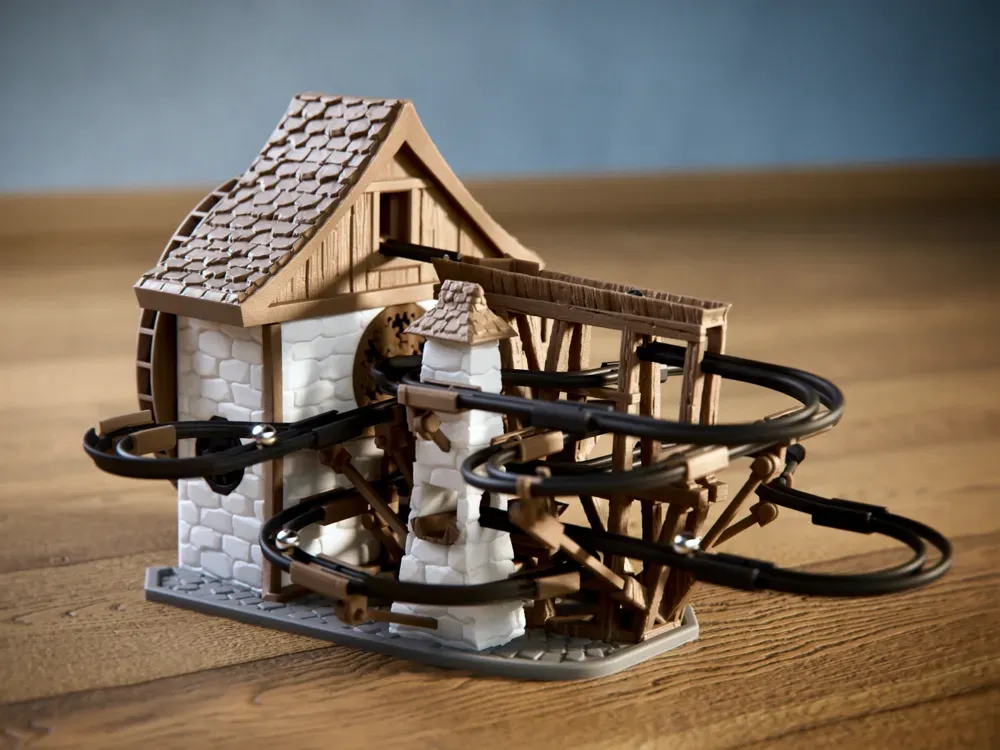
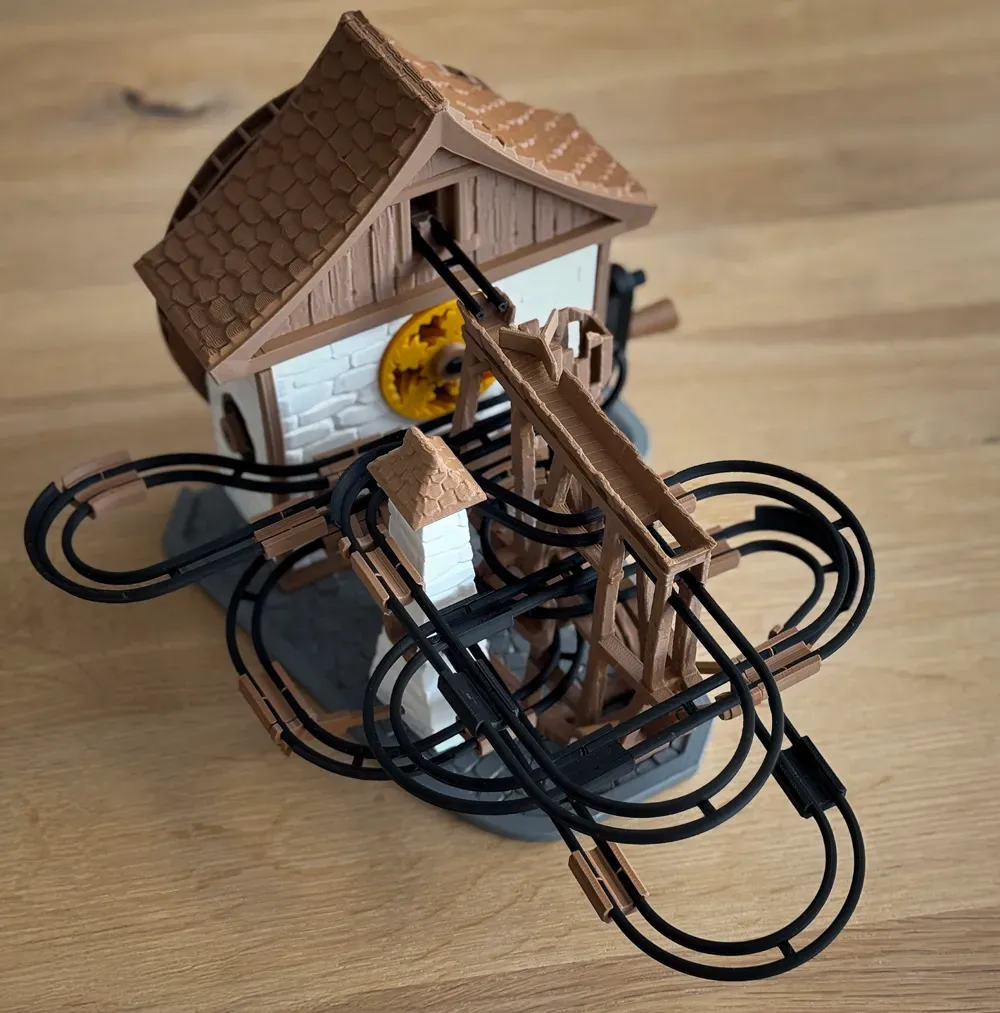
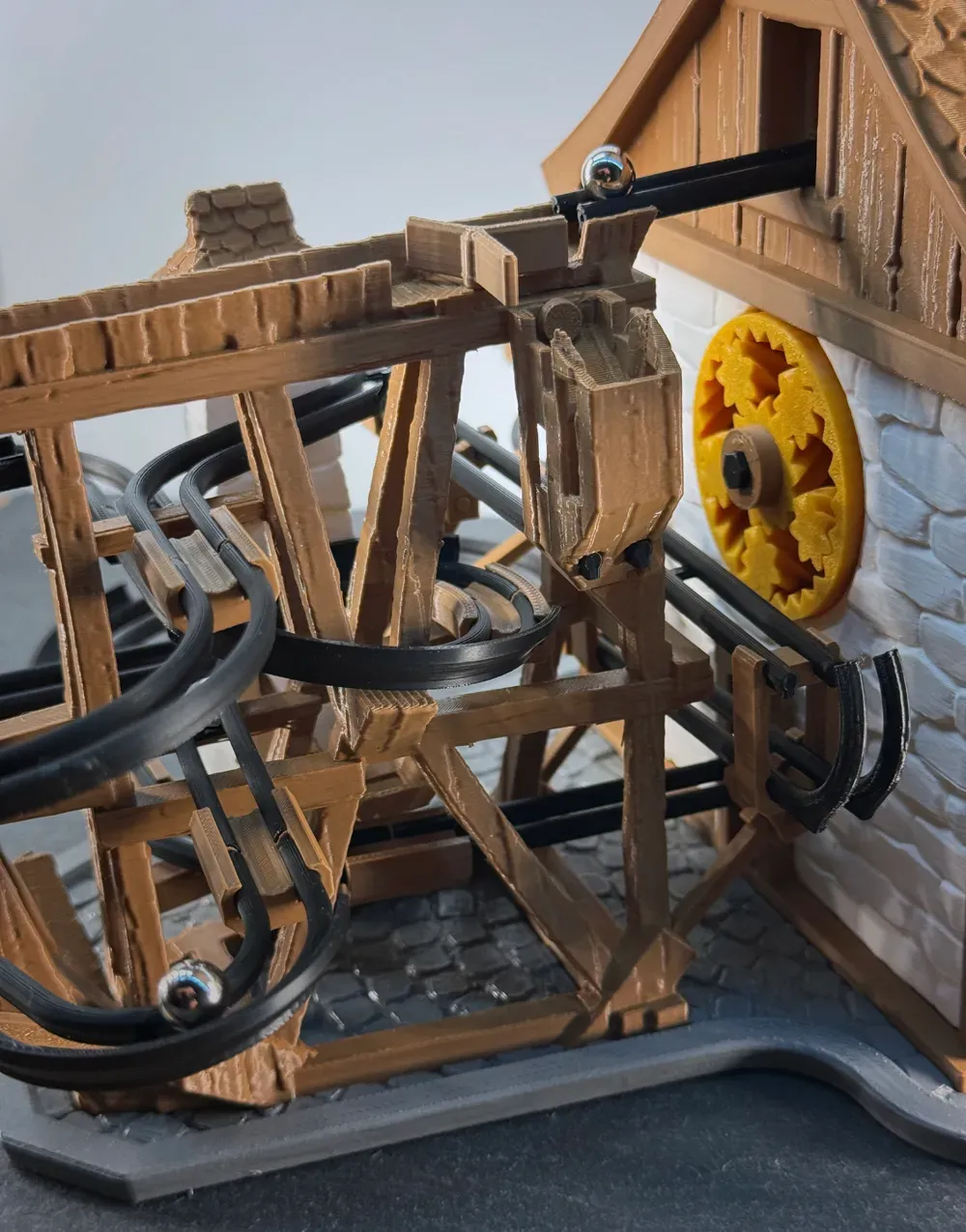
There is another obsession that separates Daniel’s projects from most things on the platform: single-color models assembled by hand.
Every part printed separately, no multicolor AMS printing unless it is absolutely necessary.
Since the beginning, it is my highest aim to get single color objects which you need to assemble.
The belief that a complex construction made from separate parts has more physical character than a finished one-piece print. And that printing without AMS should remain accessible to everyone.
Projects
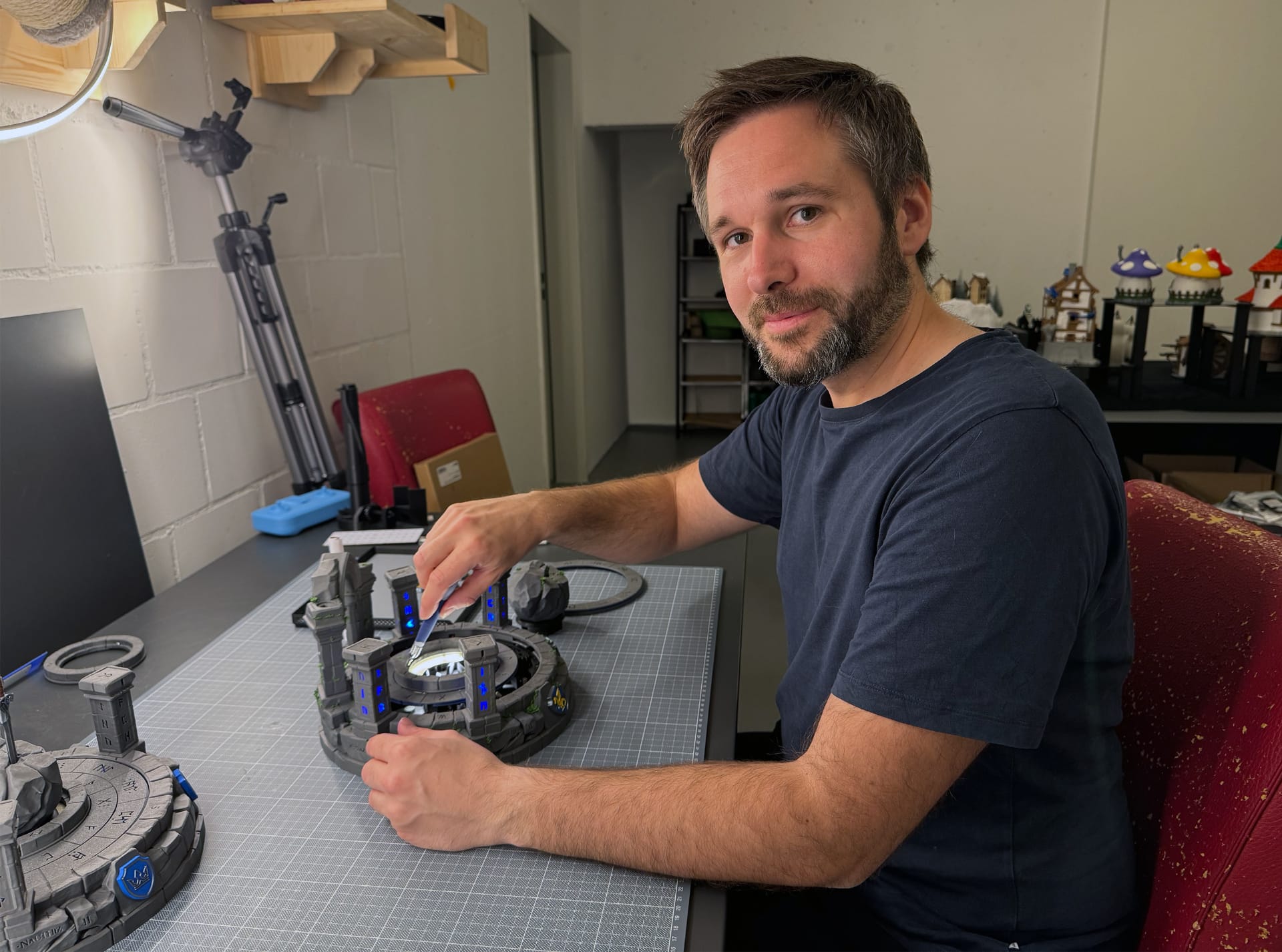
If he had to show one thing to someone unfamiliar with his work, he would show the watermill marble run. Or Metropolis Neohexa, a sci-fi city of the future with marbles moving along tracks above the streets.
When children are around, they could sit there literally thirty minutes and just watch it. That is quite great.
His best design is a haunted house. It came together surprisingly quickly, using ready-made components from Maker’s Supply and the same curved lines that appear throughout all his projects.
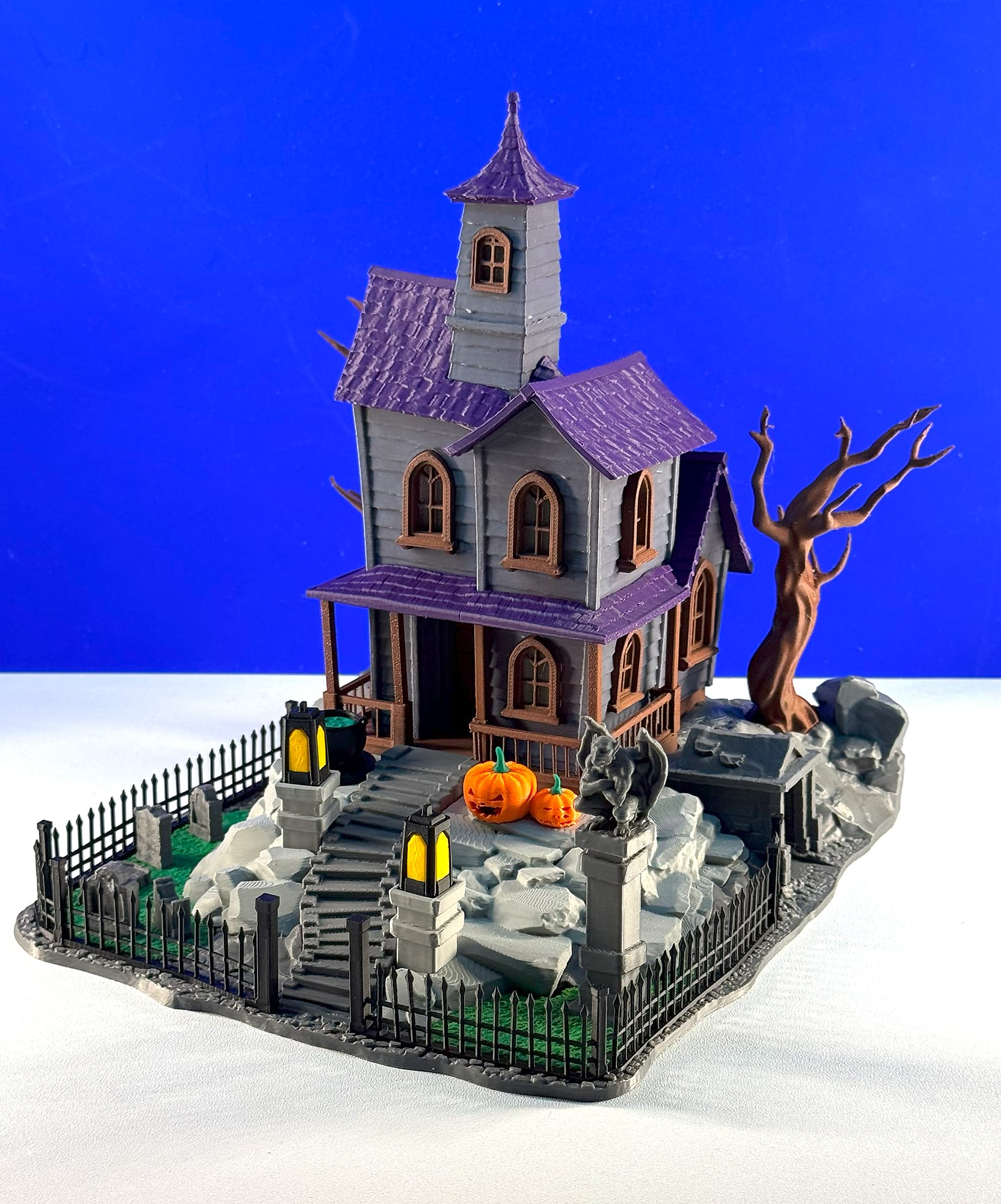
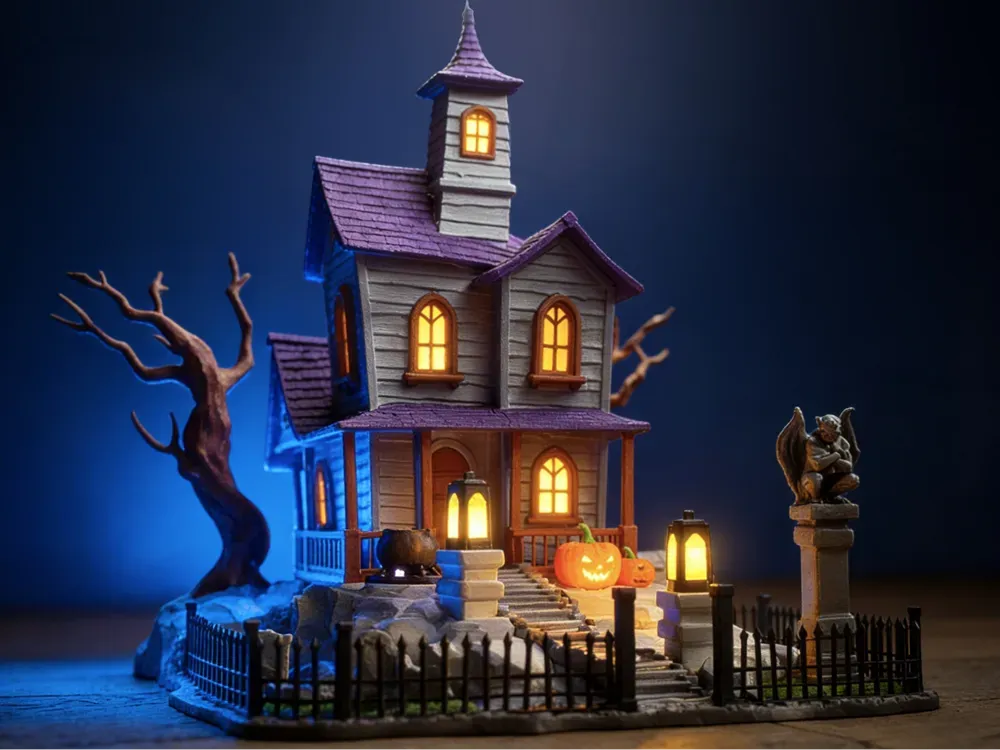
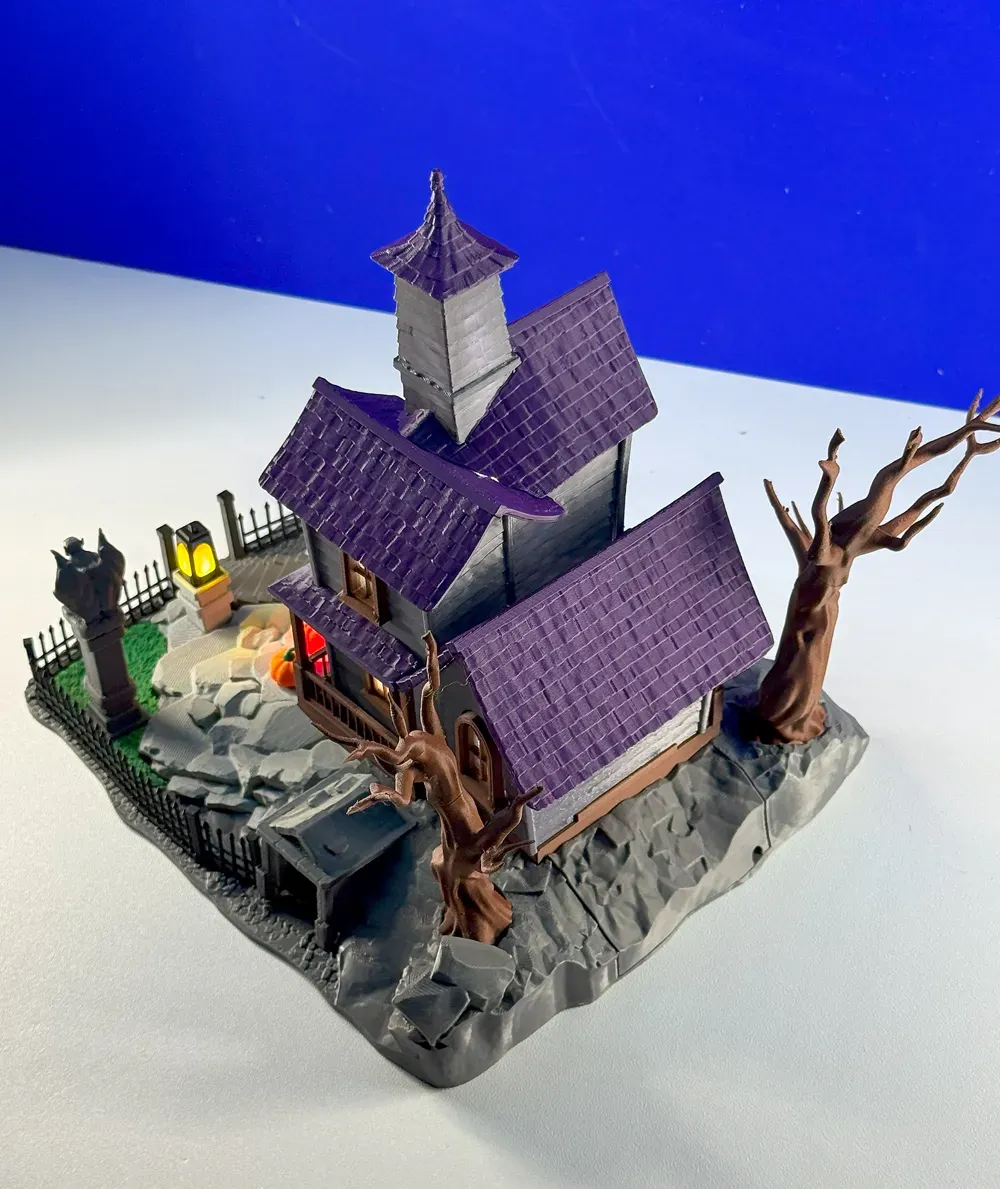
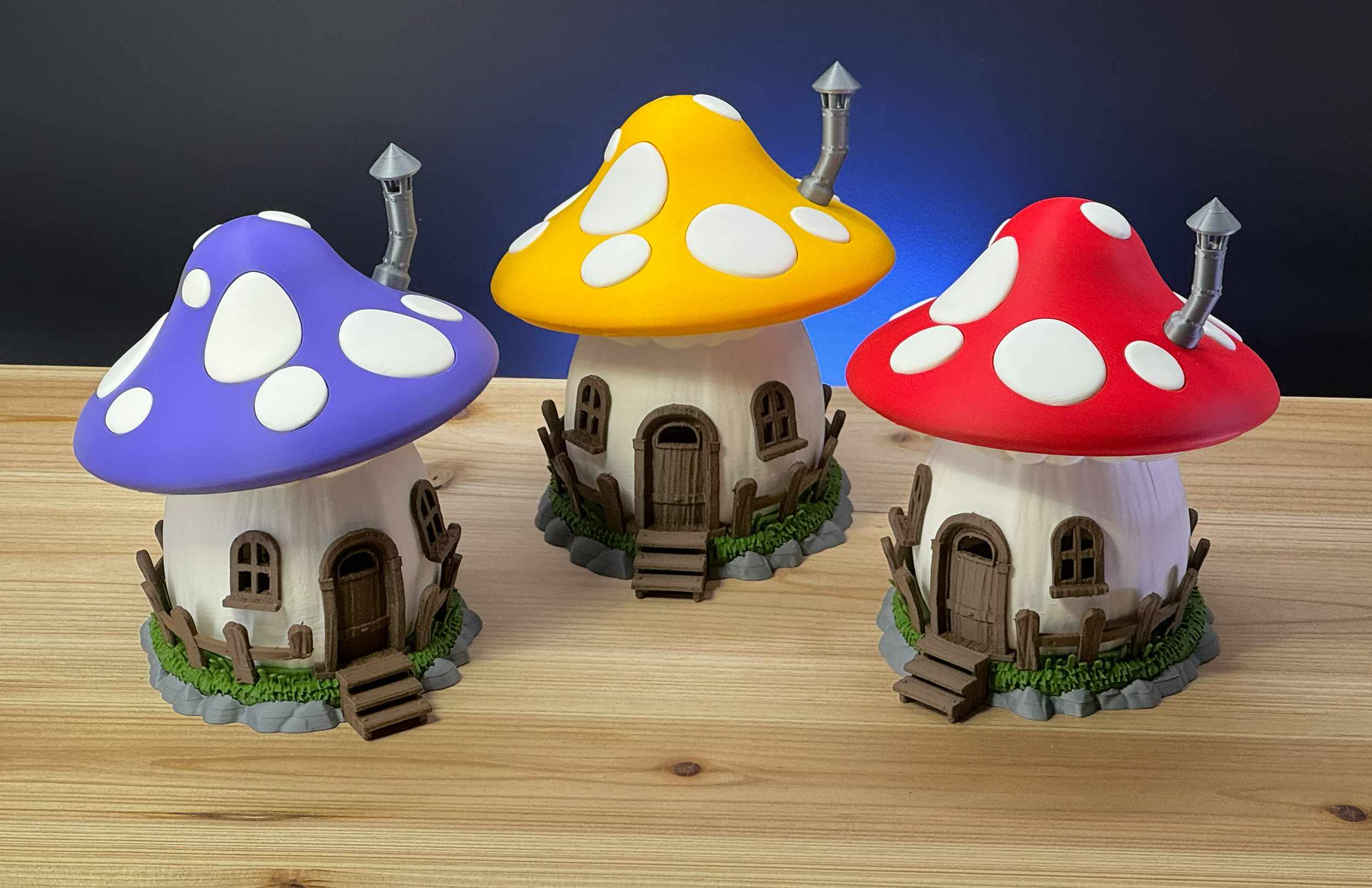
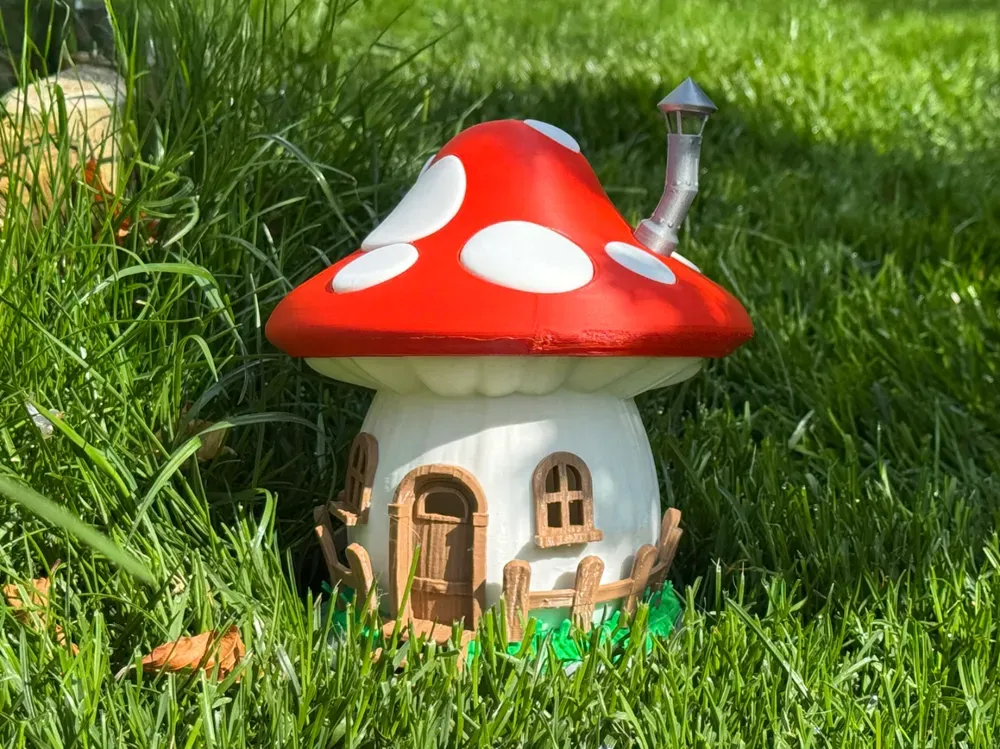
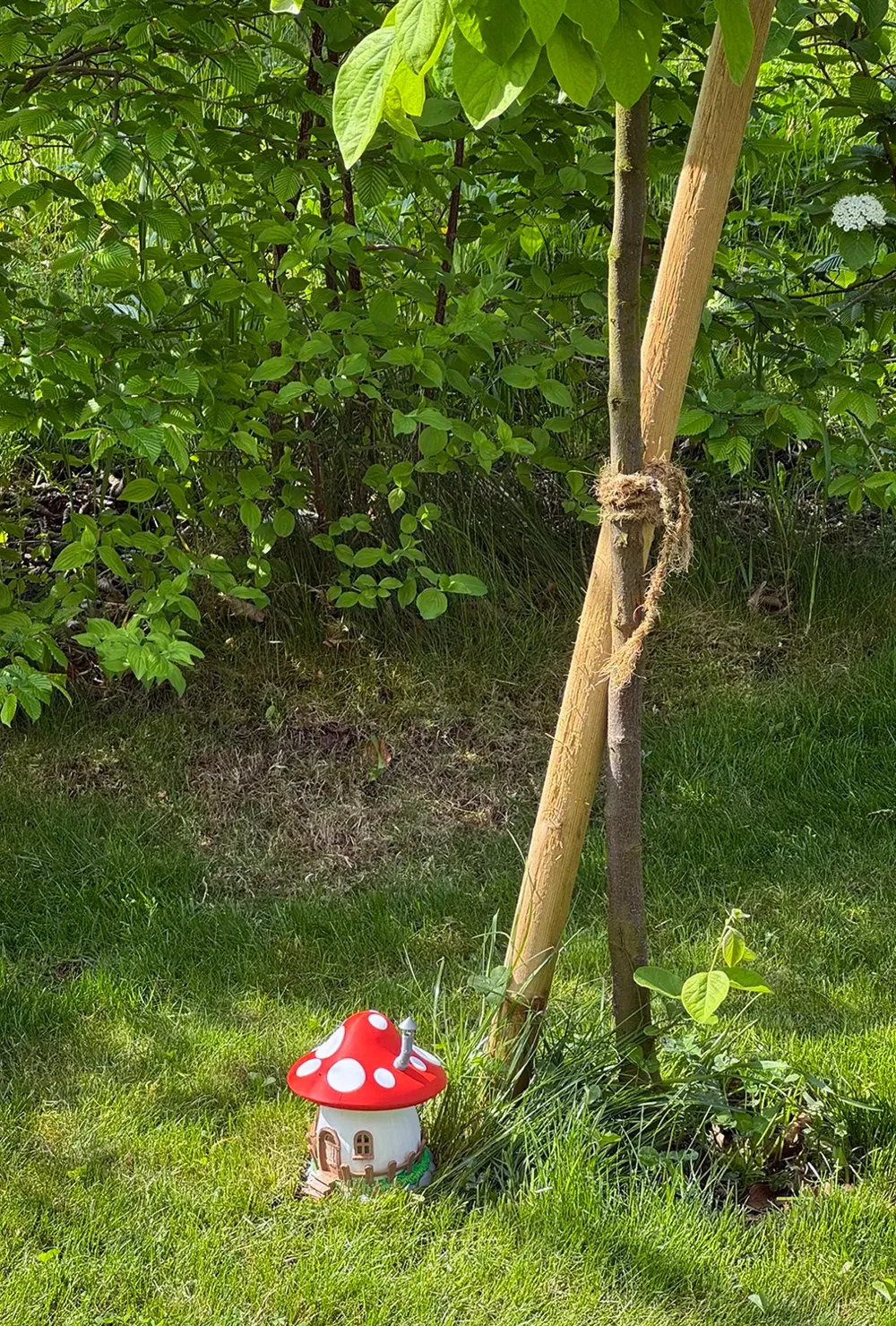
Then there is the mushroom cottage...
I have this one model, the mushroom cottage - it was just a filler model I made on the side, very simple. And people love it. Yeah. I could have done more with it.
The project that disappointed him the most was Hearts Unlocked. A mechanically complex puzzle cube requiring hours of assembly, genuinely inventive when you hold it in your hands.
Almost nobody built it.
What you can do with it and what you have to solve is really cool. But I don't think anyone really built it. Maybe those fifteen people...
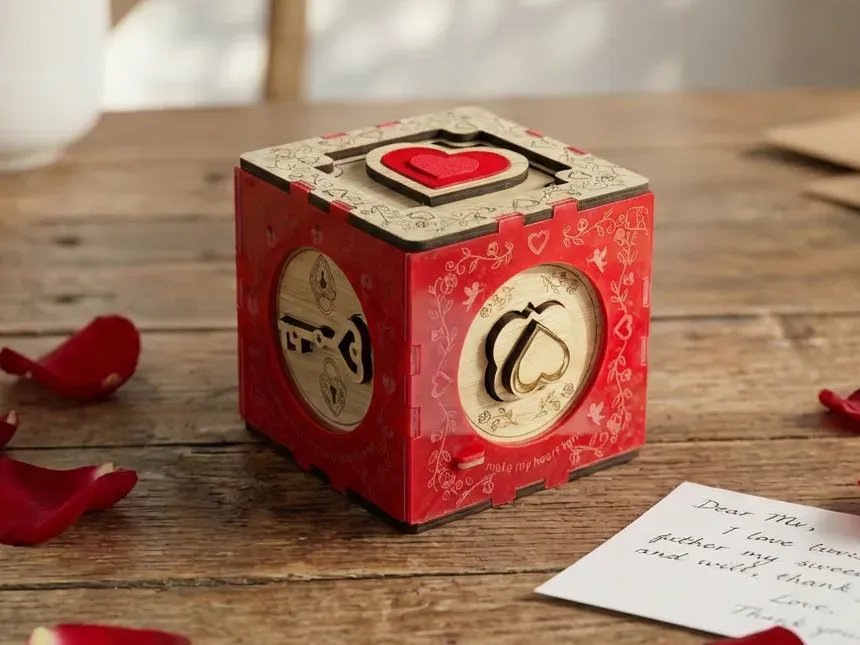
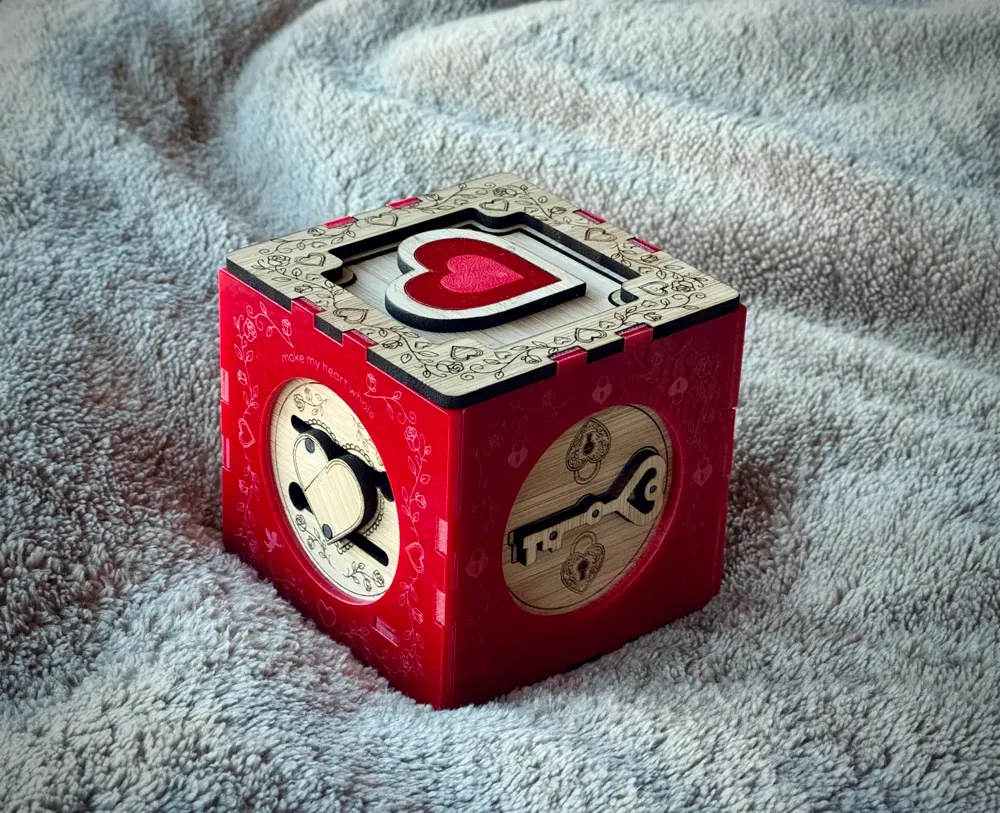
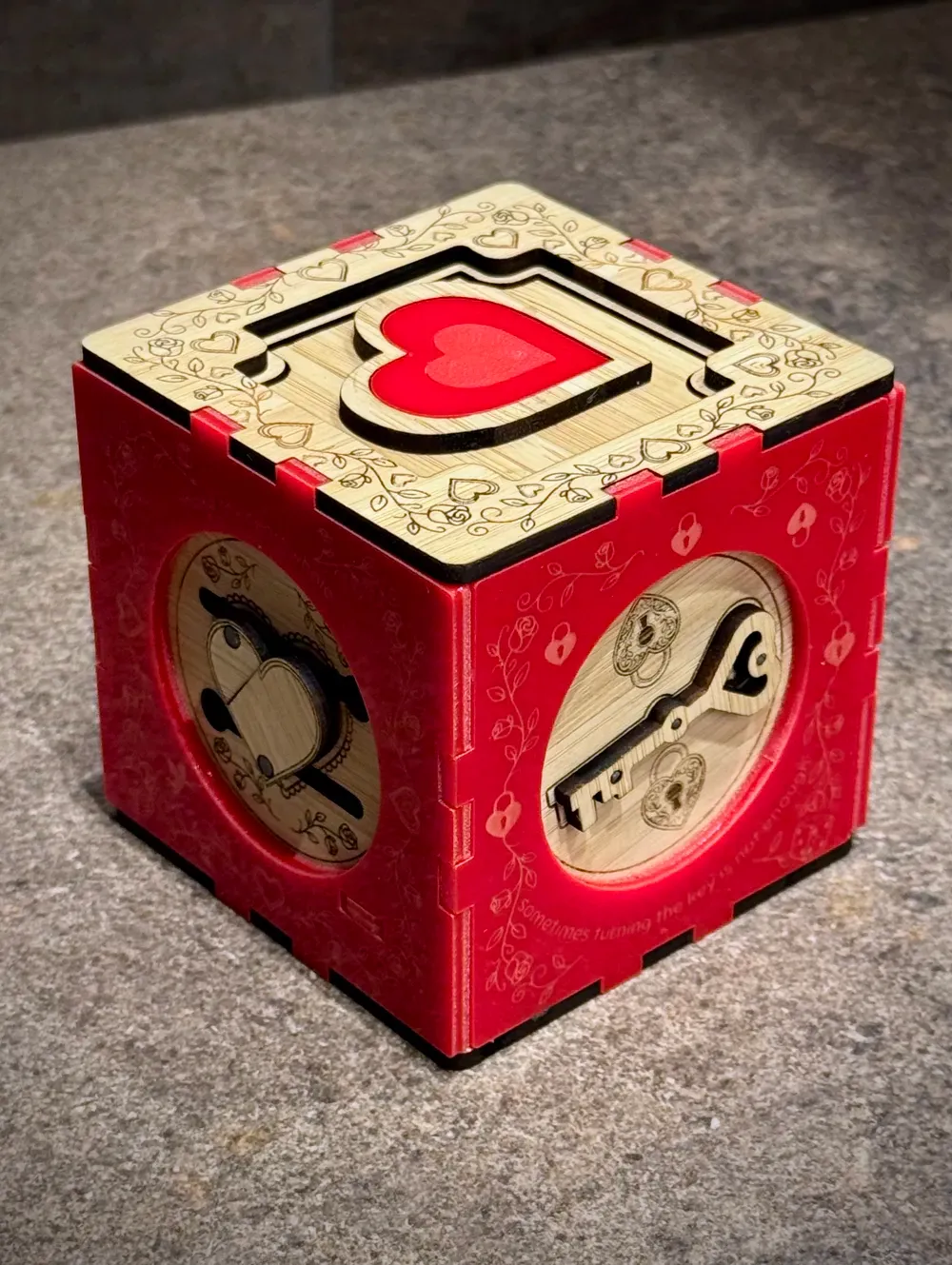
Source: Hearts Unlocked - Mechanical Puzzle Box [MakerWorld]
He talks about it without bitterness. That is simply how it turned out.
The winter village is a separate chapter altogether.
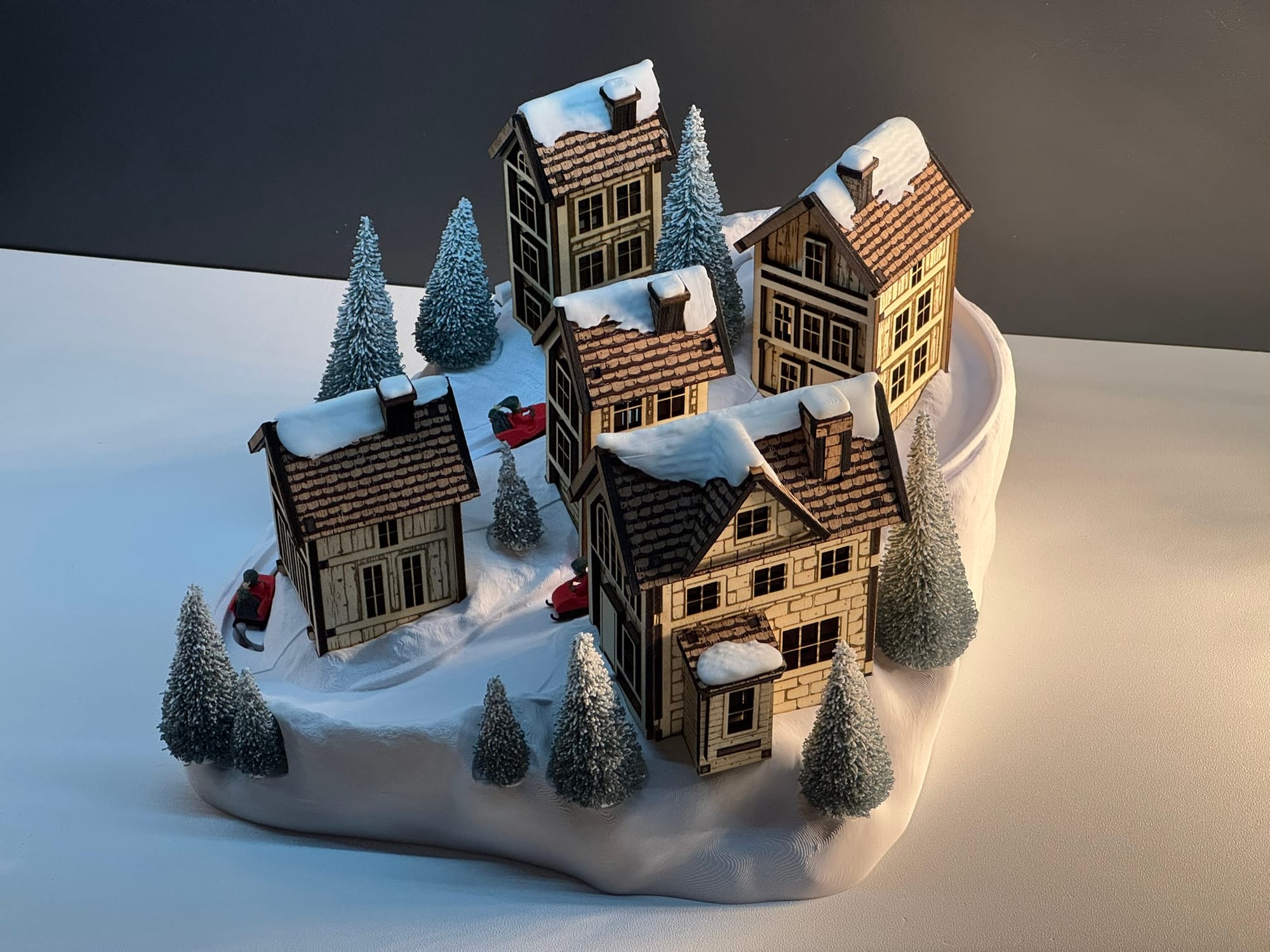
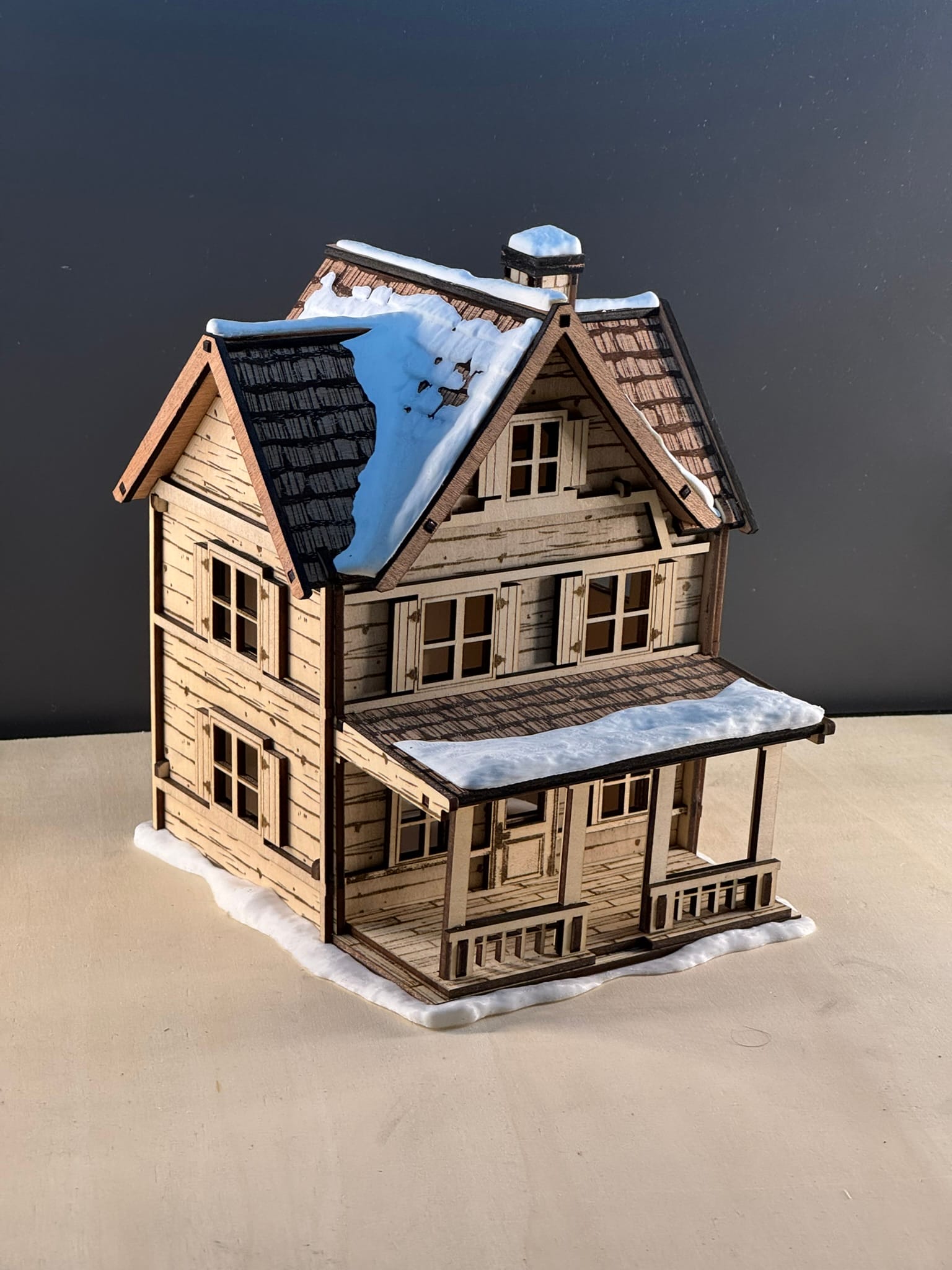
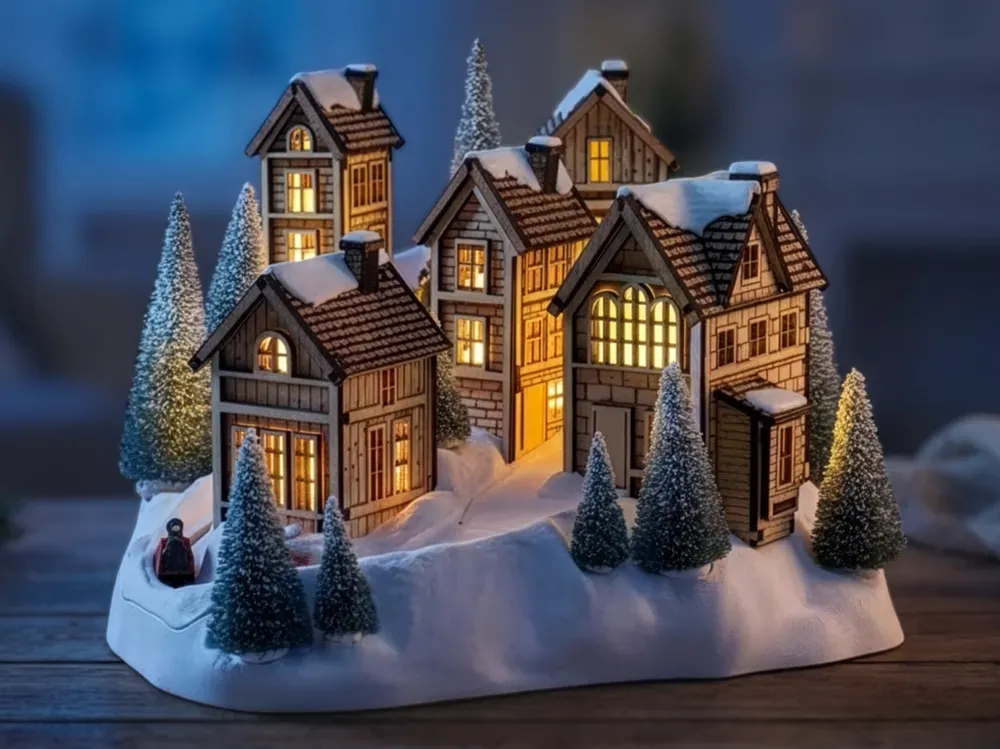
A combination of laser-cut wood and 3D prints: houses with engraved facades, trees filled with snow, sleds climbing a hill powered by a lifting mechanism. LEDs inside every house, animation controlled by a motor and a power distributionboard from Maker's Supply.
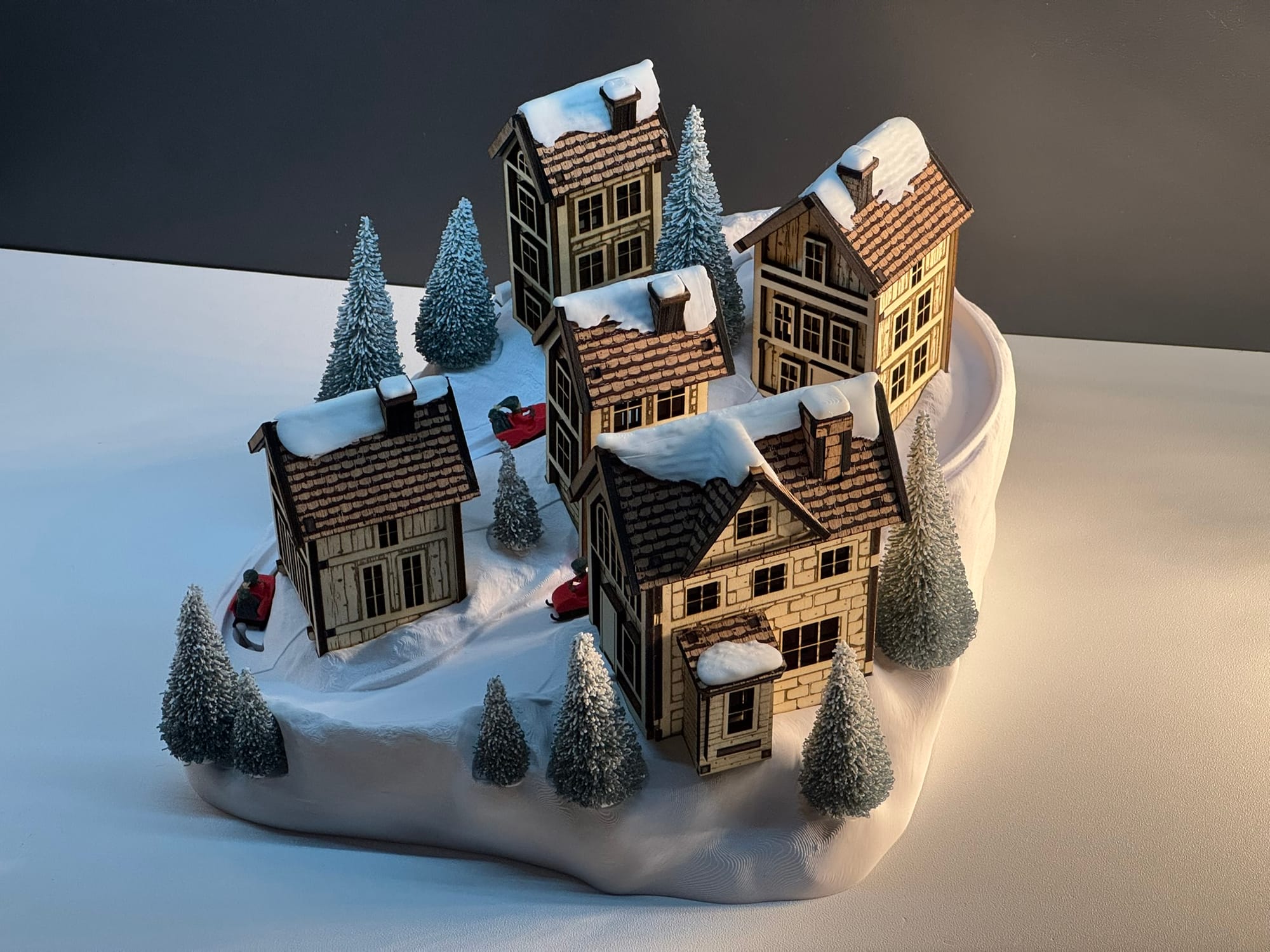
A project that started with one single element - the trees!
With the winter village, I just thought, hey, I need trees. If I couldn't get trees I liked, the model wouldn't work. So, forget everything else - first I need trees.
The trees required more than ten print iterations before the layered color mechanism worked properly.
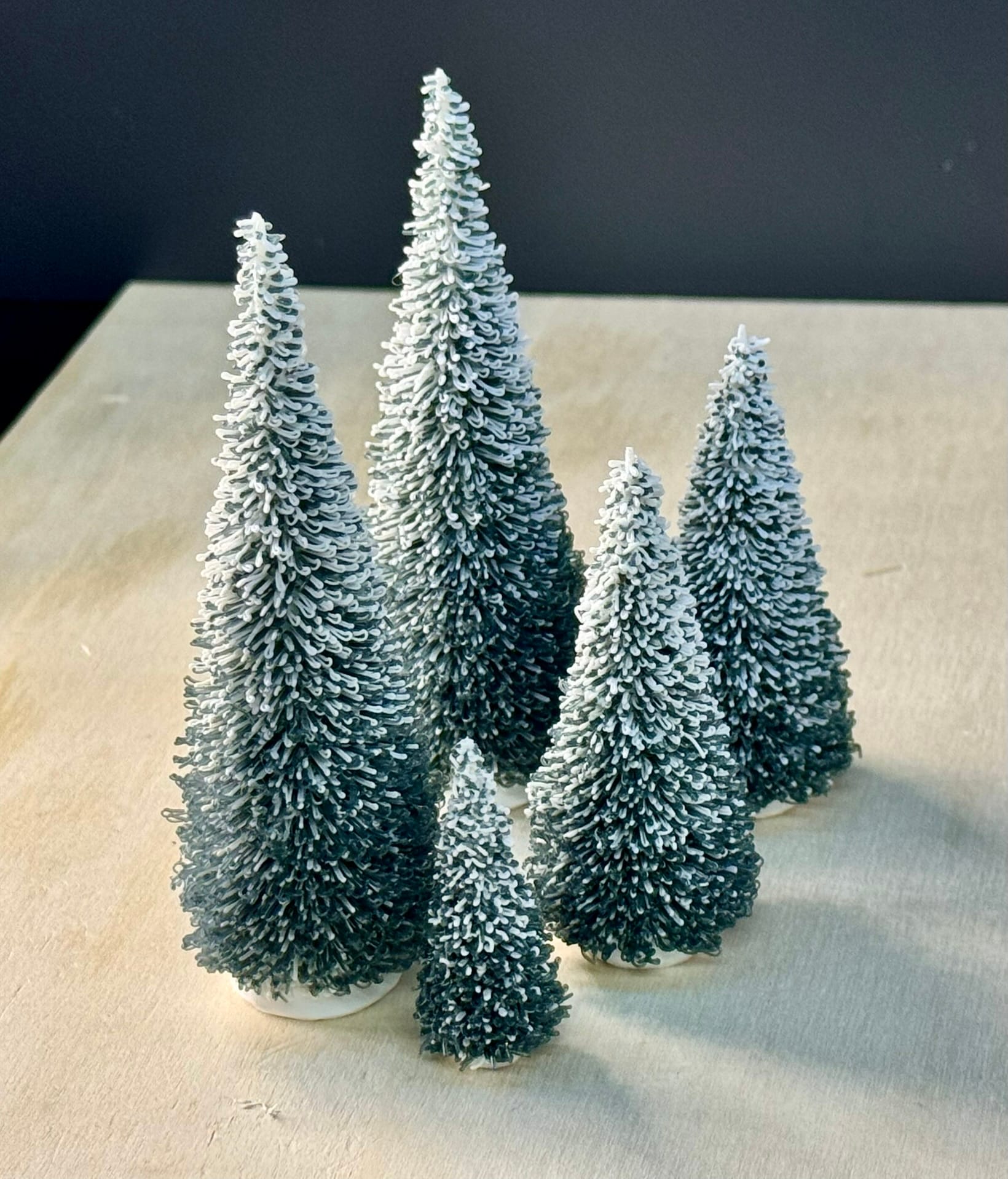
Then Daniel wanted the sleds to travel along two separate routes connected by a bridge. Weeks of attempts.
It never worked.
That is the hardest part when you have to dump a real big part of your work where you tried so hard and you see, it just won't work.
He threw that section away. The rest came together quickly.
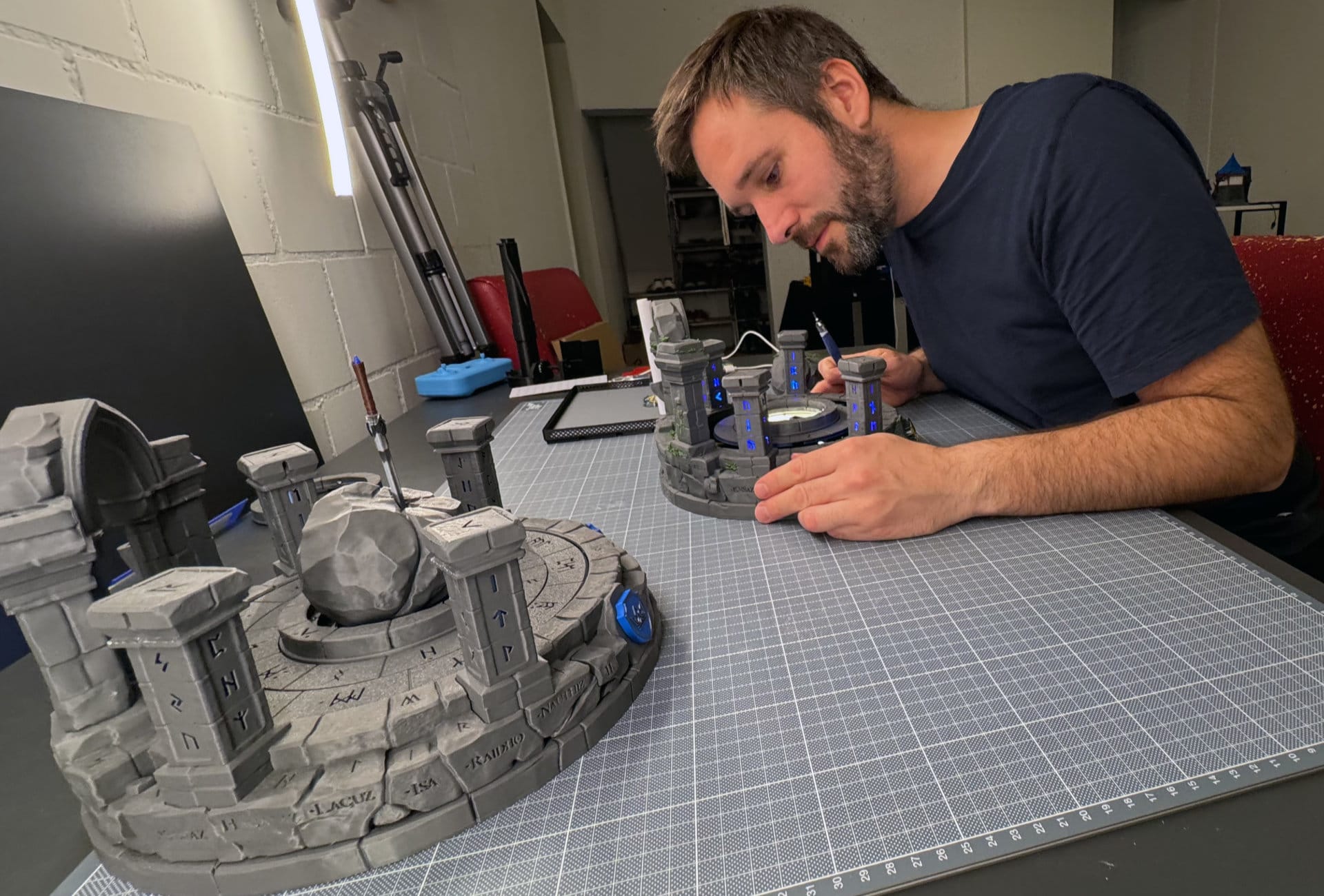
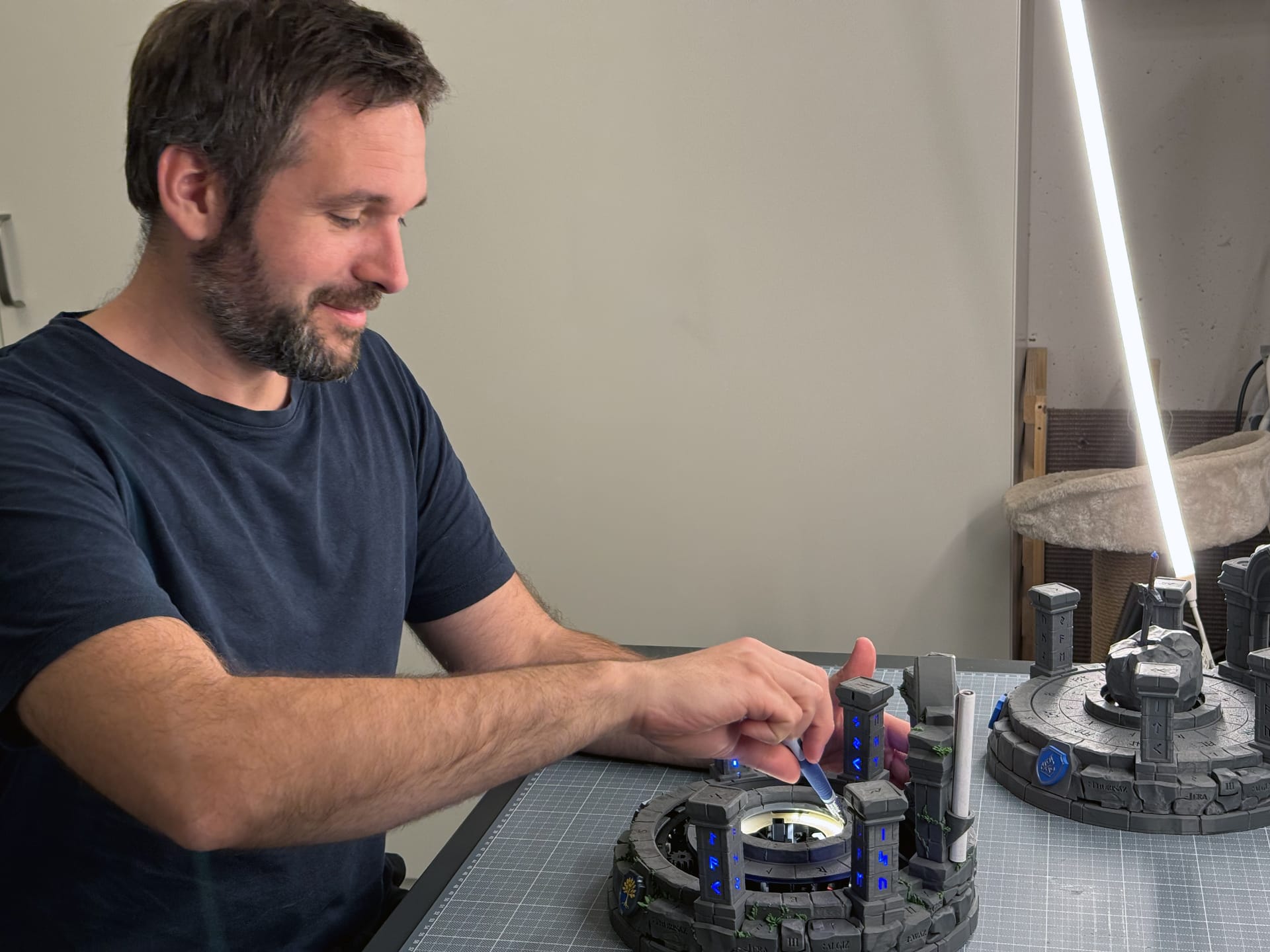
Excalibur is a crowdfunding project. A sword, pillars with locking mechanisms, drawers hidden inside the columns, runes engraved into stone. Daniel started with a 3D render before printing a single part.
Reddit reacted coldly to the render.
Most of the people on Reddit said 'okay this is AI slop.' But this was a 3D render of the actual printing model.
After the render, he printed a preliminary version without the mechanics and added a few LEDs to show that it physically existed. Then he started raising funds. The crowdfunding campaign launched.
H2D and laser work
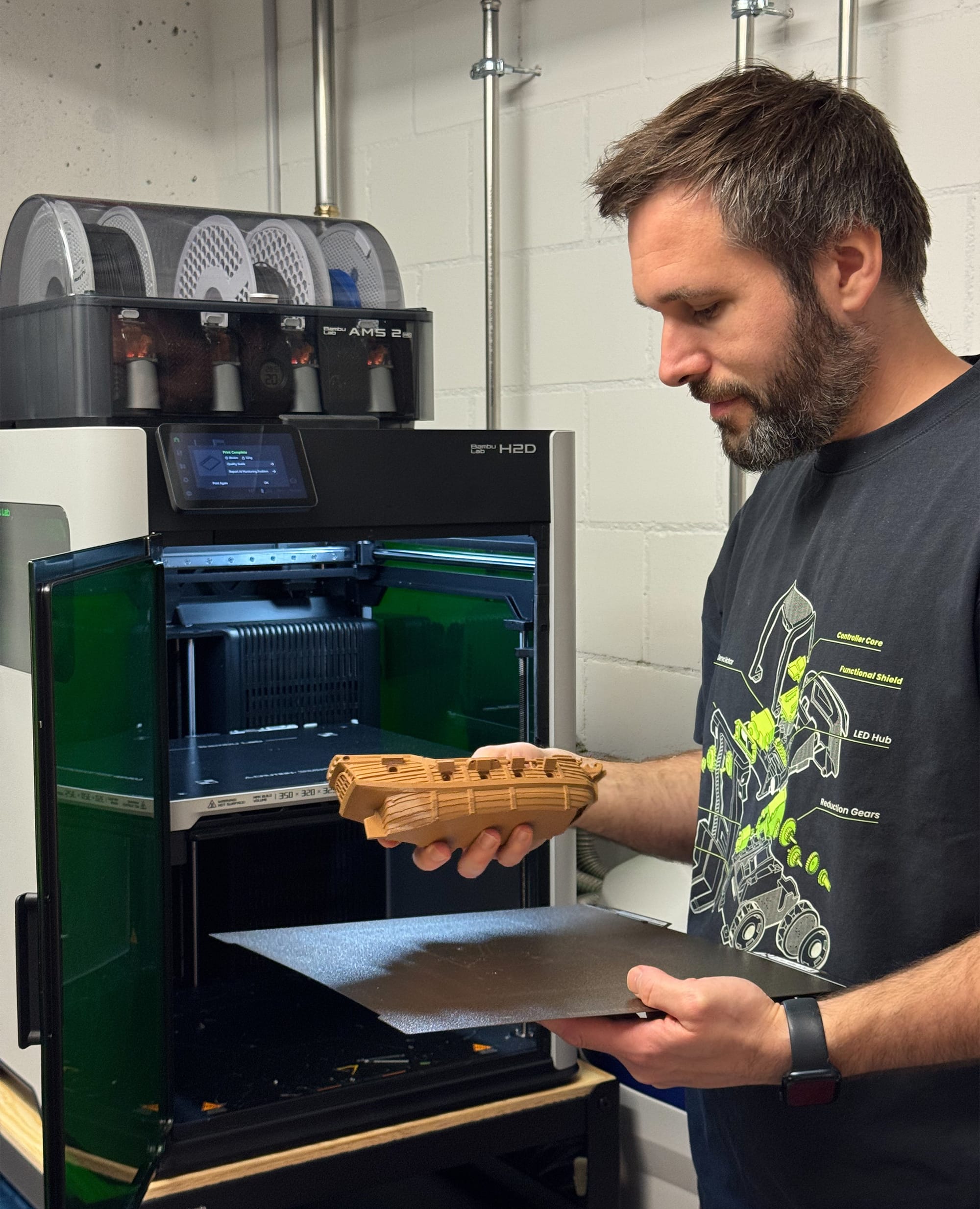
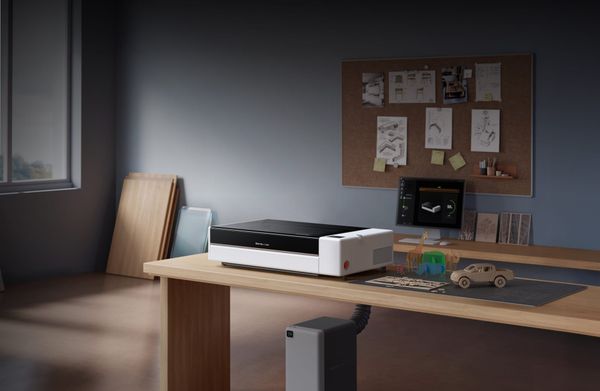
The H2D printer came to Daniel through Dora Ding from MakerWorld. She asked if he would like to try working with a laser. Of course he said yes, even though he had never planned on getting into laser cutting or woodworking before.
I wouldn't have thought about getting a laser or getting into this wood stuff. But Dora came once on Discord channel and asked me if I would like to do laser work? And I of course didn't say no, because I thought - oh, this is great!
The discovery came quickly: wood, textures engraved directly into the material, an aesthetic that 3D printing alone cannot reproduce.
The look and feel of wood is so much better for me as a designer. I just love it.
Now he owns two A1 printers and one H2D. He swaps modules between the laser and print head whenever a project requires it, cleans the machine, and moves on.
Simple procedure, no magic involved.
Crowdfunding
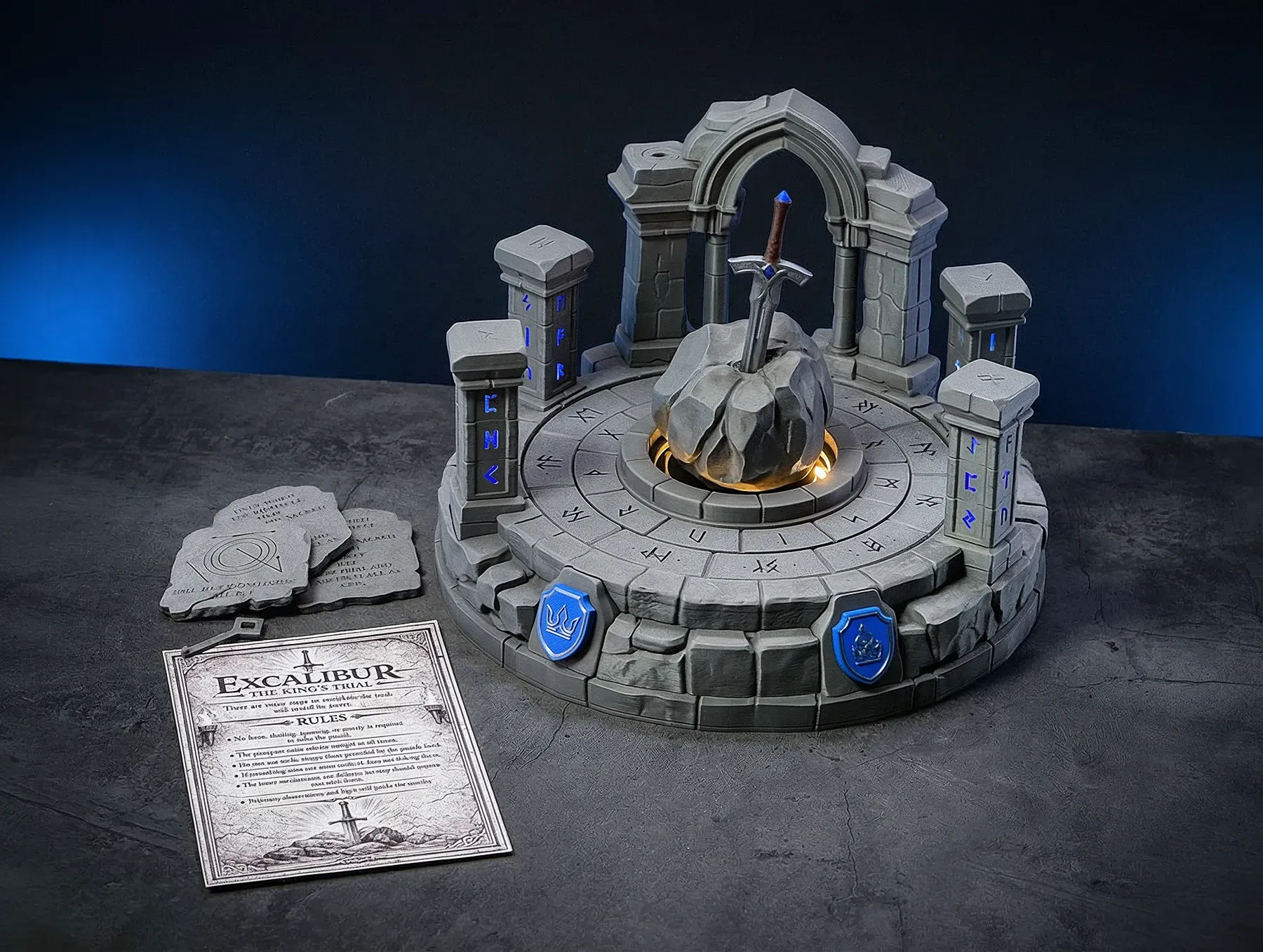
Daniel has done crowdfunding on MakerWorld twice. One of the projects earned $11,000. Money is motivating, he says directly. But he also speaks about crowdfunding with clear ambivalence...
Every time I do it, about halfway through, I start to feel it like it is work. That I have to keep my 'clients' happy. Something like that.
The moment someone pays for a product, changes the relationship between creator and this project. A hobby becomes an assignment. Responsibility toward an external audience enters a space that previously contained only curiosity.
Free models do not carry that weight. The machine core box, one of his favorite objects, still sits on his desk all the time.

And the assembly instructions are a challenge, and Daniel knows it. However recently he updated the instructions with a short animation, which helps alot.
I want constructive feedback, or good feedback. And that's what I'm after with the crowdfunding models. So I put a lot of work into getting this part right.
With a crowdfunding project, everything has to be polished. Good print profiles, detailed instructions, testing on several machines.
That is work, not play. He feels the difference very clearly.
How he does it
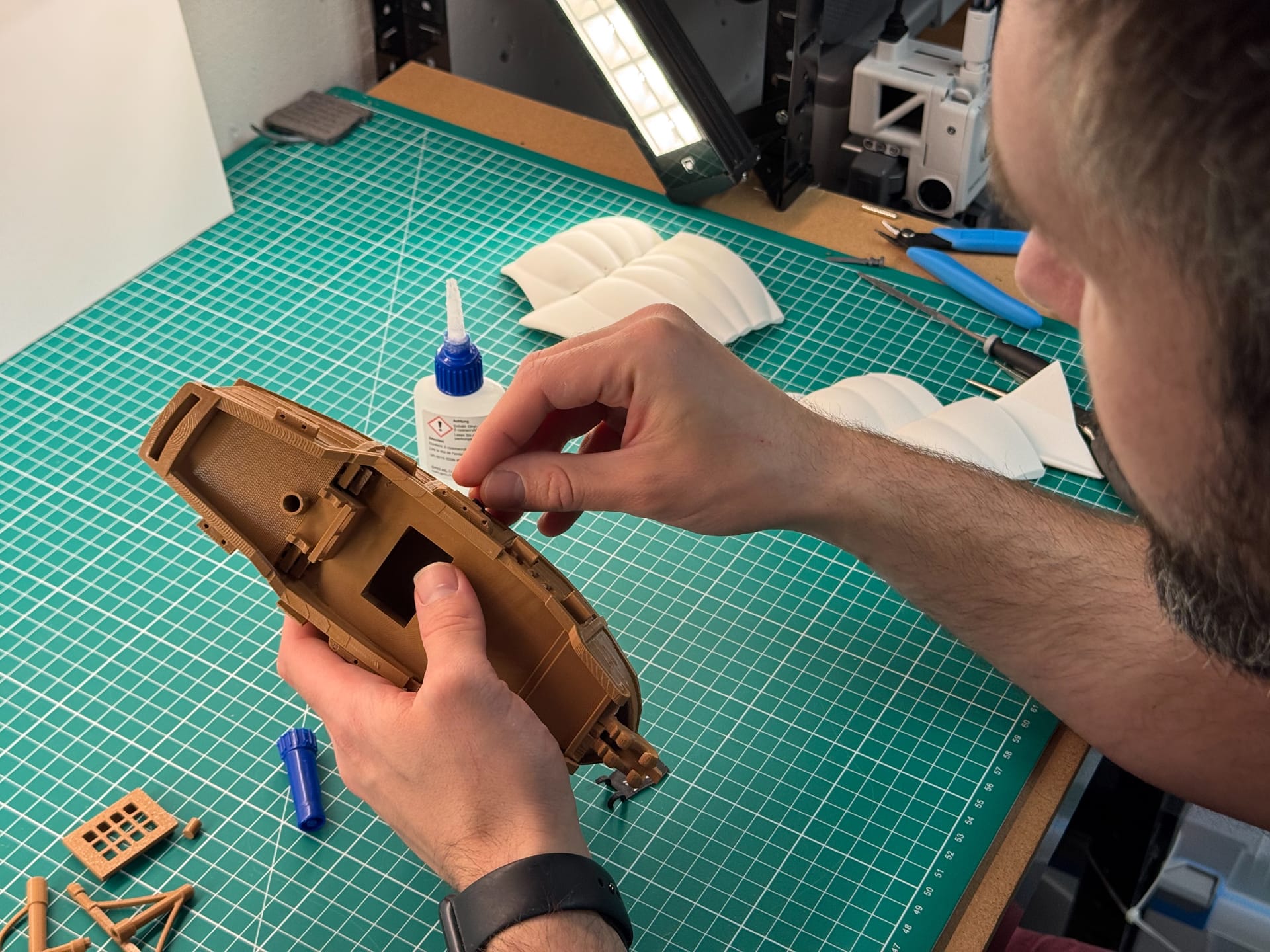
The process always starts with a feeling. Browsing Pinterest, stopping at something that catches the eye. More references, AI-generated variations as starting points for layouts, rough blockouts in Cinema 4D to see whether the proportions make sense from every angle.
I always have this inner push that I want to try this out.
He cannot draw.
He openly says he models slowly and awkwardly. But he knows how the final result should look, and he moves toward that.
He always starts with one element that has to work before the rest can exist. In the winter village, it was the trees. In Excalibur, it was the sword and the first pillar. In the marble runs, it was the lifting mechanism, which had to function before he designed anything around it.
Always it's the same process. I start with one specific part of that model I have in mind.
For projects involving mechanics, prototyping can become an exercise in patience. The sled mechanism in the winter village required ten printed iterations before it finally worked. When the mechanism fails, Daniel prints another version. When it succeeds, he moves on.
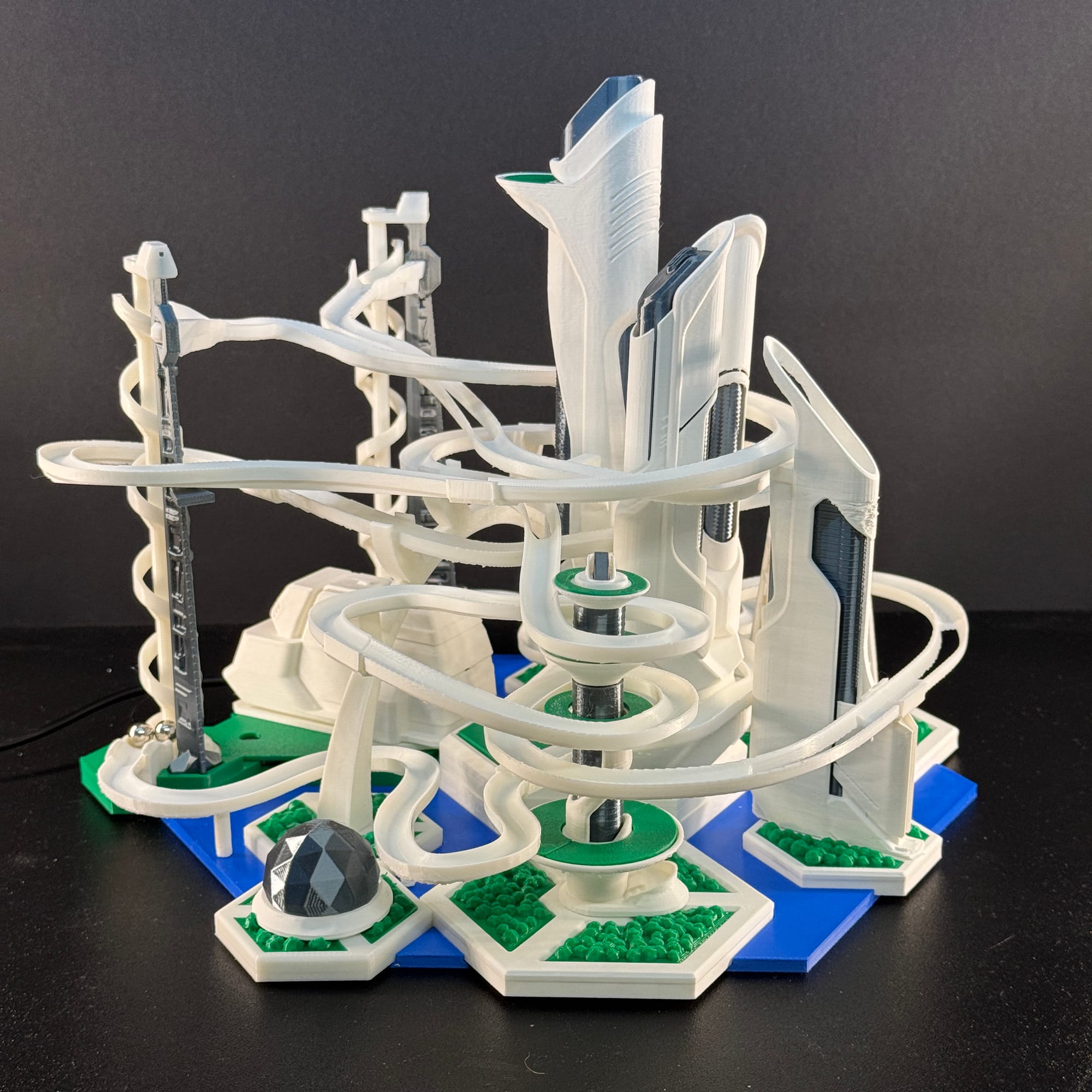
He admits, with some irony toward himself, that his print profiles are often released before the second prototype is even finished.
I have to admit that sometimes my first printprofiles of a new project are a beta-test...
He does not experience creative blocks.
Since joining MakerWorld, he has always known what he wants to make next. Right now, he already has another idea waiting after Excalibur: a wooden marble run combining laser work and 3D printing in a single moving model.
What I want to do is a wooden marble run combination. This is something I really want to come up with.
For himself, not for the algorithm
Before MakerWorld, Daniel had no social media presence at all. He worked during the day, then spent evenings away from computers. For many years, he showed none of his personal creative work publicly.
The first thing he uploaded to MakerWorld was a sponge holder with a soap tray on December 2, 2024.
Almost no interaction followed.
But he liked how easy it was to upload pictures and descriptions, and how neatly the platform organized his projects. He started treating it as a personal database.
Now he reads every comment. He replies to most of them.
I really love to answer comments. I hate if comments just stand there unanswered.
He has no target for the number of models or followers. He does not think about living from MakerWorld because he already has his own company and a job he genuinely enjoys.
I don't have an aim for how many followers I have, or how many designs I published. I just want to get happy again with a new model.
Projects begin with himself. They end in contact with the community.
Free models are released when he personally feels ready. Crowdfunding projects are released when they are sufficiently developed. The distinction matters to him, and he protects it carefully.
The idea for a project has to come from me.
Feedback missing from comments
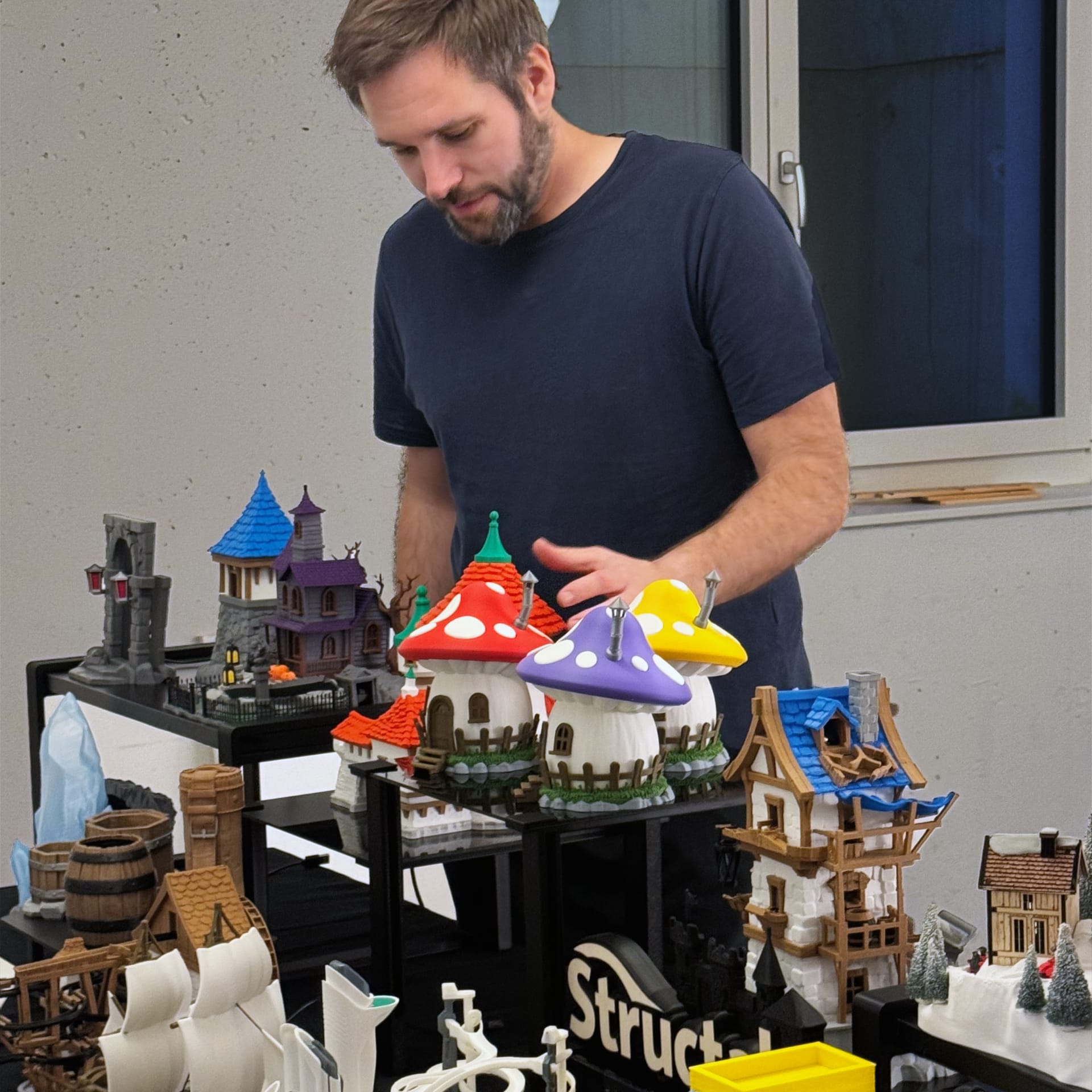
In June, at a maker fair in Switzerland, Daniel will have his own table reserved. He plans to bring everything he has made.
It has been his plan for a year. Because the one type of feedback he cannot get online is feedback from someone holding his objects in their hands.
Someone hearing how a mechanism works, touching the texture of castle walls, rolling a marble through the watermill marble run and watching it climb back to the top.
To get this feedback on my real models is something I dream of since last year. Online I get mostly feedback on my pictures, maybe on how good or bad the print profile is. But on the actual functions, the look of it from an actual object, I don't get a lot of feedback there.
Online, people see pictures. In person, they see the object.
That may be the shortest possible description of Daniel Mueri’s philosophy. For 15 years, he created things that existed only on screens. Now he creates things people can hold, operate, assemble, place on a shelf, and show to children. Or carry out onto a balcony beside a hydroponic tower where tomatoes are growing.
Two worlds, one person. During the day: nuclear reactors and Pilatus aircraft. In the evenings: castles, marble runs, and wooden villages with sleds.
He only started enjoying modeling once the model stopped being a layer inside a file and became something he could physically pick up.
The rest was done by the printer.
All photos courtesy of Daniel Mueri. All right reserved.